Best Coastal Fishing Spots in South Carolina
South Carolina's coastline is a veritable treasure trove for anglers, but with so many incredible options, from the bustling piers of Myrtle Beach to the serene marsh creeks of the Lowcountry, figuring out where to cast your line can feel a bit daunting. This comprehensive guide is here to untangle the confusion, taking you on a journey through the very best coastal fishing spots our Palmetto State has to offer, ensuring your next trip is filled with unforgettable catches and priceless memories.
Understanding South Carolina's Diverse Coastal Fishery
Fishing in South Carolina isn't just a pastime; it's a way of life, deeply intertwined with the state's rich natural beauty and vibrant ecosystems. The coast, stretching for hundreds of miles, offers an unparalleled variety of fishing experiences, from the busy resort towns to the quiet, pristine barrier islands. Each region presents its own unique charm and angling opportunities, ensuring there's a perfect spot for every skill level and preference.
Why South Carolina's Coast is a Fishing Paradise
What makes South Carolina's coast such a magnet for anglers? It's a fantastic blend of healthy, productive habitats and abundant marine life. We're talking about extensive marsh systems that serve as nurseries for countless species, expansive estuaries where freshwater meets saltwater, and a coastline dotted with natural and artificial reefs, wrecks, and jetties. This rich biodiversity means you can target everything from feisty Redfish tailing in the grass to powerful King Mackerel cruising just offshore.
Beyond the sheer variety, the mild climate often allows for year-round fishing, though specific species have their peak seasons. The nutrient-rich waters flow from rivers like the Santee and Cooper, carrying vital sustenance into the coastal environment, fostering a robust food chain. This dynamic interaction creates an ideal environment for both inshore and offshore species to thrive, providing consistent action for those who know where and when to look.
Key Coastal Regions and Their Unique Offerings
South Carolina's coast can broadly be broken down into a few distinct regions, each with its own character and fishing focus. Understanding these differences is key to planning your ultimate coastal angling adventure. The "Grand Strand" in the north, centered around Myrtle Beach, is known for its piers, surf fishing, and access to nearshore and offshore wrecks. It’s a bustling hub with plenty of amenities.
Moving south, the "Central Coast" around Charleston offers a fascinating mix of urban fishing within historic harbors, vast marsh systems, and convenient access to the Atlantic. This area is renowned for its diverse inshore fishery and expanding artificial reef network. Finally, the "Lowcountry" and "Sea Islands" to the south, encompassing areas like Hilton Head, Beaufort, and Edisto, are characterized by their expansive, pristine salt marshes, strong tidal flows, and a slower, more natural pace of fishing, perfect for those seeking solitude and classic Lowcountry charm.
The Grand Strand: Myrtle Beach and Surrounding Areas
The Grand Strand, stretching from Little River down to Georgetown, is probably what most people envision when they think of a South Carolina beach vacation. But beyond the sandy shores and amusement parks lies a fantastic fishing scene, offering everything from relaxing pier fishing to thrilling offshore excursions. It’s a vibrant region that caters to both the casual vacation angler and the serious sport fisherman.
Pier and Surf Fishing Hotspots
For many visitors to Myrtle Beach, the first taste of coastal fishing comes from one of its iconic piers or directly from the surf. These spots are incredibly accessible and don't require a boat, making them perfect for families or those new to saltwater fishing. The Myrtle Beach State Park Pier, Second Avenue Pier, and Apache Pier are among the most popular, offering anglers the chance to catch Whiting, Pompano, Spanish Mackerel, and even King Mackerel during certain seasons. Most piers also offer rod rentals and bait, simplifying the experience for beginners.
Surf fishing along the wide, sandy beaches is another beloved pastime. From early morning to late afternoon, you'll see lines of rods staked out, targeting species like Whiting, Pompano, and various types of drum. Fresh shrimp, cut bait, and artificials like Gotcha plugs can all be effective. It’s a great way to enjoy the ocean breeze and the calming rhythm of the waves, and you never know what might bite! If you're looking for more specific guidance on where to cast your line from the shore, be sure to check out our detailed guide on Myrtle Beach Surf Fishing Spots in South Carolina.
Murrells Inlet: The Seafood Capital's Fishing Secrets
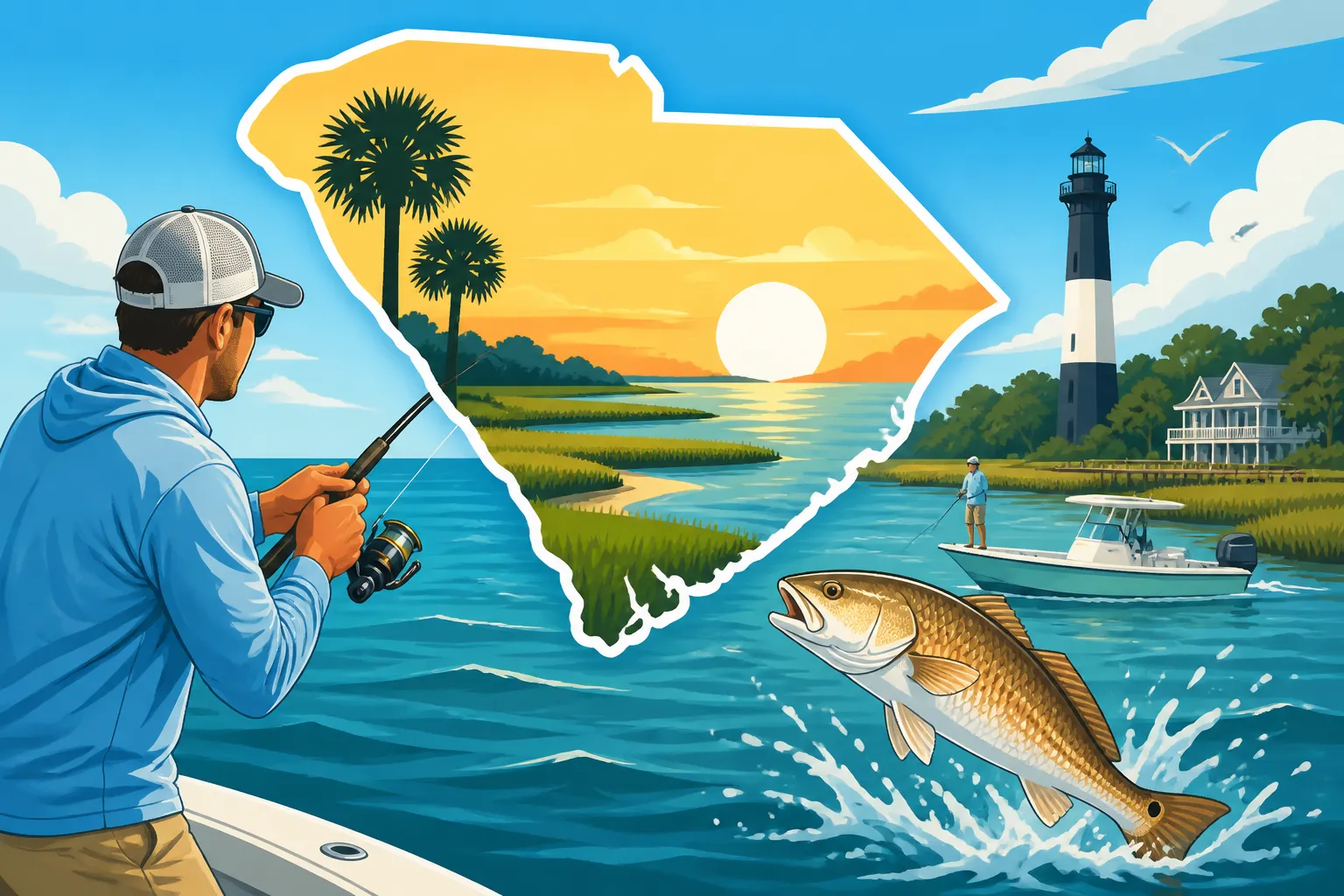
Just south of the main Myrtle Beach hustle lies Murrells Inlet, affectionately known as the "Seafood Capital of South Carolina." This quaint fishing village is surrounded by a sprawling creek and marsh system that offers some of the Grand Strand's best inshore fishing. The intricate network of tidal creeks, oyster beds, and grass flats provides prime habitat for our most sought-after inshore species: Redfish, Flounder, and Spotted Seatrout.
Anglers here often navigate shallow waters by kayak, small skiff, or even wade fishing, stalking Redfish as they tail in the grass on an incoming tide. Flounder can be found ambushing baitfish around oyster rakes and creek mouths, while Spotted Seatrout often congregate in deeper holes or along current edges. Access points are plentiful, with public boat ramps and kayak launches available. For those eager to explore this unique fishery, our guide to Murrells Inlet Inshore Fishing Spots in South Carolina offers even more in-depth advice.
Nearshore and Offshore Adventures from the Grand Strand
While inshore fishing is fantastic, the Grand Strand also serves as a gateway to exciting nearshore and offshore adventures in the Atlantic. Just a few miles from shore, a series of artificial reefs and natural bottom structures hold an incredible array of fish. Nearshore, anglers can target Spanish Mackerel, King Mackerel, and even large sharks during the warmer months, often by trolling or live baiting. These trips are typically shorter, making them perfect for those who want a taste of open-water action without committing to a full-day offshore journey.
For the more ambitious angler, offshore trips venture further out to deeper waters, targeting pelagic species like Mahi-Mahi, Tuna, and Wahoo. These longer excursions usually involve traveling many miles offshore to the Gulf Stream, where the true giants of the ocean reside. Booking a charter is highly recommended for these trips, as experienced captains have the specialized boats, gear, and knowledge to safely and effectively chase these powerful fish. If you're contemplating such an adventure, our comprehensive guide to Myrtle Beach Offshore Fishing Charter Trips can help you understand what to expect.
Charleston and the Central Coast: Historic Waters, Abundant Fish
The central coast of South Carolina, with Charleston at its heart, marries historical charm with world-class fishing. This region offers an incredible diversity of angling opportunities, from fishing alongside historic forts in the harbor to exploring vast, untouched marshlands just minutes from downtown. It’s a truly unique fishing destination, offering something for every type of angler.
Charleston Harbor: An Urban Angler's Dream
Charleston Harbor is far more than just a port; it's a vibrant fishing ground teeming with life. Flanked by iconic landmarks like Fort Sumter and the Ravenel Bridge, the harbor's diverse structure creates fantastic habitat. Anglers here can target a multitude of species around the bridge pilings, artificial reefs, and deeper channels. Sheepshead are notoriously clever and plentiful around barnacle-encrusted structures, while Redfish and Black Drum frequent the jetties and shallower flats.
The strong tidal currents sweeping through the harbor bring in rich nutrients and baitfish, keeping the ecosystem incredibly productive. It's a place where you can be casting a line for Spotted Seatrout with a historic backdrop, or battling a powerful Redfish beneath a towering bridge. For those looking to delve into the nuances of this dynamic urban fishery, our guide on Charleston Harbor Fishing Spots for South Carolina Anglers provides detailed insights into where and how to fish these iconic waters.
Mount Pleasant's Inshore Marsh Labyrinths
Just across the Cooper River from Charleston lies Mount Pleasant, a town that boasts some of the most accessible and productive inshore fishing in the state. The intricate network of tidal creeks, expansive grass flats, and oyster beds here are classic Lowcountry habitats, making it a prime destination for light tackle enthusiasts. This area is especially celebrated for its sight fishing opportunities for Redfish, where keen-eyed anglers can spot their targets tailing in shallow water on incoming tides.
Spotted Seatrout are also abundant in these marsh labyrinths, often holding in deeper creek bends or along the edges of grass lines, particularly during cooler months. Flounder lurk on sandy bottoms near oyster beds and creek mouths, waiting to ambush unsuspecting bait. Kayak anglers and those with shallow-draft boats find endless possibilities to explore the countless backcountry creeks, often enjoying a peaceful solitude rarely found in more crowded areas. For specific spots and techniques, check out our guide on Mount Pleasant Redfish and Trout Fishing Spots.
Nearshore Reefs and Wrecks off Charleston
Beyond the harbor, the waters off Charleston offer extensive opportunities for nearshore and offshore fishing. The South Carolina Department of Natural Resources (SCDNR) has developed an impressive network of artificial reefs, ranging from sunken barges and subway cars to concrete culverts. These structures attract a wealth of marine life, making them hotspots for a variety of species.
Anglers venturing out from Charleston or Mount Pleasant can target Snapper, Grouper, Amberjack, and various other reef fish on these structures. During the warmer months, Spanish and King Mackerel patrol the areas around these reefs, providing exciting trolling or live baiting action. Many reputable fishing guides and charter services operate out of Charleston, making it easy for visitors to experience these productive grounds, even if they don't have their own boat. If you're looking to book a professional, services like FishingBooker can help you find the perfect captain and trip for your offshore adventure.
The Lowcountry and Sea Islands: Pristine Marshes and Barrier Islands
South of Charleston, the Lowcountry unfurls into a landscape of vast salt marshes, ancient live oaks, and quiet barrier islands. This region, encompassing destinations like Hilton Head, Beaufort, and Edisto, embodies the classic South Carolina coastal experience. It's a place where fishing is as much about soaking in the natural beauty as it is about the catch.
Hilton Head Island: Estuaries and Calmer Waters
Hilton Head Island is famous for its resort amenities, but its true gem for anglers lies in the surrounding estuaries and calmer sounds. The island is bordered by Calibogue Sound and the Port Royal Sound, with numerous tidal creeks winding through its interior. This sheltered environment makes it ideal for a variety of inshore fishing, particularly for families and beginners. Redfish, Spotted Seatrout, and Flounder are the primary targets here, found in abundance around oyster beds, dock pilings, and grass flats.
Pier fishing is also popular, with locations like the Hilton Head Island Fishing Pier providing easy access to the deeper waters of the sound. Many local guides specialize in light tackle inshore trips, navigating the creeks in shallow-draft boats, offering personalized experiences. These guides know the intricacies of the local tides and fish movements, almost guaranteeing a successful outing. For those considering a guided trip, our resource on Hilton Head Island Fishing Charters, South Carolina can help you choose the best option for your group.
Beaufort and Port Royal Sound: Rich Tides and Oyster Beds
Beaufort and the expansive Port Royal Sound system offer some of the most productive and visually stunning fishing grounds in the entire state. This area is characterized by its powerful tidal flows and seemingly endless oyster beds, which serve as crucial habitat for a diverse array of fish. The strong currents deliver a constant supply of food, attracting large numbers of Redfish, Sheepshead, and Speckled Trout.
Anglers here often focus on fishing around the prolific oyster reefs and creek mouths, where baitfish congregate. Kayak fishing is incredibly popular in the quieter creeks, allowing for stealthy approaches to tailing Redfish on flood tides. Fishing from public docks, private property, or guided boats are all excellent options. The sheer size and health of the Port Royal Sound ecosystem make it a premier destination for those seeking a true Lowcountry angling experience. If you're specifically targeting Spotted Seatrout, you might find our guide on Spotted Seatrout Fishing Near Beaufort particularly helpful.
Edisto Island: A Hidden Gem for Inshore and Nearshore
Edisto Island offers a more laid-back, natural fishing experience compared to some of its more developed neighbors. It's a place where the pace slows down, and the focus is squarely on connecting with nature and the fish. The creeks, rivers, and bays surrounding Edisto provide excellent inshore fishing for Redfish, Flounder, and Spotted Seatrout, often with less competition than more popular locales.
The Edisto River, a blackwater river, meets the Atlantic here, creating unique brackish water fishing opportunities. Nearshore, Edisto also provides access to artificial reefs and wrecks that hold Snapper, Grouper, and Spanish Mackerel. This blend of pristine inshore waters and productive nearshore structures makes Edisto a versatile destination for anglers looking for a slightly off-the-beaten-path adventure, perfect for those who appreciate tranquility as much as trophy catches.
Essential Gear and Techniques for Coastal South Carolina Fishing
Getting out on the water in South Carolina is exhilarating, but having the right gear and understanding local techniques can make all the difference between a good day and a truly unforgettable one. Coastal fishing here requires versatility, as you might be targeting different species in various habitats, from shallow marsh flats to deeper ocean waters.
Rods, Reels, and Lines for Coastal Success
For most inshore fishing in South Carolina's coastal creeks and sounds, a medium-light to medium-action spinning rod, typically 6'6" to 7'6" in length, paired with a 2500-3000 series spinning reel, is your bread and butter. This setup offers the sensitivity for detecting subtle bites and the backbone to handle hard-fighting Redfish or a decent-sized Flounder. Spool your reel with 10-20 lb braided line, which offers superior casting distance and sensitivity, and always use a fluorocarbon leader (20-30 lb) for its abrasion resistance and invisibility in clear water.
When venturing into nearshore waters for species like Spanish Mackerel or smaller King Mackerel, you might step up to a medium-heavy rod and a 4000-5000 series reel with 20-30 lb braid. These fish are faster and often require a bit more power. For serious offshore trips targeting larger pelagics, specialized conventional setups or heavier spinning gear will be necessary. The key is to match your gear to the size of the fish and the conditions you expect to encounter.
Top Baits and Lures for Different Species
South Carolina coastal fish respond well to a variety of baits and lures. Live bait is often king, especially for species like Redfish, Flounder, and Spotted Seatrout. Live shrimp, mud minnows, and finger mullet are highly effective and can often be caught with a cast net or purchased at local bait and tackle shops. Fiddler crabs are excellent for Sheepshead around pilings. Cut bait, such as mullet or menhaden, works wonders for larger Red Drum and various bottom feeders.
Artificial lures are also incredibly popular and can be highly effective. Soft plastics, often rigged on jig heads, mimic baitfish and shrimp and are deadly for Redfish and Trout. Brands like Z-Man and D.O.A. offer a wide array of options that excel in these waters. Topwater lures can create explosive strikes from Redfish and Trout during low-light conditions, while spoons and Gotcha plugs are great for Spanish Mackerel. When it comes to chasing Redfish, specifically, understanding the best bait choices can dramatically increase your success, and our guide on Best Bait for Redfish in South Carolina's Marsh Creeks offers a deep dive into this topic.
Navigating Tides and Weather
In coastal South Carolina, especially inshore, tides are everything. Understanding the tidal charts is often more important than the time of day. Fish activity, particularly for Redfish and Flounder, is heavily influenced by the ebb and flow of the water. An incoming tide often pushes bait into shallow areas, making fish more active and accessible. An outgoing tide can concentrate fish in deeper channels or around oyster bars. Slack tide, when the water movement is minimal, can sometimes be slow, but also an opportunity to target fish holding in specific structures.
Beyond tides, always pay close attention to the weather forecast. High winds can make fishing difficult and even dangerous, especially in open waters or when navigating skinny marsh creeks. Thunderstorms can pop up quickly during warmer months, so check radar frequently. A sudden cold front can also drastically impact fish behavior, often making them less active. Knowing how to read the tides and weather will not only keep you safe but significantly improve your chances of a productive fishing trip. For a closer look at how tides affect our prized Redfish, explore Does Tide Timing Matter for South Carolina Redfish?.
Regulations, Licenses, and Conservation: Fishing Responsibly
As much as we love fishing, it's our responsibility as anglers to ensure these incredible resources remain healthy for future generations. That means understanding and adhering to the rules, getting the proper licenses, and practicing good conservation habits. South Carolina takes its fisheries seriously, and so should we.
Understanding South Carolina's Coastal Fishing Regulations
South Carolina's coastal fishing regulations are put in place by the SCDNR to manage fish populations and ensure sustainability. These rules cover everything from minimum and maximum size limits (often referred to as "slot limits") to daily bag limits (how many fish you can keep) and even specific seasons for certain species. For instance, popular species like Redfish and Spotted Seatrout have strict slot limits to protect breeder fish and ensure a healthy population.
It's absolutely crucial to check the most current regulations before every fishing trip, as they can change seasonally or even annually based on scientific assessments of fish stocks. You can find up-to-date information on the SCDNR website or in their annual fishing guide, often available at tackle shops. Ignorance of the law is no excuse, and wardens regularly patrol coastal waters. To get a comprehensive overview of all the rules, refer to our detailed guide on Saltwater Fishing Rules in South Carolina.
Securing Your South Carolina Fishing License
Almost anyone 16 years of age or older needs a valid South Carolina fishing license to fish in the state's waters, whether freshwater or saltwater. If you're fishing in the ocean, sounds, or tidal creeks, you'll need a saltwater fishing license. There are different options available, including annual licenses, 14-day licenses, and even 3-year licenses for residents. Costs vary for residents versus non-residents, and there are sometimes special exemptions for seniors or those fishing on designated Free Fishing Days.
Obtaining a license is straightforward and can be done online through the SCDNR's "Go Outdoors South Carolina" portal, by phone, or in person at authorized vendors like tackle shops, bait stores, and some hardware stores. It's best to get your license before you head out, as you'll need to present it if requested by a law enforcement officer. Don't risk a fine and inconvenience; always carry your valid license. For all the specifics on where to purchase your license, consult our guide on Where to Buy a Fishing License in South Carolina.
Supporting Sustainable Fishing Practices
Beyond just following the rules, true anglers embrace a mindset of conservation. Practicing catch and release, especially for species outside the slot limit or those you don't intend to eat, helps maintain healthy fish populations. Learning proper fish handling techniques – minimizing time out of water, using wet hands, and supporting the fish's body – greatly increases the survival rate of released fish.
It's also essential to be mindful of your impact on the environment. Always dispose of trash properly, avoid disturbing fragile habitats like oyster beds, and be respectful of other anglers and wildlife. Many fishing guides and charter captains, often found on platforms like FishingBooker, are strong advocates for conservation and can offer valuable insights into ethical angling. By adopting these sustainable practices, we all contribute to preserving South Carolina's incredible coastal fishery for generations to come.
Planning Your Coastal Fishing Trip: Tips for Success
A successful coastal fishing trip in South Carolina involves a bit of planning, whether you're a seasoned local or a first-time visitor. From deciding whether to hire a guide to knowing what to bring and when to go, a little foresight can vastly improve your experience and your chances of a great catch.
DIY vs. Hiring a Fishing Charter
One of the first decisions you'll face is whether to explore the waters yourself or hire an experienced guide. Going the DIY route offers incredible flexibility and can be more cost-effective if you have your own boat and gear. It allows you to explore at your own pace and truly discover hidden gems. However, it requires significant local knowledge, understanding of tides, safe navigation, and owning all the necessary equipment.
Hiring a South Carolina fishing charter, on the other hand, provides invaluable advantages, especially for first-timers or those targeting specific species. A seasoned captain brings years of local knowledge, knows where the fish are biting, provides all the necessary gear, and ensures your safety. While it's a greater upfront investment, the higher success rate, learning opportunities, and convenience often make it well worth the cost. For a complete breakdown on how to arrange your next guided trip, explore our guide on How to Book a Fishing Charter in South Carolina.
What to Pack for a Day on the Water
No matter if you're hitting a pier, wading the flats, or venturing offshore, a few essentials will make your day much more comfortable and safe. Sun protection is paramount: bring a wide-brimmed hat, polarized sunglasses (crucial for spotting fish in shallow water), and plenty of high-SPF sunscreen. Hydration is also key, so pack more water than you think you'll need, especially during warmer months.
Consider appropriate clothing – quick-drying fabrics are ideal. A rain jacket is always a good idea, as coastal weather can be unpredictable. Basic first aid supplies, a sharp knife, pliers, and a camera to capture your memories are also smart additions. If you plan to keep your catch, a cooler with ice is a must. For a comprehensive list of what to bring on any extended fishing trip, take a look at our detailed A Packing Checklist for a Full-Day South Carolina Charter.
Best Times of Year to Visit Coastal Spots
While you can fish year-round in South Carolina, certain seasons offer peak opportunities for different species. Spring (March-May) and Fall (September-November) are generally considered the prime times for inshore fishing. During these periods, Redfish and Spotted Seatrout are highly active, feeding aggressively in the comfortable temperatures. This is also when migratory species like Spanish Mackerel begin to show up in nearshore waters.
Summer (June-August) brings warmer water, excellent for offshore species like Mahi-Mahi, Tuna, and King Mackerel. Inshore, you can still find Redfish and Trout, but they might be in deeper, cooler water. Tarpon also make their appearance during summer, offering a thrilling challenge. Winter (December-February) can be fantastic for targeting large Redfish in deeper holes in the creeks, as well as Trophy Trout. Understanding the seasonal patterns is vital for maximizing your chances. Our in-depth look at South Carolina Saltwater Fishing Seasons offers a comprehensive calendar to help you plan your trip.
Coastal Fishing Hotspots in South Carolina
| Coastal Region | Primary Locations | Key Target Species | Best Fishing Type |
|---|---|---|---|
| Grand Strand | Myrtle Beach, Murrells Inlet | Redfish, Spotted Seatrout, Flounder, Whiting, Pompano, Spanish Mackerel, King Mackerel, Mahi-Mahi, Tuna | Pier, Surf, Inshore, Nearshore, Offshore |
| Central Coast | Charleston, Mount Pleasant | Redfish, Spotted Seatrout, Flounder, Sheepshead, Black Drum, Snapper, Grouper, Amberjack, Spanish Mackerel | Inshore, Nearshore, Offshore |
| Lowcountry/Sea Islands | Hilton Head, Beaufort, Edisto | Redfish, Spotted Seatrout, Flounder, Sheepshead, Black Drum, Tarpon, Spanish Mackerel | Inshore, Nearshore |
Disclaimer
The information provided in this guide is for general informational purposes only and is not intended as legal advice. Fishing regulations, license requirements, and local conditions can change rapidly. Always consult the official South Carolina Department of Natural Resources (SCDNR) website or their current fishing guides for the most up-to-date and accurate information before planning your trip. Fishing inherently involves risks, and safety precautions should always be observed.