Fishing the Savannah River Border With a Georgia or South Carolina License
There's nothing quite as frustrating as planning a relaxing fishing trip to a beautiful spot like the Savannah River, only to be hit with a wave of confusion about which state's fishing license you actually need. Is a South Carolina license enough, or do you need a Georgia one too? This guide is here to untangle those complicated border water rules and make sure you're legally prepared for your next angling adventure on this iconic river.
Understanding Reciprocity on Border Waters
The Savannah River isn't just a natural boundary; it's a living, flowing ecosystem that happens to separate two states, South Carolina and Georgia. This unique situation often leaves anglers scratching their heads, wondering if their hard-earned fishing license from one state is truly valid across the entire waterway. The good news is that both states recognize the shared nature of this resource and have established agreements to simplify things for recreational anglers. This concept is called "reciprocity."
The Basics of Interstate Agreements
Reciprocity, in the context of fishing licenses, simply means that two states have a formal agreement where a valid fishing license from one state is recognized as valid in certain designated waters of the other state, usually along their shared borders. It’s designed to prevent anglers from having to purchase two separate licenses just to fish a single body of water that happens to straddle a state line. Imagine trying to fish a small creek that weaves back and forth across the border every few hundred yards – without reciprocity, you'd be constantly switching licenses or breaking the law!
These agreements are put in place by the respective state wildlife and natural resources departments. For South Carolina, that's the South Carolina Department of Natural Resources (SCDNR), and for Georgia, it's the Georgia Department of Natural Resources (GADNR). They work together to define the specific boundaries and conditions under which a license from one state is honored in the other. It’s a common-sense approach that makes fishing far more accessible and enjoyable for everyone. However, it's crucial to understand the specifics of these agreements, as they can sometimes have limitations or particular conditions.
Specifics for the Savannah River
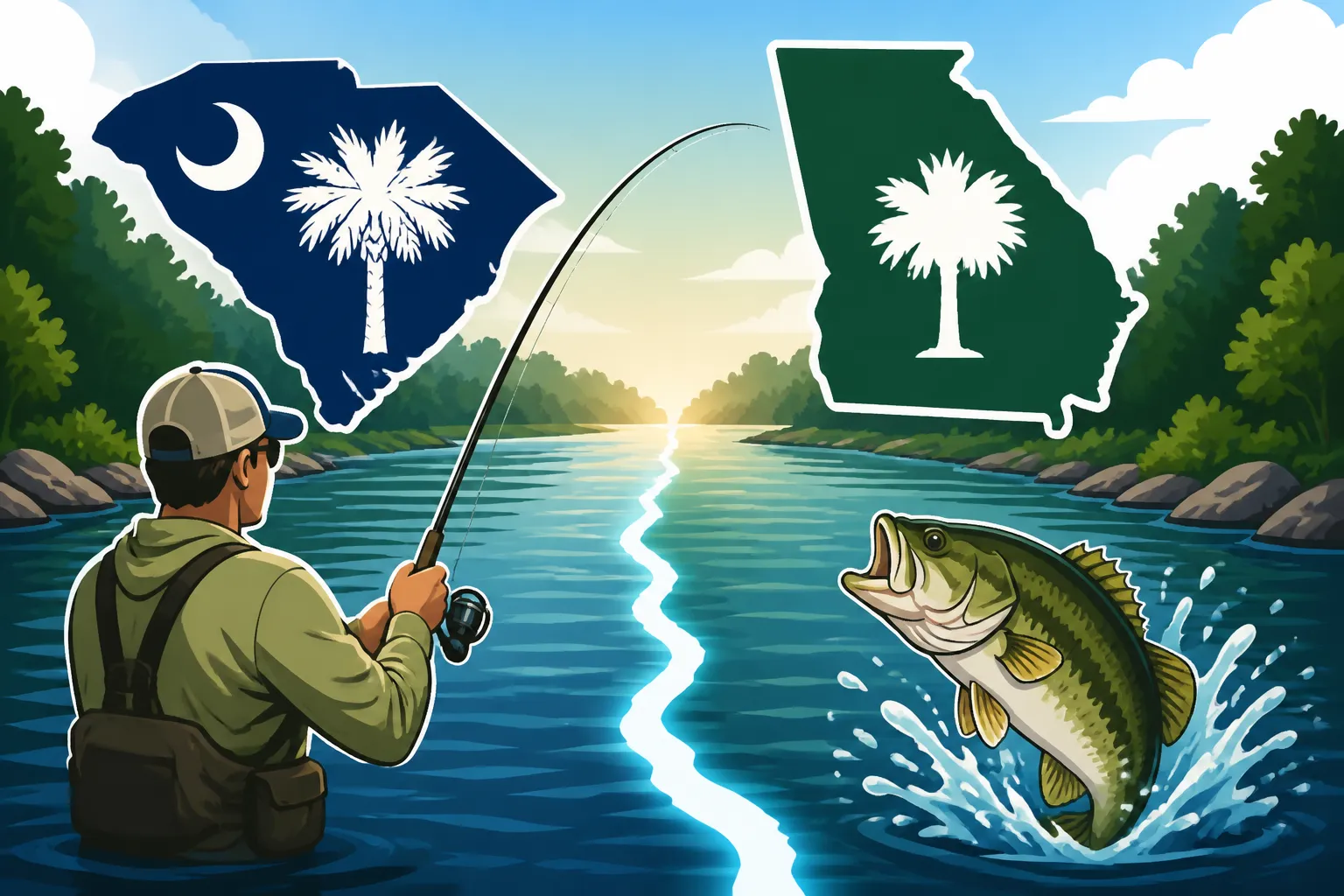
For the Savannah River, the agreement between South Carolina and Georgia is quite generous and angler-friendly. Generally speaking, if you possess a valid resident or nonresident fishing license from either South Carolina or Georgia, you are legally permitted to fish anywhere on the main channel of the Savannah River, including its impoundments (like Lake Thurmond, Lake Russell, and Lake Hartwell) and tributaries that are considered "border waters."
This means if you're a resident of South Carolina with a South Carolina Freshwater Fishing License, you can confidently cast your line on the Georgia side of the Savannah River without needing to buy a Georgia license. The same applies to Georgia residents fishing on the South Carolina side. This significantly simplifies planning, especially for those who live near the border or travel frequently between the two states to fish. You can cast your line in the deeper channels, near the banks, or around islands, as long as you're within the recognized border water zones. However, always remember that while your license is reciprocated, the fishing regulations themselves (like bag limits, size limits, and gear restrictions) typically default to the state in which you are physically located or the most restrictive of the two states, especially if you step onto dry land that is clearly within one state's jurisdiction. This is a subtle but important distinction that we’ll dive into more deeply.
Navigating the Regulations: Which License Do You Need?
While the reciprocity agreement on the Savannah River is a huge convenience, it's not a blanket pass for every situation. Understanding the nuances of where these rules apply and how they interact with specific types of fishing is key to avoiding any unexpected citations. No one wants their peaceful day on the water interrupted by a conversation with a game warden about a technicality.
Freshwater vs. Saltwater Considerations
The Savannah River, while a continuous waterway, transitions from freshwater to brackish and then saltwater as it approaches the coast and flows into the Atlantic Ocean. The reciprocity agreement primarily applies to the freshwater portions of the river and its impoundments. This is a critical distinction that many anglers overlook.
For instance, if you're targeting largemouth bass or catfish up near Augusta or on Lake Thurmond, your single state license (SC or GA) is perfectly fine. These are clearly freshwater environments covered by the agreement. However, as you move downstream, especially closer to Savannah, Georgia, or Port Royal, South Carolina, where the river becomes tidal and brackish, and eventually fully saltwater, the reciprocity rules can become less clear or even cease to apply. Generally, once you enter waters that are distinctly tidal or saltwater, you will need the appropriate saltwater fishing license for the state whose waters you are fishing in.
It's wise to carry a saltwater license for the specific state you are physically fishing in once you hit the lower reaches of the Savannah River or any of its coastal estuaries. The boundaries aren't always marked with a giant sign, so err on the side of caution. For more information on license costs and types, you might want to read up on the nuances of South Carolina's Freshwater Fishing Regulations or Saltwater Fishing Rules in South Carolina. Knowing the specific regulations for the type of water you are fishing is just as important as having the right license.
Identifying the "Border Water" Zones
So, where exactly are these magical "border water" zones on the Savannah River where reciprocity applies? The agreement covers the mainstem of the Savannah River from the confluence of the Tugaloo and Seneca rivers (which form Lake Hartwell) all the way downstream to the mouth of the river at the Atlantic Ocean. This includes all the major impoundments formed by the river: Lake Hartwell, Lake Richard B. Russell, and Lake Strom Thurmond (also known as Clarks Hill Lake).
This means that whether you're fishing the deep waters of Lake Hartwell, casting near the rocky points on Lake Russell, or exploring the vast expanses of Lake Thurmond, your valid South Carolina or Georgia freshwater license covers you across the entire lake. The same goes for the free-flowing sections of the river between these lakes.
However, once you venture into specific tributaries or creeks that flow entirely within one state's boundaries and are not directly part of the mainstem flow or major impoundment, the reciprocity might not apply. For example, if you pull your boat into a creek on the Georgia side of Lake Thurmond that is clearly and exclusively Georgia water for its entire length, you might need a Georgia license, even if you have a valid South Carolina one. This can be tricky, and the general rule of thumb is: if you're in the main channel or a major impoundment, you're usually good with one state's license. If you're deep inside a smaller, isolated tributary, it’s best to verify or assume you need the license for the state that tributary is in. For more details on license requirements, check out a broader guide on Fishing License Requirements in South Carolina.
| Waterway Section | Reciprocity Applies? (SC or GA Freshwater License) | Notes |
|---|---|---|
| Lake Hartwell | Yes | Entire lake covered |
| Lake Richard B. Russell | Yes | Entire lake covered |
| Lake Strom Thurmond (Clarks Hill Lake) | Yes | Entire lake covered |
| Mainstem Savannah River (Free-flowing sections) | Yes | From upstream lakes to tidal influence |
| Tidal/Brackish Savannah River (Near coast) | No | Requires state-specific saltwater license for where you are fishing |
| Tributaries entirely within one state | Generally No | When in doubt, assume state-specific license required for that tributary |
What Happens if There's No Reciprocity?
If you find yourself in a situation where reciprocity doesn't apply – for example, you've ventured into a purely Georgia tributary from Lake Hartwell with only a South Carolina license, or you're fishing the lower, brackish sections of the river without the correct saltwater endorsement – you could face penalties.
Getting caught fishing without the proper license can result in a fine, which can range from a warning to a significant monetary penalty, and potentially even confiscation of your gear or catch. These fines are often hefty because they serve as a deterrent to encourage compliance with conservation efforts funded by license sales. It’s not just about the money; it’s about ensuring sustainable fisheries for everyone. You definitely don’t want to be dealing with the Penalties for Fishing Without a License in South Carolina.
In cases where reciprocity is ambiguous or absent, the safest and most stress-free option is often to purchase both a South Carolina and a Georgia license. Many anglers who frequently fish both sides of the border or explore various tributaries opt for this peace of mind, especially if they have annual licenses. While it might seem like an extra expense upfront, it saves you potential headaches and costs down the line. You can easily find information on South Carolina Nonresident Fishing License Guide if you're coming from out-of-state, or explore South Carolina Annual Fishing License Price Breakdown for resident options.
Practical Tips for Savannah River Anglers
Fishing on a border river offers incredible opportunities, but it also means staying a bit more vigilant about the rules. A little preparation and common sense can save you a lot of trouble and ensure your focus remains on catching fish, not worrying about legalities.
Always Carry Your License and ID
This might seem obvious, but you'd be surprised how many anglers forget to bring their physical license or a digital copy, especially if they're relying on a reciprocity agreement. A game warden can and will ask to see your license, and if you can't produce it, you could be in violation, even if you technically have one purchased.
Always carry your current, valid fishing license (either printed or easily accessible on your phone through an official app like Go Outdoors SC) along with a valid photo ID. This is especially important on border waters. The game wardens from either state have the authority to check licenses and enforce regulations within their jurisdiction on the shared waterway. They need to be able to verify who you are and that your license is legitimate. This is true whether you’re fishing from a boat, from the bank, or even from a pier that extends into the border waters. You can even learn about Buying a South Carolina Fishing License Online for convenience and peace of mind.
Stay Informed About Regulation Changes
Fishing regulations are not static; they change periodically based on scientific data, conservation needs, and public input. What was valid last year might have changed this year, especially regarding specific species limits or seasons. This is particularly relevant for species like Redfish or Striped Bass, which are managed carefully.
Before every fishing season, or even before a specific trip to a new area on the Savannah River, take a few minutes to check the latest regulations from both the South Carolina Department of Natural Resources (SCDNR) and the Georgia Department of Natural Resources (GADNR). Their websites are the best source for current information. Pay close attention to bag limits, size restrictions, and any seasonal closures for the species you intend to target. For instance, South Carolina Redfish Slot Limit Rules and Spotted Seatrout Size and Bag Limits in South Carolina are often updated to ensure healthy populations. These rules apply regardless of which state's license you hold.
When in Doubt, Get Both
Seriously, if you're ever unsure about a specific stretch of water, a peculiar tributary, or simply want to explore without any legal qualms, investing in both a South Carolina and a Georgia fishing license is the safest bet. The cost of a second license, especially if it's an annual one, is a small price to pay for absolute peace of mind and unrestricted access to the entire Savannah River system and its surrounding waters.
This is particularly relevant for non-residents or those who frequently travel to the border region. For example, a non-resident might find a South Carolina 14-Day Fishing License Options to be a good short-term solution for exploring, but if they plan multiple trips or want to fish extensively across the border, an annual license from both states might be more economical and less hassle in the long run. By holding both licenses, you eliminate any ambiguity and can simply focus on the joy of fishing, knowing you're fully compliant no matter where you cast your line.
Disclaimer
The information provided in this guide is for general informational purposes only and does not constitute legal advice. Fishing regulations can change, and it is always the angler's responsibility to verify the most current rules and licensing requirements with the South Carolina Department of Natural Resources (SCDNR) and the Georgia Department of Natural Resources (GADNR) before fishing.