Best Bait for Redfish in South Carolina’s Marsh Creeks
Trying to figure out what bait will actually get a redfish to bite in South Carolina's intricate marsh creeks can feel like solving a secret puzzle, especially when you're faced with so many options and the reds seem to turn up their noses at everything. Many anglers spend hours casting without a single strike, wondering if they're using the wrong bait or if the fish just aren't there. This guide is here to untangle that mystery, walking you through the very best bait choices – both live and artificial – that consistently entice redfish in the Lowcountry's unique creek systems, ensuring your next trip is a lot more productive and a lot less frustrating.
Why Bait Choice Matters for Redfish in Marsh Creeks
It's easy to think that if a fish is hungry, it'll eat anything, right? When it comes to redfish in South Carolina's marsh creeks, that couldn't be further from the truth. These fish are incredibly tuned into their environment, and what they're willing to strike often depends on a host of factors, from the tides to the time of year. Just tossing out any old bait and hoping for the best is a sure-fire way to end up with an empty cooler and a lot of questions.
The Finicky Nature of Marsh Creek Redfish
Redfish, often called "red drum" or simply "reds" by local anglers, are opportunistic feeders, but they're not dumb. They live in a rich ecosystem teeming with a variety of forage, meaning they can afford to be a bit picky. One day they might be hammering live shrimp, and the next they'll completely ignore them in favor of a mud minnow. Their diet is largely dictated by what's readily available and easy to catch in their specific environment, which, in the marsh creeks, can change with the seasons and even the tides.
Think about it from their perspective: they're constantly looking for an easy meal that expends minimal energy. A bait that looks natural, acts natural, and smells natural is far more appealing than something out of place or presented poorly. If you're using bait that doesn't mimic what they're regularly feeding on, or if it's too big, too small, or moving incorrectly, they'll simply pass it by. This is especially true in clearer waters where they have a better view of their prey. The key is understanding their typical diet and adapting your approach accordingly.
Matching the Hatch: What Redfish Are Already Eating
The concept of "matching the hatch" isn't just for fly fishermen; it's crucial for redfish anglers too. South Carolina's marsh creeks are dynamic environments, home to a diverse population of baitfish, crustaceans, and shellfish. Redfish in these areas are accustomed to preying on specific local delicacies. During certain times of the year, shrimp might be abundant, while at other times, mud minnows or fiddler crabs dominate the food chain.
Your best bet is to observe what the local ecosystem is offering. Are there schools of finger mullet skipping across the surface? Are fiddler crabs scurrying on the exposed mud banks at low tide? Is the water buzzing with small glass shrimp? These observations can give you invaluable clues as to what the redfish are actively foraging on. Using bait that imitates or is exactly what the redfish are currently eating will drastically increase your chances of a strike. It’s about presenting them with something they instinctively recognize as food, something that's part of their natural daily meal plan. For example, if you see juvenile mullet everywhere, a live finger mullet or a soft plastic lure designed to imitate one will likely outperform a shrimp imitation.
Top Live Baits for South Carolina Redfish
When it comes to consistently catching redfish in South Carolina's marsh creeks, nothing quite beats live bait. The natural movement, scent, and appearance of a live offering are often irresistible to a hungry redfish. These baits are the gold standard because they perfectly mimic the natural forage that redfish encounter daily.
Live Shrimp: The Redfish Candy
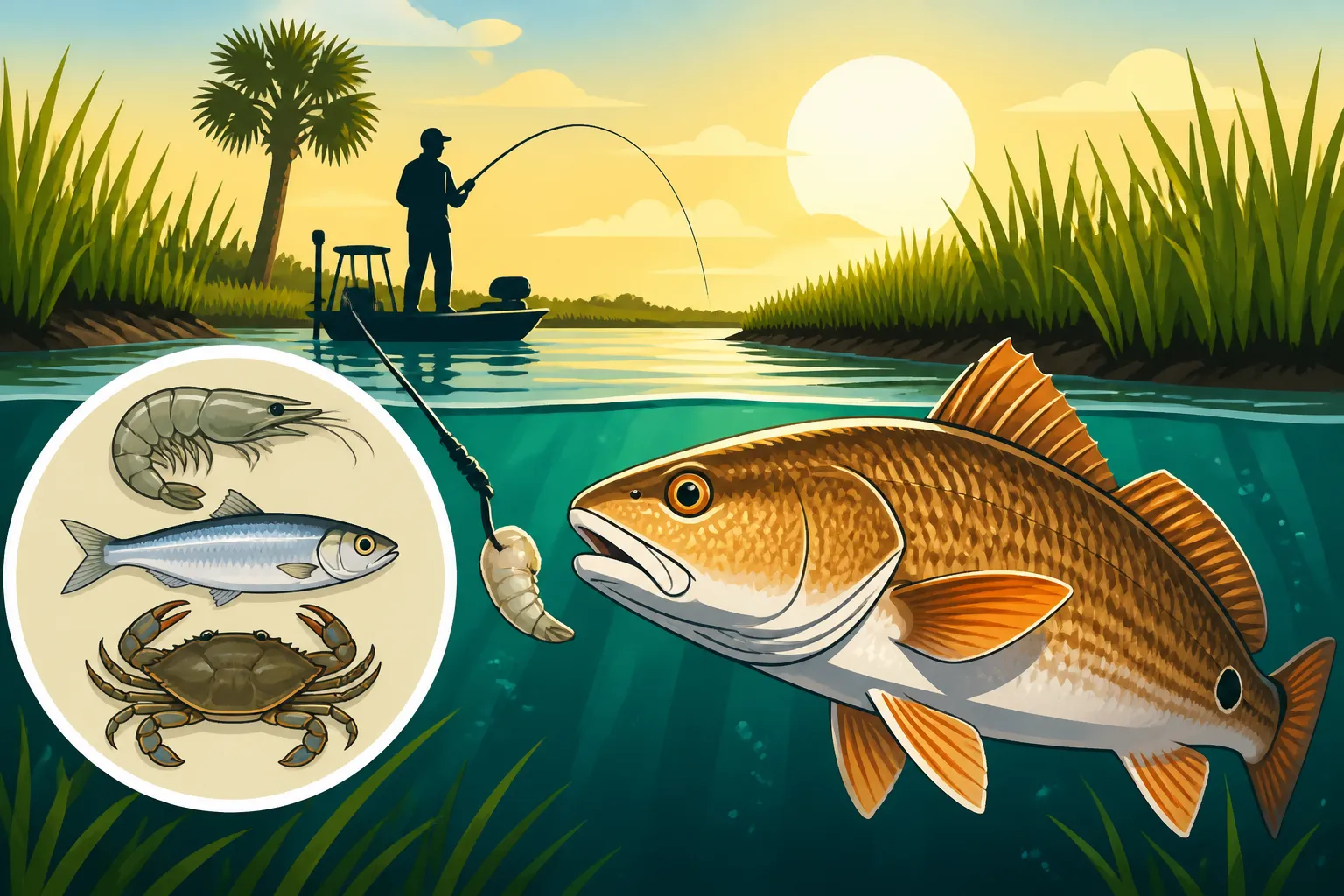
If there's one universal truth about redfish bait, it's that live shrimp are almost always a winner. They're often called "redfish candy" for a reason. Shrimp are a primary food source for redfish throughout their lives, from juvenile reds hiding in the grass to larger fish patrolling oyster rakes. Their natural erratic movements when hooked, coupled with their strong scent, make them incredibly effective.
You can rig live shrimp in several ways: under a popping cork, on a Carolina rig, or even free-lined with just a small split shot. The popping cork method is particularly popular in marsh creeks because the "pop" sound mimics a feeding fish or shrimp, drawing attention from distant reds. When fishing deeper channels or around oyster beds, a Carolina rig keeps the shrimp near the bottom, right where redfish often hunt. Remember to hook your shrimp carefully, either through the horn on the head or through the tail, to keep them lively for as long as possible. Always check your local tackle shops for the freshest live shrimp; it really makes a difference.
Mud Minnows and Finger Mullet: Hardy and Effective
While shrimp are a fantastic option, mud minnows (also known as killifish) and finger mullet (juvenile mullet) are incredibly hardy and often more readily available, especially if you know how to cast net. These baitfish are robust and can withstand a lot of abuse on the hook, making them excellent choices when you're fishing areas with strong currents or want a bait that will last longer.
Mud minnows are fantastic in cooler water, often out-producing shrimp when the water temperatures drop. They're sluggish and easy targets for redfish, especially around mud flats and creek edges. You can rig them through the lips or just in front of the dorsal fin on a simple jig head or a Carolina rig. Finger mullet are another redfish staple. They're fast swimmers and a common sight in the marsh, making them a natural choice. Rigged either through the lips or behind the dorsal fin, they present a lively profile. Both mud minnows and finger mullet are excellent choices for targeting bigger redfish, as smaller fish often shy away from their size. For a good selection of various sized hooks and weights for rigging these baits, check out the fishing section on Amazon.
Fiddler Crabs: A Lowcountry Delicacy
Fiddler crabs are a quintessential Lowcountry bait, and redfish absolutely adore them. If you've ever seen a redfish "tailing" in the shallow marsh grass at high tide, there's a good chance they're rooting around for fiddler crabs. These crabs are a natural and abundant food source in the marsh, and presenting one correctly can be incredibly effective, especially during higher tides when the reds push up into the grass to feed.
Catching fiddler crabs can be a fun activity in itself, often found scurrying on exposed mud banks and around oyster shells at low tide. You'll want to use a small, sharp hook, usually a size 1 or 2 circle hook, threaded carefully through the back of the crab's shell or its leg joint to keep it alive. Present them on a very light Carolina rig or even free-lined with no weight if you're fishing super shallow water. This allows the crab to scuttle naturally along the bottom. This method is particularly deadly when targeting "sight-fishing" opportunities where you can actively see redfish cruising or tailing. It's a very specific technique that pays off handsomely when reds are on the crab hunt.
Here's a quick look at some popular live baits:
| Bait Type | Best Use Case | Rigging Suggestion | Redfish Size Tendency | Availability | Notes |
|---|---|---|---|---|---|
| Live Shrimp | All-around, popping cork, bottom fishing | Popping cork, Carolina rig | All sizes | Tackle shops, nets | "Redfish candy," highly effective, but can be delicate. |
| Mud Minnows | Cooler water, strong currents, larger fish | Jig head, Carolina rig | Medium to Large | Tackle shops, nets | Hardy, good for colder months or when shrimp are scarce. |
| Finger Mullet | Targeting bigger reds, natural presentation | Jig head, Carolina rig | Medium to Large | Nets | Excellent for active, aggressive reds. |
| Fiddler Crabs | Tailing reds, shallow grass flats, high tide | Light Carolina rig, free-lined | All sizes | Manual collection | Best for sight-fishing in the grass, very natural. |
Artificial Lures That Fool Marsh Creek Redfish
While live bait is incredibly effective, sometimes you want the thrill of casting and working an artificial lure, or you simply can't get your hands on fresh live bait. The good news is that redfish are often aggressive enough to strike a well-presented artificial lure, and modern lure technology has come a long, long way. For serious anglers, keeping a variety of artificials on hand is key to adapting to different conditions and fish moods.
Soft Plastics: The Versatile Imitators
Soft plastics are, without a doubt, one of the most versatile and effective artificial lure categories for marsh creek redfish. They come in an endless array of shapes, sizes, and colors, allowing you to imitate everything from shrimp to small baitfish. The beauty of soft plastics lies in their ability to be fished slowly, mimicking injured bait, or worked aggressively to trigger reaction strikes.
My go-to soft plastics for marsh creek reds are typically 3-5 inch paddle tail or grub tails. Colors like "new penny," "chartreuse," "pearl," and "darker natural" tones are consistent producers. You'll want to rig them on a jig head, usually 1/8 to 1/4 ounce, depending on the depth and current. When fishing around oyster beds or docks, a weedless soft plastic setup (like a Texas rig with a worm hook) can prevent snags, allowing you to cast into prime redfish habitat without fear of losing your lure. Brands like Z-Man and Berkley Gulp! are incredibly popular among South Carolina anglers, and you can easily stock up on a variety of colors and styles on Amazon. When working these lures, a slow retrieve with occasional twitches often gets the most bites. Remember to experiment with retrieve speed and action until you find what the fish prefer on that particular day. For more tips on lure selection, check out Best Lures for Inshore Redfish Fishing.
Gold Spoons and Topwater Plugs: Making a Scene
Sometimes, you need to make some noise to get a redfish's attention, and that's where gold spoons and topwater plugs shine. These lures are designed to create a commotion, either through flash and wobble or by splashing across the surface, drawing reds in from a distance.
Gold spoons, especially weedless versions, are classic redfish killers. Their brilliant flash and irresistible wobble perfectly mimic a wounded baitfish, and they're fantastic for covering a lot of water. Cast them over shallow grass flats or along creek edges and retrieve them with a steady pace, adding a slight twitch now and then. The weedless design allows them to glide over oyster shells and grass without snagging, which is a huge advantage in the marsh. Topwater plugs, on the other hand, offer an adrenaline rush that few other fishing techniques can match. Nothing beats the explosive strike of a redfish blowing up on a topwater lure. "Walk-the-dog" style baits that sashay side-to-side are incredibly effective, particularly during low light conditions (dawn and dusk) or on overcast days. A bone-colored or silver topwater plug can produce incredible results when reds are actively feeding on the surface.
Jigs and Scented Baits: Adding an Edge
For those times when redfish are being particularly stubborn or you're fishing in murky water, jigs with added scent can give you the edge you need. The combination of an enticing profile and an irresistible smell can trigger bites when other lures fail.
Bucktail jigs, often tipped with a piece of shrimp or a soft plastic trailer, are incredibly effective for probing deeper holes and channels in the marsh. Their natural hair pulsates in the water, giving them a lifelike action. Experiment with different colors and weights to match the current conditions. Another excellent option, as mentioned with soft plastics, are those specifically designed with scent. Berkley Gulp! products are a prime example, soaked in a potent scent attractant that redfish can't seem to resist. Even when retrieved slowly or fished almost like dead bait on the bottom, their scent trail acts as a powerful beacon. If you're struggling to get a bite, adding a dab of a commercial fish attractant or a small piece of actual bait (like a shrimp tail) to your artificial lure can often make all the difference, providing that extra sensory appeal that finally coaxes a strike. These are readily available at your local tackle shop or even online on Amazon.
Understanding the Marsh Creek Environment and Redfish Behavior
Catching redfish isn't just about throwing the right bait; it's about understanding where and when to present it. South Carolina's marsh creeks are intricate systems, and success often hinges on knowing how redfish relate to the tides, current, and various types of structure found within these dynamic habitats. Learning to read the water and predict redfish movements will significantly elevate your game.
Reading the Tides and Current for Bait Presentation
Tides are the lifeblood of marsh creek fishing in South Carolina. They dictate water levels, current flow, and where bait and redfish will be concentrated. Redfish are highly influenced by tidal movements, often using the incoming and outgoing tides to their advantage for feeding. Understanding the tide cycle is paramount to successful bait presentation. You can learn more about this by reading Does Tide Timing Matter for South Carolina Redfish?.
- Incoming Tide: As the tide rises, it brings in cooler, cleaner water and new bait into the creeks and over the grass flats. Redfish will often push up into these shallower areas, sometimes with their tails "tailing" out of the water, rooting for crabs and other crustaceans. This is an excellent time for sight fishing with lighter baits like fiddler crabs or weedless soft plastics. The moving water also creates current breaks where redfish will ambush unsuspecting prey.
- Outgoing Tide: As the tide falls, water recedes from the grass flats, pushing baitfish and shrimp out of hiding and into the deeper channels and creek mouths. This concentrates the redfish, making them easier to target. Focus your efforts on choke points, oyster bars, and deeper pockets where bait will be flushed out. A live shrimp under a popping cork or a Carolina-rigged mud minnow can be deadly during this phase. Understanding the nuances of a falling tide can be a game-changer; for instance, learn how to refine your strategy with How to Fish an Incoming Tide for Redfish.
Targeting Structure: Docks, Oyster Beds, and Grass Lines
Redfish are masters of using structure for ambush points and protection. In the marsh creeks, this structure can take many forms, from natural oyster beds to man-made docks and seawalls. Knowing where these fish hold can make all the difference, regardless of your bait choice.
- Oyster Beds: These are redfish magnets. Oyster shells provide habitat for countless small crabs, shrimp, and baitfish, creating a natural buffet. Redfish will cruise along the edges of oyster beds, waiting to ambush prey. Fish your baits very close to the edges of these beds, but be prepared for snags. Weedless lures or tough live baits like mud minnows are excellent choices here.
- Docks and Pilings: Man-made structures like docks, pilings, and bridge supports offer shade, cover, and a substrate for barnacles and other growth that attract bait. Redfish will often hold in the shadows, darting out to strike passing prey. Cast your bait as close to the pilings as possible, letting it sink naturally. A light jig head with a soft plastic or a free-lined live shrimp works wonders.
- Grass Lines and Potholes: The extensive Spartina marsh grass that defines South Carolina's coast is prime redfish territory. Reds will hide along the edges of grass lines, in small cuts, and especially in "potholes" – deeper depressions within the grass flats. These areas concentrate bait and offer ambush opportunities. Use weedless baits that can be retrieved through the grass without fouling, focusing on casting into the potholes or along the grass edges. These are often considered some of the Best Inshore Fishing Spots Along the South Carolina Coast.
Ethical Considerations: Catch and Release for Future Fishing
While securing the best bait for redfish is about catching fish, it's equally important to consider the future of the fishery. Redfish are a prized sportfish in South Carolina, and practicing responsible catch and release is crucial to maintaining healthy populations for generations to come. This is especially relevant when you're targeting those slot-sized fish that are often the most aggressive biters.
If you plan to release your catch, consider using circle hooks with live bait. Circle hooks are designed to hook fish in the corner of the mouth, significantly reducing gut-hooking and increasing the fish's survival rate. Minimize handling time, keep the fish in the water as much as possible, and use a dehooking tool for easy release. Always be aware of current regulations regarding South Carolina Redfish Slot Limit 18 to 25 Inches and South Carolina Redfish Daily Bag Limit Per Person, as these rules are in place to protect the fishery. By being mindful of your impact and practicing good angling ethics, you're contributing to the sustainability of South Carolina's incredible redfish population. Understanding these regulations is key, as highlighted in Current Redfish Regulations for Coastal Waters.
Disclaimer
This article is for general informational purposes only and does not constitute professional advice. Laws, prices and regulations vary by location and change over time. Consult a qualified professional for guidance on your specific situation.