How to Identify a Redeye Bass
It can be incredibly frustrating to reel in a beautiful bass in South Carolina, only to stare at it, scratching your head, wondering exactly what kind of bass it is. With several black bass species calling our waters home, it’s easy to get them mixed up, especially when you’re trying to understand local regulations or just brag about your catch accurately. This guide is here to cut through that confusion, giving you all the nitty-gritty details you need to confidently identify a redeye bass the next time one strikes your line.
The Basics: What is a Redeye Bass Anyway?
Let's face it, when you're out on the water, especially in the beautiful, diverse waterways of South Carolina, it feels like every other fish is trying to trick you. Bass fishing is no exception, and sometimes, even experienced anglers can pause, unsure of exactly which black bass species they’ve just landed. The redeye bass is one of those species that often gets folks stumped, frequently mistaken for its more famous cousins like the largemouth or even the smallmouth. But once you know what to look for, its unique characteristics truly stand out.
Redeye vs. Other Bass in South Carolina: A Common Mix-Up
The confusion is totally understandable. Many of our South Carolina rivers and streams hold multiple bass species, and they can sometimes even share similar habits or territories, at least for part of the year. You might catch a fish that looks like a smallmouth, but its color is a bit off, or a bass that seems like a largemouth but is much smaller and feistier. That's often when a redeye bass enters the picture, silently causing a bit of an identity crisis on your boat or the bank.
One of the biggest frustrations anglers face is when they know they’ve caught something different, but just can't quite put their finger on it. This misidentification isn't just about bragging rights; it can sometimes be important for understanding specific regulations, especially if there are size or creel limits that vary by species. We want you to feel confident, not confused, so let’s get into the specifics that will help you distinguish this feisty fish from the others. For a broader overview of what swims in our state, check out South Carolina Fish Species: A Complete Guide to What's in the Water.
General Appearance and Size Expectations
The redeye bass, often referred to as a Coosa bass in some circles due to its native range, is generally a more streamlined, torpedo-shaped fish compared to the chunkier largemouth. They typically don't grow as large as their famous cousins, which is one of the first clues you might get. While a trophy largemouth can push into the double digits, a big redeye bass in South Carolina is usually in the 1-to-2-pound range, with anything over 3 pounds considered a truly impressive catch. They rarely exceed 5 pounds.
Their coloration can vary quite a bit depending on the clarity of the water and their specific environment. Generally, they exhibit a darker back, often a deep olive green or brownish hue, fading to lighter sides with mottled or irregular dark blotches that can sometimes form faint vertical bars. The belly is usually white or cream-colored. This subtle beauty makes them a joy to catch, but their size often leads to them being underestimated.
Key Physical Characteristics to Look For
When you've got a bass in your hands and you're trying to figure out if it's a redeye, you need to become a detective. Forget the general impression for a moment and zoom in on a few critical features. These aren't just subtle differences; they are the definitive markers that will help you nail down the identification, every single time. It's like learning the secret handshake of the fish world!
The Distinctive Reddish Eye
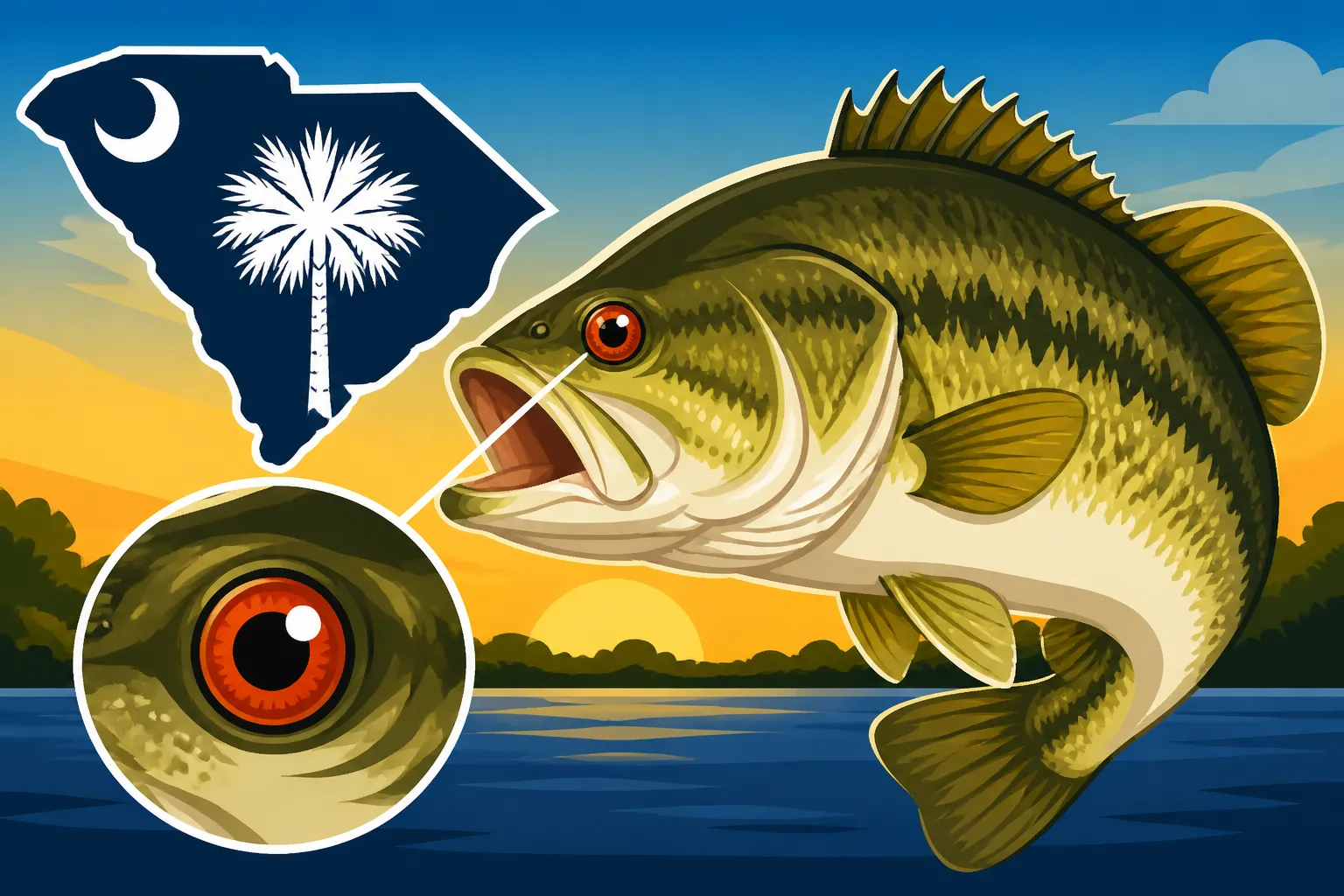
Alright, let's start with the most obvious clue, the one that gives the redeye bass its name: its eye. While not always a shocking, vibrant crimson, the eye of a redeye bass typically has a noticeable reddish or orangish tint, especially on the upper half of the iris. It's often subtle, sometimes appearing more of a burnt orange or even a reddish-brown, but it's almost always there. This isn't just a trick of the light; it's a consistent feature.
Now, here's the kicker and where some confusion can sneak in: other bass species, particularly smallmouth bass, can sometimes exhibit a reddish hue in their eyes, too! So, while the red eye is a strong indicator, it's not the only thing you should look for. Think of it as the first piece of the puzzle, a strong hint that you're on the right track. Always combine this observation with other physical traits to be absolutely certain.
Dorsal Fin Separation and Spotting
Next, let's turn our attention to the fins, specifically the dorsal fin along its back. The dorsal fin on a redeye bass is deeply notched, giving the impression of two separate fins, but they are still connected. It's not as completely divided as you might see on a white bass or a striper, but it's a much more pronounced separation than on a largemouth bass, which has a relatively shallow notch.
Beyond the shape, look closely at the fins themselves. Redeye bass often have distinct dark spots or blotches on their dorsal, caudal (tail), and anal fins, giving them a somewhat speckled appearance. This fin spotting is a pretty reliable identifier, especially when combined with the other features we're discussing. You might notice these spots are more prominent on fish caught from clear, rocky streams.
Jaw Length and Mouth Position
This is a critical identifier for any black bass species, and the redeye is no exception. Gently close the fish's mouth and observe where the end of its upper jaw (the maxilla) extends in relation to its eye. On a redeye bass, the jaw typically does not extend past the back edge of its eye. It usually aligns roughly with the middle of the eye or just slightly behind the pupil, but almost never past the rear orbit of the eye itself.
Compare this to a largemouth bass, whose jaw famously extends well past the back of its eye. This is one of the most reliable ways to differentiate it from a largemouth right off the bat. The mouth of a redeye is also relatively smaller and less cavernous than that of a largemouth, fitting its preference for smaller prey items in riverine environments.
Scale Patterns and Dark Patches
Now, let's get up close and personal with the body of the fish. Look at the scales and any markings below the lateral line, which is that prominent line running down the side of the fish. A key characteristic of the redeye bass is the presence of distinct, individual dark scales, often arranged in rows below the lateral line, which can give the appearance of horizontal streaks or subtle diamond shapes. This isn't always super obvious, but it's there.
Another tell-tale sign, especially on younger or actively feeding redeyes, are the patches of dark pigmentation on the cheeks and operculum (gill plate). These can sometimes appear as faint smudges or spots. Also, unlike some other bass species that have a prominent dark lateral stripe or a series of distinct dark blotches along the side, the redeye's markings tend to be more irregular or mottled. They might have vague vertical bars, but not a strong, continuous stripe like a smallmouth sometimes displays.
Habitat and Behavior Clues
It’s not just about what a fish looks like; where you find it and how it behaves can give you huge clues about its identity. Think of it as fish forensics – the crime scene (their habitat) tells you a lot about the perpetrator (the species). Knowing the typical hangouts and mannerisms of a redeye bass in South Carolina can confirm what your eyes are telling you.
Preferred Waters and Locations in South Carolina
Redeye bass are true connoisseurs of specific aquatic real estate. Unlike largemouth bass that thrive in warm, often murkier waters with abundant submerged vegetation and structure, redeye bass prefer cooler, clearer, and typically rockier stream and river environments. They are often found in the headwaters, tributary streams, and upper sections of rivers where the current is more noticeable and the water quality is generally higher. Think about those crystal-clear, fast-flowing creeks you might find in the foothills.
In South Carolina, this means you're most likely to encounter redeye bass in the Piedmont and Upstate regions, especially in the rocky, flowing waters of rivers and streams like the Chauga, Chattooga, and Cheohee, or even some of the upper reaches of the Broad and Saluda River systems. If you're fishing in a warm, slow-moving lake with lots of lily pads, it's highly unlikely you've caught a redeye. They absolutely thrive in environments that mimic their ancestral mountain stream homes. If you're exploring these specific regions, you might want to read Where to Catch Redeye Bass in South Carolina's Mountain Streams for more focused advice.
Behavior and Feeding Habits
Redeye bass are known for being incredibly aggressive and hard-fighting for their size. If you hook into a fish that's pulling like crazy, making strong runs and trying to get into cover, but isn't quite the size of a big largemouth, you might be dealing with a redeye. They are opportunistic feeders, preying on insects, crayfish, and smaller baitfish. Their preference for flowing water means they are often found lurking behind rocks, in eddies, or along current seams, waiting to ambush prey.
They tend to strike lures with a real vengeance, often surprising anglers with their ferocity. Many anglers who pursue Redeye Bass Fishing Tips for Upstate South Carolina find that small crankbaits, jigs, and even topwater lures can be incredibly effective, especially when worked around rocky structure and current breaks. Observing their behavior – how they strike, where they hold in the current – can often provide that final confirmation when you're teetering between two similar species.
Redeye Bass vs. Common Look-Alikes (The Nitty-Gritty Comparisons)
This is where rubber meets the road. While all the individual characteristics are important, putting them into context by directly comparing the redeye to other bass species is the ultimate way to solidify your identification skills. It's often easier to see what something isn't to figure out what it is. We'll tackle the most common identity crises here.
Redeye Bass vs. Largemouth Bass
The largemouth bass is probably the most commonly caught and recognized bass in South Carolina, so it's a natural point of comparison. Distinguishing a redeye from a largemouth is usually the easiest of the comparisons once you know the main differences.
The single biggest differentiator is the jaw. Remember, a redeye's jaw does not extend past the back of its eye. A largemouth bass, true to its name, has a jaw that extends noticeably past the back edge of its eye. Think of it as the ultimate "big mouth" indicator.
Secondly, consider the dorsal fin. The largemouth has a dorsal fin with a much shallower notch, appearing more like a single, continuous fin. The redeye, as we discussed, has a deeply notched dorsal fin, almost looking like two separate fins but still connected at the base. Finally, largemouths often have a distinct, solid dark lateral stripe down their side, which is usually absent or much more broken and mottled on a redeye. If you want to dive deeper into our state's most popular bass, check out Largemouth Bass Fishing in South Carolina: The Complete Guide.
Redeye Bass vs. Smallmouth Bass
This is where it can get a little trickier, as both redeye and smallmouth bass share some similarities, including a preference for cooler, clearer water and a generally streamlined body shape. Plus, smallmouths can also have a reddish tint to their eyes, making the "redeye" moniker less unique in this specific comparison.
The primary difference lies in the scales on the cheek. Smallmouth bass generally have no scales or very few scales on the cheek below their eye, appearing smooth. Redeye bass, however, will have fully scaled cheeks. This is a very reliable, though sometimes subtle, distinction. Another key is the coloration: smallmouth bass often have distinct vertical bars on their sides, which are usually more pronounced and regular than any vague barring you might see on a redeye. Smallmouths also tend to have a more bronze or brown overall coloration compared to the redeye's often greener or darker olive tones. If you're fishing in the Upstate, you might also be interested in Smallmouth Bass Fishing in South Carolina's Upstate Rivers.
Redeye Bass vs. Spotted Bass
The spotted bass is often the most confusing look-alike for the redeye bass, especially since their ranges can overlap, and they share many physical characteristics. They even have similar habitat preferences in some areas. This is where you really need to look for specific details. As an Amazon associate, I find that a good quality magnifying glass or even a phone camera with a zoom feature can be surprisingly helpful for examining these tiny details safely while you hold the fish.
The most definitive characteristic for distinguishing a spotted bass from a redeye is the patch of teeth on the tongue. If you can gently open the fish's mouth and feel its tongue, a spotted bass will almost always have a small, rough patch of teeth right in the middle of its tongue. A redeye bass, on the other hand, will have a smooth tongue with no tooth patch. This is a highly reliable identifier.
Additionally, spotted bass often have more distinct rows of spots or small blotches below the lateral line that can appear as pronounced horizontal streaks. While redeyes can have some marking, they are usually less defined. Also, the spotted bass typically has a jaw that extends slightly beyond the middle of the eye but not usually past the back edge, placing it somewhere between a largemouth and a redeye in terms of jaw length. For a more detailed breakdown, check out Redeye Bass vs Spotted Bass: Key Differences or Spotted Bass Identification and Where to Find Them in South Carolina.
To summarize these key distinctions, here’s a handy comparison table:
| Feature | Redeye Bass | Largemouth Bass | Smallmouth Bass | Spotted Bass |
|---|---|---|---|---|
| Eye Color | Often reddish/orangish tint | Typically dark, rarely reddish | Can have reddish tint | Typically dark, rarely reddish |
| Jaw Extension | Does NOT extend past back of eye | Extends WELL past back of eye | Does NOT extend past back of eye | Extends to middle or slightly behind eye |
| Dorsal Fin Notch | Deeply notched | Shallow notch | Deeply notched | Deeply notched |
| Cheek Scales | Fully scaled | Fully scaled | Few to no scales, appears smooth | Fully scaled |
| Tongue Patch | Smooth tongue, NO tooth patch | Smooth tongue, NO tooth patch | Smooth tongue, NO tooth patch | Rough, distinct tooth patch on tongue |
| Body Markings | Irregular dark blotches, faint bars | Prominent dark lateral stripe | Vertical bars, bronze/brown coloration | Rows of distinct spots below lateral line |
| Preferred Habitat | Cool, clear, rocky streams/rivers | Warm, murky lakes, heavy vegetation | Cool, clear, rocky lakes/rivers | Similar to redeye, sometimes deeper lakes |
Armed with this information, you should be able to confidently identify a redeye bass the next time you encounter one in South Carolina's waters. It's a fantastic, feisty fish, and knowing exactly what you've caught adds another layer of appreciation to your angling adventures. Remember, responsible handling, especially using tools like lip grippers or a good set of fishing pliers you can find on Amazon, will ensure these beautiful fish swim away healthy for future catches. Always stay updated with South Carolina's Freshwater Fishing Regulations to ensure you're fishing legally and sustainably.
Disclaimer
This article is for general informational purposes only and does not constitute professional advice. Laws, prices and regulations vary by location and change over time. Consult a qualified professional for guidance on your specific situation.