Best Lures for Largemouth Bass in Muddy Water
There's nothing quite as frustrating for a bass angler as showing up at your favorite South Carolina lake or river only to find the water churned up, murky, and looking like chocolate milk. It can feel like your chances of catching anything just washed away with the last rainstorm, leaving you wondering if you should even bother. But don't throw in the towel just yet! This guide is here to equip you with the knowledge and confidence to tackle muddy water, turning a seemingly hopeless situation into an opportunity for some serious largemouth bass action with the right lures.
The Murky Truth: Why Muddy Water Trips Up So Many Bass Anglers
We've all been there. You drive for an hour, launch your boat, full of anticipation, only to see that the clear, inviting water you remembered from your last trip has turned into a cloudy mess. This sudden change can really deflate your spirits and make you question your entire game plan. It’s a common experience for anglers in South Carolina, especially after heavy rains or significant boat traffic.
The Visibility Challenge and Angler Frustration
The most obvious impact of muddy water is on visibility. When the water is clear, bass are primarily sight feeders. They can spot your lure from a distance, track its movement, and decide to strike. In muddy water, their vision is severely limited. It's like trying to find a needle in a haystack, or in this case, a lure in a liquid brown cloud. This reduced visibility not only makes it harder for the fish to see your presentation, but it also makes it harder for us to see any subtle cues, like bass busting on the surface or flicking their tails in the shallows. We're left guessing, and that uncertainty can be incredibly frustrating. Many anglers simply give up, assuming the fish aren't biting, and pack up their gear. But that's where they miss out.
Hidden Advantages of Fishing Dirty Water
While muddy water presents challenges, it also offers some fantastic hidden advantages for the savvy angler. First, it often means less fishing pressure. Many casual anglers avoid muddy conditions, leaving more prime spots and less disturbed fish for those willing to adapt. Second, bass, like many other fish, often feel more secure and less wary in stained or muddy water. The reduced visibility acts as a natural camouflage, allowing them to move into shallower, more accessible areas they might avoid in clear conditions. This can mean bigger bass moving closer to cover or shoreline structures, offering you shots at fish that are usually harder to reach. It’s all about understanding that while their primary sense (sight) is diminished, their other senses become super-tuned.
Understanding Largemouth Behavior When the Water Turns Soupy
To truly master muddy water fishing, you need to think like a largemouth bass. When their world goes from clear to cloudy, they don't just stop eating. They adapt. Their survival instincts kick in, and they rely on other ways to find their next meal and navigate their environment.
Reliance on Vibration and Scent
In conditions where they can't see well, largemouth bass switch gears and lean heavily on their other highly developed senses: their lateral line and their sense of smell. The lateral line is a sensory organ that runs along the sides of the fish, detecting vibrations and pressure changes in the water. This is how they "feel" objects and movements around them, even in complete darkness or thick mud. A lure that displaces a lot of water and creates strong vibrations becomes a beacon in the murk. Similarly, a bass's sense of smell is incredibly acute. They can detect chemical cues and scents in the water from a surprising distance. If your lure emits a strong natural or artificial scent, it creates a "scent trail" that bass can follow, much like a bloodhound tracking a scent on land. This is why having scent on your lures, whether it's infused into the plastic or added as a spray, becomes absolutely crucial.
Why Shallow Water Becomes a Prime Target
Muddy water often warms up faster and holds more oxygen near the surface, especially after rain events. This can draw baitfish into the shallows, and where the bait goes, the bass follow. Furthermore, the diminished light penetration in muddy water means that bass can comfortably move into very shallow areas, right up against cover like flooded timber, grass lines, docks, or even under lily pads. They feel safer in these areas because they're harder to spot by predators (and anglers!) when the water is dirty. These shallow zones, especially those with structure or cover, become high-percentage targets. Think about fishing the margins of Lake Marion or the shallow coves of Lake Murray after a good rain – those areas that might be too exposed on a sunny, clear day can be goldmines when the water turns murky. For more on how bass adjust to environmental changes, check out Bass Fishing Techniques After a Cold Front.
Your Arsenal: Top Lure Choices for South Carolina's Muddy Bass
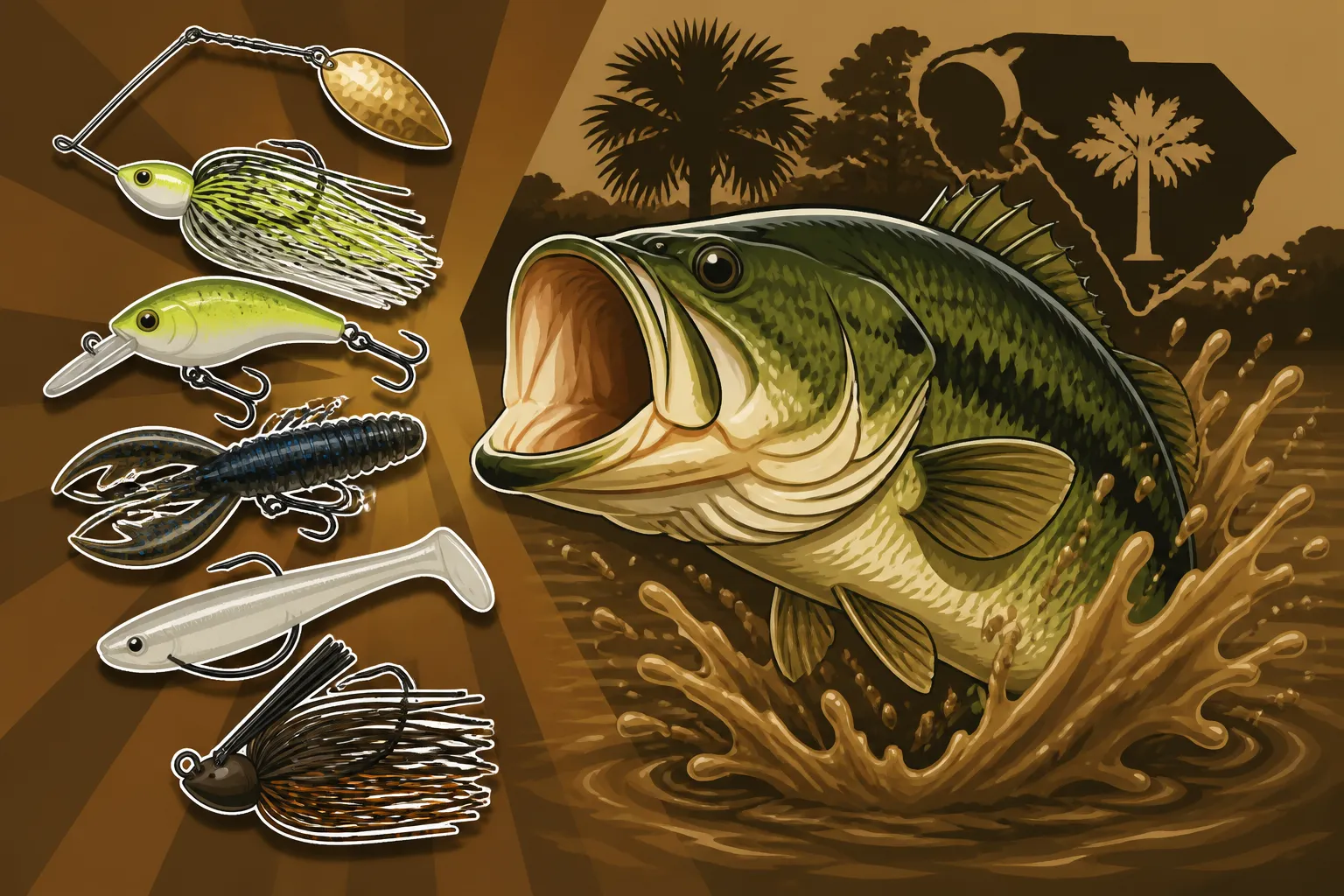
Now that we understand why and how bass feed in dirty water, let's talk about the tools that will help you capitalize on these conditions. The key is to select lures that excel at creating vibration, presenting a noticeable profile, and offering high-contrast colors.
Thumping Spinnerbaits: Flash and Feel
Spinnerbaits are hands-down one of the best muddy water lures, and they should be the first thing you tie on. They combine two critical elements: flash and vibration. The spinning blades (Colorado or Indiana styles are generally preferred for maximum thump in muddy water) create a tremendous amount of turbulence and vibration that bass can easily detect with their lateral line. Plus, the flash, even in low light, can still catch a fish's eye if it gets close enough.
- Blade Selection: Opt for larger, rounder blades like Colorado blades. They rotate slower and displace more water, sending out stronger vibrations. Tandem Colorado or a Colorado/Indiana combination works wonders.
- Color: Bright, contrasting colors for the skirt are essential. Chartreuse, white, black/blue, or combinations thereof are classic dirty water choices. Think about what will stand out against a brown background.
- Weight and Size: Don't be afraid to go a bit heavier (1/2 oz to 3/4 oz) to ensure you're getting deep enough and creating a substantial profile.
- Retrieval: A slow, steady retrieve is usually best, allowing the blades to thump and the bass time to find it. But don't be afraid to add a few pauses or twitches to trigger a reaction strike. You can find a fantastic array of spinnerbaits with various blade and skirt combinations on Amazon.
The Erratic Action of Chatterbaits
Chatterbaits, sometimes called bladed jigs, have exploded in popularity for good reason, and they absolutely shine in muddy water. The unique hexagonal blade attached to the jig head creates an intense, erratic vibration and a side-to-side wobble that screams "injured baitfish" to a nearby bass. This action is incredibly effective at drawing strikes when fish aren't relying on sight.
- Vibration is Key: The chatterbait's signature thumping vibration is its superpower in murky conditions.
- Trailer Choice: Adding a soft plastic trailer (like a grub, swimbait, or craw) not only increases the lure's profile but also adds more flutter and movement. Choose a trailer color that contrasts with the skirt, like a black and blue jig with a bright chartreuse trailer.
- Retrieval: A steady retrieve is often all it takes, but experimenting with short rips and pauses can often entice a strike from a hesitant bass.
- Color: Like spinnerbaits, focus on high-contrast colors such as black/blue, chartreuse, white, or combinations that include orange or red.
Rattle and Deflect: Squarebill Crankbaits
Squarebill crankbaits are another heavy hitter for dirty water. Their wide, square bills cause them to deflect aggressively off underwater cover (rocks, stumps, laydowns), creating an erratic action and a loud rattling sound. This commotion is exactly what you want to generate when bass can't see your lure clearly.
- Deflection Power: The ability of a squarebill to bounce off cover without snagging is crucial. This sudden change in direction mimics fleeing prey and often triggers an instinctual strike.
- Rattles: Many squarebills come equipped with internal rattles, which are vital for attracting attention in low visibility. The louder, the better!
- Buoyancy: Look for models that float well at rest. This allows you to pause the retrieve when you hit cover, letting the lure back up before resuming, which can often draw a strike.
- Color: Bright, opaque colors work best. Chartreuse, fire tiger, red craw, and solid black are excellent choices. Many anglers stock up on these versatile crankbaits on Amazon. Consider reading How to Fish a Spinnerbait for Bass for more on crankbait comparisons.
Big Profile, Slow Fall: Jigs and Trailers
While more subtle than a spinnerbait or chatterbait, a bulky jig and soft plastic trailer can be incredibly effective in muddy water, especially when bass are tight to cover or sluggish. The key here is presenting a large, noticeable profile that displaces water, often enhanced with scent.
- Jig Type: A compact, weedless jig (like a flipping or pitching jig) is perfect for working through heavy cover.
- Trailer Selection: Choose a soft plastic craw, creature bait, or grub trailer that adds bulk and natural movement. The flapping claws or wiggling tails create subtle vibrations.
- Scent: This is where jigs truly excel in dirty water. Infuse your trailers with powerful scents, or add a scent gel/spray directly to the plastic. This creates an irresistible scent trail that bass can home in on.
- Presentation: Jigs are often best fished slowly, dragged or hopped along the bottom, or punched into dense cover. The slow fall of a bulky jig allows the bass ample time to detect it.
- Color: Black/blue, brown, or black/red combinations are favorites. These dark, opaque colors provide a strong silhouette against the murky background.
Scent-Infused Soft Plastics: The Subtle Approach
For those times when even the most vibrating lures aren't getting a bite, or when bass are extremely lethargic, scent-infused soft plastics can be a game-changer. These lures don't necessarily create massive vibrations, but their combination of scent, subtle movement, and a natural feel can convince a hesitant bass to strike.
- Worms and Creature Baits: Texas-rigged or Carolina-rigged soft plastic worms, creature baits, and craws are excellent choices. How to Rig a Texas-Rig Worm for Bass can give you more insights here. The movement of the plastic, even if subtle, combined with powerful scent, can be deadly.
- Color: Dark, opaque colors like black, blue, June bug, or even solid white or chartreuse are effective. The contrast is more important than mimicking natural bait colors.
- Scent Power: Choose plastics that are heavily infused with salt, fish attractants, or garlic scent. You can also add external scent gels. This is paramount for these lures in dirty water.
- Fishing Slow: These lures are almost always fished slowly, allowing the scent to disperse and giving bass time to find them. Pitch them into cover, let them soak, and work them painstakingly slow.
Here’s a quick overview of our top muddy water lures:
| Lure Type | Primary Attraction | Best Blade/Bill/Head | Key Features for Muddy Water | Preferred Colors |
|---|---|---|---|---|
| Spinnerbait | Vibration, Flash | Colorado blades | Max thump, flash from blades | Chartreuse, White, Black/Blue |
| Chatterbait | Erratic Vibration | Hexagonal blade | Intense, erratic thumping action | Black/Blue, Chartreuse, White/Orange |
| Squarebill | Rattle, Deflection | Wide, square bill | Loud rattles, aggressive deflections | Fire Tiger, Red Craw, Chartreuse |
| Jig & Trailer | Profile, Scent | Flipping/pitching | Bulky profile, slow fall, scent absorption | Black/Blue, Brown, Black/Red |
| Soft Plastics | Scent, Subtle Move | N/A (rigged) | Heavy scent, natural feel, slow presentation | Black, June Bug, Blue, Chartreuse |
Mastering the Retrieve and Other Key Tips for Muddy Conditions
Having the right lures is only half the battle. How you present them, where you cast them, and other small adjustments can make a monumental difference in your success when the water is muddy.
Choosing the Right Color and Size
While we touched on color for each lure, it's worth reiterating the general principles for muddy water. Forget about trying to "match the hatch" with subtle baitfish patterns. In dirty water, bass aren't discerning much by sight. They need something that creates a stark contrast against the murky background.
- Opaque & Bright: Solid colors like chartreuse, white, orange, or reds really pop. Darker, opaque colors such as black, blue, or black-and-blue also create a strong silhouette that is easy for a bass to detect.
- Fluorescent Accents: Many lures incorporate fluorescent colors that can glow even in low light, adding another layer of visibility.
- Size Matters: Generally, a slightly larger profile can be beneficial in muddy water, as it displaces more water and presents a more substantial target for the bass's lateral line. Don't be afraid to size up your typical lure choices a bit.
Slowing Down Your Presentation
This is perhaps the most crucial adjustment you can make. When bass can't see your lure quickly, they need time to locate it with their other senses. A fast retrieve will often zip past them before they even know it's there.
- Steady and Slow: For spinnerbaits and chatterbaits, a slow, steady retrieve allows the blades to turn fully and create maximum vibration.
- Pauses and Contact: When fishing squarebills, slow down just enough so you can actively "feel" your lure hitting cover. The moment it deflects, give it a slight pause. For jigs and soft plastics, fish them painfully slow, dragging and hopping them on the bottom, allowing the scent to disperse and giving any bass in the vicinity ample time to investigate.
- Less is More: Sometimes, less action is more. A soft plastic worm dead-sticked in a likely looking spot might be more effective than frantic twitching. For more on slow presentations, consider How to Fish Deep Water From a Boat.
Targeting Key Structures Effectively
Even in muddy water, bass will still relate to structure and cover. The difference is that they will likely be much tighter to it. You need to be precise with your casts and understand where the fish are most likely to ambush prey.
- Shallow Cover: Focus intently on any shallow cover: submerged timber, rock piles, docks, boat ramps, fallen trees, brush piles, and grass lines. These areas offer both ambush points and protection.
- Transition Zones: Look for areas where clear water meets muddy water, often found near creek mouths or feeder streams after rain. These "mud lines" can concentrate baitfish and bass.
- Current Breaks: In rivers or areas with current, bass will seek out current breaks. Cast to the upstream side of cover, allowing the current to carry your lure into the strike zone.
- Targeting Banks: Don't overlook simply casting parallel to the bank, especially where there's any form of submerged grass or cover. Bass will often cruise these edges in muddy conditions. For specific locations, you might want to read Best Places for Bank Fishing on South Carolina Lakes.
- Noise and Scent First: Cast your lure a little past your target, allowing it to "announce" its presence with vibration and scent before it reaches the prime strike zone.
Muddy water fishing in South Carolina doesn't have to be a deterrent. By understanding how largemouth bass adapt and by choosing lures that appeal to their heightened senses of vibration and smell, you can turn a challenging day into a productive one. So next time the forecast calls for rain, get excited, because those murky waters might just hold your next trophy fish!
Disclaimer
This article is for general informational purposes only and does not constitute professional advice. Laws, prices and regulations vary by location and change over time. Consult a qualified professional for guidance on your specific situation.