Night Fishing Access Points Near Charleston
Trying to find those perfect fishing spots around Charleston after the sun dips below the horizon can feel like searching for a needle in a haystack. Many of us are stuck working during the day, or simply want to escape the scorching summer heat and the bustling daytime crowds. This guide is here to illuminate the best night fishing access points near Charleston, South Carolina, offering practical advice and crucial tips to make your nocturnal angling adventures successful and safe.
Why Night Fishing in Charleston is Worth the Effort
There's something uniquely magical about fishing under the stars. The world quiets down, the air cools, and a different set of challenges and rewards emerges. For many anglers in the Lowcountry, switching to a nighttime schedule isn't just a preference; it's a strategic move that can significantly improve their success rate and overall enjoyment.
Beating the Heat and the Crowds
Let's be honest, Charleston summers are legendary for their heat and humidity. Day fishing can be a sweaty, draining experience, especially when the sun is relentlessly beating down. But as evening arrives, the temperatures drop, a gentle breeze often picks up, and the whole experience becomes far more comfortable. This alone is a massive draw for many local anglers and visitors alike.
Beyond comfort, the crowds thin out dramatically after sunset. Public boat ramps, popular piers, and even some of the more well-known creeks can be absolute madhouses during the day, especially on weekends. At night, you'll find far less boat traffic, fewer kayakers, and more elbow room on the docks. This peaceful solitude allows you to truly focus on your fishing, without constantly worrying about tangling lines or navigating congested waterways. It’s an opportunity to connect with the water on a deeper, more personal level.
Targeting Nocturnal Species
Many of our favorite game fish in South Carolina become more active predators under the cover of darkness. Species that might be lethargic or shy during the bright daylight hours often come out to feed when the moon is high. This shift in behavior makes night fishing a prime time to target certain fish that are harder to entice during the day.
Think about redfish, spotted seatrout, and various drum species; they all capitalize on the low light conditions to ambush unsuspecting baitfish. Catfish, both freshwater and saltwater varieties, are renowned for their nocturnal feeding habits. Even some larger predatory species might venture into shallower waters at night, offering thrilling opportunities you might miss during the day. Understanding these nocturnal patterns is key to unlocking some truly epic fishing experiences.
Top Night Fishing Access Points Near Charleston
Charleston offers a fantastic array of fishing opportunities, and many of these spots remain accessible and productive after dark. Knowing where to go and what to expect can make all the difference between a frustrating night and a memorable one.
Public Piers and Docks
Piers are often the first choice for night anglers because they provide easy, well-lit access to deeper water without needing a boat. The lights on many public piers act as a beacon, attracting baitfish, which in turn draws in predatory species.
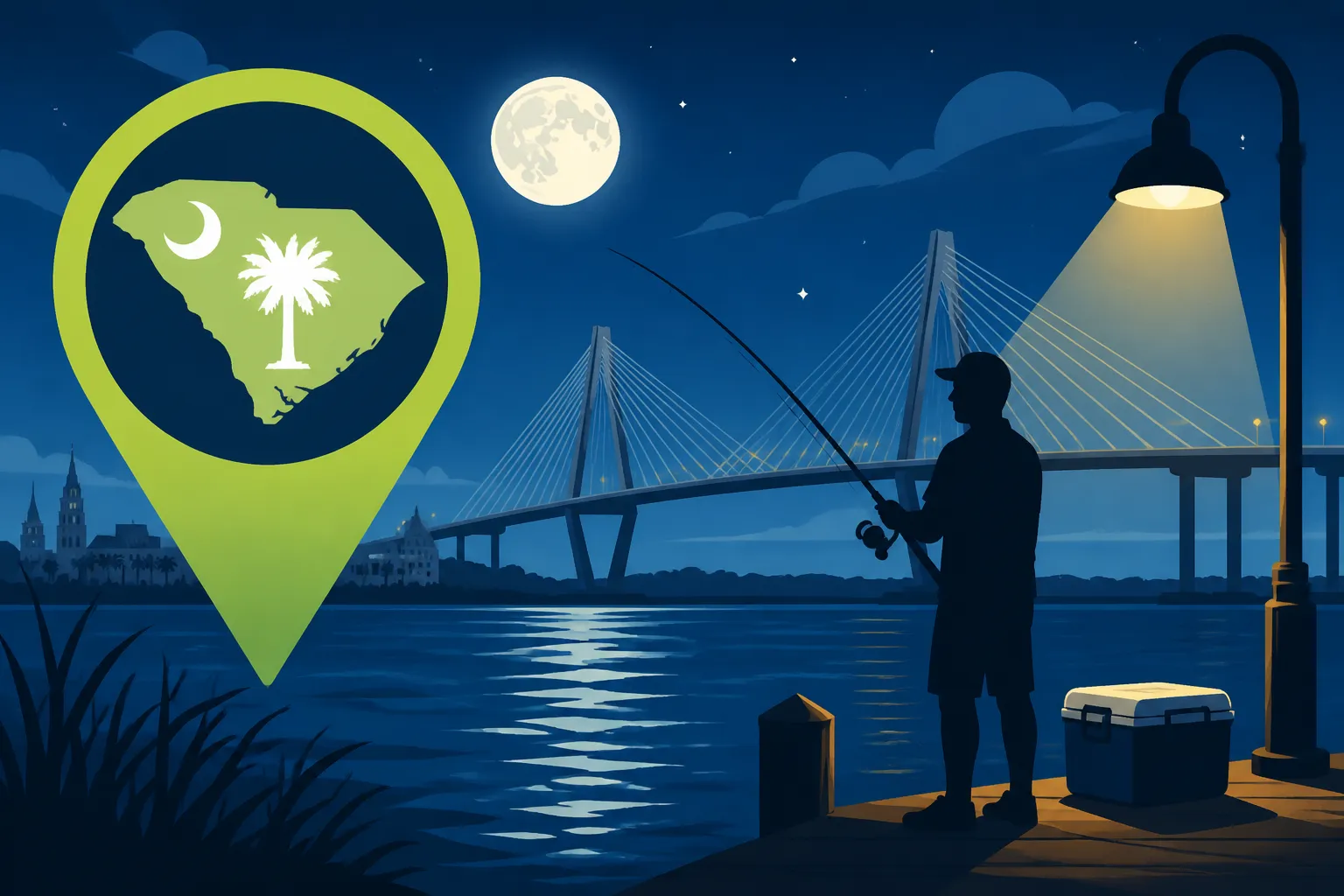
The Mount Pleasant Pier, located right under the Ravenel Bridge, is a fantastic option. It's open late, sometimes even 24 hours depending on the season, and is usually well-lit. The pier offers bait and tackle shops right there, along with restrooms. Anglers here often hook into spotted seatrout, redfish, flounder, and even smaller sharks at night. The currents can be strong, so be prepared with heavier tackle. Similarly, the Folly Beach Pier offers another excellent opportunity for coastal night fishing, with its long reach into the ocean and often vibrant nighttime activity, though its hours can vary. Remember that a fishing license is often covered when fishing from an officially licensed public pier, but always double-check the specifics with pier management or the South Carolina Department of Natural Resources (SCDNR). You can find more details on general requirements in a comprehensive South Carolina Fishing License Guide.
Public Boat Ramps with Night Access
For those with a boat, certain public boat ramps around Charleston offer 24/7 access, allowing you to launch well before dawn or stay out long after sunset. These ramps often put you in prime position to access productive creeks, channels, and marsh flats that are difficult to reach from shore.
The Wappoo Cut Boat Landing on James Island is a popular choice, providing direct access to the tidal waters of the Wappoo Cut, which connects the Stono River and Charleston Harbor. This area is a known hotbed for redfish and spotted seatrout, especially during moving tides at night. Another excellent option is the Remleys Point Boat Landing in Mount Pleasant, offering access to Shem Creek and the Cooper River. Both locations offer ample parking, but it's always a good idea to scout them during the day to familiarize yourself with the layout and any potential hazards you might encounter in the dark. For anglers planning a trip, exploring options through platforms like FishingBooker can reveal charter captains who specialize in night trips from these very ramps, providing an experienced hand for those less familiar with navigating Charleston's waterways at night.
Bridges and Causeways
Bridges and causeways, particularly those with strong artificial lighting, create their own unique ecosystems after dark. The lights attract plankton, which draws in baitfish, creating a concentrated feeding ground for larger predators. Fishing from or around these structures can be incredibly productive.
The Ben Sawyer Bridge connecting Mount Pleasant to Sullivan's Island offers bank fishing opportunities near its base, where the currents funnel baitfish. Further afield, smaller causeways and bridges over tidal creeks throughout the Lowcountry can be hidden gems. Always be mindful of traffic and posted restrictions when fishing from or near bridges. Safety is paramount, so wear reflective clothing, be aware of your surroundings, and never obstruct traffic. These spots are fantastic for targeting species like redfish, especially during outgoing tides when bait is flushed out from the marshes. Understanding does tide timing matter for South Carolina redfish can give you a significant edge here.
Essential Gear and Safety Tips for Night Fishing
Fishing in the dark requires a bit more preparation than your typical daytime excursion. Visibility is limited, hazards are harder to spot, and help might be further away. Taking the right gear and prioritizing safety are non-negotiable for a successful and enjoyable night on the water.
Lighting and Navigation
Adequate lighting is absolutely critical. A good quality headlamp with both a bright white light for rigging and a red light setting (which preserves your night vision) is essential. For boat anglers, ensure all navigation lights are functional and that you have a powerful spotlight for identifying markers, snags, or other boats. GPS devices or reliable mapping apps on your phone are vital for safe navigation, especially in complex marsh systems where all the creeks can look identical in the dark. Don't rely solely on your phone; a dedicated marine GPS or a backup battery pack is a wise investment.
Beyond personal and boat lighting, consider adding light sources that attract fish. Submersible green or white fishing lights can be incredibly effective. These lights lure in plankton and small baitfish, creating a natural feeding frenzy that draws in larger game fish like spotted seatrout and redfish. Setting one up off the side of your boat or pier can often be the difference between a slow night and a lively one.
Baits and Lures for Darkness
While fish can certainly see in low light, their primary senses for hunting shift after dark. Scent and vibration become more important. Live bait like mullet, shrimp, or mud minnows are often irresistible under the cloak of night. Cut bait, particularly for species like redfish and catfish, also performs exceptionally well due to its strong scent trail. For catfish specifically, you might want to learn more about how to bottom fish for catfish and whether is night fishing better for catfish.
When it comes to artificial lures, think about options that create a lot of vibration or have a strong profile. Soft plastics with paddle tails or grub tails, especially in darker colors that create a better silhouette against the moonlit sky, can be very effective. Topwater lures that "walk the dog" or create a noisy splash can also trigger aggressive strikes from predatory fish keyed into sound and vibration. Glow-in-the-dark lures or those with rattles can add another dimension to your presentation, making them easier for fish to locate.
Safety First
Night fishing, while rewarding, carries inherent risks. Always tell someone your float plan – where you're going, when you expect to return, and who you're with. Fishing with a buddy is always a good idea, especially at night. A properly fitted life vest for everyone on board is non-negotiable, and it's a good habit to wear it even if you're a strong swimmer.
Be intimately familiar with the area you plan to fish during the day. Know where the oyster beds are, where the channel markers lie, and any submerged hazards. Carry a fully charged cell phone, a first-aid kit, a whistle, and a marine radio if you're boating. Check the weather forecast meticulously; a sudden storm at night can be far more dangerous than during the day. Don't forget bug spray, as mosquitoes and no-see-ums can be relentless after dark in the Lowcountry. Remember, getting caught fishing without a license in South Carolina also carries penalties, so ensure your paperwork is in order before you head out.
Species to Target and Techniques for Night Success
Knowing which fish are most likely to bite after dark, and how to effectively present your bait or lure, will significantly increase your chances of success. Charleston’s diverse fisheries offer plenty of nocturnal targets.
Redfish and Spotted Seatrout
Redfish and spotted seatrout are perhaps the most popular inshore targets for night anglers in Charleston. They are opportunistic feeders that use the cover of darkness to their advantage. For redfish, focus on oyster bars, spartina grass edges, and creek mouths where baitfish congregate. Live shrimp, mud minnows, or cut bait on a Carolina rig are often deadly. When targeting them with artificials, try soft plastic baits with a slow, steady retrieve or a "thump-thump" retrieve along the bottom. The South Carolina Redfish Slot Limit Rules are strictly enforced, so be sure to measure your catch accurately.
Spotted seatrout also become very active at night, especially around pier lights, dock lights, and lighted bridges where baitfish gather. They are ambush predators and will often sit just outside the light line, darting in to strike. Live shrimp under a popping cork (or even a standard float if the bite is subtle) are incredibly effective. Soft plastic jerk baits or grub tails, fished slowly with a twitch-twitch-pause retrieve, can also entice strikes. Always be aware of the South Carolina Spotted Seatrout Daily Bag Limit of 10 Fish and minimum size requirements.
Catfish and Drum
For those looking for a different kind of fight, catfish and various drum species are excellent nocturnal targets. Both channel catfish and blue catfish thrive in the freshwater sections of rivers like the Cooper and the Ashley, and they are incredibly active after dark. Stink baits, cut bait, or even chicken livers fished on the bottom are highly effective. You might find some excellent guides specializing in these species via FishingBooker if you want to tackle larger specimens.
Black drum, a close relative of the redfish, are often found in deeper channels and around structure in the harbor at night. They feed primarily on crustaceans and mollusks, so fresh cut shrimp or fiddler crabs fished on the bottom are prime baits. Both species offer a strong, steady fight and are fantastic table fare.
Using Light to Your Advantage
One of the biggest advantages of night fishing is the ability to create your own bait attractor. Portable LED fishing lights, especially green ones, are incredibly effective. When submerged, these lights penetrate the water and create a glow that attracts zooplankton, which then attracts small baitfish like glass minnows and shrimp. This natural food source then draws in larger predatory fish.
Position your light to maximize its reach without shining directly into your fishing area too much. For pier fishing, hang a light over the side. For boat fishing, deploy submersible lights off the stern or bow. Cast your baits or lures just outside the main glow of the light, letting them drift into the illuminated area. This simulates a natural ambush point and can lead to explosive strikes. Many experienced night guides, some of whom can be found through platforms like FishingBooker, will use this technique to great effect.
Planning Your Charleston Night Fishing Trip
A successful night fishing trip isn't just about showing up with a rod and reel. It requires careful planning, checking regulations, and understanding the unique dynamics of fishing in the dark around Charleston.
Checking Tides and Weather
Tides are arguably even more critical at night for inshore fishing. Strong incoming and outgoing tides often trigger feeding frenzies as bait is moved around. Consult a reliable tide chart for Charleston Harbor or your specific fishing location. Planning your trip around a moving tide, especially the two hours before and after the peak current, can be incredibly productive. For saltwater species, particularly redfish and trout, understanding how to fish specific tides, like learning how to fish an incoming tide for redfish, can significantly boost your success.
Always, always check the weather forecast. Even a light drizzle can make for a miserable and potentially dangerous night trip. Pay close attention to wind speed and direction, as well as any forecasts for thunderstorms or fog, which can reduce visibility to near zero and make navigation incredibly treacherous. A calm, clear night is ideal for comfort and safety.
Licensing and Regulations
Before you even think about casting a line, ensure you have the correct South Carolina fishing license. Whether you need a saltwater, freshwater, or a combination license depends on where you plan to fish. You can easily purchase these online through Go Outdoors South Carolina. Don't assume that just because it's dark, nobody is checking; game wardens are out there protecting our resources around the clock. Make sure you understand all relevant bag limits, size restrictions, and seasons for the species you intend to target. These regulations are in place to ensure sustainable fishing for generations to come. More information can be found in our South Carolina Fishing License Requirements in South Carolina guide.
What to Bring and What to Expect
Beyond your fishing gear, lights, and safety equipment, pack smart. Bring plenty of water and snacks to stay hydrated and energized. A small cooler with ice is essential for keeping your catch fresh. Dress in layers, as even on a warm night, temperatures can drop, and a sea breeze can feel chilly. Long sleeves and pants can also help protect against mosquitoes.
Expect a different kind of fishing experience. The sounds of the night, the glow of the moon or distant city lights, and the mysterious splashes of fish create an atmosphere unlike daytime fishing. Patience is often key, but the rewards—a powerful strike in the darkness, the thrill of landing a fish you couldn’t see until it was boatside, or simply the peace and quiet—are well worth the effort.
Here's a quick summary of some prime night fishing spots around Charleston:
| Location | Accessibility | Target Species | Notes |
|---|---|---|---|
| Mount Pleasant Pier | Public Pier | Redfish, Spotted Seatrout, Flounder, Sharks | Well-lit, bait/tackle shop, usually open late, covered by pier license. |
| Folly Beach Pier | Public Pier | Spotted Seatrout, Redfish, Spanish Mackerel, Pompano | Long ocean pier, can be windy, check hours, covered by pier license. |
| Wappoo Cut Boat Landing | Public Boat Ramp | Redfish, Spotted Seatrout, Drum | 24/7 access, strong currents, access to Stono River & Charleston Harbor. |
| Remleys Point Boat Landing | Public Boat Ramp | Redfish, Spotted Seatrout, Drum, Catfish | 24/7 access, near Shem Creek & Cooper River, ample parking. |
| Ben Sawyer Bridge (banks) | Public Bank Access | Redfish, Flounder, Drum | Fishing near bridge structure, strong currents, watch traffic. |
| Various Tidal Creeks | Boat/Kayak Access | Redfish, Spotted Seatrout, Flounder | Look for lighted docks/structures in creeks accessible from ramps. |
Disclaimer
Always check current local regulations, weather conditions, and access rules before heading out. Fishing involves inherent risks, especially at night. Exercise caution and prioritize safety.