Crappie Fishing Techniques for Fall
As the sweltering South Carolina summer finally starts to give way to crisp, cooler air, many anglers find themselves scratching their heads, wondering where the crappie have gone. That frustrating transition from predictable summer patterns to the often elusive autumn bite can really test your patience. But don't despair! This comprehensive guide is here to unravel the mysteries of fall crappie fishing, equipping you with the knowledge and techniques to consistently reel in those slabs throughout the Palmetto State's beautiful waters.
Understanding Fall Crappie Behavior and Movements
Fall crappie fishing in South Carolina is a whole different ball game than the spring spawn or the deep-water doldrums of summer. As the seasons change, so do the habits of these beloved panfish. If you want to be successful, you first need to understand their motivations and movements.
Cooling Water Temperatures and Crappie Migration
One of the most significant drivers of crappie behavior in the fall is the gradual cooling of water temperatures. After months of warm, stable conditions, the shortening days and cooler nights cause the surface waters to drop. This thermal shift triggers a migration. Crappie, which often relate to deeper, more stable thermoclines in summer, will begin to move from their deep-water sanctuaries towards shallower, more oxygenated areas. They're not just moving randomly, though; they're following their food.
Initially, you might find them scattered as they begin this transition, making them a bit harder to pinpoint. However, as the water continues to cool and stabilize, they'll start to school up again, often congregating in predictable patterns. This post-turnover period, when the entire water column has roughly the same temperature, can be a fantastic time to find large schools. The key is to be observant of weather patterns and water temperature changes; a sudden cold snap can send them scurrying, while a prolonged period of moderate cooling will see them settle into more consistent fall patterns.
The Autumn Crappie Feed: Bulking Up for Winter
Another crucial aspect of fall crappie behavior is their intense feeding frenzy. Just like many other fish species, crappie instinctively know that winter is coming, and food will become scarcer. This biological imperative drives them to actively feed and pack on fat reserves. This "fall feed" can make them incredibly aggressive and willing to chase down baits they might ignore during other times of the year. It's a prime window for anglers, but it requires a strategic approach.
During this period, crappie will often pursue baitfish like shad and threadfin herring with gusto. This means they might be more inclined to strike at larger, more active lures than they would in the spring. Their metabolism is still relatively high from the summer, but the cooling water makes them more efficient at digesting and converting food into energy. This combination of active feeding and slightly slower metabolism means they'll often be found near abundant bait schools, making bait location a critical factor in your success. Understanding the nuances of this feeding period can vastly improve your chances, as highlighted in guides like "Best Time of Year to Catch Crappie."
Essential Gear and Bait for Autumn Crappie Fishing
Having the right tools for the job is paramount, especially when targeting crappie during the fall transition. Their behavior can be a bit more nuanced, requiring sensitive gear and enticing bait to draw them in.
Rods, Reels, and Line for Fall Sensitivity
When it comes to fall crappie, sensitivity is your best friend. Crappie bites can be incredibly subtle, often feeling like nothing more than a slight tick or a bit of added weight on your line. Therefore, a lightweight, fast-action rod is ideal. A 6 to 7-foot ultralight spinning rod paired with a small spinning reel (like a 1000 or 2000 series) will give you the finesse needed to detect those faint bites and present your baits naturally.
For line, most seasoned crappie anglers opt for light monofilament or fluorocarbon. 4 to 6-pound test monofilament offers excellent knot strength and a bit of stretch, which can be forgiving with a crappie's soft mouth. Fluorocarbon in a similar weight range provides even more sensitivity and is nearly invisible underwater, which can be a huge advantage in clear fall waters. Some anglers also use braided line with a fluorocarbon leader for maximum sensitivity and strength, especially when fishing around heavy cover. When looking for reliable gear, whether it's a new reel or specialized line, Amazon offers a wide selection that can be delivered right to your door, making preparation a breeze.
Top Baits and Lures for Autumn Slabs
The fall feed means crappie are often looking for a substantial meal, but variety is still key. Live bait and artificial lures each have their place, and often, combining them can be the most effective strategy.
Live Bait: The Irresistible Option
Small live minnows are almost always a go-to for crappie, and fall is no exception. They perfectly mimic the natural forage crappie are chasing. When targeting fall crappie, try to match the size of your minnows to the size of the baitfish crappie are actively feeding on. Hook them lightly through the lips or just behind the dorsal fin to allow them to swim naturally. Suspending a live minnow under a small bobber, especially in areas with submerged brush or standing timber, can be incredibly effective. The erratic swimming motion of a struggling minnow is often all it takes to trigger a strike from a hungry crappie.
Artificial Lures: Jigs and Crankbaits
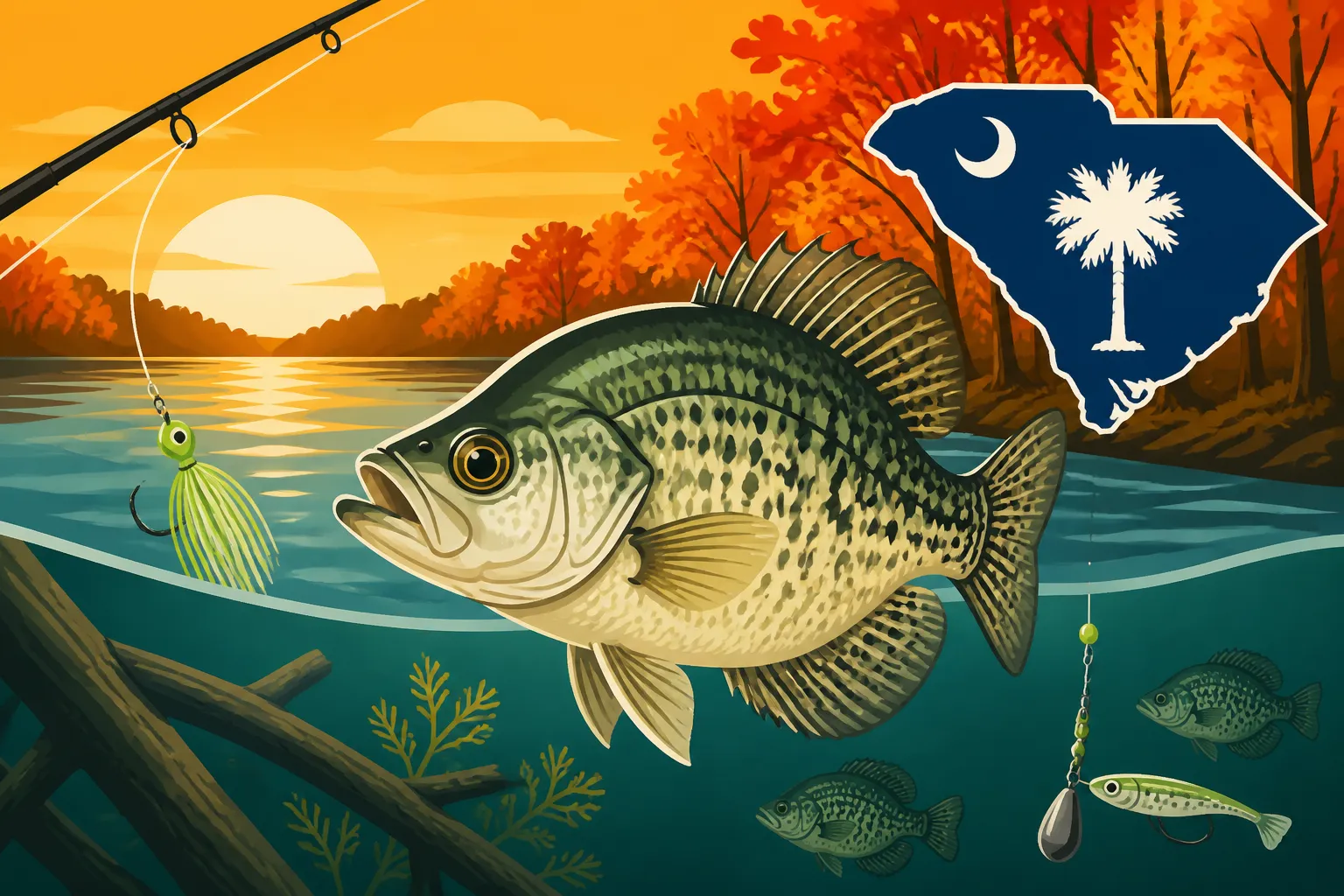
Jigs are another perennial favorite for crappie, and in the fall, they can be particularly deadly. Small jig heads (1/32 to 1/8 ounce) tipped with soft plastic bodies are excellent. The "Best Jig Colors for Crappie Fishing" often vary by water clarity and light conditions, but in the fall, don't be afraid to experiment with brighter colors like chartreuse, orange, and white, especially in stained water, or more natural patterns like minnow imitations in clearer conditions. When crappie are actively chasing bait, a small crankbait can also be incredibly effective, especially those that mimic shad or other small forage fish. The vibration and flash can draw strikes from a distance, making them great for covering water.
Top Techniques for Autumn Crappie
Once you understand crappie behavior and have your gear ready, it's time to put some techniques into action. Fall fishing often requires a blend of covering water to find scattered fish and then systematically working productive areas once schools are located.
Slow Trolling and Spider Rigging
One of the most effective ways to find and catch crappie in South Carolina's larger lakes during the fall is through slow trolling or "spider rigging." This technique involves presenting multiple lines at various depths and distances behind the boat, allowing you to cover a broad area and quickly identify crappie concentrations. Typically, anglers use multiple rods (often up to eight or more, depending on local regulations) extending out from the front and sides of the boat, creating a "spider web" effect.
Each line is rigged with a jig, a jig-and-minnow combo, or even a small crankbait, and deployed at different depths. As you slowly motor along (usually less than 1 mph), you're essentially dragging a wide array of offerings through the water column. When you get a bite, note the depth and general location, then focus your efforts there. This method is particularly effective in large open water areas, like the main lake basins or extensive creek channels in places like the Santee Cooper Lakes. It allows you to systematically search for those migrating schools as they move into their fall patterns.
Vertical Jigging in Structure
When you locate a school of crappie, especially if they are congregated around specific underwater structure like brush piles, standing timber, or bridge pilings, vertical jigging becomes incredibly potent. This technique involves positioning your boat directly over the structure and dropping your bait straight down to the fish. A good fish finder is invaluable here, helping you pinpoint the crappie and present your lure at their exact depth.
Use a sensitive rod and a light jig (often 1/16 or 1/8 ounce) tipped with a small plastic body or a minnow. Let the jig fall to the desired depth, then use subtle lifts and drops of your rod tip to impart action. The goal is to make the jig appear like an easy meal to the crappie. Sometimes a simple dead stick approach, just holding the bait still at their level, can be the ticket, while other times a slow, rhythmic bounce is more effective. This is closely related to "How to Jig for Crappie in Deep Water" and can be incredibly rewarding once you get the hang of it. Consider trying different jig shapes and plastic tails, easily found on Amazon, to see what the crappie prefer on a given day.
Casting and Retrieving for Active Fish
In some fall scenarios, particularly during warmer spells or in shallower coves where crappie are actively chasing bait, a simple cast and retrieve can be highly effective. This technique is less about finding deep schools and more about targeting aggressive, shallower fish that are actively feeding. Look for areas where baitfish are abundant, often indicated by subtle ripples on the surface or even active bird feeding.
Cast a small jig, a spinnerbait, or a small crankbait towards cover or baitfish activity and retrieve it at a steady pace. Vary your retrieve speed and depth until you find what triggers a strike. Sometimes a fast retrieve will elicit a reaction bite, while other times a slower, more deliberate retrieve is necessary. This technique is especially enjoyable from the bank or a kayak in smaller coves or along shorelines where crappie might be pushing bait into shallower water. For more nuanced approaches to covering water, insights from "Tightlining Techniques for Crappie Explained" might also provide complementary strategies.
Finding the Best Fall Crappie Spots in South Carolina
Identifying productive crappie fishing spots in South Carolina during the fall often comes down to understanding the types of areas they gravitate towards as the water cools and their feeding instincts kick in.
Transition Areas and Submerged Cover
As the water cools, crappie will often utilize transition areas—places where deep water quickly gives way to shallower flats or vice-versa. These spots provide them with easy access to different depths as conditions change and allow them to ambush baitfish moving between shallow and deep water. Look for creek channels, especially those that wind through flats, humps, and points that drop off into deeper water.
Submerged cover is also paramount. Crappie are ambush predators and feel safe around structure. This includes brush piles, fallen trees, standing timber, old roadbeds, and even man-made fish attractors. These are prime spots for crappie to hide, feed, and congregate. If you have access to a good depth finder and GPS, mark these locations during the summer when they are easier to spot, and return to them in the fall. Guides focused on "Crappie Fishing Tips for South Carolina Lakes" consistently emphasize the importance of cover for locating these fish.
South Carolina's Premier Crappie Lakes
South Carolina boasts some truly exceptional lakes for crappie fishing, and the fall can be a fantastic time to explore them. Each lake has its unique characteristics, but many share common features that make them crappie magnets.
Santee Cooper Lakes (Marion and Moultrie)
The interconnected Santee Cooper Lakes, Lake Marion and Lake Moultrie, are legendary for their crappie populations. These vast, shallow lakes with abundant standing timber, cypress trees, and extensive creek channels provide ideal habitat for fall crappie. As the water cools, crappie will often move from the deeper main lake basins into the flooded timber areas and creek channels, especially those with good cover.
Anglers often find success slow trolling jigs and minnows through the timber or vertical jigging around the base of cypress trees and submerged brush piles. These lakes are so productive that you'll find dedicated sections, like "Best Crappie Spots on the Santee Cooper Lakes," detailing specific areas and techniques. Given the sheer size of these lakes, having reliable navigation and fishing electronics, perhaps even a portable fish finder purchased from Amazon, can significantly enhance your ability to locate productive fall crappie schools.
Lake Murray
Lake Murray, near Columbia, is another fantastic fall crappie destination. While famous for its stripers, Lake Murray's crappie fishery thrives, especially in its numerous coves and along its extensive shoreline. In the fall, crappie in Lake Murray often relate to the deep creek channels, brush piles, and submerged timber found throughout the lake. As the baitfish move, the crappie follow, and Lake Murray's abundant shad population provides plenty of forage.
Fishing around bridge pilings and deep docks can also be productive. Anglers often employ slow trolling or vertical jigging techniques, especially near the submerged humps and ledges that drop into the old Saluda River channel. If you're planning a trip, exploring a "Lake Murray Fishing Guide for South Carolina Anglers" can provide invaluable insights for finding those autumn crappie.
Lake Hartwell
On the western border of South Carolina, Lake Hartwell offers excellent crappie fishing in the fall, particularly as its abundant baitfish move into shallower pockets. Crappie here will often be found suspended over deeper creek channels or relating to the extensive standing timber and brush piles that line its numerous coves and river arms. The Tugaloo River arm, in particular, can be a hotspot.
Focus your efforts on areas with sharp depth changes, especially where creek beds intersect with main lake points. Vertical jigging and tightlining around submerged timber are popular and effective methods. While scouting for crappie, don't forget to check out general guides like "Lake Hartwell Fishing Spots and Boat Ramps" to ensure easy access to prime fishing areas.
Ultimately, fall crappie fishing in South Carolina is a rewarding pursuit that combines seasonal knowledge, versatile techniques, and a bit of patience. By understanding how crappie react to cooling water and their intense need to feed, you can unlock some of the year's most exciting fishing opportunities.
Crappie Fishing Techniques for Fall: A Quick Comparison
To help you decide which technique might be best for your next fall crappie trip, here's a brief comparison:
| Technique | Best Conditions | Ideal Depths | Pros | Cons |
|---|---|---|---|---|
| Slow Trolling | Large, open water; scattered fish | All depths (adjustable) | Covers vast areas; finds scattered schools; multiple baits at once | Requires boat; can be slow if fish are highly concentrated |
| Vertical Jigging | Concentrated schools; distinct cover | Specific depths (precise) | Highly effective on tight schools; precise bait presentation | Requires accurate boat positioning; slower for finding scattered fish |
| Casting/Retrieving | Active, shallower fish; baitfish present | Shallow to mid-depth | Covers mid-range areas; active fishing; good for bank anglers | Less effective on deep, sluggish fish; may spook shy fish |
| Spider Rigging | Large flats; extensive cover (timber); searching | Various depths | Maximum coverage; ideal for searching; great for multiple anglers | Can be cumbersome; requires many rods; not ideal for tight spaces |
Remember that crappie behavior can change from day to day, and even hour to hour. Don't be afraid to switch up your techniques and try different baits until you find what the crappie are biting on. This adaptability is what separates successful fall crappie anglers from the rest!
Disclaimer
Fishing conditions, regulations, and fish behavior can change rapidly. Always check the latest South Carolina Department of Natural Resources (SCDNR) regulations before heading out. This guide is for informational purposes only and should not replace official guidelines or your own careful judgment.