How to Find Crappie in Spring
The spring bite for crappie in South Carolina can be notoriously fickle, leaving many anglers scratching their heads and wondering where these elusive panfish have disappeared to. It’s a frustrating experience to hit your favorite spot, expecting a basket full of slabs, only to find the water seemingly barren. This guide is here to unravel the mysteries of crappie movements during the spring, offering actionable strategies to help you consistently locate and catch these delicious fish as the waters warm up.
Understanding Crappie Spring Migration and Behavior
Spring is a season of dramatic change for crappie, driven almost entirely by water temperature. They transition from their deep winter haunts to shallow spawning grounds, and understanding these movements is the absolute key to finding them. It's not just one "spring bite" but rather a series of distinct phases, each requiring a different approach.
Pre-Spawn Migration: From Deep to Staging Areas
As the long, cold days of winter finally give way to milder temperatures, crappie begin to stir from their deeper resting spots. This initial warming, usually when water temperatures climb into the high 40s and low 50s Fahrenheit, signals the start of the pre-spawn migration. They won't rush straight to the shallows; instead, they'll move to "staging areas." Think of these as transition points – places where deep water quickly gives way to shallower flats, often near creek channels, main lake points, or submerged humps.
During this phase, crappie are focused on feeding, bulking up for the strenuous act of spawning. They'll often school up in large numbers, making them a prime target if you can locate these congregations. They tend to hold slightly deeper than where they'll eventually spawn, often suspending over structure like brush piles or timber that provides cover and ambush points for baitfish. It's a game of following temperature breaks and contour lines on your sonar, searching for those subtle changes in depth where crappie will pause before their final push to the bank.
The Spawning Frenzy: Shallow Water Action
This is what most crappie anglers eagerly await: the spawn. Once water temperatures consistently hit the mid-50s to low 60s Fahrenheit, crappie will move into extremely shallow water, often just 1-5 feet deep, to build their nests and reproduce. This is when you can find them in places you might not expect – right up against the bank, in dense cover, or under docks.
Male crappie are usually the first to arrive, clearing out small, dinner-plate-sized depressions for the females to lay their eggs. They become incredibly aggressive, protecting their nests from any perceived threat. This is where you might experience some of the fastest fishing of the year, as crappie strike almost anything that comes near their bed. Look for areas with hard bottom, like gravel or sand, especially if there's nearby cover like submerged wood, lily pad stems, or cattails. The females will move in, lay their eggs, and then typically retreat to slightly deeper water to recover, while the males stay to guard the eggs until they hatch. For more details on seasonal patterns, check out our guide on South Carolina Crappie Fishing Techniques by Season.
Post-Spawn Dispersion: Recuperation and Recovery
After the rigors of spawning, both male and female crappie enter a post-spawn recovery period. This can be one of the trickiest times to locate them, as they tend to disperse and become less aggressive. Females, especially, will often move to slightly deeper, cooler water to recuperate, often suspending around submerged timber or the edges of creek channels. They're still feeding, but not with the same urgency as during the pre-spawn or spawn.
Males will remain near the shallow spawning areas for a bit longer, guarding the newly hatched fry, but eventually, they too will retreat. The key during this phase is to look for crappie transitioning back to deeper summer patterns, often holding on the edges of submerged weed lines, deeper brush piles, or suspending over open water near baitfish schools. The bite might be slower, and they might require more finesse, but they are still catchable. Don't be afraid to experiment with different depths and retrieve speeds as they adjust to their post-spawn routine.
Prime Spring Crappie Habitat and Structure
Knowing when crappie are in a particular phase is only half the battle; you also need to know where to concentrate your efforts. Spring crappie are incredibly structure-oriented, meaning they'll always be found near something that offers cover, ambush points, or protection.
Shallow Cover is Key
When crappie move into the shallows for spawning, they don't just hang out in open water. They gravitate towards any available cover. This could be natural or man-made:
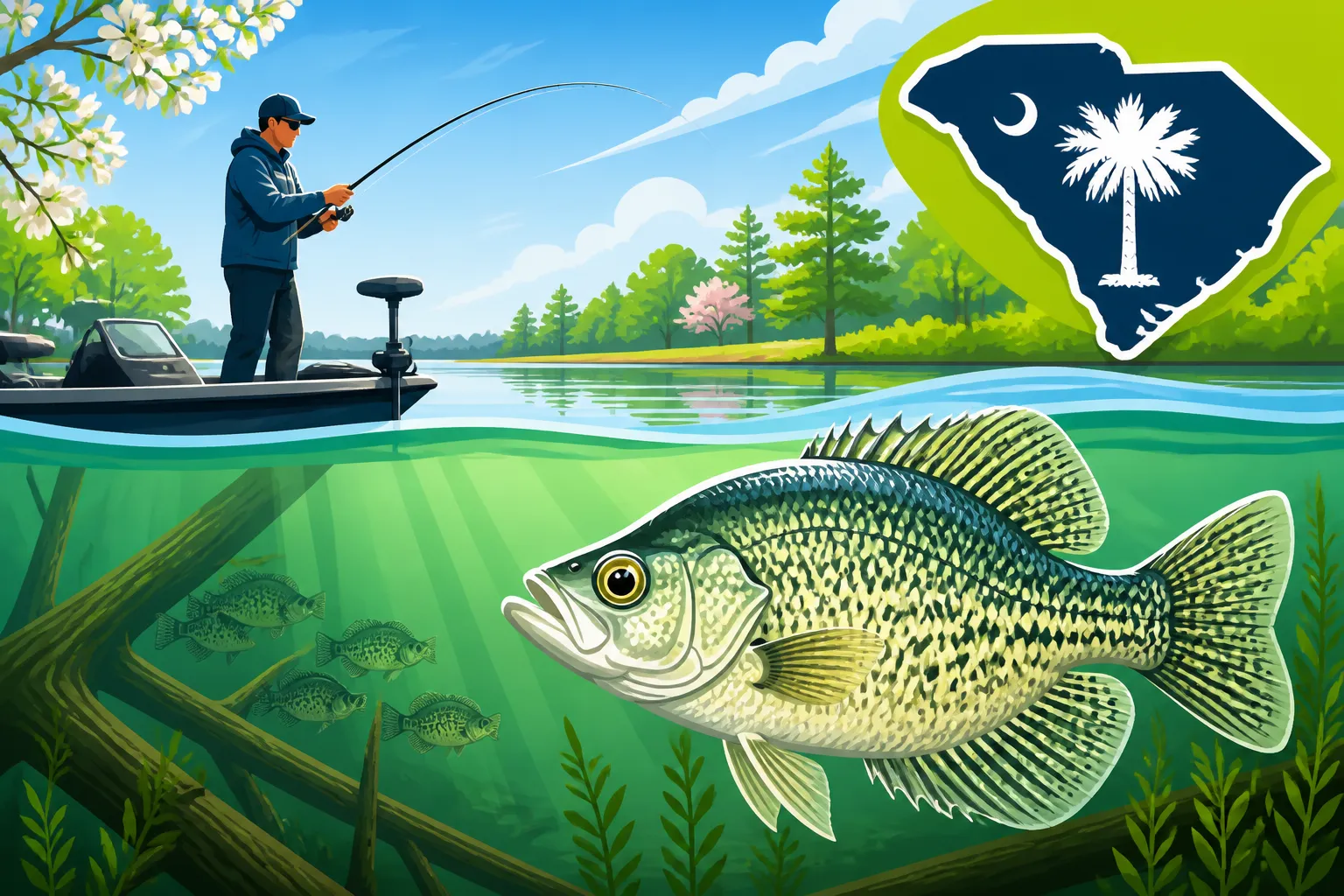
- Brush Piles and Submerged Timber: These are classic crappie magnets year-round, but especially in spring. Look for sunken trees, branches, or purposely sunk brush piles in shallow coves, along creek channels, or near points. Crappie will use these for protection from predators and as ambush points for baitfish. A good fish finder is invaluable here, helping you pinpoint these underwater havens.
- Docks and Piers: Don't overlook man-made structures. The pilings and undersides of docks provide shade, cover, and often attract baitfish. Crappie will hold right against these structures, especially if there's some additional brush or vegetation around the pilings. Many anglers have great success targeting docks on lakes like Lake Murray or the Santee Cooper Lakes.
- Lily Pads, Reeds, and Cattails: As aquatic vegetation begins to emerge and thicken in spring, crappie will move right into it. The dense stems offer excellent cover and protection, and the vegetation itself can hold warmth, attracting baitfish. Pitching jigs or live minnows into pockets or along the edges of these weed beds can be incredibly effective.
Transition Zones and Creek Channels
Even when crappie are shallow, they're rarely far from deeper water. This makes transition zones critical. These are areas where the depth changes rapidly, creating a natural highway for crappie to move between deep and shallow water.
- Creek Channels and River Bends: In reservoirs, old creek channels are prime pathways. Crappie will stage in the deeper sections of these channels during pre-spawn, then move up the slopes of the channel into shallower flats to spawn. After spawning, they might retreat back down the channel. Look for where these channels make sharp bends or intersect with other structures.
- Main Lake Points and Humps: Points that extend into the main lake and underwater humps offer similar transition opportunities. Crappie will hold on the deeper side of these structures during cooler periods, then move over the top and to the shallower side as they prepare to spawn. The deeper drops off these structures provide quick access to safety.
Man-Made Structures and Fish Attractors
Beyond natural cover, many South Carolina lakes benefit from purposely placed man-made structures that act as fish attractors.
- Bridge Pilings: Bridges that cross major creeks or main lake bodies often have substantial pilings that extend deep into the water. These act as vertical cover, attracting baitfish and, in turn, crappie. Fishing around bridge pilings can be very productive, especially during the pre-spawn and post-spawn periods when crappie are staging.
- Old Roadbeds and Foundations: Many reservoirs were created by damming rivers, submerging old towns, roads, and homesteads. These old roadbeds, house foundations, and culverts create fantastic hard-bottom structure that crappie adore. They're often subtle and require good sonar to locate, but once found, they can hold massive schools of fish.
- Commercial Fish Attractors: In some lakes, local agencies or fishing clubs place large fish attractors, often consisting of PVC structures or bundled brush. These are usually marked on navigation charts or can be found with a little research on state DNR websites. These can be goldmines for crappie, especially if they're in appropriate depths for the spring transition.
Effective Techniques and Baits for Spring Crappie
Once you've zeroed in on the right locations, it's time to present your offerings in a way that crappie can't resist. Spring often calls for a combination of methods to adapt to the crappie's changing mood and location.
Vertical Jigging and Spider Rigging
These techniques are powerhouses for spring crappie, especially when fish are schooled up or holding tight to vertical structure.
- Vertical Jigging: This is a fantastic technique when crappie are holding precisely in brush piles, under docks, or on specific ledges. Using your fish finder, position your boat directly over the crappie you see on screen. Drop a small jig (1/16 to 1/8 ounce is common) or a live minnow directly down to their depth. The key is minimal movement – a slight twitch, then hold, then another twitch. Experiment with different jig colors; sometimes a chartreuse, pink, or white jig from a brand like Bobby Garland can be irresistible. You can find a great selection of crappie jigs, soft plastics, and even portable fish finders on Amazon to help you get geared up. For beginners, understanding Crappie Jigging Techniques for Beginners can make a huge difference.
- Spider Rigging: When crappie are dispersed over a larger area, or you're trying to cover a contour line effectively, spider rigging is ideal. This involves deploying multiple rods (often 4-8) from the front of your boat, presenting baits at different depths and distances. You move very slowly, often with an electric trolling motor, effectively "sweeping" an area. This is particularly effective during the pre-spawn when crappie are staging in slightly deeper water along creek channels. Each rod can have a different bait or jig color, helping you quickly identify what the fish prefer on that particular day. For those fishing deeper, you might want to learn about Tightlining for Crappie in Deep Water.
Trolling and Casting for Active Fish
Sometimes crappie are more spread out and active, especially during the peak spawn or post-spawn when they're chasing baitfish.
- Trolling: Slow trolling small jigs, crankbaits, or minnow-tipped jigs can be very effective for covering large flats or searching for scattered crappie. Use your trolling motor to move at a slow, consistent speed (0.5 to 1.5 mph). This technique allows you to present your bait to a wider area and can be particularly good for locating post-spawn crappie that have moved away from dense cover. Pay attention to your rod tips; crappie bites can be subtle.
- Casting to Cover: When crappie are shallow and relating to visible cover like lily pads, docks, or fallen trees, casting is your best bet. Use a lightweight spinning rod and reel, making accurate casts to the edges and pockets of the cover. Let your jig or minnow sink briefly, then retrieve it slowly with subtle twitches. Sometimes a shallow-running crankbait or a beetle spin can also trigger strikes, especially from aggressive spawning males. For finding the perfect bait, consider picking up some affordable crappie rigs or a variety pack of jigs from Amazon before your next outing.
Live Bait and Artificial Lures: The Best of Both Worlds
You'll find passionate advocates for both live bait and artificials, but the truth is, both have their place in spring crappie fishing.
- Live Minnows: There's a reason minnows are often called "crappie candy." A lively minnow suspended under a bobber or fished on a tight line is incredibly hard for a crappie to resist, especially when they're less aggressive. Hook them lightly through the lips or dorsal fin.
- Jigs (Soft Plastics): Jigs offer versatility in size, shape, and color. Small tube jigs, curly tail grubs, and hair jigs are all proven crappie killers. They allow you to control depth, retrieve speed, and present a more active presentation. Don't be afraid to tip your jig with a small piece of minnow or a Crappie Nibbler for added scent. For choosing the right colors, our guide on Best Jig Colors for Crappie Fishing offers some great insights.
- Small Crankbaits and Spinnerbaits: These can be very effective for aggressive crappie, especially when trolling or casting to larger areas. They mimic baitfish and their vibration can call in fish from a distance. Look for models designed for shallow to medium depths.
Timing, Weather, and Water Conditions for Success
Crappie are highly sensitive to environmental factors. Paying attention to these details can turn a slow day into a banner one.
Water Temperature is Your Compass
We've mentioned it already, but it bears repeating: water temperature dictates everything for spring crappie.
| Water Temperature Range | Crappie Behavior Phase | Preferred Location | Recommended Techniques |
|---|---|---|---|
| 45-54°F (7-12°C) | Pre-Spawn Staging | Deep channels, points, deep brush piles, structure edges | Vertical jigging, spider rigging, slow trolling deep cranks/jigs |
| 55-64°F (13-18°C) | Peak Spawning | Shallow coves, docks, laydowns, lily pads, reeds (1-5 ft) | Casting jigs/minnows to cover, dipping, shallow trolling |
| 65-70°F (19-21°C) | Post-Spawn Dispersion | Mid-depth brush, channel edges, submerged weed lines, suspended over bait | Trolling, vertical jigging structure, casting to weed edges |
Always use a good thermometer to check the water temperature at different depths and locations. Even a one or two-degree difference can concentrate fish. South Carolina often experiences rapid temperature changes in spring, so staying flexible is key. Understanding Does Water Temperature Affect Morning Bite Timing can further enhance your strategic planning.
Cloudy Days vs. Sunny Days
Light penetration plays a significant role in where crappie position themselves.
- Cloudy, Overcast Days: On these days, crappie tend to be more spread out and willing to roam in shallower water throughout the day. The diffused light makes them feel less exposed. This is a great time for slow trolling or casting to large flats.
- Bright, Sunny Days: When the sun is high and bright, crappie will often seek shade and deeper cover. Look for them tucked under docks, deep inside brush piles, or on the shady side of bridge pilings. You might need to present your bait more precisely and vertically to entice a bite.
Post-Front Conditions: The Notorious Slowdown
One of the most frustrating spring scenarios is a strong cold front rolling through. After a beautiful, warm spring day, a cold front brings plummeting temperatures, clear skies, and high pressure. Crappie, like many fish, become finicky and often shut down.
When this happens, don't give up, but be prepared to adjust your approach. Crappie will often move deeper and hold very tight to cover. Your presentation needs to be incredibly slow and subtle. Downsize your jigs, lighten your line, and be prepared to soak a minnow for extended periods. Sometimes, simply waiting for a day or two after the front passes, when conditions stabilize, is the best strategy. For more on this, check out Fishing Techniques After a Cold Front. Patience is truly a virtue during post-front conditions, and small crappie-specific rods and reels are readily available, and many anglers find excellent deals on quality gear on Amazon for this type of finesse fishing.
Finding crappie in spring in South Carolina is a dynamic challenge that rewards knowledge, patience, and adaptability. By understanding their temperature-driven movements, targeting prime structures, and employing the right techniques, you can enjoy some truly memorable days on the water. Don't forget that many excellent crappie fisheries like the Santee Cooper Lakes or Lake Wateree offer fantastic opportunities, so be sure to explore Best Crappie Spots on the Santee Cooper Lakes or Crappie Fishing Spots on Lake Wateree for local hot spots.
Disclaimer
Fishing conditions and regulations in South Carolina can change. Always consult the latest South Carolina Department of Natural Resources (SCDNR) regulations before heading out. This guide is for informational purposes only and does not constitute legal advice or an endorsement of specific products or brands.