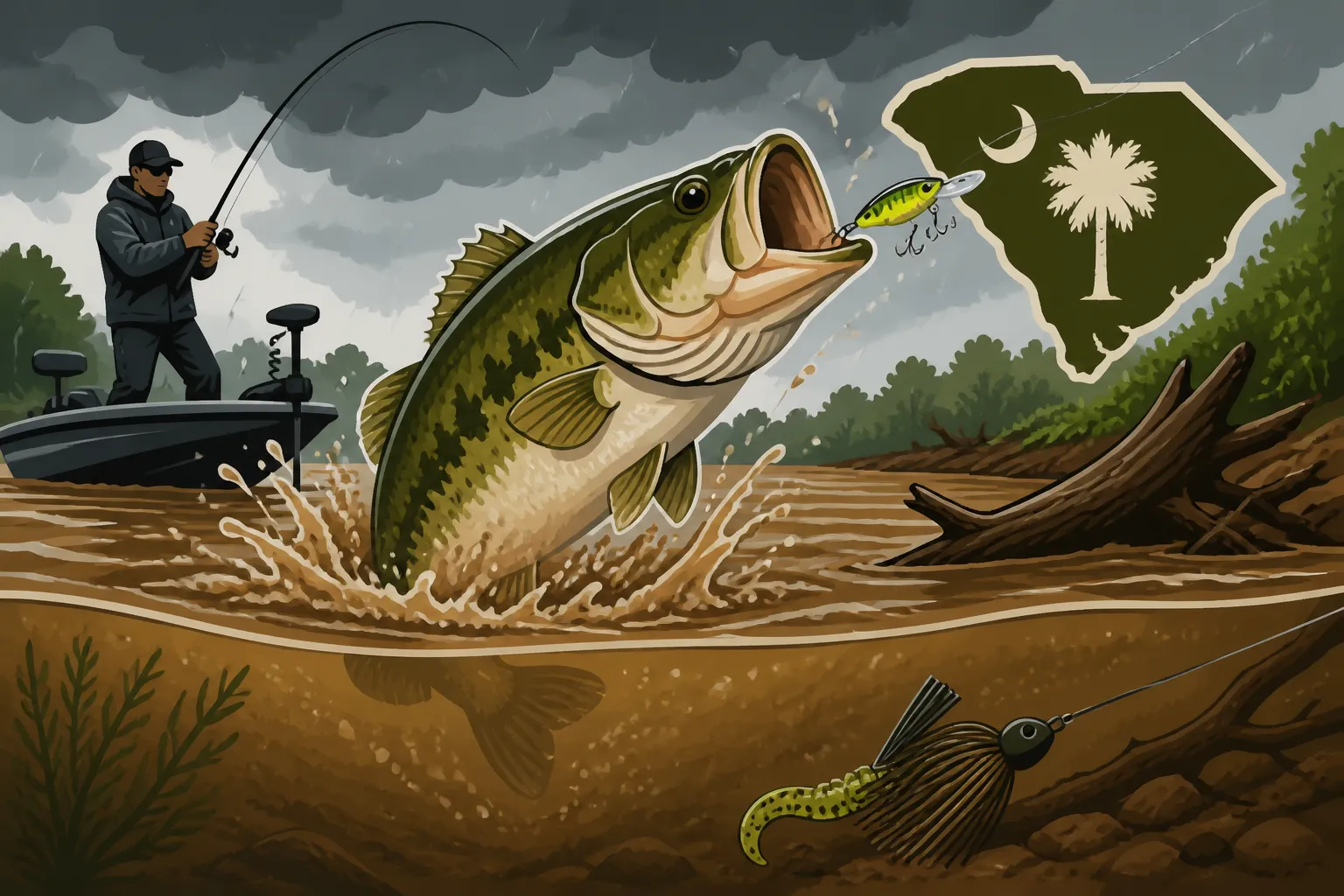
Bass Fishing Techniques for Muddy Water After Rain
We've all been there: you wake up with a plan to hit your favorite fishing spot, rods rigged, cooler packed, only to find that an overnight downpour has turned what was clear, inviting water into a chocolate milk shake. It's frustrating, right? You might even think about packing it in for the day. But here's the secret: muddy water after rain doesn't mean the bass stop biting; it just means you need to adjust your approach. This guide is all about equipping you with the knowledge and tactics to successfully chase largemouth bass, and other bass species, when South Carolina's lakes and rivers are churned up and murky.
Understanding Why Rain Turns Water Muddy and Affects Bass
Before we dive into the "how-to," it's crucial to understand the "why." A good rain can be a blessing for anglers, but when it's a deluge, it often brings with it a whole new set of challenges. Understanding these challenges is the first step to overcoming them.
The Science Behind Muddy Water
When heavy rain falls across South Carolina, especially in areas with exposed soil like freshly tilled fields, construction sites, or even just eroded banks, it picks up sediment and carries it into our waterways. This runoff is what gives the water that characteristic brown, turbid look. The composition of the soil plays a huge role here; the red clay often found in the Midlands and Upstate regions, for example, tends to create much denser, longer-lasting turbidity compared to the sandier soils you might find closer to the coast.
This influx of suspended particles drastically reduces visibility. Imagine trying to hunt in a dense fog; that's essentially what bass are experiencing. Beyond visibility, rain can also affect water temperature, oxygen levels, and even bring in new food sources or debris. It's a cascade of environmental changes that bass, being creatures of habit, have to quickly adapt to. What was once clear water where a bass could ambush prey by sight becomes a murky maze.
How Bass React to Low Visibility
It's not just your imagination; the fish do act differently when the water is muddy. When their primary sense of sight is compromised, bass don't just give up; they switch gears. They become much more reliant on their other senses: their highly developed lateral line system, which detects vibrations and pressure changes in the water, and their sense of smell.
Behaviorally, bass often move shallower in muddy conditions. Why? Two main reasons: first, the surface layers might be slightly clearer or warmer, especially in shallower coves where the mud hasn't settled as densely. Second, the influx of water often pushes baitfish and other forage into these shallower, often dirtier, areas. Bass will tuck tight to cover like submerged trees, docks, or grass lines, using these structures not just for ambush points but also as physical references in the low visibility. They might also become less active, conserving energy and waiting for an easy meal to pass directly in front of them, making a slow, deliberate presentation key. Understanding these behavioral shifts is paramount, much like knowing the intricacies of South Carolina Bass Fishing Techniques by Season.
Lure and Bait Selection for Muddy Conditions
Choosing the right lure is half the battle when the water is muddy. You need something that shouts "EAT ME!" even when the bass can barely see it. This means focusing on two main attributes: color and commotion.
Color Theory: Go Bright, Go Dark
When visibility is minimal, you might think bright colors are always the answer, and often they are. Colors like chartreuse, bright orange, hot pink, and pure white offer maximum contrast against a muddy backdrop. These hues stand out, creating a distinct profile that a bass might pick up on. Think of it like a flashing neon sign in a dark alley; it catches the eye. Many anglers swear by chartreuse and black or chartreuse and blue combinations in dingy water, and you can find a huge variety of these on Amazon.
However, don't overlook the power of dark colors either. Black, dark blue, or junebug (a dark purple with green flakes) can also be incredibly effective. Against an overcast sky or when a bass is looking up from below, a dark lure creates a strong silhouette, making it easier for the fish to detect its shape. Sometimes, a subtle, dark profile is less intimidating and more convincing than an aggressively bright one, especially for wary bass. The key is contrast, whether bright against dark, or dark against light.
Vibrations and Scent: The Keys to Success
Since sight is diminished, bass rely on their lateral line to detect vibrations in the water and their olfactory senses to pick up on scent. Your lure choices should reflect this.
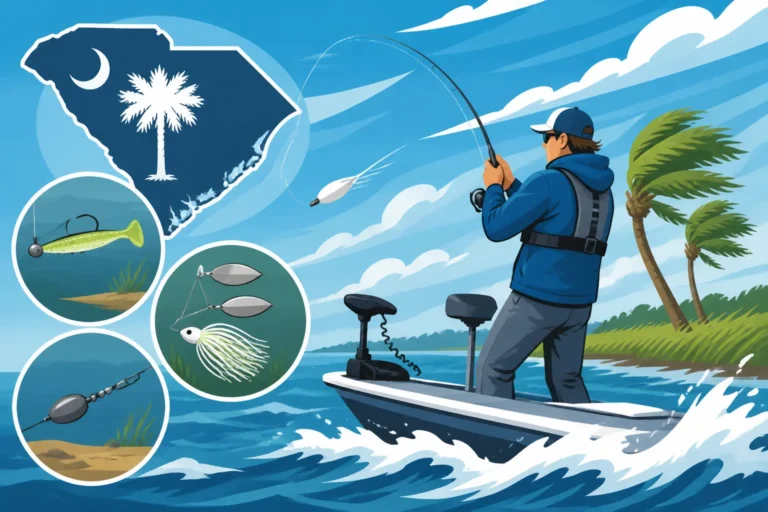
Lures that displace a lot of water and create strong vibrations are gold in muddy conditions. Spinnerbaits, especially those with large Colorado blades, are excellent choices because they thump hard and create flash. Bladed jigs, often called ChatterBaits, are another top contender, producing a unique thumping vibration and erratic action that bass can't ignore. Crankbaits with a wide wobble are also fantastic, particularly square bills that deflect off cover with a lot of noise. Lipless crankbaits, retrieved with a yo-yo motion, can also be dynamite. For soft plastics, consider those with large paddles or curly tails that kick aggressively through the water.
When it comes to scent, don't be shy. Many soft plastics come pre-impregnated with fish attractants. Brands like Berkley PowerBait and Yum often feature strong scents that disperse well in the water, guiding bass right to your lure. If your baits aren't scented, carry some scent gels or sprays to apply regularly. This added olfactory cue can be the decisive factor, turning a curious bass into a committed strike. Live bait, of course, offers both natural vibration and an irresistible scent trail, making shiners or worms a great fallback. Learning these nuances is just as important as mastering How to Rig a Texas-Rig Worm for Bass in clearer water.
Here’s a quick overview of lure types and their effectiveness in muddy water:
| Lure Type | Ideal Colors | Key Feature | Why it Works in Muddy Water |
|---|---|---|---|
| Spinnerbait | Chartreuse, White, Black/Blue | Colorado blades, wire arm | Strong vibration, flash, weedless, good for covering water |
| Bladed Jig | Black/Blue, Green Pumpkin, White | Unique thumping blade | Intense vibration, erratic action, mimics injured baitfish |
| Crankbait | Chartreuse, Red, Orange | Wide wobble, rattles | Strong vibration, deflects off cover, dives to different depths |
| Jig (Skirted) | Black/Blue, Junebug, Green Pumpkin | Skirt pulsation, bulky profile | Slow fall, can be scented, mimics crawfish or baitfish |
| Soft Plastics | Dark colors (Junebug, Black), Bright colors | Ribs, paddles, curly tails | Can be heavily scented, strong vibration with tail action |
Strategic Fishing Techniques for Muddy Water Bass
Once you've got your gear dialed in, it's time to adjust your fishing approach. Muddy water requires patience, precision, and a willingness to slow things down.
Slow and Steady Wins the Race
When bass can't see well, they need more time to locate and commit to a lure. This means slowing down your retrieve speed dramatically. What might be a fast burn in clear water could be a snail's pace in the mud. For spinnerbaits and bladed jigs, a slow roll just above the bottom or through cover is often deadly. For jigs and soft plastics, think about flipping and pitching into tight cover, letting the bait sit for several seconds before a subtle twitch. This allows the scent to dissipate and gives the bass every opportunity to find it.
Consider the retrieve as a series of pauses and movements, mimicking a struggling baitfish or a crawfish trying to hide. This deliberate, methodical approach can be frustrating if you're used to covering a lot of water quickly, but it pays off when bass are hunkered down. This concept applies even when considering techniques like How to Catch Bass After a Cold Front, where fish often become more sluggish.
Targeting Prime Muddy Water Hangouts
Bass don't just swim around aimlessly in muddy water. They seek out specific types of areas that offer advantages in low visibility. Your goal is to find these spots.
- Shallow Cover: Docks, fallen trees (laydowns), brush piles, and submerged vegetation become magnets for bass. These structures offer concealment for the bass to ambush prey and provide a sense of security. Flipping and pitching jigs or Texas-rigged soft plastics into these areas is a highly effective strategy. Bass will often be right on the edge of the cover, or even nestled deep within it.
- Transition Areas: Look for spots where the muddy water meets slightly clearer water. This could be at the mouth of a creek flowing into a main lake, or where two different water bodies converge. Bass will often patrol these "mud lines," using the clearer water to spot prey and the murky water for cover.
- Inflow Points: Any area where fresh water is flowing into a lake or river after rain is a prime target. Creek mouths, culverts, and feeder streams will often carry warmer, more oxygenated water, and, crucially, wash in baitfish, worms, and other food sources. Bass will stack up in these areas, waiting for an easy meal. Focus on casting upstream and letting your lure drift naturally with the current. This can be especially productive on larger systems like the Santee Cooper Lakes.
The Power of Shallow Water
As mentioned earlier, bass often move shallow in muddy conditions. This is a critical piece of the puzzle. Don't be afraid to fish water that's only a foot or two deep. The low visibility gives bass confidence to move into these areas without fear of being seen by predators (or anglers).
Techniques like using square bill crankbaits that bump and grind along the bottom in shallow water can be incredibly effective. Topwater lures can also work in muddy water, especially if the surface isn't too agitated by wind or current. The key here is to use a topwater bait that creates a lot of commotion, like a popper or a walking bait, to draw attention. The bass will hear and feel the disturbance on the surface, even if they can't see it clearly. Remember, the deeper you go, the darker it gets, so keeping your baits in the upper water column or very close to bottom structure in shallow areas can significantly increase your strike chances. This is a contrast to How to Fish Deep Structure for Bass in Summer which requires different strategies entirely.
Essential Gear and Preparations for Rainy Day Fishing
A successful muddy water outing also hinges on having the right gear and making a few practical preparations. It's not just about the lures; it's about the whole setup.
Rod, Reel, and Line Considerations
For muddy water fishing, you generally want to lean towards a slightly heavier setup than you might use in ultra-clear conditions.
- Rods: A medium-heavy to heavy action casting rod, typically 6'10" to 7'6" in length, is ideal. This gives you the backbone to cast heavier, bulkier lures like bladed jigs and spinnerbaits, and the power to pull bass out of dense cover. Sensitivity is still important, but raw power and control often take precedence.
- Reels: A baitcasting reel with a decent gear ratio (around 6.4:1 to 7.1:1) is versatile enough for most muddy water techniques. A higher gear ratio helps you quickly reel in slack and control fish, while a slightly slower one can encourage a more deliberate retrieve for certain baits.
- Line: This is where you might make your biggest adjustment. In murky water, line visibility is much less of a concern.
- Fluorocarbon: A good quality fluorocarbon line (15-20 lb test) is an excellent choice. It has low stretch, providing better sensitivity to feel those subtle bites in the mud, and it's highly abrasion-resistant, which is crucial when fishing around heavy cover.
- Braided Line: Many anglers prefer braided line (30-50 lb test) for muddy water. Its zero stretch offers maximum sensitivity, allowing you to feel every bump and tick, and its incredible strength lets you muscle fish out of thick stuff. It's also highly abrasion-resistant, though a fluorocarbon leader is still a good idea if you're worried about fish seeing the line, or for extra abrasion protection around rocky bottom. When looking for lines, check brands like Seaguar, P-Line, or Sufix on Amazon.
Tackle Box Adjustments
Before you head out, make a dedicated "muddy water" section in your tackle box. This saves you time and ensures you have the right tools at hand.
- Lure Inventory: Stock up on the bright and dark colored lures we discussed: a variety of spinnerbaits with different blade combinations (Colorado/willow, tandem Colorado), bladed jigs in various weights, square bill crankbaits in reds, oranges, and chartreuse, and a good selection of black/blue, junebug, and green pumpkin jigs and soft plastics.
- Scent: Don't forget your scent attractants! Gels like Kick'n Bass, Pro-Cure, or even a simple tube of garlic paste can make a huge difference. Reapply it frequently, especially after catching a fish or if your lure has been sitting for a while.
- Hooks and Weights: Make sure your hooks are sharp and strong. Consider using slightly heavier tungsten weights for your Texas rigs or jigs. This helps them penetrate cover more effectively and maintain better bottom contact in current.
- Rain Gear: This might seem obvious, but fishing after rain often means more rain, or at least damp conditions. A good set of waterproof rain gear – jacket, pants, and hat – is essential for staying comfortable and focused on the fishing, not on being cold and wet. Nothing ruins a fishing trip faster than being soaked to the bone.
Remember, every fishing trip in South Carolina is a learning experience, especially when conditions change. By understanding why bass behave the way they do in muddy water and adjusting your lures and techniques accordingly, you can turn a challenging day into a productive and rewarding one. Don't let a little rain keep you off the water; it might just lead to your next big catch! You can always check for more tips on topics like Best Lures for Largemouth Bass in Muddy Water to further refine your approach.
Disclaimer
Fishing conditions and regulations in South Carolina can change. Always consult the latest South Carolina Department of Natural Resources (SCDNR) guidelines and local advisories before heading out. This guide provides general information and best practices, but it is the angler's responsibility to ensure compliance with all current laws and safety protocols.