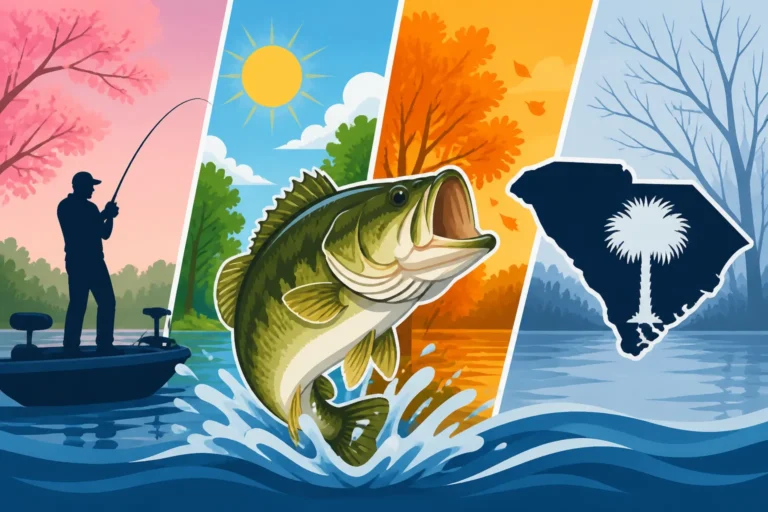
When Do Largemouth Bass Spawn in South Carolina Reservoirs?
One of the most exciting times for any angler in the Palmetto State is when the largemouth bass start their annual spawning ritual. Trying to pinpoint the exact moment can feel like chasing a phantom, though, with varying weather patterns and water conditions often throwing a wrench into your carefully laid plans. This guide is here to unravel the mystery, providing you with a detailed look at when largemouth bass typically spawn in South Carolina's diverse reservoirs, and what factors truly drive this crucial event.
Understanding the Symphony of the Largemouth Bass Spawn
The largemouth bass spawn isn't a flip-a-switch event; it's a gradual process orchestrated by a combination of environmental cues. For us anglers, understanding these triggers is like having a secret decoder ring for when and where to find these impressive fish. It’s not just about a calendar date; it’s about reading the water and the weather.
The Critical Role of Water Temperature
Hands down, water temperature is the single most important factor dictating when largemouth bass decide it’s time to reproduce. They are warm-water fish, and their biological clock is finely tuned to the mercury rising in our reservoirs. As the chilly grip of winter loosens and spring breezes warm the surface, bass begin to stir from their deeper haunts.
Typically, largemouth bass begin to feel the urge to move shallow when water temperatures consistently reach the low to mid-50s Fahrenheit. This is the very beginning of what we call the "pre-spawn" phase. They’re still deep, but they're thinking about moving. The actual spawning activity, where they build nests and lay eggs, usually kicks into high gear when the water stabilizes in the range of 60 to 70 degrees Fahrenheit. If you see temperatures dip significantly after a warm spell, don't be surprised if the fish "pull back" to deeper water for a bit before resuming their nesting efforts. This is a common frustration for anglers, but it’s just the bass playing it safe to ensure the survival of their young. Keeping a good thermometer handy, perhaps one you can find easily on Amazon, is invaluable for tracking these subtle but critical changes in your favorite fishing spots.
The Influence of Photoperiod and Moon Phases
While water temperature is king, the increasing length of daylight hours, known as photoperiod, also plays a significant supporting role in the bass spawn. As the days grow longer in spring, it signals to the bass that the prime reproductive window is approaching. This biological imperative, combined with warming waters, creates the perfect storm for spawning activity.
Some anglers also swear by the moon phases, believing that full and new moons can intensify spawning activity or push more fish onto beds. While the scientific evidence might be a bit murkier on the direct impact of moon phases compared to temperature, many veteran bass fishermen in South Carolina observe heightened activity around these lunar cycles. It’s not uncommon to hear tales of anglers having their best days on the water during a full moon in April, as the combination of warm water and strong lunar pull seems to get the bass extra aggressive.
Geographic Variations Across South Carolina
South Carolina is a pretty big state, stretching from the Blue Ridge Mountains down to the Atlantic coast, and this diversity means that the bass spawn doesn't happen uniformly. What's happening on Lake Hartwell in the Upstate might be a couple of weeks behind or ahead of what's going on in the Santee Cooper lakes in the Lowcountry.
Generally, the southern and coastal reservoirs tend to see an earlier spawn. Think about places like Lake Marion and Lake Moultrie; they warm up faster in the spring due to their lower elevation and often milder climate. Conversely, the Upstate lakes, such as Lake Keowee or Lake Jocassee, which are deeper, colder, and at higher elevations, will typically experience their bass spawn later in the spring, sometimes extending into early summer. It's crucial to consider your specific location in the state when trying to predict the spawn.
Pinpointing the Typical Spawning Window in South Carolina Reservoirs
So, when can you expect to really see those largemouth bass on their beds across South Carolina? While local conditions will always dictate the exact timing, there are general windows that most of our major reservoirs adhere to. Knowing these can help you plan your trips and maximize your chances of success.
Early Spring: The Pre-Spawn Excitement
The pre-spawn period is arguably one of the best times to catch trophy largemouth bass. These fish are gorging themselves, packing on weight before the arduous task of spawning. In South Carolina, this usually kicks off in late February and extends through March, particularly in the warmer, southern lakes. Water temperatures will be in that 50-60 degree range.
During this time, bass are transitioning from their winter patterns. They're still somewhat deep, but they'll make frequent forays into shallower water to feed. You'll find them staging in areas adjacent to their future spawning grounds – think points, submerged humps, and channel swings leading into coves. For anglers, this means targeting those transition areas with baits like lipless crankbaits, jerkbaits, and slow-rolled spinnerbaits. If you're looking for Bass Fishing Techniques for Spring Pre-Spawn, understanding this staging behavior is key.
Peak Spawning: April into May
For most of South Carolina’s major reservoirs, April is the prime month for the largemouth bass spawn. This is when water temperatures consistently hold in that sweet spot of 60-70 degrees. You’ll start to see bass on visible beds in shallower, protected coves and pockets.
Reservoirs like Lake Murray often see their peak spawn in early to mid-April, especially in its shallower arms. The fish will move up into very shallow water, often less than three feet deep, seeking hard bottoms like sand, gravel, or even submerged stumps to fan out their nests. Similarly, the vast Santee Cooper Lakes (Lake Marion and Lake Moultrie) are famous for their excellent sight-fishing opportunities during April and sometimes into early May. On the other hand, a reservoir like Lake Hartwell, being a bit further north and often deeper, might see its main spawn closer to mid-to-late April, sometimes even spilling into the first week of May if spring has been cool. Knowing How to Fish the Bass Spawn on South Carolina's Lake Hartwell really requires paying attention to those specific conditions.
Here's a quick look at typical peak spawning windows for some popular South Carolina reservoirs:
| Reservoir Name | Region of SC | Typical Peak Spawning Window | Key Water Temperature Range |
|---|---|---|---|
| Lake Murray | Central Midlands | Early to Mid-April | 60-68°F |
| Santee Cooper Lakes (Marion & Moultrie) | Lowcountry | Late March to Mid-April | 60-70°F |
| Lake Hartwell | Upstate | Mid-April to Early May | 60-67°F |
| Lake Wylie | Catawba River | Early to Mid-April | 60-69°F |
| Lake Greenwood | Western Midlands | Early to Mid-April | 60-68°F |
| Lake Keowee | Upstate | Late April to Mid-May | 60-65°F |
Keep in mind these are general guidelines. A sudden cold snap can delay it, while an unusually warm spring can push it forward. Flexibility and observation are your best tools.
Post-Spawn Adjustments: May and Beyond
Once the bulk of the spawning activity is over, usually by late April or early May, bass enter the "post-spawn" phase. This can be a challenging time for anglers, as fish are often exhausted and scattered. They'll linger around spawning areas for a short period, guarding fry, but eventually, they'll begin to move toward their summer haunts.
In this phase, you’ll find bass recuperating and feeding opportunistically. They might still be shallow, especially early in the morning or late in the evening, but they’ll also start venturing deeper, hanging around drop-offs, submerged timber, and brush piles. If you're fishing on the Santee Cooper system, understanding Post-Spawn Bass Patterns on South Carolina's Santee Cooper can make a huge difference in finding those recuperating fish. This is a time when a variety of baits can work, from topwater lures in low light to shaky heads and Texas rigs fished on deeper structure.
Navigating the Spawning Season: Pre-Spawn, Spawn, and Post-Spawn
Each phase of the largemouth bass spawning cycle presents unique opportunities and challenges for anglers. Understanding the bass's behavior during these times is crucial for successful fishing, allowing you to tailor your techniques and lure choices to what the fish are doing. It's like knowing when to cast a net versus when to use a spear; the right tool at the right time.
Tactics for Pre-Spawn Bass
During the pre-spawn, bass are actively feeding to build up energy reserves. They are often aggressive and can be found in predictable staging areas just outside their eventual spawning grounds. This is when those bigger bites often happen, as the larger females are particularly vulnerable.
Focus your efforts on points, humps, and channel swings that offer a clear path to shallow, protected coves. These fish are hungry and willing to chase. Lipless crankbaits like a Bill Lewis Rat-L-Trap or a Lucky Craft LV series, are excellent for covering water and eliciting reaction strikes. Jerkbaits, worked with a stop-and-go retrieve, can also be deadly as they mimic dying baitfish. If you're fishing a specific reservoir like Lake Murray, delving into Pre-Spawn Bass Techniques for South Carolina's Lake Murray will give you even more localized insights into depth, structure, and color preferences. Don't be afraid to experiment with larger profile baits during this time, as big bass are looking for substantial meals.
Excelling During the Spawn
Once bass are on their beds, the fishing strategy shifts dramatically. The fish are often territorial and focused on protecting their nests. This means sight fishing can become a primary technique, especially in clear-water reservoirs. You'll be looking for visible beds, which often appear as lighter, swept-out circular areas on the bottom, usually in water from 1 to 5 feet deep.
Approaching beds carefully is paramount; bass can be easily spooked. Once you spot a fish on a bed, repeatedly cast a lure past the bed and bring it into the strike zone. Soft plastics like lizards, creature baits, or even simple Senko-style worms in natural colors are fantastic choices. The goal isn't necessarily to get the bass to eat the bait, but to provoke a "strike" as it tries to move the perceived intruder off its nest. Sometimes, they'll just nudge it, other times they'll engulf it. Patience is key, and multiple casts to the same fish are often required. For more general advice on what baits excel, refer to our guide on the Best Bait for Largemouth Bass in South Carolina Lakes.
Post-Spawn Recovery and Beyond
The post-spawn period can be tricky because bass are depleted of energy and often scattered. They may guard their fry for a bit, but soon they disperse to recover and feed. They'll start moving towards deeper structure, but might still make occasional trips to the shallows.
Target areas that offer both shallow water access and deeper cover, such as main lake points, offshore humps, and submerged brush piles near creek channels. Topwater lures can be incredibly effective early and late in the day when bass are ambushing baitfish near the surface. Buzzbaits, walking baits, and poppers can draw explosive strikes. As the sun gets higher, switch to bottom-oriented baits like shaky heads, Texas-rigged worms, or deep-diving crankbaits to probe those deeper transition zones. If you're curious about What Time of Day Do Bass Bite Best? during this phase, remember that low light conditions usually offer the best opportunities for active feeding.
Monitoring Local Conditions for the Perfect Timing
While statewide averages and general timelines are helpful, the most successful anglers are those who stay attuned to the hyper-local conditions of their chosen fishing spot. South Carolina's weather can be notoriously fickle in the spring, with warm fronts followed by cold snaps.
Reading the Water Temperature Regularly
Your best friend during the spawn will be a reliable water thermometer. Don't just rely on general forecasts; get on the water or check reputable local fishing reports for specific lake temperatures. Many modern fishfinders come equipped with temperature gauges, which are incredibly useful. If you’re bank fishing, a simple, floating thermometer can be clipped to your tackle box, readily available. Pay attention to how temperatures change throughout the day and week. A sudden drop of 5-10 degrees can send bass temporarily scurrying back to deeper water, putting the brakes on spawning activity until conditions stabilize.
Local fishing guides and tackle shops are also fantastic resources. They are on the water constantly and can provide real-time updates on what the bass are doing. Don't be shy about striking up a conversation!
Observing Bass Behavior Firsthand
Nothing beats firsthand observation. Spend time on the water, even if you’re not catching a ton of fish, just looking for signs of spawning activity. Look for those tell-tale cleared-out circular beds in shallow, protected areas. Pay attention to sudden splashes or movements near the shore, which could indicate a bass guarding its nest or fry.
If you’re launching a boat, take a few extra minutes to idle through some shallow coves with your trolling motor on high, slowly scanning the bottom. Polarized sunglasses are absolutely essential for spotting beds and fish in the shallows. On many of South Carolina's clearer reservoirs like Lake Keowee, you can often spot these beds fairly easily. When you do find a bed, observe the fish’s reaction to your boat and presentation. Is it aggressive, or does it spook easily? This will inform your approach.
Utilizing Online Resources and Fishing Reports
The internet is a treasure trove of information, with countless fishing forums, local social media groups, and dedicated fishing websites. Many state and local agencies also provide invaluable resources. For instance, the South Carolina Department of Natural Resources (SCDNR) often publishes weekly fishing reports that include water temperatures and general fish activity for major lakes. Websites like Bassmaster and FLW (now MLF) also have extensive articles and sometimes local reports that can offer broader insights.
However, always take online reports with a grain of salt. While many are helpful, some might be exaggerated or outdated. Use them as a starting point, but always verify information with your own observations on the water. Pairing these reports with your own temperature readings and visual checks will give you the most accurate picture of when the largemouth bass spawn is truly underway in your specific South Carolina reservoir. For comprehensive information on different species and tactics, you might want to read our guide to Largemouth Bass Fishing in South Carolina: The Complete Guide.
Disclaimer
Fishing conditions and regulations in South Carolina can change frequently. Always consult the latest South Carolina Department of Natural Resources (SCDNR) regulations before heading out on the water to ensure compliance with all local laws and limits.