Why Lake Murray Stripers Move Deeper as Water Warms
There’s nothing quite like the thrill of fighting a powerful striped bass on Lake Murray, but when those long, hot South Carolina summer days kick in, finding these elusive fish can feel like searching for a needle in a haystack. Many anglers get frustrated when their usual shallow-water spots dry up, leaving them wondering where the stripers have vanished. This comprehensive guide will explain exactly why Lake Murray stripers move deeper as the water warms and, more importantly, equip you with the knowledge and strategies to find and catch them, even when the mercury soars.
The Physiological Imperative: Why Stripers Crave Cooler Waters
Striped bass, often affectionately called "stripers" by local anglers, are incredible game fish, but they have a distinct physiological need for cooler, oxygen-rich water. Unlike some other species that can tolerate a wider range of temperatures, stripers get stressed when surface waters heat up, forcing them into a summer migration to the depths. Understanding this fundamental biological drive is the first step to unlocking their summer patterns.
The Striper's Preferred Temperature Zone
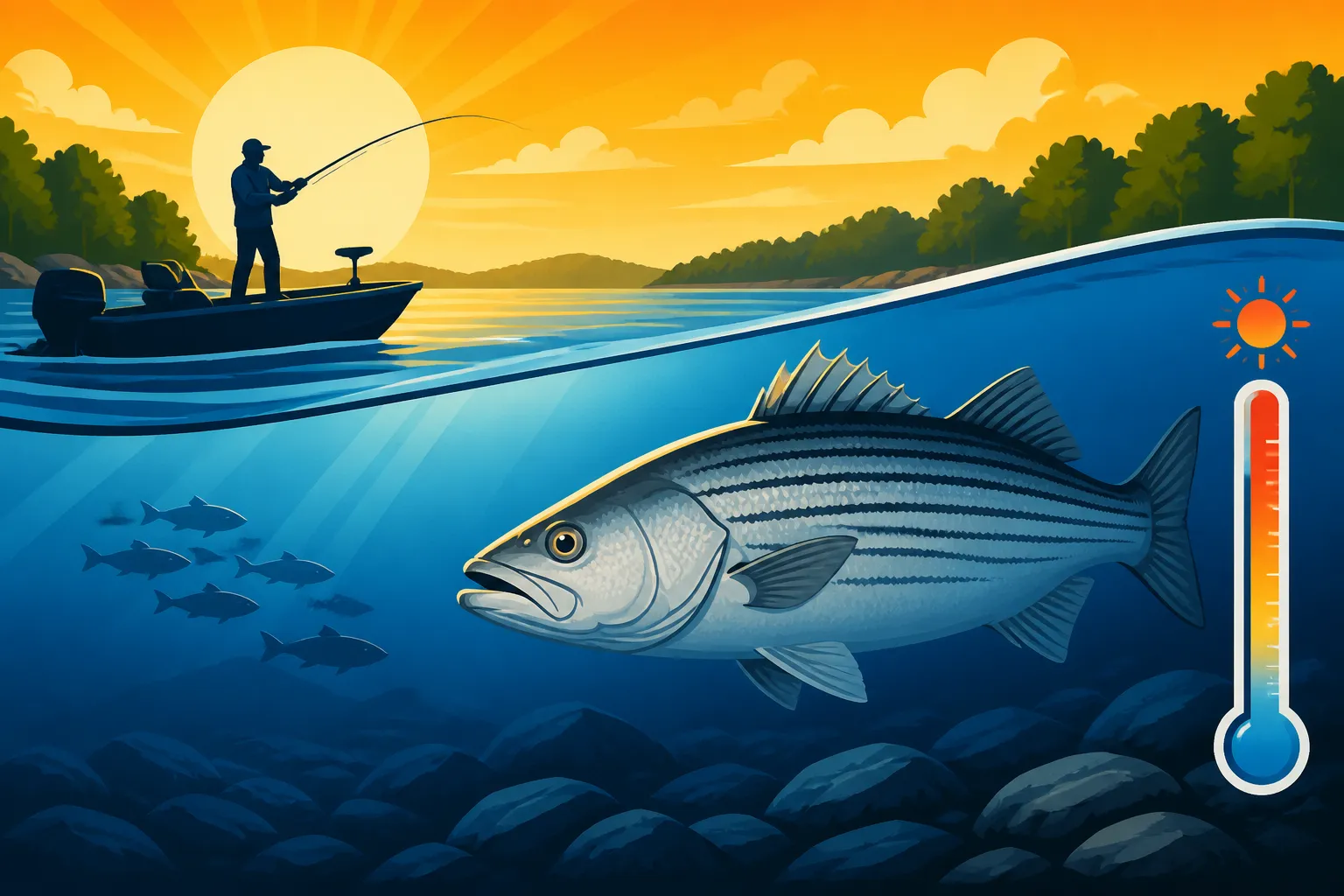
Imagine trying to run a marathon in a sauna – that's how a striper feels in warm surface water. Striped bass thrive in cooler water, ideally between 60 to 70 degrees Fahrenheit. While they can tolerate slightly warmer temperatures for short periods, prolonged exposure to water above 75 degrees can be incredibly stressful and even deadly for them. Their high metabolic rate means they need a lot of oxygen, and warmer water simply doesn't hold as much dissolved oxygen as colder water does.
As spring transitions into the scorching South Carolina summer, the sun's relentless rays heat the upper layers of Lake Murray. What was once comfortable cruising grounds for stripers becomes a thermal trap. They don't just "prefer" cooler water; their very survival depends on finding it. This biological imperative drives them to seek out the deepest, coolest pockets of the lake where they can find relief and the oxygen they need to sustain themselves. Think of it as their natural air conditioning system – they’re heading to the basement to escape the heat!
The Crucial Role of Dissolved Oxygen
Water temperature and dissolved oxygen are inextricably linked, especially for fish with high oxygen demands like stripers. Colder water naturally holds more dissolved oxygen (DO) than warmer water. As the surface of Lake Murray heats up throughout late spring and into summer, the oxygen levels in those upper layers begin to decline. Simultaneously, the deeper, colder layers retain higher oxygen concentrations.
This creates a critical scenario: stripers need both cool temperatures and sufficient oxygen to survive and thrive. They can't just dive into any deep, cold abyss; if that cold water is devoid of oxygen (which can happen in very deep, stagnant areas due to decomposition), it becomes a "dead zone." Thus, stripers are constantly searching for that perfect balance – a thermal refuge with adequate oxygen. This is a primary factor in explaining Why Lake Murray Stripers Move Deeper as Water Warms.
Understanding Lake Murray's Summer Stratification and the "Squeeze"
Lake Murray, like many deep reservoirs in warmer climates, undergoes a process called thermal stratification during the summer months. This phenomenon creates distinct layers of water with different temperatures and, crucially, different oxygen levels. For stripers, understanding this stratification is paramount to pinpointing their whereabouts.
Formation of the Thermocline
As the summer sun bakes Lake Murray, the surface water warms rapidly. This warm, less dense water floats on top of the colder, denser water below. A distinct boundary forms between these two layers, known as the thermocline. Above the thermocline is the epilimnion (warm, oxygenated surface water), and below it is the hypolimnion (cold, deep water). The thermocline itself is characterized by a rapid drop in temperature for every foot of depth.
In Lake Murray, this thermocline typically sets up by late spring and can persist through early fall. The depth of the thermocline can vary based on weather patterns, but it usually stabilizes somewhere between 20 to 40 feet in many areas of the lake. This horizontal "wall" of rapidly changing temperature creates a barrier, limiting the comfortable vertical movement of stripers. Experienced anglers often use their fish finders to locate this thermocline, as it’s a vital clue to where fish might be holding.
The Oxygen Minimum Layer and the "Summer Squeeze"
While the hypolimnion (deep, cold water) offers the respite from heat that stripers need, it often comes with a significant catch: reduced dissolved oxygen. As organic material (like dead algae and leaves) sinks to the bottom, bacteria decompose it, consuming oxygen in the process. This leads to the formation of an oxygen minimum layer, or even an anoxic (oxygen-depleted) zone, in the deepest parts of the hypolimnion.
This creates what anglers often refer to as the "summer squeeze" or "death zone" for stripers. They are literally caught between a rock and a hard place: too hot and low oxygen on the surface (epilimnion), and too cold with no oxygen at the bottom (hypolimnion). Their habitat is compressed into a relatively narrow band of water – usually just above, within, or just below the thermocline – where the water is cool enough and has sufficient oxygen. This makes finding this specific, often thin, band of water crucial for anyone hoping to succeed in Lake Murray Summer Striped Bass Techniques in South Carolina.
Following the Food: Where Baitfish and Stripers Converge
Stripers are apex predators, and their movements are almost always tied to their food source. Just as stripers seek comfortable temperatures and oxygen, so do the baitfish they prey upon, primarily threadfin and gizzard shad, and Lake Murray's prolific alewife population. Understanding how these baitfish react to summer conditions is key to locating the stripers.
Baitfish Migration Patterns
As Lake Murray stratifies, baitfish also seek their comfort zones. Alewives, in particular, are a favorite food source for stripers and are highly sensitive to water quality. When surface waters become too warm or oxygen-depleted, these baitfish will also descend to cooler, more oxygenated depths. They don't always go as deep as the stripers might tolerate, but they will congregate around the edges of the thermocline, often just above or within it, where conditions are more favorable.
This creates predictable patterns: a "bait ball" showing up on your fish finder in the middle depths is often a sure sign that stripers aren't far behind. Stripers, with their keen senses and powerful swimming ability, will patrol the thermocline, ambushing schools of baitfish that are trapped in this layer. Knowing that these baitfish are actively trying to avoid both the hot surface and the oxygen-depleted depths gives you a massive advantage in predicting where to cast your line.
Identifying Key Lake Murray Deepwater Structures
Once you understand the physiological needs of stripers and the movements of their prey, the next step is to apply this knowledge to the specific contours of Lake Murray. Stripers in summer will abandon the shallow flats and coves they frequented in spring and move to deepwater structures that intersect the thermocline and oxygenated zones.
Look for areas like submerged humps, deep river and creek channels, significant ledges, and deep points that drop off rapidly into open water. Prime examples on Lake Murray include the deep water around Dreher Island, the main river channel, and several large humps and offshore structures that can be found with good electronics. These underwater features act like highways and ambush points for stripers, allowing them to conserve energy in the cooler depths while still having access to passing schools of baitfish. Anchoring the Submerged Humps Near Dreher Island for Stripers is a classic summer tactic because these spots provide that critical combination of depth, structure, and bait.
Table: Typical Striper Depths and Oxygen Levels in Lake Murray Summer
| Depth Range (Feet) | Water Temperature (°F) | Dissolved Oxygen (mg/L) | Striper Presence | Angling Strategy Implications |
|---|---|---|---|---|
| 0-15 (Surface) | 80-90 | Low (2-4) | Rare | Avoid shallow areas in direct sun |
| 15-30 (Thermocline) | 70-79 | Moderate (4-6) | High | Crucial zone for active fish, bait |
| 30-50 (Hypolimnion) | 60-69 | Low to None (0-3) | Low (Stress) | Check oxygen; dead zones common |
| 50+ (Deepest) | 55-60 | Very Low/None (0-1) | Absent | Unsuitable for stripers |
Note: These are approximate values and can vary based on specific lake conditions, weather, and time of summer.
Mastering Deepwater Angling Strategies for Summer Stripers
Finding these deepwater stripers is one thing; consistently catching them is another. It requires a shift in mindset and technique from your spring and fall fishing. Forget the topwater blow-ups and shallow-crankbait action; summer deepwater stripers demand precision, the right gear, and often, a lot of patience. This is where your preparedness truly pays off.
Essential Electronics and Gear
You can't effectively fish deep water blind. Modern marine electronics are your best friend when targeting summer stripers. A high-quality fish finder with down imaging and side imaging capabilities, like those offered by brands such as Humminbird or Garmin (many models available on Amazon), is almost non-negotiable. These units allow you to:
- Locate the Thermocline: Identify the depth at which the water temperature rapidly changes, indicating the striper's comfort zone.
- Spot Baitfish Schools: Mark those crucial bait balls that stripers are likely to be harassing.
- Identify Deepwater Structure: See humps, channels, and ledges where fish will congregate.
- Track Your Lures/Bait: Some advanced units can even help you see your downrigger balls or weighted lures as they descend, ensuring you're presenting your offering directly in the strike zone.
Beyond electronics, you'll need the right tackle. Heavy-action rods (7-8 feet) paired with high-capacity baitcasting or spinning reels are essential for fighting powerful stripers in deep water. Spool up with 20-30 lb monofilament or fluorocarbon, or even heavier braided line with a fluorocarbon leader for abrasion resistance. For specialized techniques, a good set of planer boards, downriggers, or lead core line can be purchased from various reputable tackle retailers, and yes, even on platforms like Amazon, making it convenient to gear up. Don't forget a large landing net and a cooler with plenty of ice – those summer stripers need to be kept cold!
Proven Deepwater Techniques and Rigs
Once you’ve found the fish and geared up, it’s time to get your bait or lure into the strike zone. This usually means presenting your offering at precise depths, often much deeper than you might be used to. This is where a lot of anglers trying to target Striped Bass Depth Patterns at South Carolina's Lake Murray in Summer miss the mark.
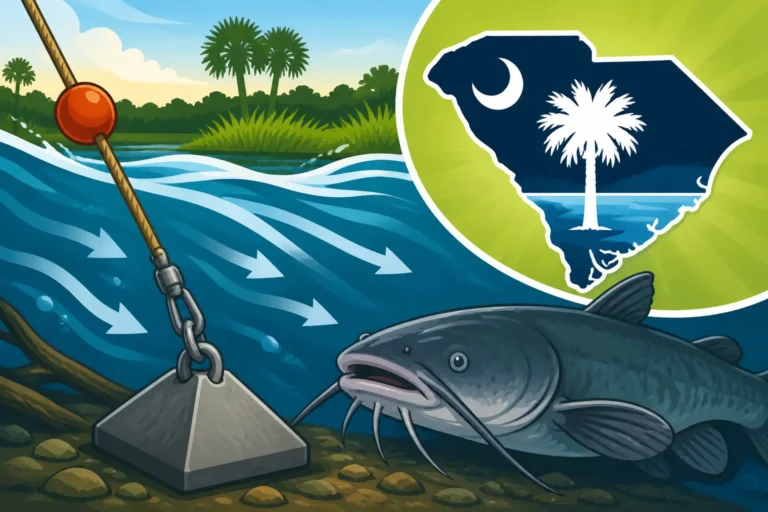
- Downrigging: This is arguably the most effective method for consistently targeting deep stripers. Downriggers use a heavy ball to carry your bait or lure down to a specific depth, which is then released when a fish strikes. You can present live bait (like alewives or gizzard shad) or artificial lures (spoons, bucktails, deep-diving crankbaits) exactly where the fish are holding, often right on the thermocline.
- Lead Core Line/Sufix Advanced Lead Core: This specialized fishing line has a lead core wrapped in a braided sheath, allowing it to sink without additional weight. Different colors mark specific depths, making it easier to present lures at a consistent level. It's often used for trolling, especially when trying to cover a wider area.
- Live Bait Free-Lining/Balloon Fishing: If you find stripers actively feeding near the surface in low-light conditions (dawn/dusk) or during a brief cool spell, you can free-line live bait. However, for deeper presentations without a downrigger, some anglers use a balloon to suspend live bait at a set depth or use heavy slip sinkers to get bait down quickly.
- Jigging Spoons: When you mark schools of stripers clustered tightly on structure, vertical jigging with heavy spoons can be incredibly effective. Drop a heavy spoon, like a War Eagle or a Hopkins spoon (easily found on Amazon), directly over the fish, then sharply lift and drop your rod tip to imitate a struggling baitfish. This can trigger aggressive reaction strikes.
- Planer Board Trolling: While often associated with surface fishing, planer boards can also be used to present baits and lures out to the sides of the boat while running downriggers or lead core lines, expanding your spread and covering more water. This is particularly useful for presenting live bait for Best Bait for Striped Bass in Freshwater Lakes. Remember, the goal is to get your offering into that cool, oxygenated "squeeze" zone where the stripers are waiting. Mastering these techniques will significantly improve your chances of success and help you understand How to Fish Deep Water From a Boat.
Summer fishing for stripers on Lake Murray can be challenging, but it's incredibly rewarding when you crack the code. By understanding their biological needs and adapting your techniques, you can enjoy some fantastic fishing, even on the hottest days. Before you head out, always double-check the latest regulations from the South Carolina Department of Natural Resources to ensure a responsible and enjoyable trip. For more insights on seasonal patterns, be sure to check out our guide on Striped Bass Winter Fishing Patterns in Freshwater Lakes. And for those chasing records, remember that understanding How Water Temperature Affects Fish Feeding can be the difference maker!
Disclaimer
Fishing conditions and regulations in South Carolina can change. Always consult the South Carolina Department of Natural Resources (SCDNR) for the most current rules and advisories before planning your fishing trip. This guide is for informational purposes only and does not constitute official legal advice.