Crappie Jigging Techniques for Beginners
It’s incredibly frustrating when you’re out on the water, excited to catch some crappie, but the bites just aren't happening, or you feel completely lost on where to even start. Many aspiring anglers struggle with the sheer variety of techniques and tackle out there, making crappie fishing seem more complicated than it needs to be. This guide is here to cut through the confusion, offering a comprehensive, beginner-friendly walkthrough of the most effective crappie jigging techniques, designed to get you catching more fish in South Carolina’s abundant waters.
Understanding Crappie Behavior and Habitat
Before you even think about tying on a jig, it’s crucial to understand the crappie you’re trying to catch. These fish aren't just swimming around randomly; they have specific preferences for where they hang out, and these spots change throughout the year. Knowing their habits is half the battle, trust me. You can have the fanciest gear in the world, but if you're not putting your bait where the fish are, you're just casting for exercise.
Seasonal Movements and Depths
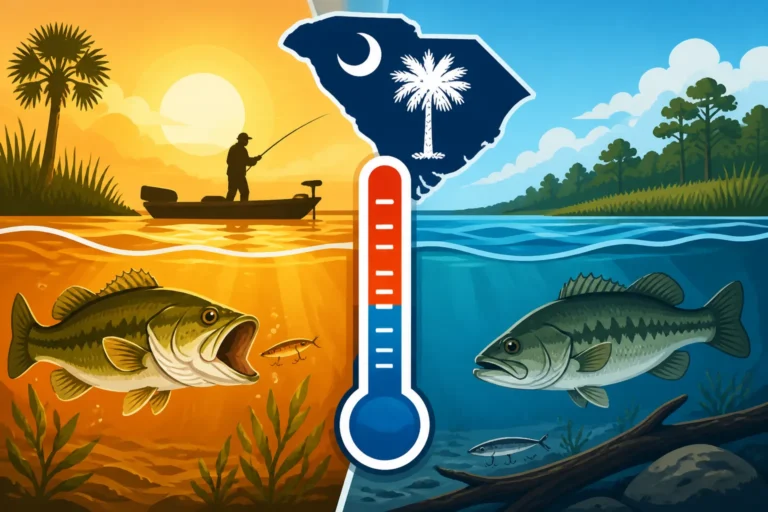
Crappie are highly influenced by water temperature, which dictates their movements and the depths they prefer. Think of it like us changing our clothes for the seasons – crappie change their homes! This is why knowing the best time of year to catch crappie can make a huge difference in your success.
In the spring, as water temperatures rise, crappie start moving from deeper, open water into shallower areas to spawn. This is often when they're most accessible to anglers, congregating around submerged brush, docks, and lily pads in water as shallow as 2-5 feet. They're focused on reproduction, so they'll be aggressive, guarding their nests. You’ll find them shallower earlier in the spring, and as the spawn peaks, they might move slightly deeper to avoid direct sunlight, but still remain in the immediate vicinity of their spawning grounds. It's a prime time for sight fishing if the water is clear enough, or at least targeting visible cover.
As summer heats up, crappie retreat to deeper, cooler water, often suspending over structure or congregating in brush piles in 10-20 feet or more, especially during the hottest parts of the day. They become less active and more spread out, making them a bit tougher to locate. Early mornings and late evenings might see them move shallower to feed, but generally, summer means fishing deeper structure. This is when understanding how to jig for crappie in deep water becomes absolutely essential.
Fall is a fantastic time for crappie fishing in South Carolina. As temperatures cool, crappie become more active again, feeding heavily in preparation for winter. They often move back into shallower coves and creek channels, chasing baitfish. You might find them suspended at various depths, from 5 to 15 feet, depending on the day and the presence of bait. They are usually more willing to bite during this season, making techniques like slow trolling or casting to structure very effective. Many anglers swear by fall as the best time to load up on crappie.
In winter, crappie typically return to deeper, more stable water, often suspending near ledges, deep brush piles, or river channels. Their metabolism slows down, and they become more lethargic, requiring a much slower, more subtle presentation. You'll often find them schooled tightly, so when you find one, you've likely found a whole bunch. This can be challenging for beginners, as bites are often incredibly light, feeling like nothing more than a slight "tick" or added weight on your line. Understanding South Carolina crappie fishing techniques by season is key to adapting your approach.
Structure and Cover Preferences
Crappie absolutely adore structure and cover. It provides them with ambush points for feeding and protection from predators. If you're not fishing around something, anything, you're probably not going to find crappie. This is a fundamental principle that applies whether you're on Lake Marion or a small farm pond in the Upstate.
Brush piles and submerged timber are crappie magnets. These can be naturally fallen trees, stumps, or man-made structures placed by anglers or fishery managers. Crappie will hold tightly to these areas, especially the shaded sides. Learning to drop a jig precisely into these areas without getting snagged is a skill that comes with practice, but it's incredibly rewarding. You'll often find these spots along old creek channels, points, or sudden depth changes.
Docks, piers, and bridges also provide excellent crappie habitat, particularly in shallower waters. The pilings and shaded areas beneath these structures offer protection and often attract baitfish. Many of South Carolina's lakes, like Lake Moultrie Catfish and Crappie Fishing Guide areas, feature numerous docks that hold crappie year-round. Fishing these spots often requires a quiet approach and precise casts to get your jig into the darkest corners where crappie like to hide. Even old, rundown docks can be goldmines, as long as they offer shade and submerged structure.
Weed lines, lily pads, and grass beds are more common in shallower areas and are prime crappie territory during the warmer months, especially in spring and early summer. These dense growths offer excellent ambush points for crappie targeting smaller baitfish and insects. Fishing these areas often involves skipping jigs under overhanging vegetation or pitching them into pockets within the cover. Just be prepared for potential snags, as working jigs through thick vegetation can be tricky. Knowing how to find crappie in spring often means looking for this type of cover.
Essential Crappie Jigging Gear for Beginners
Walking into a tackle shop can be overwhelming, with rows upon rows of rods, reels, lines, and an endless array of jigs. But for crappie jigging, especially as a beginner, you really only need a few key pieces of gear. The goal is sensitivity and light presentation – crappie often have a very subtle bite. Many of these items are easily found on platforms like Amazon, offering a convenient way to get started.
Rod, Reel, and Line Selection
The right combination of rod, reel, and line can dramatically improve your crappie jigging experience, helping you detect those light bites and present your jig effectively.
For crappie jigging, a light to ultralight action spinning rod is your best friend. Look for rods in the 5 to 7-foot range. The key is a sensitive tip that can telegraph even the faintest tap from a crappie, but with enough backbone to set the hook and handle a decent fish. A longer rod (6.5-7 ft) can help with casting distance and shock absorption, while a shorter one (5-6 ft) offers more precision for pitching into tight spots around docks or brush. Graphite rods tend to be more sensitive than fiberglass, which is a big plus for feeling those subtle bites. Brands like Ugly Stik offer durable, affordable options that are great for beginners.
Pair your sensitive rod with a small, lightweight spinning reel in the 500 to 1000 series size. These reels are designed for light line and small lures, perfectly balancing your ultralight rod. Smooth drag is important, as crappie have delicate mouths that can tear easily if you apply too much pressure. Shimano and Daiwa both make excellent reels in this category that won't break the bank. You can find many great entry-level combos (rod and reel together) on Amazon, which can be a cost-effective way to start.
When it comes to line, thinner is almost always better for crappie. It's less visible to the fish, offers better casting distance with light jigs, and improves sensitivity. Monofilament line in 4 to 6-pound test is a classic choice for beginners. It's inexpensive, easy to tie, and has some stretch, which can be forgiving. Fluorocarbon line (4-6 lb test) is a step up; it's nearly invisible underwater and sinks, which can be an advantage for deeper presentations. However, it's less forgiving with knots and can be pricier. Braided line (6-10 lb test) offers extreme sensitivity and no stretch, but it's very visible, so many anglers add a fluorocarbon leader (2-4 ft long) with a knot like the Albright or FG knot. For beginners, sticking with quality 4-6 lb monofilament or fluorocarbon is a great starting point.
Jig Types and Sizes
The world of crappie jigs is vast, but you don't need every single one to start catching fish. Focus on a few proven types that cover a range of presentations.
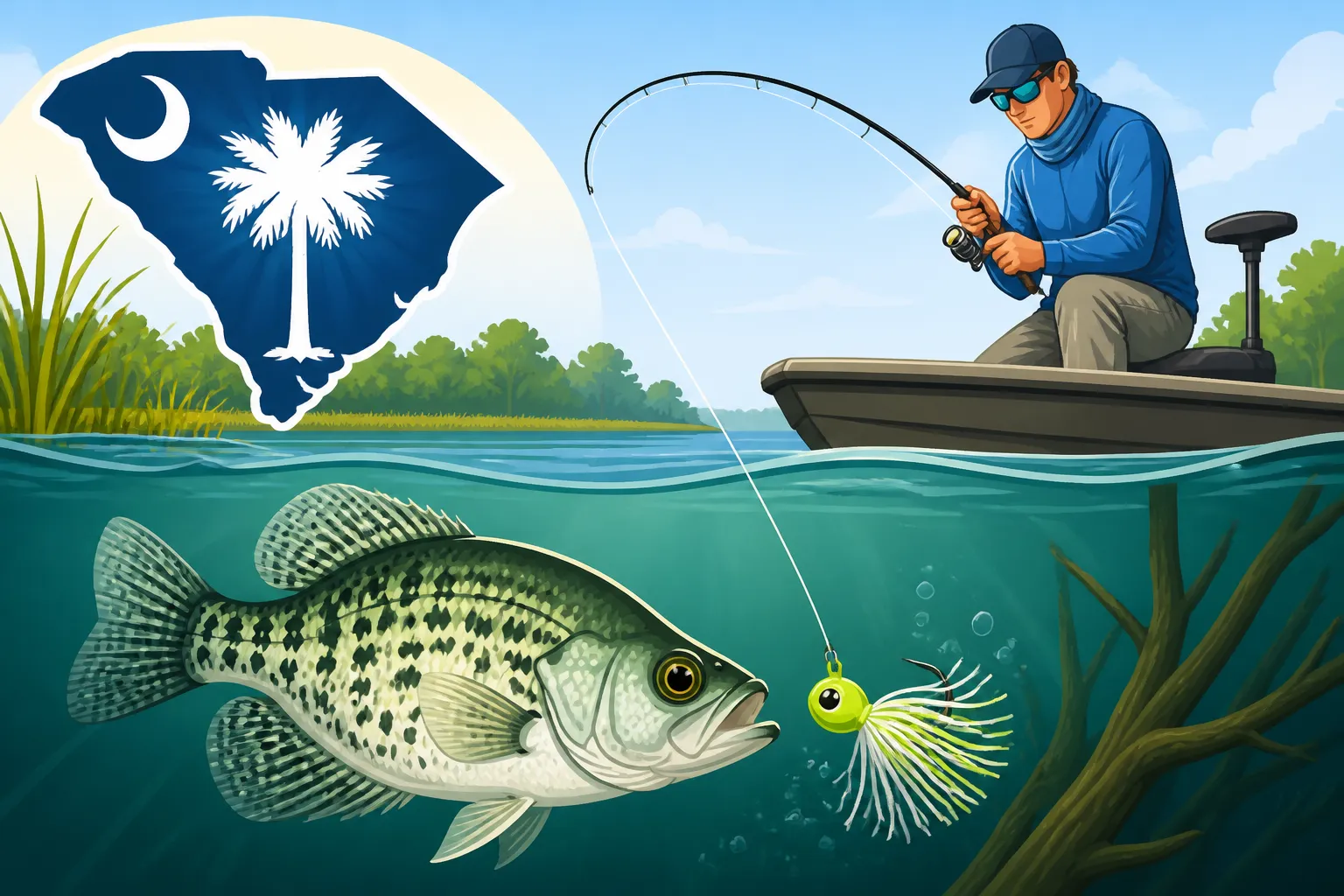
Tube jigs are perhaps the most iconic crappie jig. They consist of a soft plastic body with tentacles, offering a lot of subtle action in the water. They come in various sizes, but 1/32 oz and 1/16 oz are staple sizes for crappie. The hollow body allows you to insert a jig head, and the tentacles flutter enticingly on the fall or with a slight twitch. They are incredibly versatile and work well for vertical jigging, casting, and even under a bobber.
Curly tail grubs are another fantastic choice. These soft plastic lures feature a thin, curled tail that provides a swimming action with even the slowest retrieve or current. Sizes 1 inch to 2 inches are ideal for crappie, typically rigged on 1/32 oz or 1/16 oz jig heads. The continuous action of the tail can be irresistible to crappie, especially when they're actively feeding. They're particularly effective for casting and retrieving, as the tail's movement helps attract attention.
Hair jigs are a more traditional option, often made from deer hair, marabou, or bucktail. Their natural materials give them a very lifelike, pulsating action in the water, especially when wet. Common sizes range from 1/64 oz to 1/8 oz. While perhaps not as flashy as some plastics, hair jigs are deadly, particularly in clear water or when crappie are finicky. They excel with a slow, deliberate retrieve or subtle vertical jigging. Marabou jigs, in particular, expand and contract with the slightest movement, mimicking small baitfish or aquatic insects.
Jig Colors and Their Role
Choosing the right jig color can feel like guesswork, but there are some general guidelines that can help, influenced by water clarity, light conditions, and even the time of day. This is where researching the best jig colors for crappie fishing really pays off.
In clear water, natural and translucent colors often perform best. Think about shad, minnow, or insect patterns. Colors like clear with silver flake, smoke, or light greens and blues can be very effective. The goal is to imitate natural prey without being overly flashy or unnatural-looking. When crappie have a good view, they can be particular about realism.
In stained or murky water, brighter, more opaque colors are typically the way to go. Chartreuse, orange, pink, and bright greens stand out better in low visibility conditions, making it easier for crappie to see and react to your jig. Darker colors, like black and blue, can also create a strong silhouette against a bright sky, making them visible even in dark water. Sometimes, a combination of bright and dark, like a black back with a chartreuse belly, works wonders.
Low light conditions, such as early morning, late evening, or overcast days, often favor brighter or glow-in-the-dark colors. Chartreuse, white, and orange can be very effective as they reflect ambient light well. On super dark days or for night fishing, jigs with glow-in-the-dark properties can be incredibly productive, as they offer the only source of light for the fish to key in on. This is especially true if you are trying to find out if you can catch crappie at night.
Conversely, on bright, sunny days, particularly in clear water, more subdued or translucent colors may be better. Too much flash can spook fish. However, sometimes a bit of flash, like a jig with silver or gold flake, can mimic the shimmer of baitfish and draw strikes. It often comes down to experimentation, so having a variety of colors in your tackle box is always a good idea. You can find multi-packs of popular crappie jigs in various colors on Amazon, giving you plenty of options to test out.
Fundamental Crappie Jigging Techniques
Now that you've got your gear, let's talk about how to actually use those jigs to catch fish! These techniques are the bread and butter of crappie angling and will serve as a solid foundation for your future fishing adventures.
Vertical Jigging
Vertical jigging is one of the most straightforward and effective methods, especially when you’ve located a school of crappie holding tight to structure or suspended in open water. This technique is often employed when fishing from a boat directly over the fish, but it can also be adapted from a pier or even a steep bank.
The basic premise is simple: you drop your jig straight down to the depth where the crappie are holding. Once your jig is at the target depth, you impart action by gently lifting and dropping your rod tip. Think of it as a subtle dance for your jig. A common retrieve involves a lift of 6-12 inches, followed by a slow, controlled drop, allowing the jig to flutter naturally. The key is to keep your line taut enough to feel the bite on the fall, as crappie often strike as the jig descends. It's often referred to as "yo-yoing" the jig.
This technique is incredibly effective for how to jig for crappie in deep water, especially in South Carolina's larger lakes like the Santee Cooper lakes, where crappie often suspend over submerged timber or ledges. You'll often see anglers using their fish finders to pinpoint schools and then drop their jigs directly into them. The real challenge is feeling the bite. Crappie bites can be incredibly subtle – sometimes it's just a slight "tick," a spongy feeling, or your line simply goes slack for a moment when it should be falling. It takes practice and a sensitive rod to discern these subtle takes. When you feel anything out of the ordinary, set the hook!
Casting and Retrieving
Casting and retrieving jigs is a versatile technique that allows you to cover more water and target crappie holding near visible cover or scattered throughout an area. This is a great method for targeting docks, submerged brush, or weed lines from a distance.
There are several ways to retrieve a crappie jig after casting. One common method is the slow roll: cast your jig out, let it sink to your desired depth (counting it down can help), and then slowly reel it back in, just fast enough to make the jig's tail or tentacles subtly pulse. This retrieve mimics a lethargic baitfish and can be deadly when crappie are less active. You want to maintain just enough tension to feel the jig working.
Another effective retrieve is the lift-and-drop (or "swim-and-fall"). After casting and letting the jig sink, gently lift your rod tip to make the jig swim upwards a foot or two, then drop your rod tip, allowing the jig to fall on a semi-slack line. Many strikes occur on the fall, so watch your line closely for any twitches or pauses. You can vary the length of the lift and the speed of the fall to see what the crappie prefer.
Finally, a twitch-and-pause retrieve can be very effective, especially around visible cover. Cast your jig near a dock piling or brush pile, let it sink for a few seconds, then give your rod tip a subtle twitch or two, followed by a pause. These short, erratic movements can mimic a wounded baitfish, often triggering an aggressive reaction strike. Experiment with the length of your pauses – sometimes a longer pause is what it takes. This technique is particularly useful for anglers fishing from the bank or when targeting specific pieces of cover.
Spider Rigging Slow Trolling Jigs
Spider rigging, often called slow trolling jigs, might sound intimidating with its multi-rod setup, but it’s actually a highly effective and relatively easy technique for beginners looking to cover a lot of water and find active crappie. It's especially popular on large reservoirs like Lake Wateree and the Santee Cooper lakes in South Carolina, which are known for their abundant crappie populations.
The core idea behind spider rigging is to present multiple jigs at varying depths and distances from your boat simultaneously, increasing your chances of finding crappie schools. This usually involves mounting several rod holders around the boat, allowing you to deploy anywhere from 4 to 10 (or more!) rods. Each rod is typically rigged with a single crappie jig or a double-jig rig, often weighted to keep them at specific depths. Common jig sizes for this technique are 1/16 oz to 1/8 oz, and sometimes even heavier if you're targeting very deep water.
Once your jigs are in the water, you slowly troll (move) your boat, usually at speeds between 0.3 to 1.0 miles per hour. This slow movement causes the jigs to swim and flutter naturally through the water column. You can vary your trolling speed, direction, and even the type of jigs you're using on different rods until you find what the crappie are biting. When a crappie strikes, you'll usually see the rod tip bend sharply, or sometimes even pull straight down. It’s an incredibly efficient way to locate active fish and determine their preferred depth and color. While it requires a bit more equipment and boat setup, it can be a game-changer for consistent crappie success, especially when crappie are scattered or when you're exploring new areas.
Reading the Water and Locating Crappie
Finding crappie is often more challenging than getting them to bite once you've located them. It requires a combination of understanding their habitat preferences and utilizing tools, both high-tech and old-school, to pinpoint their hiding spots.
Interpreting Sonar and Fish Finders
For many anglers, especially those fishing from a boat, a fish finder (sonar unit) is an indispensable tool for locating crappie. Learning to interpret what you see on the screen can dramatically reduce your unproductive fishing time. Modern fish finders from brands like Humminbird or Garmin are incredibly powerful, but even a basic unit can show you valuable information.
When looking at your fish finder screen, you're primarily looking for three things: structure, baitfish, and crappie arches. Structure will appear as irregular shapes on the bottom or distinct vertical lines (like tree trunks) if you have side imaging or down imaging. If you see a dense cluster of lines or blobs around a submerged brush pile, that's often a good sign. Baitfish, which crappie feed on, usually show up as dense clouds of small dots or a fuzzy mass, often suspended at various depths. If you see bait, crappie are likely nearby.
Crappie themselves will often appear as arches on your traditional 2D sonar, or distinct, brighter dots/blobs with down imaging. The size and thickness of the arch can give you an idea of the fish's size. If you see multiple arches stacked tightly together, you’ve likely found a crappie school. Pay close attention to the depth at which these arches are appearing, as this is the depth you'll want to target with your jigs. Don't just look for fish on the bottom; crappie often suspend in the middle of the water column, especially during summer or winter. Mark any productive spots with your GPS to return to them later. This skill is critical for serious crappie anglers and can transform your fishing trips into true crappie hunts.
Identifying Productive Areas Without Electronics
Even if you don't have a fancy fish finder, you can still find crappie by learning to "read the water" and observing your surroundings. Many great crappie spots are visible to the naked eye, particularly on smaller ponds or close to the bank on larger lakes.
Start by looking for visible structure and cover. This includes obvious things like docks, piers, fallen trees, brush piles, or bridges. Crappie will almost always relate to these features. Pay attention to the sunny side versus the shaded side; crappie often prefer shade, especially on bright days. In springtime, look for shallow coves with lily pads, cattails, or submerged grass beds – these are prime spawning grounds. You might even see subtle ripples or movements on the surface from fish feeding in these areas.
Another key indicator is the presence of baitfish activity. If you see small baitfish dimpling the surface, jumping out of the water, or hear them splashing, crappie are likely nearby, actively feeding. Look for birds like herons or ospreys fishing, as they often key in on baitfish schools, which in turn attract crappie. Areas where two different types of water meet, like a murky creek entering clearer lake water, can also be productive "transition zones" where fish congregate. Pay attention to sudden changes in depth, such as sharp drop-offs or underwater humps visible on a contour map if you have one. Even without electronics, observant anglers can find consistent success by understanding these patterns and knowing where to throw a jig.
Common Beginner Mistakes and How to Avoid Them
We all make mistakes when we're learning something new, and crappie fishing is no exception. The good news is that many common beginner errors are easy to identify and correct, instantly boosting your success rate on the water.
Using Too Heavy Gear or Line
One of the most frequent mistakes I see new crappie anglers make is using tackle that's simply too heavy for these subtle-biting fish. It’s easy to grab a general-purpose spinning combo, but crappie fishing demands finesse.
Using a rod that's too stiff or heavy action will kill your sensitivity. You won't feel those light crappie bites, which often feel like nothing more than a slight pressure change or a spongy feeling on the line. A medium-action bass rod, for example, is just too cumbersome for the delicate presentation and bite detection needed for crappie. Opt for those ultralight or light action rods we discussed earlier; they might feel flimsy at first, but they are designed precisely for this kind of fishing. They will literally tell you when a crappie is just breathing on your jig.
Similarly, line that's too heavy (think 8 lb test or more) presents several problems. Thicker line is more visible underwater, potentially spooking wary crappie. It also creates more drag in the water, making it harder for your small, lightweight jigs to sink naturally and reach the desired depth. Most importantly, heavy line significantly reduces your ability to feel subtle bites. The thicker the line, the less vibration and pressure can be transmitted up to your rod tip. Stick to 4-6 lb test monofilament or fluorocarbon. If you absolutely insist on braid for its strength, always tie on a fluorocarbon leader of 4-6 lb test; it makes a huge difference in presentation and bite detection. Upgrading to the right line and rod often means going to a dedicated tackle shop or checking out reputable brands on Amazon for specialized crappie gear.
Fishing Too Fast or Too Deep/Shallow
Crappie are not usually fast-moving predators like a striped bass; they're more ambush hunters. Fishing at the wrong speed or depth is a surefire way to miss out. This is why understanding seasonal movements is so crucial.
The most common error is retrieving your jig too fast. Crappie often prefer a slow, deliberate presentation, especially in colder water or when they are lethargic. If you're reeling in at a pace that works for active bass, you're likely zipping your jig right past crappie that aren't willing to chase. Slow down. Think about barely moving your jig, just enough to get its tail or tentacles to flutter. For vertical jigging, the lifts should be gentle, and the drops slow and controlled. Many experienced anglers will tell you to fish slower than you think you need to, and then slow down even more.
Equally important is fishing at the wrong depth. Crappie typically hold at a very specific depth within the water column, often relating to the thermocline in summer, the bottom in winter, or shallow cover during the spawn. If you're consistently fishing 10 feet deep when the crappie are suspended at 5 feet, you're simply not putting your bait in their strike zone. Use your fish finder if you have one to pinpoint their depth, or experiment with different depths by counting down your jig. Start shallower and gradually increase your depth until you find fish. Conversely, don't cast into a foot of water in the dead of summer and expect results; crappie will likely be seeking cooler, deeper water. Adapting to the specific conditions of the day is key, which is why a good understanding of South Carolina fishing seasons guide is always helpful.
Not Varying Presentation
It's natural to stick with what's comfortable or what worked last time, but crappie are finicky, and what worked yesterday might not work today. Failing to vary your presentation is a significant hurdle for beginners.
If you're only casting and steadily retrieving, or only vertically jigging with the same cadence, you're limiting your chances. Crappie often respond to subtle changes. This means altering your jig's action, color, and even its size. If a slow retrieve isn't working, try a twitch-and-pause. If vertical jigging isn't producing, try a slightly faster lift or a longer pause on the fall. Sometimes, the slightest alteration can be the difference between an empty livewell and a full one.
Don't be afraid to change colors. If chartreuse isn't working, switch to white, then black and blue, then a natural shad pattern. Water clarity, light levels, and even baitfish preferences can change throughout the day, so what was effective in the morning might be ignored by afternoon. Keep a wide variety of jig colors and types in your tackle box, and be willing to experiment. You might discover that crappie in Lake Moultrie respond better to a specific blue flake jig, while those on Lake Murray prefer a white tube jig. The anglers who consistently catch crappie are the ones who are constantly experimenting and adapting until they crack the code for that particular day. It’s a process of elimination, but it's essential for success.
Popular Crappie Jig Types and Their Best Uses
| Jig Type | Common Sizes | Key Characteristics | Best Use Scenarios |
|---|---|---|---|
| Tube Jig | 1/32 oz, 1/16 oz, 1/8 oz | Hollow body, multiple fluttering tentacles, soft plastic | Vertical jigging, casting to structure, under a bobber, subtle action |
| Curly Tail Grub | 1"-2", 1/32 oz, 1/16 oz, 1/8 oz | Soft plastic with a thin, curved tail, continuous action | Casting & slow retrieving, spider rigging, active fish, searching |
| Hair Jig | 1/64 oz, 1/32 oz, 1/16 oz | Natural materials (marabou, bucktail), pulsating action | Clear water, finicky fish, slow retrieve, subtle presentation |
| Paddle Tail Swimbait | 1"-2.5", 1/16 oz, 1/8 oz | Soft plastic with a paddle-shaped tail, thumping action | Casting & retrieving, imitating minnows, more aggressive presentation |
| Minnow-Shaped Jig | 1.5"-2.5", 1/16 oz, 1/8 oz | Realistic baitfish profile, typically slimmer body | Clear water, mimicking specific baitfish, vertical or cast |
Remember, this table provides a general guideline. Many anglers have their personal favorites and unique combinations that work for them. The best approach is to experiment with different types and sizes to see what the crappie are biting on any given day.
Disclaimer
The information provided in this guide is for general informational purposes only. Fishing regulations, license requirements, and local conditions in South Carolina can change. Always consult the latest South Carolina Department of Natural Resources (SCDNR) regulations before heading out to fish. Adherence to all local, state, and federal laws is the angler's responsibility. Fishing involves inherent risks, and safety precautions should always be taken.