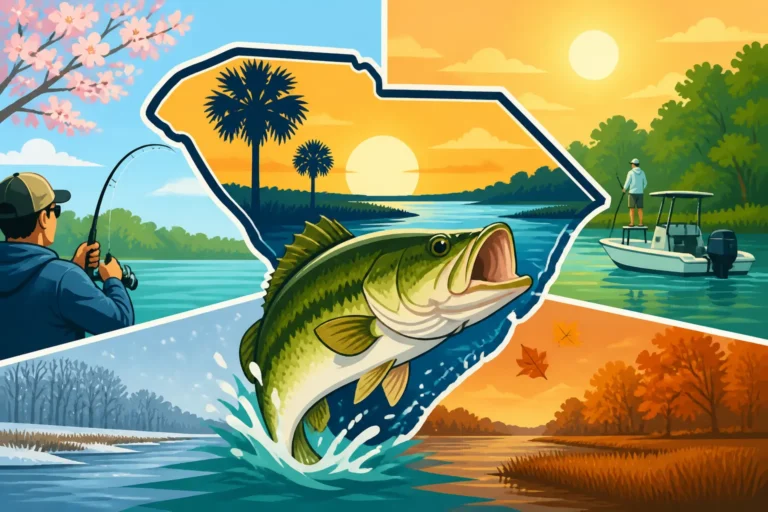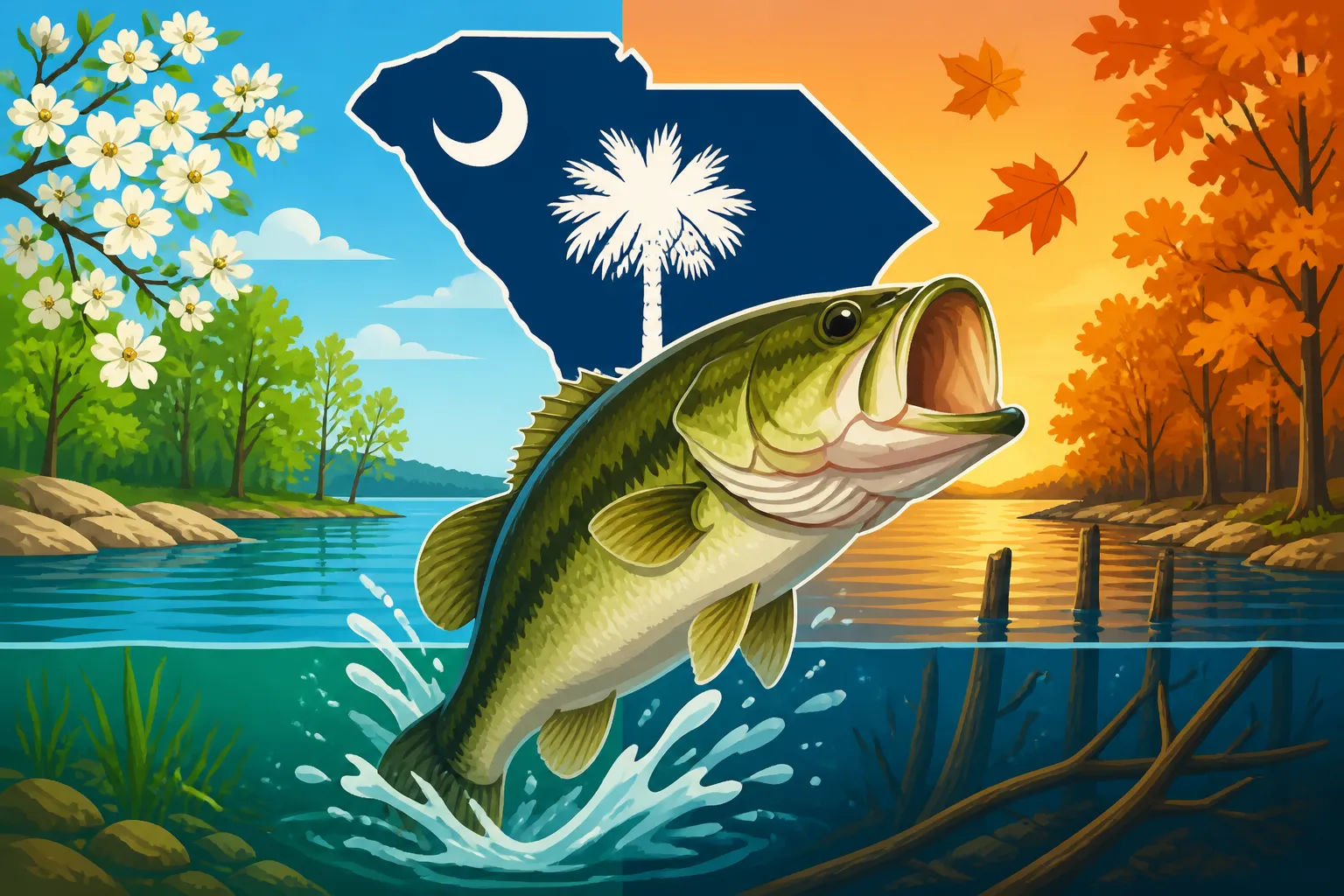
Lake Hartwell Spring and Fall Bass Fishing Patterns in South Carolina
Oh, Lake Hartwell. If you've spent any time on its vast, beautiful waters, you know it's a gem, but also a puzzle box when it comes to bass fishing. Anglers often face the frustrating challenge of finding consistent patterns on such a massive and diverse reservoir, especially as the seasons shift. This comprehensive guide will dive deep into the specific bass fishing patterns you can expect and successfully tackle during the vibrant spring and dynamic fall seasons on Lake Hartwell here in South Carolina.
Understanding Lake Hartwell's Unique Bass Fishery
Lake Hartwell isn't just any reservoir; it's a powerhouse, a sprawling body of water on the border of South Carolina and Georgia, known for its deep, clear waters, abundant forage, and incredible bass fishing potential. But its very size and varied terrain can be intimidating. You might be out there, looking at miles of shoreline, wondering where the fish could possibly be hiding. The key to unlocking its secrets lies in understanding its fundamental characteristics and how they influence bass behavior throughout the year.
The Lake's Geography and Structure
Lake Hartwell is a massive reservoir covering over 56,000 acres with nearly 962 miles of shoreline. That's a lot of water to cover, and it certainly contributes to the feeling of being overwhelmed when you're trying to locate fish. The lake was formed by damming the Tugaloo and Seneca Rivers, and their original riverbeds still run deep beneath the surface, creating natural highways for fish movement. Beyond these main channels, you’ll find a labyrinth of submerged timber, rocky points, long tapering main lake humps, and numerous creek arms that provide countless ambush points for bass.
Many anglers find themselves drawn to the major creek arms like the Tugaloo, Seneca, and Lightwood Creek, each offering distinct characteristics. For instance, the Tugaloo River Arm Bass Fishing on Lake Hartwell is often known for its rocky banks and steep drop-offs, while other areas might feature more gradual slopes and vast flats. Understanding these structural nuances is paramount. When you're fishing a deep, rocky bluff, your approach will be entirely different from when you're working a shallow, stump-filled cove. It’s not just about throwing a lure; it’s about presenting it where the fish want to be based on the available cover and depth.
The sheer amount of standing timber in certain sections can be a blessing and a curse. It provides excellent cover for bass, especially during colder months or bright sunny days, but it can also be a tackle eater. Learning to navigate these areas, whether with a trolling motor or by carefully pitching and flipping, is a skill developed over many hours on the water. These underwater forests are prime real estate for bass, offering protection from predators and ample feeding opportunities when baitfish are present.
Primary Forage and Its Impact
The diet of Lake Hartwell's bass largely dictates their behavior and where you'll find them. The primary forage here is threadfin and gizzard shad, which are abundant throughout the lake. These baitfish schools are the lifeblood of the bass population, and their movements heavily influence where the bass will be holding and feeding. When you see big schools of shad on your fishfinder, you can bet that hungry bass are not far behind. This is why having good electronics, whether a simple depth finder or a more advanced live-imaging sonar system, can be a game-changer. You can find some excellent units on platforms like Amazon that can really help you pinpoint these baitfish concentrations.
Beyond shad, bass will also feed on various other creatures, including bluegill, crappie, and even smaller bass. The presence of these alternative food sources can sometimes provide backup patterns when the shad are elusive. For instance, during the bluegill spawn in late spring and early summer, bass will often move into shallow pockets to gorge on bedding bream. Understanding the seasonal cycles of these different forage species gives you a significant advantage, allowing you to anticipate where the bass will be before you even launch your boat.
The impact of forage is perhaps most evident during the fall when shad begin to school up in massive balls, often migrating into creek arms and towards the surface. This creates incredible opportunities for bass to feed aggressively, leading to some of the most exciting topwater and schooling action of the year. Conversely, if baitfish are scarce in a particular area, bass won't stick around. They are constantly on the move, following their food supply, and successful anglers are those who can track these movements.
Key Water Parameters for Bass Anglers
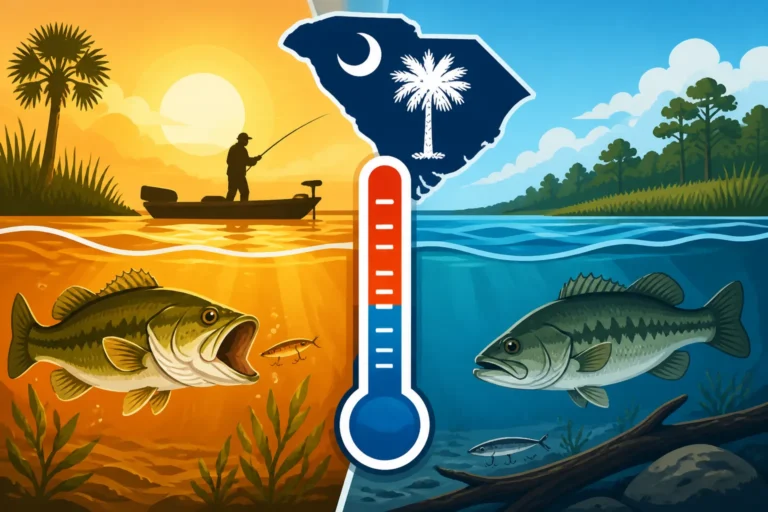
Water temperature, clarity, and level are crucial variables that often make or break a fishing trip on Lake Hartwell. These aren't just numbers; they tell a story about fish activity. Bass are cold-blooded, so their metabolism and behavior are directly tied to the water temperature. This is especially true during the critical spring and fall transitional periods. Knowing when the Largemouth Bass Spawning Season Explained truly kicks off, for instance, means watching the thermometer, not just the calendar.
In spring, as water temperatures rise from the mid-50s into the 60s, bass begin to move shallow for spawning. In the fall, as temperatures cool from the 80s down into the 60s, bass become more active and begin their aggressive feeding spree before winter. Clarity also plays a huge role. Lake Hartwell is generally a clear lake, especially on the lower end, which often means bass are more wary and require more subtle presentations. However, after heavy rains, the upper reaches of the river arms can become stained or muddy, which can concentrate bass and call for different lure colors and presentations. Learning to adjust your approach based on these conditions is vital.
Water levels, managed by the U.S. Army Corps of Engineers, can fluctuate throughout the year, impacting available cover and access to certain areas. A drop in water level can expose new structure, while a rise can flood new cover, drawing bass into shallower areas. Keeping an eye on the lake's current conditions, often available through local fishing reports or apps, can help you plan your day and avoid wasted time fishing barren spots. These parameters are dynamic, and staying flexible in your approach is a hallmark of successful Lake Hartwell anglers.
Spring Bass Fishing Dynamics on Lake Hartwell
Spring on Lake Hartwell is a time of incredible change and often, incredible fishing. It's when the bass, after a relatively dormant winter, begin to wake up, move around, and prepare for their most important annual event: the spawn. However, "spring" isn't a single, uniform period; it's a progression from cold, pre-spawn conditions to the chaotic spawn itself, and then to the post-spawn recovery. Each phase demands a different strategy, different locations, and often, different baits.
Pre-Spawn Aggression and Staging Areas
As winter loosens its grip and water temperatures begin to climb into the upper 40s and low 50s, Lake Hartwell's bass start making their first significant moves towards shallower water. This is the pre-spawn period, a time characterized by aggressive feeding as bass bulk up for the energy-intensive spawning ritual. They won't be on the actual beds yet, but they'll be staging in specific areas nearby, often referred to as "transition zones." Think about those first few warm days in February or March when you just know the fish are starting to think about it.
During this phase, bass will congregate on points, humps, and channel swings leading into major creek arms. These are typically areas where deeper water is readily accessible, providing a quick escape route, but also close to potential spawning flats. For example, some of the more productive spots might be main lake points near the entrance to major creeks where the water is 15-25 feet deep. Lures that mimic large baitfish, such as crankbaits, jerkbaits, and Alabama rigs (or A-rigs), can be incredibly effective during this time. The bass are looking for substantial meals to fuel their upcoming activities, and they'll often chase down a fast-moving bait. I've had some fantastic days throwing a large lipless crankbait around these staging areas, especially when the fish are concentrated.
One common frustration during pre-spawn is that bass can be finicky. One day they might smash a jerkbait, the next they might only nibble a slow-crawled jig. This is often due to fluctuating weather patterns – a sudden cold front can push them back to deeper water, making them less willing to chase. That's when a slower, more deliberate approach with a jig or a Carolina rig can be more productive. Remember, they're preparing, but they're not fully committed to the shallows yet, so always have a deep-water option handy. Knowing Bass Fishing Techniques for Spring Pre-Spawn is key to consistent success.
The Energetic Spawn Period
When water temperatures consistently hit the mid-60s, usually from late March through April, the spawn is in full swing on Lake Hartwell. This is the period when bass move into very shallow water – often less than 5 feet deep – to build their nests and reproduce. They'll seek out protected coves, small pockets, and flat banks with a hard bottom, often near some form of cover like a stump or a dock post. If you're a sight fisherman, this is your prime window to spot those dark circles on the bottom and target bedding bass directly.
The challenge during the spawn is that while bass are present in large numbers, they might not be actively feeding in the traditional sense. Their primary focus is protecting their eggs and fry. Therefore, your presentations need to be more about irritating them into striking rather than enticing a hunger strike. Soft plastics like lizards, tubes, and creature baits are excellent choices, pitched right onto the bed. You want the bait to sit in their face and provoke a defensive reaction. Sometimes, just leaving the bait motionless on the bed for an extended period is all it takes to trigger a bite.
It’s important to remember that sight fishing for bedding bass requires a lot of patience and stealth. A good pair of polarized sunglasses is essential, as is a quiet trolling motor. You don't want to spook these fish. While it can be incredibly exciting to catch a bass directly off its bed, many ethical anglers practice catch and release during this sensitive time to ensure the future health of the fishery. After all, we want those bass to successfully reproduce for years of great fishing to come.
Post-Spawn Recovery and Feeding Patterns
Once the spawn is complete, typically by May and into early June, bass enter the post-spawn phase. This is often described as a more challenging period because bass can be scattered and lethargic after the energy expenditure of spawning. Many anglers find this period frustrating, as the consistent patterns of pre-spawn or the focused targets of the spawn disappear. Bass will often move to nearby secondary points, isolated cover, or suspend near brush piles in slightly deeper water (5-15 feet), recuperating and waiting for their appetites to return. This is also a time when they might be found protecting fry.
However, once they recover, they become incredibly active feeders, often schooling up and chasing baitfish. This makes finding actively feeding bass more about locating the bait. Look for concentrations of shad near channel swings, around submerged timber, or along the edges of grass lines. Topwater baits like poppers, walking baits, and buzzbaits can be fantastic during this time, especially in the early mornings or late evenings when bass are pushing bait to the surface. Crankbaits, jigs, and Texas-rigged worms can also be effective for targeting those deeper, recovering fish. Knowing the Bass Fishing Techniques After the Spawn can really help you adapt your approach.
Another pattern that emerges during post-spawn is the move to offshore structure. As the water warms, some bass will pull away from the banks and relate to deeper humps, ledges, and brush piles. This is where your electronics truly shine. Learning to identify these structures and the fish holding on them can lead to incredible catches. Dropshot rigs, deep-diving crankbaits, and football jigs are excellent choices for these deeper targets. Don't be afraid to experiment with different depths and retrieve speeds until you find what triggers a bite from these recovering, yet often hungry, fish.
Fall Bass Fishing Strategies on Lake Hartwell
As the scorching heat of summer gives way to the cooler, crisper air of autumn, Lake Hartwell transforms into a bass fishing paradise. Fall is synonymous with aggressive, actively feeding bass, often schooling up and chasing baitfish with reckless abandon. It’s a period of high energy, but also a time of transition, with distinct patterns emerging as the season progresses from early fall’s lingering warmth to late fall’s chill. Just like spring, "fall" isn't a singular event; it's a gradual shift that demands adaptable strategies.
Early Fall Transition and Topwater Action
Early fall, typically September and early October, sees Lake Hartwell's water temperatures gradually begin to cool from their summer highs, often dropping from the low 80s into the low 70s. This initial cooling period signals a crucial change for bass: their metabolism picks up, and they start becoming more active, moving out of their deep summer haunts and spreading out as they begin to follow migrating baitfish. This is often when the best topwater action of the year occurs.
During this time, bass are often found shallower than in the summer, especially in the mornings and evenings, and will frequently bust on schools of shad near the surface. Creek mouths, main lake points, and humps where baitfish are congregating become prime targets. Throwing walking baits like a Heddon Super Spook, poppers, or buzzbaits around these areas can lead to explosive strikes. The visual excitement of a bass blowing up on a topwater lure is unparalleled, and Lake Hartwell offers plenty of opportunities for it in early fall. Anglers are often looking for the classic "schooling fish" behavior, where multiple bass can be seen chasing bait.
If the topwater bite isn't happening, or as the sun climbs higher, bass may retreat slightly deeper, relating to the closest cover. Jerkbaits, spinnerbaits, and shallow-diving crankbaits are excellent for picking off fish in these situations. The key is to cover water efficiently, mimicking shad that are starting to move around more actively. Don't forget to keep an eye on your electronics for baitfish schools; where the bait goes, the bass will surely follow.
Mid-Fall Schooling and Baitfish Migration
As fall progresses into October and November, water temperatures on Lake Hartwell continue to drop, typically settling into the mid-60s. This mid-fall period is perhaps the most anticipated time for many bass anglers, as it often brings about the most consistent schooling action. Baitfish, particularly threadfin and gizzard shad, begin to form massive schools and migrate into the backs of creek arms, preparing for winter. And you know who follows them? Hungry bass.
Bass will actively pursue these baitfish schools, often pushing them against points, humps, and even into the very backs of coves. This is when you can find large schools of bass feeding aggressively, making for fast and furious action. Look for birds diving, ripples on the surface, or tell-tale splashes – these are all indicators of schooling fish. Spoons, swimbaits, and lipless crankbaits are deadly during this time. You'll want to choose lures that closely mimic the size and color of the abundant shad. Some anglers even use Alabama rigs with multiple swimbaits to imitate a small school of baitfish, which can be irresistible to competitive schooling bass.
Electronics are absolutely invaluable during mid-fall. Being able to spot a huge ball of baitfish with bass lurking beneath them, or even actively feeding on them, is a huge advantage. Using side imaging or live sonar to find these transient schools can make the difference between a frustrating day and a memorable one. I’ve spent entire afternoons just following schools of bait and bass, making cast after cast into the frenzy. It's exhilarating and often productive. This period is also excellent for fishing around the abundant Lake Hartwell Boat Ramps on the South Carolina Side, as baitfish can congregate around these man-made structures.
Late Fall Deep Water Patterns
By late fall, typically late November and December, Lake Hartwell's water temperatures will have dropped significantly, often into the 50s. This is when many bass start to transition to their winter patterns, moving to deeper water and becoming less active in their feeding. The massive schooling activity of mid-fall begins to wane, and bass become more lethargic, preferring to relate to deeper structure where they can find stable temperatures and ambush opportunities.
During this period, bass will often hold tight to significant changes in bottom contour, such as deep main lake points, channel edges, and submerged humps and brush piles in 25-45 feet of water. They aren't going to chase a fast-moving bait very far, so a slower, more deliberate approach is required. Vertically jigging spoons, dropshot rigs, and heavy football jigs are excellent choices. You might also find bass suspended over deeper creek channels, relating to baitfish that are themselves seeking thermal refuge. This is where forward-facing sonar can really help you pinpoint individual fish or small schools.
Patience is a virtue in late fall. You might not get as many bites as in early or mid-fall, but the bites you do get are often from larger, healthier bass. Focus on high-percentage areas, such as the deepest parts of major creek arms, or the primary river channels. Look for areas with hard bottoms or isolated cover. Even a slight current on the main river channels can position bass in predictable ways, making them easier to target. A good quality waterproof suit and warm layers are definitely advisable for those cooler late fall mornings out on the lake.
Essential Techniques and Baits for Spring and Fall Success
Successfully targeting bass on Lake Hartwell during the spring and fall isn't just about knowing where they are, but also how to catch them. Having the right arsenal of lures and knowing the most effective ways to present them can make all the difference. The techniques and baits you choose will shift dramatically between the aggressive pre-spawn, the territorial spawn, the recovering post-spawn, and the frenzied fall feeding.
Springtime Lure Choices and Presentations
When Lake Hartwell begins to wake up in the spring, your bait selection needs to match the bass's mood. In the early pre-spawn, when bass are still fairly deep but feeding aggressively, lipless crankbaits like a Bill Lewis Rat-L-Trap or a Strike King Red Eye Shad are fantastic for covering water and triggering reaction strikes. Throw these around main lake points and channel swings, varying your retrieve speed to see what the fish prefer. Jerkbaits, such as those from Rapala or Megabass, are also incredible. They can be twitched and paused, mimicking a dying baitfish, which is often irresistible to pre-spawn bass, especially when water temperatures are still in the mid-50s.
As bass transition into the actual spawn, soft plastics become king. Pitching and flipping jigs with creature bait trailers (like a Zoom Super Chunk) or Texas-rigged lizards and soft plastic stickbaits (like a Senko) directly onto beds or into shallow cover are highly effective. The key here is precise placement and a subtle, enticing presentation. You want to make that bait look like an intruder the bass needs to get rid of. During this period, don't be afraid to let your bait sit on the bottom for an unusually long time – sometimes, it's that patient presentation that finally gets a defensive strike. You can find a huge variety of these plastics and weights on Amazon to stock up your tackle box.
Once bass move into the post-spawn phase, they'll be recovering but also looking to feed. Topwater baits like poppers and walking baits (e.g., a Zara Spook) are excellent in the mornings and evenings around shallow cover or schooling baitfish. Squarebill crankbaits, which deflect off cover, are great for targeting shallow wood and rocks. For those deeper, offshore fish, try a Carolina rig with a lizard or a brush hog, or a dropshot rig with a small finesse worm to coax bites from lethargic bass. The versatility in spring requires a diverse tackle box.
Fall Favorite Baits and Retrieval Methods
Fall fishing on Lake Hartwell is often about matching the hatch and covering water efficiently. In early fall, when bass are still chasing topwater aggressively, walking baits, poppers, and buzzbaits continue to shine. Focus on areas where you see active schooling or baitfish. As the season progresses and the water cools, those topwater explosions might become less frequent, but the schooling action will often move slightly deeper or be more concentrated.
Mid-fall, with its peak schooling activity, calls for baits that effectively imitate fleeing shad. Chrome or white lipless crankbaits are absolute staples for ripping through schools of bait. Spoons, especially jigging spoons in silver or white, are deadly for vertically fishing beneath bait balls or for casting and retrieving with a "flutter" action. Swimbaits, both soft plastic paddle tails on jig heads and hard-bodied swimbaits, are incredibly effective for mimicking larger shad. When bass are actively feeding on schooling bait, a fast, aggressive retrieve is often best to trigger a reaction strike. You'll want to choose some of the Best Bass Lures for Fall Fishing from your tackle box.
By late fall, as bass move deeper and become more sluggish, slower presentations are critical. Football jigs dragged along deep points and humps are great for imitating crawfish or bottom-dwelling bait. Dropshot rigs with small finesse worms or grubs are perfect for tempting inactive bass on deep structure. Vertically jigging metal spoons or blade baits directly beneath your boat can also be incredibly effective for targeting suspended fish or those holding tight to deep cover. The key here is patience and a keen eye on your electronics to put your bait right in front of the fish.
Seasonal Gear and Electronics Considerations
Having the right gear isn't just about lures; it's about the tools that help you use those lures effectively and find fish. For spring and fall, having a selection of medium-heavy to heavy casting rods (7' to 7'6") for pitching jigs, throwing crankbaits, and working larger topwater baits is essential. You'll also want a couple of medium-action spinning rods for lighter presentations like dropshotting or throwing smaller jerkbaits, especially in clearer water. Pair these with good quality baitcasting reels (various gear ratios depending on lure type) and spinning reels, spooled with fluorocarbon or braided line, depending on the technique.
Your electronics are your eyes underwater, and they are arguably more crucial than ever during transitional seasons. A reliable fishfinder with down imaging and side imaging capabilities can help you locate those subtle humps, channel swings, and brush piles that hold bass in both spring and fall. Being able to mark baitfish schools and bass relating to them is a game-changer. Modern live-imaging sonar systems, while an investment, can truly transform how you fish, allowing you to see fish in real-time and adjust your casts accordingly. Consider looking at models from brands like Humminbird or Garmin. Having a robust trolling motor with GPS capabilities like spot-lock is also a huge advantage, allowing you to hold position effortlessly while you dissect a productive area. Many anglers find these indispensable tools and often purchase components or accessories for them online.
Don't overlook the smaller but equally important gear, like good polarized sunglasses to cut glare and help you spot structure or even bedding bass in the spring. A wide-brimmed hat, sunscreen, and plenty of water are also crucial, even on cooler days. And speaking of preparedness, a strong net with a rubber coating is always a good idea for landing those bigger fish and protecting their slime coat. It's the little things that often make a big difference in comfort and success on the water.
Mastering Lake Hartwell's Challenges and Opportunities
Lake Hartwell, like any large reservoir, presents its own set of challenges that can make even experienced anglers scratch their heads. From rapidly changing weather to the sheer vastness of the water, it requires more than just casting a line. However, with those challenges come incredible opportunities for rewarding catches, especially if you understand how to navigate its complexities.
Dealing with Changing Weather Conditions
One of the biggest frustrations on Lake Hartwell, especially during spring and fall, is the unpredictable South Carolina weather. A beautiful, warm spring morning can quickly turn into a chilly, windy afternoon with a sudden cold front rolling in. Similarly, fall can bring abrupt temperature drops. These changes directly impact bass behavior, often causing them to move deeper, become less aggressive, or even completely shut down. It's a classic scenario: you're catching fish left and right, then the weather shifts, and the bite dies. Knowing how to adapt is crucial. If you've ever had a great day turn sour because of an unexpected cold snap, you know exactly what I'm talking about.
For instance, after a cold front, bass will often move to the closest deep water and suspend, becoming less willing to chase. This is when a slow, finesse presentation, like a dropshot or a Neko rig, might be more effective than a fast-moving crankbait. Similarly, cloudy, rainy days can sometimes trigger a good bite, as bass feel more comfortable feeding in shallower water without the harsh overhead sun. You might even find them more willing to chase topwater lures on overcast days. Understanding How to Catch Bass After a Cold Front can save a seemingly ruined day.
Wind also plays a significant role. A moderate chop can be your friend, breaking up the surface and making bass less wary, especially for topwater or spinnerbait fishing. However, high winds can make boat control difficult and fishing uncomfortable, often pushing baitfish and bass to the calmer, protected banks. Always check the forecast before heading out, and be prepared with different strategies for different conditions. Flexibility is your best friend on Lake Hartwell.
Locating Productive Fishing Areas
With such a vast lake, figuring out where to even start can be the biggest headache. Many anglers fall into the trap of fishing familiar spots, even if they're not producing. The key to consistency on Lake Hartwell is understanding that bass are rarely everywhere; they're concentrated in specific areas that offer food, cover, and comfortable water conditions. This means actively searching and being willing to explore.
Start by targeting known bass fishing hotspots like the major creek arms – the Tugaloo River, Seneca River, and Lightwood Creek all have reputations. However, don't just fish the obvious; look for subtle features like small ditches, isolated brush piles, or small rocky outcroppings that might not be immediately apparent. These are often the places that hold quality fish because they don't get as much pressure. For deeper insights into the lake's topography, check out our guide on Lake Hartwell Fishing Spots on the South Carolina-Georgia Border.
Paying attention to your electronics is non-negotiable for finding productive areas. Look for concentrations of baitfish, especially in the fall. If you mark a massive school of shad, there's a very high probability that bass are nearby. Also, study your contour maps to identify humps, points, and channel swings. Even subtle depth changes can hold bass. Don't be afraid to pull up stakes and move if a spot isn't producing after a reasonable amount of time. Sometimes, just moving a quarter-mile can put you right on top of active fish. Also, keep an eye on when the What Time of Day Do Bass Bite Best in specific seasons; early mornings and late afternoons are often prime times.
Responsible Angling Practices for Sustainable Fishing
As passionate anglers, we all have a responsibility to protect Lake Hartwell's incredible fishery for future generations. This isn't just about following regulations; it's about ethical practices that ensure the health of the bass population. For example, knowing and adhering to bag and size limits for bass, as outlined by the South Carolina Department of Natural Resources (SCDNR), is fundamental. These rules are in place for a reason, to maintain healthy fish stocks.
Practicing proper catch and release techniques is also vital, especially for larger, older bass that are important for reproduction. Minimize the fish's time out of water, handle them gently with wet hands, and use appropriate tools like lip grippers to avoid damaging their jaws. If you're using treble hooks, consider replacing them with single, barbless hooks, which are easier to remove and less damaging to the fish. When fishing during the spawn, some anglers choose to avoid targeting bedding bass directly, or at least release them quickly at the site of capture, to ensure the successful continuation of the spawn.
Lastly, always remember to leave no trace. Pack out everything you pack in, and never leave trash, discarded fishing line, or bait containers on the lake or its shores. Our actions on the water directly impact the environment and the fish we love to catch. By being mindful and responsible, we contribute to the long-term health and enjoyment of Lake Hartwell for everyone.
| Season | Primary Bass Location | Recommended Baits (Examples) | Key Technique | Water Temp Range |
|---|---|---|---|---|
| Early Spring (Pre-Spawn) | Deep points, channel swings, humps near creek mouths (15-25 ft) | Lipless Crankbaits, Jerkbaits, Jigs, Alabama Rigs | Covering water, Reaction baits | 50-60°F |
| Mid-Spring (Spawn) | Shallow protected coves, flat banks, docks, hard bottoms (1-5 ft) | Soft Plastics (Lizards, Tubes, Senkos), Jigs | Sight fishing, Pitching/Flipping | 60-68°F |
| Late Spring (Post-Spawn) | Secondary points, brush piles, offshore humps, isolated cover (5-15 ft, some deeper) | Topwater, Squarebill Crankbaits, Carolina Rigs, Dropshot | Searching, Finesse presentations | 68-75°F |
| Early Fall (Transition) | Main lake points, creek mouths, humps (5-15 ft, often shallower mornings) | Topwater (Walking Baits, Poppers), Spinnerbaits, Jerkbaits | Reaction, Covering water | 70-78°F |
| Mid-Fall (Schooling) | Backs of creek arms, main lake points, chasing baitfish schools (Surface to 20 ft) | Lipless Crankbaits, Spoons, Swimbaits, Alabama Rigs | Matching the hatch, Vertical jigging | 60-70°F |
| Late Fall (Deep Water) | Deep main lake points, channel edges, submerged brush, humps (25-45 ft) | Football Jigs, Dropshot, Vertically Jigged Spoons, Blade Baits | Slow presentations, Finesse | 50-60°F |
Disclaimer
The information provided in this guide is for general informational purposes only and is not intended as legal, financial, or professional advice. Fishing regulations and conditions in South Carolina can change frequently. Always consult the latest regulations from the South Carolina Department of Natural Resources (SCDNR) before engaging in any fishing activities. We are not responsible for any consequences resulting from the use of this information.