Boat Launch Spots for Large Trailers
There's nothing quite like the excitement of getting your big boat out on the water, whether you're chasing trophy fish or enjoying a leisurely cruise. But let's be honest, finding a boat launch in South Carolina that can comfortably handle a large trailer and a sizable vessel can be a real headache. You pull up, full of anticipation, only to find a ramp that's too steep, too shallow, or a parking lot that looks like a sardine can. This guide is here to alleviate that frustration, providing you with detailed information on South Carolina's best boat launch spots designed specifically to accommodate large trailers, ensuring your day on the water starts smoothly.
The Challenge of Launching Large Boats in South Carolina
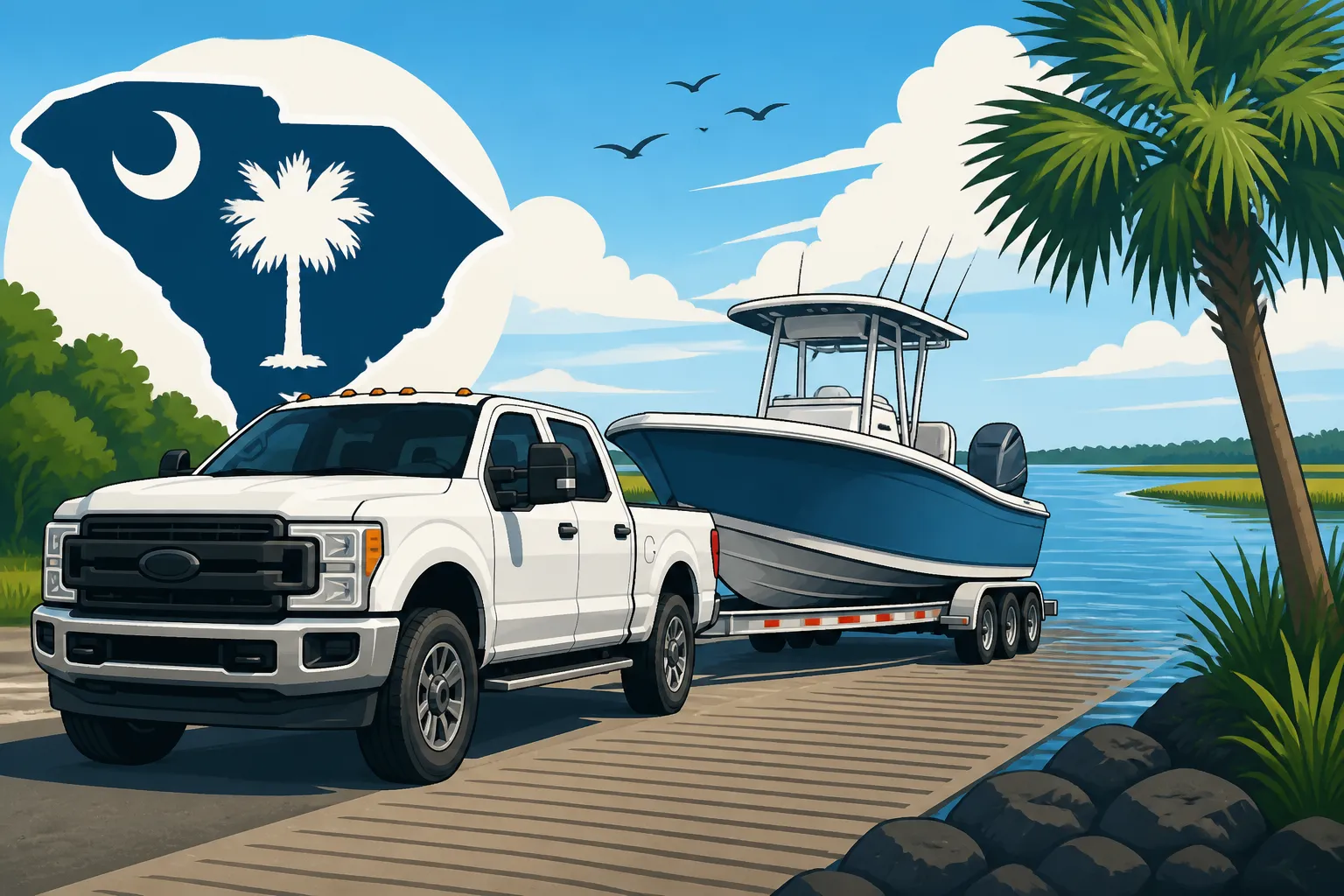
Anyone who's ever tried to back a 25-foot center console or a hefty pontoon boat down a small ramp knows the struggle is real. It’s not just about the length of the boat; it's the combined size of your truck, trailer, and vessel that turns a simple launch into a high-stakes maneuvering challenge. South Carolina is blessed with incredible waterways, but not all access points are created equal, especially when you're hauling something substantial.
Why Size Matters at the Ramp
When you're dealing with a large boat and trailer, a few extra feet or a slightly different angle can make all the difference between a seamless launch and a stressful ordeal.
Firstly, there's the ramp angle and depth. Many older or smaller ramps were simply not designed for the deeper drafts or longer trailers of modern, larger boats. You might find your trailer wheels dipping into soft mud before your boat is fully afloat, or the angle is so shallow that you're backing your truck into the water just to get your prop clear. This isn't just inconvenient; it can be damaging to your vehicle and dangerous for those around you.
Secondly, turning radius becomes a major factor. A 20-foot truck towing a 30-foot trailer assembly needs a serious amount of space to perform the necessary turns to line up with the ramp. Many public ramps, particularly those in more urban or confined areas, have extremely tight turns or immediate obstacles, making it nearly impossible to position your rig without several frustrating adjustments.
Lastly, water depth at the end of the ramp is crucial. A large boat typically needs more water to float off its trailer without scraping the keel. If the ramp is too short or the water isn't deep enough, you could end up with your boat stuck on the trailer or worse, damaging your hull. This is a common issue that larger boat owners frequently encounter, leading to wasted time and frayed nerves.
Common Frustrations for Big Boat Owners
It's not just the physical act of launching that causes headaches; it's the entire experience surrounding it. One of the biggest pain points is insufficient parking for oversized rigs. You manage the launch, breathe a sigh of relief, then spend twenty minutes circling for a parking spot long enough for your truck and trailer. Often, you're forced to park in an awkward spot, taking up multiple spaces or even extending into areas not intended for parking, risking a ticket or the ire of other boaters.
Tight turns and congested access roads leading to the ramp itself are another frequent complaint. Imagine navigating a busy street, then having to execute a sharp 90-degree turn into a narrow ramp entrance with other cars waiting impatiently. This scenario plays out far too often, creating unnecessary stress before you even hit the water.
And let’s not forget crowded ramps, especially on popular weekends. When you have a large setup, you need a little extra time and space. But in a busy environment, you feel rushed, pressured, and often end up in a tangle with smaller boats trying to zip in and out. This guide focuses on identifying spots where you can minimize these frustrating scenarios.
Key Features of Trailer-Friendly Boat Launches
So, what exactly makes a boat launch "trailer-friendly" for those of us with bigger vessels? It's a combination of thoughtful design, ample space, and good maintenance. When you're scouting for a new launch spot, these are the critical elements to look for.
Wide, Gradual Ramps with Ample Depth
The absolute cornerstone of a great launch for large trailers is the ramp itself. We're talking about ramps that are wide enough to give you a generous margin for error, allowing you to back down without feeling like you're threading a needle. A double-wide or even triple-wide ramp is ideal, providing space for multiple boats to launch or retrieve simultaneously, reducing pressure on you and other users.
Equally important is a gradual slope. A ramp that drops off too steeply can be jarring, potentially damaging your trailer's suspension or causing your boat to slide off prematurely. A gentle incline allows for a controlled descent, giving you more time to react and ensuring your boat eases into the water smoothly.
Finally, ample depth at the end of the ramp is non-negotiable. This means the concrete or paved surface extends well into the water, ensuring that even at lower tides or lake levels, you have enough depth to float off your boat without grounding it. Many excellent ramps are constructed to maintain sufficient depth year-round, accommodating boats with deeper drafts without issue. This is especially crucial for saltwater ramps where tide swings can drastically change the water level throughout the day.
Expansive Parking Areas and Maneuvering Space
Once your boat is launched, the next challenge is parking your large truck and trailer. This is where many otherwise decent ramps fall short. A truly trailer-friendly launch will boast expansive parking areas specifically designed to accommodate long truck-and-trailer combinations. We're talking about dedicated, striped spaces that are long enough to hold your entire rig without encroaching on another spot.
Beyond just the number of spaces, the overall maneuvering space within the parking lot is vital. You need room to turn your truck and trailer around after launching, to unhook, and to confidently back into your designated spot without performing a 10-point turn. Wide aisles and clear pathways are hallmarks of a well-designed facility. Some of the best spots even have a dedicated "staging area" where you can prep your boat before hitting the ramp, and pull out of the way to prepare your trailer for retrieval, keeping the main ramp clear.
Designated Turnaround and Docking Facilities
The little things often make the biggest difference, and designated turnaround and docking facilities are prime examples. After launching your boat, you shouldn't have to back your long trailer up a congested ramp or into oncoming traffic just to get out of the way. A clear, marked turnaround area at the top of the ramp allows you to easily reposition your truck for parking. This simple feature drastically reduces congestion and stress, especially on busy days.
Similarly, adequate docking facilities adjacent to the ramp are incredibly helpful. Once your boat is launched, you need a safe place to tie it up while you go park your vehicle. Docks that are sturdy, long enough to accommodate multiple boats, and well-maintained are a huge plus. They allow you to get your boat off the ramp quickly and safely, without having to rush or worry about it drifting into other vessels. These docking areas also serve as convenient spots for passengers to board or disembark, further streamlining the launch and retrieval process. You can often find detailed information about these amenities, including the availability of courtesy docks, by checking resources like FishingBooker or local county park websites before you head out.
Top South Carolina Boat Launch Spots for Large Trailers
South Carolina offers a diverse range of fishing environments, from vast inland lakes to intricate coastal estuaries and the open ocean. Thankfully, there are several outstanding boat launch facilities designed to handle larger rigs, minimizing the stress and maximizing your time on the water.
Freshwater Giants: Lake Murray and Santee Cooper
When it comes to freshwater fishing in South Carolina, Lake Murray and the Santee Cooper Lakes (Marion and Moultrie) are legendary. They're also home to some of the state's best facilities for large boats.
Lake Murray Specific Ramps
Lake Murray, often called the "Jewel of South Carolina," is a sprawling reservoir renowned for its striped bass and largemouth bass fishing. It naturally attracts larger boats, and its access points reflect this.
One of the premier spots is Dreher Island State Park in Prosperity. This park boasts multiple concrete ramps, which are wide and offer excellent depth, even when lake levels fluctuate slightly. The parking situation here is superb, with vast, dedicated truck and trailer parking areas that can easily accommodate even the longest rigs. There’s ample room to maneuver, turn around, and stage your boat without feeling cramped. You’ll also find courtesy docks available, making the transfer from trailer to water incredibly smooth. It's a popular spot, particularly for anglers chasing Lake Murray Summer Striped Bass Techniques in South Carolina, but its size handles the crowds well.
Another solid option is the Lake Murray Public Access Area on the Lexington side, often referred to as Lighthouse Marina's public ramp. While it can get busy, the ramps are wide, well-maintained, and typically offer good depth. The parking lot is quite large, though it can fill up quickly on peak weekends. Still, it’s designed with larger trailers in mind and provides enough space for most maneuvers.
Santee Cooper Lakes: Lake Marion and Lake Moultrie Specific Ramps
The Santee Cooper Lakes, consisting of Lake Marion and Lake Moultrie, form the largest inland body of water in South Carolina, famous for trophy catfish, crappie, and bass. These lakes draw a lot of serious anglers with big boats, and the infrastructure has evolved to match.
On Lake Marion, Santee State Park near Santee offers an excellent launching experience. Its ramps are wide, well-maintained, and provide consistent depth, even in a lake known for its fluctuating levels. The park has substantial parking that caters to larger boat and trailer setups, and the general layout is very user-friendly. It's a fantastic base for exploring the diverse waters of Lake Marion, whether you're targeting Lake Marion Bass Fishing Spots in South Carolina or massive catfish.
The Alex Harvin III Landing near Manning on Lake Marion is another top-tier facility. This is a very popular and expansive landing, boasting multiple wide ramps and vast paved parking areas specifically designed for large truck and trailer combinations. The facility is equipped with substantial courtesy docks, making it incredibly convenient for launching and retrieving. It's truly built for the serious angler with a big rig and is frequently used for fishing tournaments. On Lake Moultrie, the Canal Lakes Landing provides good access, particularly if you're looking to explore the diversion canal between the two lakes, known for its productive fishing. While perhaps not as grand as Alex Harvin, it's a reliable spot for larger boats.
Coastal Access for Offshore Vessels
For those looking to explore South Carolina's rich saltwater fisheries, having reliable access for larger offshore boats is paramount. The coast offers several well-equipped landings.
Charleston Area Offerings
Charleston Harbor and its surrounding waters are a hub for inshore and offshore fishing. The area provides some truly impressive boat launch facilities.
Remley's Point Boat Landing in Mount Pleasant is arguably one of the best public boat landings in the Lowcountry for large vessels. It features multiple wide, deep-water ramps that can easily accommodate large offshore center consoles or bay boats. The parking lot is absolutely massive, with ample, clearly marked spaces for truck and trailer combinations, ensuring you won't be struggling to find a spot. There are also extensive courtesy docks. This landing is perfectly situated for quick access to Charleston Harbor and beyond, making it ideal for everything from Charleston Harbor Redfish Fishing Spots to venturing offshore for pelagics. You can often find local charter captains launching from here, and platforms like FishingBooker can show you options departing from Remley's Point.
The Wappoo Cut Boat Landing on James Island is another excellent choice. It offers several wide ramps and a large parking area, well-suited for larger boats heading into the Intracoastal Waterway or out to the ocean. While sometimes a bit busier than Remley's, its design and facilities are definitely large-trailer friendly.
Murrells Inlet and Georgetown Area Options
Further north along the coast, Murrells Inlet and Georgetown provide crucial access points for anglers with larger boats.
The Murrells Inlet Public Boat Landing is a bustling hub that, despite its popularity, is well-equipped for larger vessels. It features multiple wide ramps and a substantial parking lot. While it can get very crowded, the layout is designed to handle a high volume of traffic and larger rigs. It’s the gateway to excellent Murrells Inlet Redfish Fishing Spots and nearshore reefs.
In Georgetown, the East Bay Public Boat Landing offers fantastic access to Winyah Bay, the Sampit River, and the Atlantic Ocean. It has multiple wide, deep-water ramps and a large parking area that is accommodating for big trailers. This spot is less congested than some other coastal landings, providing a slightly more relaxed experience while still offering premium access for larger boats. It's a great choice for those exploring the vast brackish waters around Georgetown or heading offshore.
Hilton Head Island Access
Hilton Head Island is a popular destination, and its main public ramp is built to handle the demand from a variety of boats.
The Cross Island Boat Landing is the primary public boat ramp for Hilton Head Island. This facility is well-regarded for its wide ramps and ample parking, making it suitable for larger boats, including those used for offshore excursions. It offers direct access to the Calibogue Sound and the Atlantic, and its design makes the launch and retrieval process as smooth as possible for big rigs. If you're looking for Hilton Head Island Fishing Charters, South Carolina, many of them will operate from this well-appointed landing.
Tips for a Smooth Launch with a Large Trailer
Even at the best facilities, launching a large boat requires a bit of finesse and preparation. A smooth operation isn't just about the ramp; it's also about your technique and etiquette.
Pre-Trip Preparation and Inspection
Before you even leave your driveway, a thorough check of your entire rig can save you a world of trouble.
First, inspect your trailer tires. Are they properly inflated? Look for any signs of wear, cracks, or bulges. A flat tire on a large boat trailer at a busy ramp is a nightmare. Don't forget the spare!
Next, test your trailer lights and brakes. Ensure all running lights, brake lights, and turn signals are functioning correctly. Check your trailer's brake fluid (if hydraulic) and ensure the emergency brake lockout is working. A quick test drive around the block can confirm everything is in order. You don't want to find out your brake lights are out when a law enforcement officer is pulling you over on the highway or your trailer brakes fail on the ramp.
Finally, check your hitch and safety chains. Ensure the hitch is securely fastened, the coupler is locked, and the safety chains are crossed and attached. Don't overlook the boat's tie-downs and transom straps; they should be tight and secure to prevent shifting during transit. Make sure your drain plug is in, too – a classic mistake that can ruin a day!
Mastering the Launch and Retrieval Process
Even with the best equipment and ramps, a large boat and trailer require a practiced hand.
Backing up: This is often the most intimidating part. Practice in an empty parking lot if you're new to it. Go slow, make small corrections, and use your mirrors (or spotters). The longer the trailer, the less steering input is needed to make a significant change. If you have a spotter, establish clear hand signals before you start. The key is to take your time and not feel rushed by others.
Launching: Once you're lined up, back down gradually. Don't submerge your trailer too deeply too quickly; this can make it harder for the boat to float off. Use your boat's engine (if applicable) to gently power it off the trailer once it starts to float. Once the boat is free, move it quickly to a courtesy dock to clear the ramp.
Retrieval: The process is reversed. Power your boat to the dock, have someone guide you back onto the trailer. Make sure the boat is centered and snug against the bow stop before winching it up. Once on the trailer, pull forward a bit, out of the immediate splash zone, before securing tie-downs and removing the drain plug. This keeps the ramp clear for the next boater. For more detailed instructions, consider reviewing resources like Boat Positioning Techniques for Bass Fishing which can offer great insights applicable to various boating scenarios.
Respecting Other Anglers and the Environment
Boat ramp etiquette is crucial, especially at busy landings.
Be prepared: Have your lines untied, safety gear ready, and engine ready to start before you get to the top of the ramp. This keeps the line moving. Don't hog the staging area with last-minute preparations.
Be efficient: Launch and retrieve as quickly and safely as possible. If you need to spend extra time, move your rig to a designated prep area or a less congested part of the parking lot.
Park thoughtfully: Always park your truck and trailer in designated long vehicle spots. Avoid taking up multiple regular car spots or blocking access for others.
Leave no trace: Take all your trash with you. Be mindful of your wake, especially in no-wake zones near ramps and docks. And always adhere to local regulations, whether it’s regarding South Carolina Fishing License Requirements or specific limits on species like South Carolina Redfish Slot Limit Rules. Being a considerate boater makes the experience better for everyone.
| Boat Launch Name | Location | # Ramps | Parking Size | Depth for Large Boats | Courtesy Docks | Notes |
|---|---|---|---|---|---|---|
| Dreher Island State Park | Lake Murray, Prosperity | 3 | Very Large | Excellent | Yes | Great for Striped Bass, well-maintained. |
| Alex Harvin III Landing | Lake Marion, Manning | 5 | Very Large | Excellent | Yes | Tournament-grade facility, very popular. |
| Remley's Point Boat Landing | Mount Pleasant | 6 | Massive | Excellent (Tidal) | Yes | Top coastal access, near Charleston Harbor. |
| Murrells Inlet Public Landing | Murrells Inlet | 4 | Large | Good (Tidal) | Yes | Busy but efficient, good for inshore/nearshore. |
| Cross Island Boat Landing | Hilton Head Island | 4 | Large | Good (Tidal) | Yes | Main public access for Hilton Head, well-equipped. |
| East Bay Public Boat Landing | Georgetown | 3 | Large | Excellent (Tidal) | Yes | Less crowded, great for Winyah Bay & offshore. |
As you can see, South Carolina has put thought into accommodating anglers with larger boats and trailers, particularly at its most popular fishing destinations. By choosing the right launch and practicing good etiquette, your time on the water will be far more enjoyable. Remember to always have your South Carolina Fishing License Guide current, no matter where you choose to launch.
Disclaimer
Please note that fishing regulations, ramp conditions, and facilities can change. Always check the latest information from the South Carolina Department of Natural Resources (SCDNR) or local authorities before planning your trip. Water levels in lakes can fluctuate, and tides can significantly affect coastal ramp depths. This guide is for informational purposes only and does not constitute professional advice.