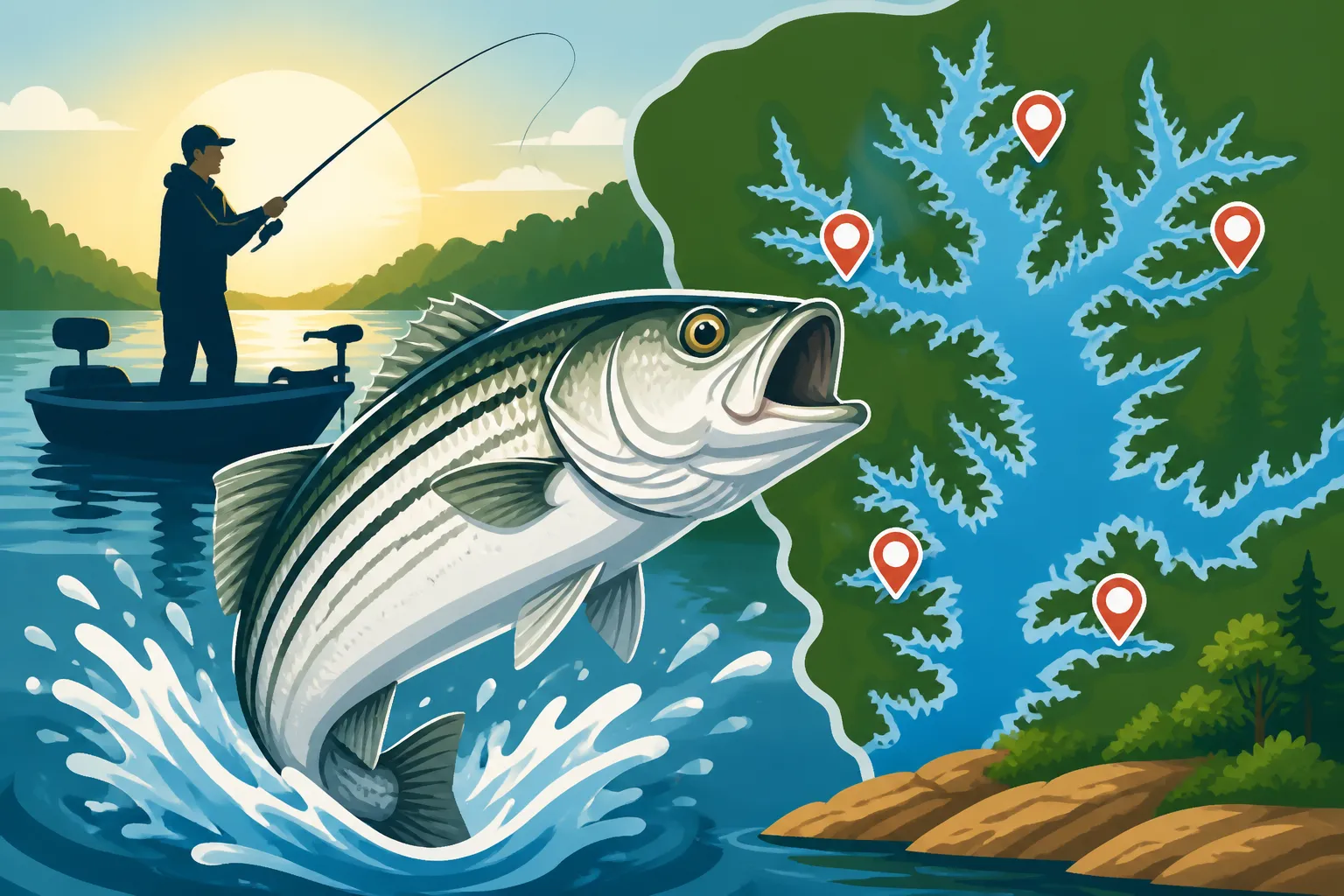
Striped Bass Fishing Spots on Lake Greenwood
Many anglers dream of the thrilling fight of a striped bass, but finding these powerful fish consistently can be a real head-scratcher, especially on a large, complex body of water like Lake Greenwood. It often feels like you're just guessing where they might be lurking, leading to frustration and empty livewells. This comprehensive guide is designed to cut through that confusion, giving you the insider knowledge on the best striped bass fishing spots on Lake Greenwood and the tactics to make your next trip a roaring success.
Understanding Lake Greenwood's Striped Bass Fishery
Lake Greenwood, nestled in the heart of South Carolina, is a gem for freshwater anglers, particularly those chasing the hard-fighting striped bass. This 11,400-acre reservoir, formed by damming the Saluda River, offers a diverse ecosystem that supports a healthy and robust striper population. Its deep, clear waters, abundant forage, and intricate bottom structure create ideal conditions for stripers to thrive, making it a prime destination for both seasoned and novice anglers.
Why Lake Greenwood is a Striper Haven
Lake Greenwood isn't just another pretty lake; it's a strategically managed fishery that prioritizes striped bass. The South Carolina Department of Natural Resources (SCDNR) regularly stocks the lake with striped bass, ensuring a steady supply of fish for anglers. This stocking program, coupled with the lake's natural attributes, is a major reason why Lake Greenwood holds a reputation as a premier striper destination. The lake's deep channels, rocky points, and submerged timber provide excellent ambush points for these predatory fish, while a plentiful supply of baitfish, such as threadfin and gizzard shad, keeps them well-fed and growing.
Moreover, the hydroelectric operations at the Lake Greenwood Dam often create current, which stripers absolutely love. This current helps to concentrate baitfish and makes the stripers more active, creating fantastic fishing opportunities, especially when the generators are running. Understanding these factors—stocking, forage, structure, and current—is key to unlocking Lake Greenwood's striper potential. It's not just about luck; it's about knowing why the fish are there.
Identifying Prime Striper Habitat
Striped bass are pelagic fish, meaning they often roam open water, but they are also highly structure-oriented, especially when feeding or seeking refuge. On Lake Greenwood, prime striper habitat often includes deep main lake channels, submerged humps and points, areas near the dam, and the mouths of major creeks and rivers feeding into the lake. These areas typically offer cooler, oxygenated water, access to deep escape routes, and proximity to baitfish concentrations.
When you're out on the water, pay close attention to your electronics. Your sonar is your best friend for identifying bait balls and the tell-tale arches of stripers below. Look for abrupt depth changes, creek channels winding through the lake, and areas with hard bottom or submerged timber. Often, stripers will suspend in the water column, either actively hunting or simply cruising, so don't just focus on the bottom. The fish might be anywhere from 15 to 60 feet down, depending on the season and water temperature. Knowing the various depths and structures that hold fish throughout the year is crucial for consistent success.
Key Striped Bass Hotspots on Lake Greenwood
Now, let's talk about specific places on Lake Greenwood where you're most likely to tangle with a powerful striper. While conditions change with the seasons and even day to day, certain areas consistently produce striped bass due to their unique characteristics that appeal to these impressive fish.
The Main Channel and River Arms
The old Saluda River channel, which winds its way through the entire length of Lake Greenwood, is arguably the most consistent producer of striped bass. This deep trench acts like a highway for stripers, providing cooler water and easy navigation. Anglers often find success by trolling deep-diving crankbaits or umbrella rigs along the edges of this channel, especially where it swings close to a prominent point or a submerged hump.
Beyond the main channel, the river arms feeding into Lake Greenwood are also fantastic striper grounds, particularly during the cooler months or when rain creates a good current flow. The Saluda River arm, which extends upstream towards the Lake Greenwood Dam, and the smaller feeder creeks offer excellent opportunities. In these areas, stripers will often push baitfish against banks or into creek mouths, making them vulnerable. Jigging spoons or casting swimbaits around these creek mouths and points where the current concentrates bait can be incredibly effective. Remember that the presence of current, whether natural or from upstream generation, often dictates where the fish will be most active in these riverine sections.
Deep Water Structure and Humps
Striped bass are notorious for holding on deep-water structure, especially when the water warms up in summer. Lake Greenwood has numerous submerged humps, rock piles, and deep points that act as magnets for stripers. These structures provide excellent ambush points where stripers can wait for unsuspecting baitfish to pass by. You'll often find schools of stripers holding just off the edges of these humps, particularly on the down-current side if there's any flow.
Using your sonar to locate these underwater features is paramount. Once you've found a promising hump or point, try dropping live bait, such as gizzard shad or blueback herring, directly over the fish. Freelines or downlines are common rigs for this type of fishing. If you prefer artificials, heavy jigging spoons or bucktails worked vertically can entice strikes. It's not uncommon to find massive schools of stripers stacked up on these structures, providing incredible action once you locate them. Sometimes, booking a guided trip through services like FishingBooker can give you an edge, as experienced local guides often have these specific deep-water honey holes marked on their GPS.
Dam Area and Power Generation Effects
The area around the Lake Greenwood Dam is a consistent hotspot for striped bass, primarily due to the current created by power generation. When the turbines are running, massive amounts of water move through, concentrating baitfish and activating stripers into a feeding frenzy. This is a powerful, dynamic fishing environment that requires caution but offers some of the most exciting striper fishing on the lake.
Anglers often drift or troll large live baits, like gizzard shad, in the current directly below the dam. Heavy tackle is a must here, as the fish are strong, and the current is fierce. Always respect exclusion zones and be aware of changing water levels and currents if you're fishing near the dam. Even when the generators aren't running, the deep water and constant oxygenation in this area make it attractive to stripers, so don't overlook it entirely during periods of calm. This area can be particularly productive in the cooler months, as stripers will often stage here.
Seasonal Strategies for Lake Greenwood Stripers
Striped bass behavior on Lake Greenwood changes dramatically throughout the year, primarily influenced by water temperature, oxygen levels, and baitfish movements. Understanding these seasonal shifts is crucial for developing effective fishing strategies and knowing where to focus your efforts.
Springtime Striper Blitz
As the water temperatures begin to rise in early spring, usually from March through May, Lake Greenwood's striped bass become incredibly active. They'll start moving out of their deeper winter haunts and into shallower areas, especially the backs of creeks and coves, to feast on spawning baitfish. This is often when you'll find the biggest schools of stripers aggressively feeding closer to the surface.
During the spring, anglers often have great success casting swimbaits, topwater lures, and lipless crankbaits into shallow coves and along main lake points. Trolling umbrella rigs or large bucktails in these shallower depths (15-30 feet) can also be very productive. Look for schooling activity on the surface, where stripers are busting baitfish. A good pair of binoculars can help you spot these feeding frenzies from a distance. The energy during a springtime striper blitz is palpable; it's a fantastic time to be on the water. For more details on catching these fish, you might find valuable insights in a guide on the Best Time to Catch Striped Bass on South Carolina's Rivers, as riverine behavior often mimics early lake patterns.
Summer Deepwater Tactics
When the scorching South Carolina summer heat arrives, and water temperatures climb, Lake Greenwood's striped bass move to deeper, cooler, and more oxygenated water. From June through August, you'll typically find them holding in the main river channel, around submerged humps, and near the dam, often at depths of 40-70 feet or even deeper. Locating the thermocline—the depth at which water temperature changes rapidly—is vital, as stripers will often suspend just above or within this layer where oxygen levels are optimal.
The most effective summer strategy is deep-water live bait fishing, often called "downlining." This involves using heavy weights to present live bait (shad or herring) directly to stripers suspended deep. Trolling with downriggers or lead core line can also be effective with deep-diving crankbaits or bucktail jigs. Early mornings and late evenings can still offer some topwater action, but the majority of the day will require precision deep-water techniques. Some anglers use services like FishingBooker to connect with local guides who specialize in these challenging summer patterns, as their boats are often equipped with advanced electronics for finding these deep-holding fish.
Fall Feeding Frenzy
Autumn, from September through November, is another prime time for striped bass fishing on Lake Greenwood. As water temperatures begin to cool, the stripers become more active and start to chase baitfish throughout the water column. They'll often move back into shallower depths, particularly around creek mouths and main lake points, as they try to put on weight for the colder months.
This season offers a fantastic mix of techniques. You can still catch fish deep, but many anglers find success trolling medium-diving crankbaits, spoons, or bucktails in shallower (20-40 foot) water. Topwater action can be explosive, especially during low light conditions or when the stripers push bait to the surface. Look for birds diving, which is often a strong indicator of baitfish and actively feeding stripers below. This fall feeding frenzy is a joyous time for anglers, as the fish are aggressive, and the weather is generally pleasant.
Winter Pattern Perfection
Don't let the cold weather deter you; winter, from December through February, can be an excellent time to target striped bass on Lake Greenwood, especially for trophy-sized fish. During these colder months, stripers tend to congregate in large, lethargic schools in deeper sections of the lake, often holding around the main river channel, deep humps, and the dam area. Their metabolism slows down, but they still need to eat.
The key to winter fishing is to slow down your presentation. Live bait, especially large gizzard shad, fished on downlines or freelines directly in deep schools, is often the most productive method. Trolling with large, slow-moving umbrella rigs can also tempt these less-active fish. Jigging heavy spoons or large vertically jigged swimbaits directly over suspended schools can also elicit strikes. While the bite might be less frequent than in spring or fall, the fish you do catch are often larger and in prime condition. For a deeper dive into cold water strategies, check out resources on How to Catch Striped Bass in Cold Water.
Essential Gear and Techniques for Lake Greenwood Striped Bass
To consistently catch striped bass on Lake Greenwood, having the right equipment and knowing how to use it is just as important as knowing where the fish are. Stripers are powerful fighters, and inadequate gear will quickly lead to broken lines and lost fish.
Rods, Reels, and Line
For striped bass on Lake Greenwood, you'll want gear that can handle a strong fight. A medium-heavy to heavy action spinning or baitcasting rod, typically 7 to 7.5 feet long, is ideal. This length provides good casting distance for artificials and enough leverage to control a hard-fighting striper. For reels, a robust baitcasting reel with a good drag system or a large spinning reel (sizes 4000-6000) capable of holding plenty of line is necessary.
When it comes to line, braid is often preferred for its strength and sensitivity, especially when fishing deep or with artificials. A 30-50 pound test braided line is a good starting point, paired with a 20-30 pound fluorocarbon or monofilament leader for abrasion resistance and invisibility. The leader length can vary, but 3-6 feet is common. For those interested in diverse fishing experiences, comparing this to other fisheries might be useful, such as learning about Striped Bass Fishing on Lake Murray, South Carolina, which often requires similar robust setups.
Top Baits and Lures
The choice of bait or lure for Lake Greenwood stripers often depends on the season and the specific technique you're employing. However, some standbys consistently produce results:
- Live Bait: Gizzard shad and blueback herring are the undisputed kings of live bait for stripers. They are the natural forage for these fish and are incredibly effective, especially when fished on downlines or freelines. Keeping your live bait healthy in a well-aerated livewell is crucial.
- Umbrella Rigs: These multi-lure rigs are deadly for trolling, especially when stripers are spread out or holding at specific depths. They mimic a school of baitfish and can draw in aggressive strikes.
- Bucktail Jigs: From 1/2 oz to 2 oz or more, bucktail jigs are incredibly versatile. They can be cast, trolled, or vertically jigged. Tipping them with a soft plastic trailer or a piece of cut bait can increase their effectiveness.
- Swimbaits: Soft plastic swimbaits, particularly those with a paddle tail, are excellent for casting to schooling fish or slow-rolling near structure.
- Deep-Diving Crankbaits: For trolling, large crankbaits that can reach depths of 15-30 feet are very productive, especially in spring and fall.
- Topwater Lures: Big poppers, walkers, and spooks can provide explosive action during dawn, dusk, or overcast conditions when stripers are actively chasing bait on the surface.
For a broader overview of options, explore articles on the Best Lures for Striped Bass in South Carolina.
Live Baiting vs. Artificials
The debate between live bait and artificials for stripers is as old as fishing itself, and on Lake Greenwood, both have their time and place.
Live Baiting:
Often considered the most consistent method, especially for larger, more finicky stripers or when fish are holding deep. Live bait, like fresh gizzard shad or blueback herring, perfectly mimics the stripers' natural food source. The down-side is the effort involved in catching or procuring bait and keeping it alive. For this method, a good livewell and aerator are essential. When downlining in 60 feet of water with live bait, the natural action and scent can entice strikes from stripers that might ignore artificials. FishingBooker might list guides who specifically offer live bait trips, saving you the hassle of catching your own.
Artificial Lures:
Artificials offer versatility, convenience, and the thrill of actively working a lure to entice a strike. They are fantastic for covering large areas, especially when trolling or casting to schooling fish. They also shine when stripers are highly aggressive and chasing baitfish on the surface. While they might not always be as consistently productive as live bait for every scenario, the satisfaction of catching a striper on a well-worked artificial is undeniable. Anglers often keep a selection of umbrella rigs, bucktail jigs, and various swimbaits ready, adapting their choices based on what the fish are keying in on. Both techniques require patience, observation, and adaptability, but mastering them will significantly increase your chances of success on Lake Greenwood. Before heading out, make sure you understand the South Carolina Fishing License Guide to ensure you're compliant with local regulations.
| Season | Primary Location | Key Techniques | Recommended Baits/Lures |
|---|---|---|---|
| Spring | Creek mouths, main lake points, shallower coves | Casting to schooling fish, trolling shallow to mid-depth | Swimbaits, topwater, lipless crankbaits, umbrella rigs |
| Summer | Deep main channel, submerged humps, dam area | Downlining live bait, deep trolling with downriggers or lead core | Live shad/herring, deep-diving crankbaits, heavy jigging spoons |
| Fall | Main lake points, creek mouths, river arms | Trolling mid-depth, casting to schooling fish, topwater | Medium-diving crankbaits, bucktails, swimbaits, topwater |
| Winter | Deep main channel, large humps, dam area (congregated) | Slow downlining live bait, slow trolling umbrella rigs, vertical jigging | Large live shad/herring, heavy umbrella rigs, jigging spoons |
Don't forget that fishing regulations, including bag limits and size restrictions, can change. Always consult the latest South Carolina's Freshwater Fishing Regulations before your trip. For example, knowing the details of your South Carolina Annual Fishing License Price Breakdown is just as important as knowing your fishing spots.
Final Thoughts for Lake Greenwood Striper Anglers
Lake Greenwood truly offers a phenomenal opportunity to chase striped bass, but it's a dynamic fishery that demands continuous learning and adaptation. Whether you're patiently downlining live bait over a deep hump or excitedly casting into a surface boil, the thrill of hooking into one of these powerful fish is an experience you won't soon forget. From the detailed structure of the main channel to the vibrant activity of the dam, each spot presents its own set of challenges and rewards.
Remember to leverage your electronics, observe the environment for signs of baitfish and bird activity, and always be prepared to adjust your tactics. Don't be afraid to experiment with different baits, lures, and presentations until you find what the fish are keying in on. And if you're ever in doubt or looking to quickly learn the ropes, consider hiring a local guide. Services like FishingBooker can help you find experienced captains who know Lake Greenwood like the back of their hand, providing invaluable insights and often putting you directly on the fish. With a little preparation and persistence, you'll be well on your way to consistent success catching striped bass on Lake Greenwood.
Disclaimer
Fishing conditions and regulations in South Carolina can change. Always consult the South Carolina Department of Natural Resources (SCDNR) for the most current rules and advisories before heading out on the water. This guide is for informational purposes only and should not replace official regulations.