Tournament Weigh-In Rules for Licensed Anglers
Stepping onto the weigh-in scales at a South Carolina fishing tournament can be one of the most exhilarating—or nerve-wracking—moments for any angler. You've spent hours, maybe even days, out on the water, battling the elements and the fish, all for that moment of truth. But all that hard work can be undermined in an instant if you’re not absolutely clear on the specific weigh-in rules. It's a frustrating reality that sometimes the biggest challenge isn't catching the fish, but ensuring they meet all the meticulous requirements when it comes time to tally your score. This comprehensive guide is here to demystify those rules, help you avoid common pitfalls, and ensure your hard-earned catch counts.
Understanding the Foundation: Your South Carolina Fishing License
Before you even think about tournament weigh-ins, the absolute bedrock of legal fishing in South Carolina is your valid fishing license. This isn't just a formality; it's a critical component of conservation efforts and ensures you're a legitimate participant in any angling activity, especially a competitive one. Without the proper license, your entire day, and any potential winnings, can be nullified.
The Requirement for All Anglers
Let's be blunt: if you're holding a rod and reel in South Carolina's public waters, you need a fishing license, unless you fall into a very specific exemption category. This applies whether you're casually wetting a line on a Sunday afternoon or competing in the biggest tournament of the year. For tournaments, this requirement often comes under intense scrutiny because prize money and reputations are on the line. Tournament organizers will typically check for valid licenses during registration, but ultimately, the responsibility rests with each individual angler to ensure they are compliant. You don't want to get all the way to the weigh-in stage only to discover an expired license means your impressive haul won't count. It's a heartbreaking scenario that happens more often than you'd think.
Consider a scenario: you've planned for months for a major bass tournament on Lake Murray. You've scouted spots, practiced your casts, and invested in top-tier gear. You pull up to the ramp, and registration is a flurry of activity. You present your license, only to be told it expired last month. Instantly, all those preparations are meaningless. You're out of the tournament before you even launch. This is why understanding your South Carolina Fishing License Guide is so crucial, long before tournament day arrives.
Tournament-Specific License Considerations
While most recreational fishing licenses cover you for general tournament participation, some larger or specific tournaments might have additional requirements or recommend certain types of licenses, especially if you're a guide or fishing for species that cross freshwater and saltwater boundaries. For instance, if a tournament crosses between an impoundment and a tidal river mouth, you might need both a freshwater and a saltwater license, or a combination license, depending on the exact boundaries and rules. It’s always best practice to confirm with the tournament director precisely what kind of license is needed for their specific event. You can find detailed information on South Carolina Annual Fishing License Price Breakdown to help you budget and plan.
Sometimes, tournaments will host participants from out of state. If you’re a nonresident, you’ll need to make sure you have the correct South Carolina Nonresident Fishing License Guide in hand. There are different options available, from annual to short-term, and choosing the right one can save you money and ensure compliance. Remember, ignorance of the law is no excuse, and wardens often patrol weigh-in events, knowing that competitive anglers are a prime group to check for proper documentation. Having your license readily available, whether it's a physical copy or a digital version on your phone via the Go Outdoors South Carolina app, is paramount.
General Weigh-In Rules: The Basics Every Angler Must Know
Once your license is squared away, the next hurdle is the actual weigh-in. This isn't just about handing over your fish; it's a process governed by specific rules designed to ensure fair play, ethical treatment of fish, and adherence to conservation guidelines. These rules can vary slightly between tournaments and species, but there are fundamental principles that apply across the board.
Live Well Checks and Fish Handling
Most bass and other freshwater tournaments, especially catch-and-release events, place a huge emphasis on fish care. This usually starts with a live well check before you even launch. Officials will often inspect your live well to ensure it's functional, free of contaminants, and set up to keep fish alive and healthy. This isn't just for sportsmanship; it's a conservation measure. Dead fish often incur penalties, which can significantly impact your standing.
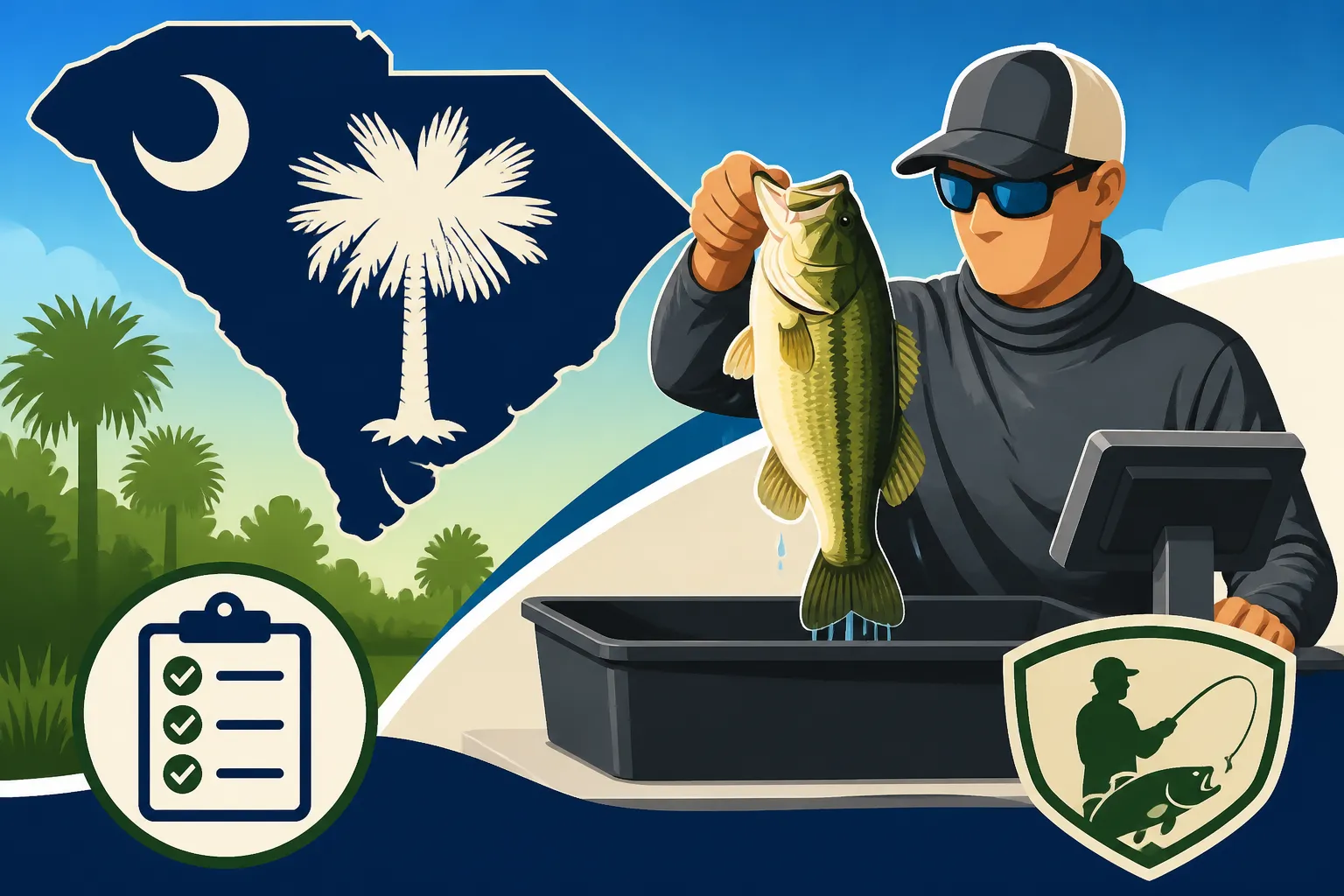
When you bring your fish to the scales, careful handling is critical. You'll typically transfer your fish from your boat's live well into a weigh-in bag, usually provided by the tournament or readily available for purchase from retailers like Amazon. These bags are designed to hold water, keeping the fish submerged and minimizing stress during the short journey to the scales. Dropping a fish, mishandling it, or allowing it to flop around can injure it and potentially lead to penalties or even disqualification if officials deem the handling to be negligent or abusive. The goal is to return a healthy fish to the water, and tournaments are increasingly stringent about this. For example, if you're fishing for something like a largemouth bass, you want to keep them in peak condition. Understanding Largemouth Bass Fishing in South Carolina: The Complete Guide will also give you insights into their biology and how sensitive they can be.
Time Limits and Designated Weigh-In Areas
Every tournament operates on a strict schedule. There will be a designated weigh-in period, and often a hard cut-off time. Missing this deadline, even by a minute, usually means your catch won't be weighed. There are no "traffic excuses" or "my boat broke down" exceptions in competitive fishing. It's a test of not just angling skill, but also time management and planning.
The weigh-in area itself is also usually clearly defined. It's not a free-for-all; there's a flow to the process, from check-in to bagging your fish, queuing up, and presenting your catch. Anglers are expected to follow this flow, respect the instructions of tournament officials, and avoid congregating or interfering with others. This organized chaos ensures efficiency and fairness, preventing any angler from gaining an unfair advantage through shortcuts or disrupting the process.
Let's consider a practical example. You're on Lake Hartwell, in a tight race. The clock is ticking down to the 3 PM weigh-in deadline. You're five minutes from the ramp, and your live well is loaded. You push the throttle, arrive with seconds to spare, and sprint to the weigh-in line. But if you hit a snag like a long line or a technical issue with the scales, and you're not physically on the scale by 3 PM, your day could be over. It's a harsh reality, but part of the game.
Species-Specific Regulations at the Scales
While general weigh-in rules provide the framework, it's the species-specific regulations that often trip up anglers. These rules pertain to minimum/maximum lengths, bag limits, and sometimes even unique identifiers for certain species. Being knowledgeable about these prior to fishing is paramount.
Size and Slot Limits
South Carolina has established size and slot limits for many popular game fish, both freshwater and saltwater. These are conservation measures designed to protect breeding populations and ensure healthy fisheries for the future. For tournaments, these limits are strictly enforced.
- Minimum Lengths: A fish must be at least a certain length to be considered a legal keeper. If your fish is even a fraction of an inch short, it will be disqualified and often result in a penalty. For example, South Carolina Spotted Seatrout Minimum Size 14 Inches is a regulation you simply cannot ignore. Anglers often carry official measuring boards, readily available from sporting goods stores or Amazon, to check their fish accurately on the water.
- Maximum Lengths (Culling): Some species have a maximum length. This means fish over a certain size cannot be kept. This is particularly common with trophy species to ensure large, mature breeders remain in the population. If you bring a fish to the scales that exceeds the maximum length, it's typically disqualified.
- Slot Limits: A slot limit means fish must fall between a minimum and a maximum length. The South Carolina Redfish Slot Limit 18 to 25 Inches is a prime example. Catching a redfish outside this slot, either too small or too large, means it cannot be kept. In tournaments, this also incurs penalties. The logic here is to protect both juvenile fish that haven't had a chance to breed and the large, highly productive mature fish. Imagine the frustration of catching a massive redfish, only to have it be an inch over the slot limit and unable to contribute to your tournament weight.
It's critical for anglers to know these limits before they ever make a cast. You can’t just rely on guesswork. Have a reliable measuring device on your boat. Always measure fish immediately upon catching them. If it's undersized or oversized for the slot, release it quickly and carefully.
| Infraction Type | Common Consequence |
|---|---|
| Under/Oversize Fish | Disqualification of fish, potential weight penalty |
| Exceeding Bag Limit | Disqualification of extra fish, heavy weight penalty |
| Dead Fish (Catch-and-Release) | Weight penalty per dead fish |
| Unlicensed Angler | Disqualification from tournament, legal fines |
| Late for Weigh-In | Disqualification of entire catch |
| Mutilated Fish | Disqualification of fish, potential sportsmanship penalty |
| Altered Fish (e.g., adding weight) | Immediate disqualification, ban from future events |
Bag Limits and Vessel Limits
Beyond size, there are also bag limits – the maximum number of fish of a particular species an individual angler can keep per day. Tournaments often adhere to or even impose stricter bag limits than state regulations. For example, South Carolina Spotted Seatrout Daily Bag Limit of 10 Fish might be the state rule, but a tournament might limit you to five of your best fish for weigh-in. Always check the specific tournament rules for their bag limits, as they can sometimes differ from the general South Carolina Fishing Bag Limits Explained.
Some saltwater species also have vessel limits, meaning a maximum number of fish per boat, regardless of how many licensed anglers are on board. The South Carolina Redfish Vessel Limit Explained is a great example of this. Even if you have three anglers on a boat, if the vessel limit is two redfish, you can only keep two. This is another layer of conservation and fair play that tournament directors take very seriously. Bringing in more than the allowed bag or vessel limit will result in the disqualification of the excess fish, and often a severe penalty applied to your total weight.
Common Missteps and How to Avoid Them
Even the most seasoned anglers can make mistakes. Understanding the common pitfalls at weigh-ins can help you avoid them and ensure your tournament experience is a positive one.
Mutilation or Alteration of Fish
This is one of the most serious infractions in tournament fishing. Any attempt to mutilate a fish to make it appear larger or heavier, or to alter its length to fit a slot limit, is a direct violation of sportsmanship and regulations. This could include fin clipping, tail pinching, or adding foreign objects (like lead weights) to a fish. Tournament officials are experts at detecting such alterations. When caught, the consequences are severe: immediate disqualification from the tournament, forfeiture of any winnings, and a likely ban from future events. Beyond the tournament, it can lead to legal penalties under state fishing regulations. It’s simply not worth it. Play fair, and your integrity will be intact.
A particularly common mistake (often unintentional) is "shorting" a fish on a measuring board by pinching its tail to meet a minimum length. While a common practice in some casual settings, at a weigh-in, this can be seen as an alteration. Always lay the fish naturally, letting the tail lie as it falls. Many tournaments specify how a fish should be measured. Investing in a quality measuring board, perhaps a sturdy one made of aluminum or high-grade plastic available on Amazon, can make all the difference.
The "Dead Fish" Penalty
In many catch-and-release tournaments, keeping fish alive until weigh-in is not just encouraged, it's mandated. Dead fish typically incur a weight penalty. This penalty varies but can be significant – sometimes a half-pound or more per dead fish. The logic is simple: tournaments aim to promote conservation. A dead fish cannot be released to breed again.
To avoid this, invest in a high-quality live well system with proper aeration and circulation. Understand how to manage water temperature in your live well, especially on hot South Carolina summer days. Using ice in separate bags (never directly in the live well water, as it can shock the fish) can help keep water temperatures down. Additionally, handling fish as little as possible and as gently as possible throughout the day reduces stress and increases their chances of survival. Knowing South Carolina's Freshwater Fishing Regulations will also provide general guidance on responsible fishing practices that contribute to fish survival.
Discrepancies with Official Rules
Perhaps the most common misstep is simply not reading and understanding the specific rules of that particular tournament. While state regulations provide the baseline, tournament directors often establish additional rules or interpretations. These might include:
- Specific Measuring Techniques: How fish are measured (mouth closed, tail pinched/unpinched, on a flat board).
- Designated Culling Areas: Some tournaments may have rules about where you can cull fish (release smaller ones to make room for larger ones).
- Artificial Lures Only: Whether live bait is allowed or not.
- Number of Rods: Limits on how many rods can be in the water at one time.
- Polygraph Tests: Many larger tournaments reserve the right to administer a polygraph test to the winners to ensure fair play.
Always, always get a copy of the tournament rules and read them thoroughly. Don't assume. Ask questions of the tournament director before the event begins if anything is unclear. It’s better to ask a "silly" question than to make a costly mistake at the weigh-in. You might even find specific details about Tournament Angler License Rules in South Carolina embedded within their documentation. Being prepared means being informed.
Disclaimer
Please remember that fishing regulations and tournament rules are subject to change. While this guide provides comprehensive information, it is always your responsibility to verify the most current regulations with the South Carolina Department of Natural Resources (SCDNR) and the specific tournament organizers before heading out on the water. This content is for informational purposes only and should not be considered legal advice.