How Redfish Vessel Limits Work for Group Charters
Figuring out the ins and outs of fishing regulations can feel like trying to untangle a snarled line, especially when you're planning a fun group charter trip in South Carolina. There's often a lot of head-scratching around how many redfish your crew can actually keep when everyone's reeling them in left and right. This comprehensive guide is here to clear up that confusion, specifically explaining how South Carolina's redfish vessel limits work for those enjoyable group excursions.
Deciphering South Carolina's Redfish Regulations
The waters of South Carolina are teeming with incredible fishing opportunities, and redfish, often called spottail bass, are undoubtedly one of the most sought-after catches. Their hard-fighting nature and delicious flavor make them a prime target for both seasoned anglers and first-timers. However, to ensure these magnificent fish remain plentiful for generations to come, the South Carolina Department of Natural Resources (SCDNR) has implemented a set of crucial regulations, including slot limits, individual daily bag limits, and, most importantly for our discussion, vessel limits.
Understanding the Slot Limit
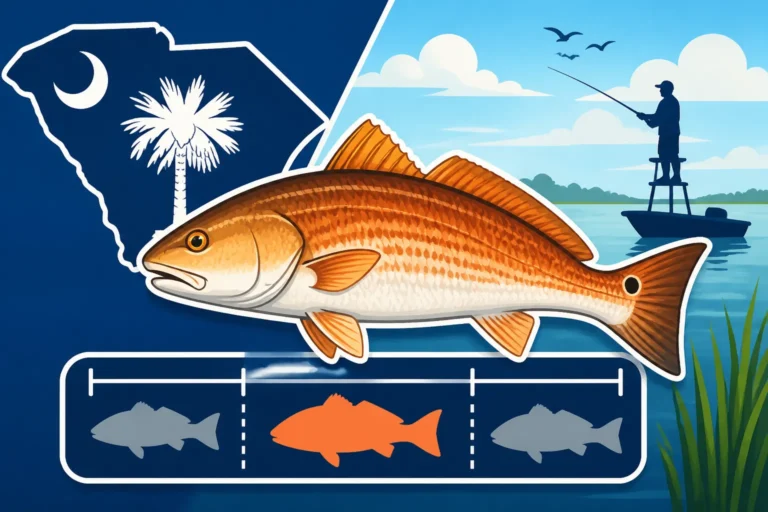
First things first, let's talk about the redfish slot limit. This isn't just a random number; it's a carefully determined range designed to protect the breeding stock of redfish. The idea is simple: juvenile fish are too small to harvest, and the largest, most prolific breeders are also protected, ensuring they can continue to spawn and contribute to the population. Currently, in South Carolina, the slot limit for redfish is 15 to 23 inches. This means any redfish you catch must be at least 15 inches long and no more than 23 inches long to be a legal keeper.
It's worth noting that these regulations can and do change. If you've been fishing in South Carolina for a while, you might remember different numbers, like the 15 to 27-inch slot limit that was in place for many years. The shift to the current 15 to 23-inch slot, which became effective in May 2024 for a year, was a conservation measure taken by the SCDNR to address concerns about the redfish population. This is why it's always critical to double-check the latest rules before you head out, as demonstrated in our guide on South Carolina Redfish Slot Limit Rules. Catching a beautiful redfish outside of this slot means it must be immediately and safely released back into the water. This ensures the future of the fishery, even if it means letting go of what feels like a trophy.
Individual Daily Bag Limit Explained
Beyond the slot limit, each angler also has an individual daily bag limit for redfish. This limit dictates how many legal-sized redfish a single person can keep in one day. In South Carolina, that number is 2 redfish per person, per day. So, if you're fishing solo and catch a 16-inch and a 20-inch redfish, you've hit your personal limit for the day. Any additional redfish you catch, even if they're within the slot, must be released.
This personal limit is straightforward when you're fishing alone or with just one or two others. However, things can get a little more nuanced when you're part of a larger group on a charter, which brings us to the core of our discussion: the vessel limit. The individual limit is your personal quota, but it's always subject to the overarching boat limit. Think of it like a two-tiered system where both limits must be respected.
The Critical Vessel Limit for Group Charters
Here's where it gets really important for those planning a group charter: South Carolina also imposes a vessel limit for redfish. This means that regardless of how many licensed anglers are on board, the entire boat, or "vessel," cannot possess more than a certain number of legal redfish. For redfish in South Carolina, the vessel limit is 4 redfish per boat, per day.
This regulation is designed to prevent overharvesting by large groups, even if each individual angler adheres to their personal limit. Imagine a scenario where you have six anglers on a charter. If each person were allowed to keep their individual limit of 2 redfish, that would be 12 fish for the boat, which could put undue pressure on the local redfish population. The vessel limit of 4 fish acts as an absolute cap for the entire trip, ensuring that even with a full boat, the total harvest remains sustainable. It means that once the fourth legal redfish is kept on the boat, all subsequent redfish, even if they are within the slot, must be released. This is a crucial distinction that many anglers, especially those new to charter fishing, might not initially grasp. It's a key piece of information you'll want to understand before you book any South Carolina Inshore Fishing Charters Explained.
How Vessel Limits Apply to Group Charters
The vessel limit can sometimes feel a bit counterintuitive when you're on a large charter with several eager anglers, all hoping to bring home some fresh redfish. Understanding how it plays out in real-time is essential for managing expectations and ensuring a smooth, compliant trip.
The "Per Boat" Reality for Anglers
Let's illustrate with a common scenario. You and five of your friends, all properly licensed, head out on a South Carolina fishing charter specifically targeting redfish. Each of you technically has a personal bag limit of 2 redfish. However, the boat itself has a hard limit of 4 redfish. This means that as soon as the fourth legal redfish is brought aboard and measured, the vessel limit has been met.
- Example 1: Angler A catches a legal redfish. Angler B catches one. Angler C catches one. Angler D catches one. At this point, the boat has 4 legal redfish. Even if Angler E and Angler F haven't caught any yet, the boat cannot keep any more redfish. All further redfish caught by anyone on board, including those who haven't caught their individual share, must be released.
- Example 2: You have two anglers on the boat. Both catch two legal redfish. That's a total of 4 redfish for the vessel. The vessel limit is met.
- Example 3: You have 5 anglers on the boat. The first two anglers each catch two legal redfish. Again, that's 4 fish for the boat, and the vessel limit is met. The other three anglers must now shift to catch-and-release, even though they personally haven't kept any fish.
This aspect of the regulation ensures that the total harvest from any single outing remains within sustainable levels, regardless of the number of lines in the water. It can lead to moments where an angler might feel a bit disappointed if they're still hoping to land a keeper after the boat limit is reached, but it's a necessary component of conservation. Knowing this upfront helps manage expectations and allows everyone to focus on the fun of the catch itself, rather than solely on the take-home.
Here's a quick reference table to visualize how the vessel limit impacts group charters:
| Number of Anglers (Licensed) | Individual Limit (per person) | Vessel Limit (per boat) | Maximum Fish Kept (per trip) |
|---|---|---|---|
| 1 | 2 | 4 | 2 |
| 2 | 2 | 4 | 4 |
| 3 | 2 | 4 | 4 |
| 4 | 2 | 4 | 4 |
| 5+ | 2 | 4 | 4 |
As you can see, once you have two or more licensed anglers on board, the vessel limit of 4 redfish often becomes the overriding factor.
Role of the Charter Captain
Your charter captain plays a crucial role in navigating these regulations. They are not only responsible for finding the fish and ensuring your safety but also for ensuring strict compliance with all SCDNR rules. A good captain will explain the limits clearly at the start of the trip, especially the vessel limit, so everyone is on the same page.
They'll typically:
- Monitor the catch: Keep track of how many legal redfish have been kept on board.
- Educate passengers: Explain why certain fish need to be released (undersized, oversized, or after the vessel limit is met).
- Promote responsible fishing: Encourage proper catch-and-release techniques to minimize harm to fish that must go back.
Reputable charter services, like many operating out of Charleston or Hilton Head Island, are well-versed in these rules and prioritize conservation. They understand that their livelihood depends on healthy fish populations. They'll often have a plan for what happens once the vessel limit is reached, which usually involves switching to strictly catch-and-release fishing for the remainder of the trip or targeting other species that have different regulations. This professional approach is why choosing the right South Carolina Fishing Charters: The Complete Guide is so important.
Hypothetical Scenarios and Practical Implications
Let's dive into some more practical scenarios:
-
Scenario 1: Four friends on a half-day trip.
You and three buddies book a 4-hour inshore trip. Everyone is excited! Within the first hour, one friend catches a 16-inch redfish, another lands a 22-incher, and you and your other friend each reel in a slot-sized fish. Congratulations, your boat has now reached its 4-fish vessel limit! From this point on, every redfish caught must be released. The captain will likely demonstrate how to quickly unhook and release the fish to ensure its survival. You might still have two hours of fishing left, so it's a great opportunity to practice your catch-and-release skills and enjoy the fight without the pressure of keeping the fish. -
Scenario 2: A family of five with young kids.
Mom, Dad, and three children (two of whom are old enough to need a license, let's say 16 and 14, and one younger one who is exempt according to Fishing License Rules for Kids in South Carolina) are on a family-friendly charter. Even though there are technically four licensed anglers (Mom, Dad, and the two older kids), the vessel limit of 4 redfish still applies. If the younger child, who doesn't need a license, catches a keeper redfish, it can still contribute to the vessel limit of 4 if the parents decide to count it toward their share. The captain will guide the family on how to manage this, making sure everyone understands the rules. It's often about sharing the opportunity to keep fish amongst the group. -
Scenario 3: Tournament Anglers.
While tournament anglers often have specific permits, the general vessel limit still applies. If you're fishing a recreational tournament where you can keep fish, the 4-fish vessel limit is still the maximum. This is different from professional tournaments that are strictly catch-and-release or have specific weigh-in rules, but for most recreational group outings, these rules are paramount.
The practical implication is that the success of a charter trip isn't always measured by the number of fish brought home. Often, it's about the experience – the thrill of the bite, the camaraderie with your group, and the beauty of the South Carolina coast. Embracing catch-and-release after hitting the limit becomes part of the adventure.
Why Vessel Limits Are in Place and What It Means for Conservation
It's easy to focus on the immediate impact of fishing regulations on your trip, but understanding the deeper 'why' behind vessel limits can really shift your perspective. These rules aren't arbitrary; they are the backbone of sustainable fishing practices, crafted to protect our precious marine resources for future generations.
Protecting the Redfish Population
The primary reason for redfish vessel limits, along with slot and daily bag limits, is the conservation of the species. Redfish are a relatively long-lived fish, and the larger ones are crucial for successful spawning. When too many large, breeding-size fish are removed from the population, it can significantly impact future generations. Similarly, overharvesting juveniles prevents them from ever reaching maturity and contributing to the breeding stock.
The vessel limit specifically addresses the cumulative impact of multiple anglers on a single boat. While an individual angler keeping two fish might seem minor, when multiplied by a charter boat with six, eight, or even ten anglers, the potential harvest could quickly become unsustainable. By capping the total number of fish taken from a single vessel, the SCDNR aims to:
- Reduce fishing pressure: Distribute the harvest more broadly across different fishing groups and areas.
- Protect local concentrations: Prevent a single charter from heavily impacting a productive redfish spot.
- Ensure reproductive success: Allow a greater number of redfish, especially the critical breeding stock, to survive and reproduce.
This conservation effort isn't just theory. Organizations like the SCDNR regularly conduct scientific research, population surveys, and stock assessments to monitor the health of the redfish fishery. Regulations are often adjusted based on these findings, as seen with the recent changes to the redfish slot limit. These measures are critical for maintaining the robust redfish populations that make South Carolina a premier fishing destination. This dynamic nature of regulations is why staying informed about Current Redfish Regulations for Coastal Waters is always a good idea.
Balancing Angler Experience with Sustainability
Crafting fishing regulations is a delicate balancing act. On one hand, the SCDNR wants to provide ample opportunities for anglers to enjoy the sport and harvest fish for consumption. On the other hand, they have a mandate to protect the natural resources. Vessel limits, like all fishing regulations, represent a compromise designed to achieve both.
For charter captains and their businesses, these limits can present challenges. They want their clients to have a memorable experience, which often includes bringing home fresh fish. However, they also understand the importance of conservation, as a depleted fishery would ultimately harm their business. Responsible captains skillfully manage these expectations, emphasizing the thrill of the catch-and-release aspect once limits are met. They often highlight other species available or shift tactics to keep the rods bent, even if no more redfish can be kept. This ensures a positive angler experience while adhering to sustainable practices.
Think of it this way: a good fishing trip isn't solely defined by the cooler full of fillets. It's about the adventure, the scenery, the learning, and the stories. The vessel limit encourages anglers to appreciate every catch, whether it's destined for the dinner table or goes back to grow bigger.
The Impact on Fishing Tourism
South Carolina's vibrant fishing industry, including its many fishing charters, contributes significantly to the state's economy and tourism. Healthy fish populations are the foundation of this industry. If redfish populations were to decline due to overfishing, it would not only be an ecological disaster but also an economic one, affecting charter businesses, bait and tackle shops, restaurants, and hotels.
The vessel limit, therefore, helps to safeguard the long-term viability of fishing tourism in coastal areas like Murrells Inlet, Mount Pleasant, and Hilton Head. By ensuring a sustainable fishery, these regulations help maintain South Carolina's reputation as a top-tier fishing destination, attracting anglers from all over the country. Visitors planning their trip often look for comprehensive information, such as South Carolina Fishing License Guide, to ensure they comply with all state requirements, demonstrating their commitment to responsible angling. These regulations are a collective investment in the future of the sport and the natural beauty of the Palmetto State.
Planning Your Redfish Charter Trip with Limits in Mind
Understanding the redfish vessel limit before you step onto a charter boat can make a huge difference in your overall experience. It helps set realistic expectations and allows you to fully enjoy the trip, regardless of how many fish end up in the cooler.
Asking the Right Questions Before You Book
Don't be shy about asking your prospective charter captain or booking agent about redfish limits. A professional guide will appreciate your interest in responsible fishing and will be happy to explain their approach.
Here are some key questions you might consider asking:
- "What are the current redfish limits for individuals and for the vessel on your charters?" (Even though you know, it's good to confirm they're up-to-date).
- "Once we reach the redfish vessel limit, what's your approach for the rest of the trip? Do we switch to catch-and-release for redfish, or do you target other species?"
- "Do you provide all the necessary gear for safe catch-and-release, like circle hooks and de-hooking tools?"
- "What are your typical success rates for catching slot-sized redfish?" (This gives you an idea of how quickly you might hit the limit).
By asking these questions, you not only gain valuable information but also signal that you are a responsible angler, which helps foster a better relationship with your guide. You can often find answers to some of these questions, along with booking details, on online booking platforms or directly on the charter's website. You'll also want to make sure everyone in your party has their South Carolina Fishing License Requirements in South Carolina sorted out before the trip!
Embracing Catch and Release
With a vessel limit of just 4 redfish, it's highly likely that your group will hit that limit relatively quickly on a good fishing day. This is where embracing catch-and-release becomes a core part of the experience. Many anglers find just as much satisfaction in catching and successfully releasing a fish as they do in keeping one.
To make catch-and-release as effective and humane as possible, consider these tips:
- Minimize handling: Try to keep the fish in the water as much as possible, especially if it's a large breeder that must be released due to the slot limit.
- Use appropriate tools: Your captain should have tools like de-hookers or long-nose pliers to remove hooks quickly. If you're buying your own gear, you can find a good quality de-hooker on Amazon that will make the process much easier and safer for the fish.
- Avoid excessive stress: Fight the fish efficiently to reduce exhaustion.
- Use circle hooks: Many charters prefer circle hooks, especially when bait fishing, because they tend to hook fish in the corner of the mouth, reducing gut-hooking and improving survival rates. You can find a wide variety of circle hooks on Amazon if you're outfitting your own tackle box.
- Support the fish: If you must bring the fish aboard for a quick photo, support its body horizontally to avoid damaging its internal organs or jaw.
Embracing catch and release means you can continue to enjoy the thrill of reeling in redfish even after your cooler quota is met. It’s a rewarding way to extend your fishing time and contribute directly to conservation efforts.
What to Expect When You're Onboard
Once you're out on the water, your captain will be the primary manager of the vessel limit. They'll have a measuring device ready and will quickly determine if a redfish is within the legal slot. When a legal fish is caught, the captain will likely place it in a cooler.
Once the boat has 4 legal redfish, the captain will announce that the vessel limit has been reached. From that point forward, all redfish caught will be immediately released. Don't be surprised or disappointed; this is standard practice and demonstrates a commitment to sustainable fishing. Your captain might then offer to switch tactics to target other species like speckled trout (Spotted Seatrout Size and Bag Limits in South Carolina) or flounder, which have different limits, or simply continue catch-and-release fishing for redfish.
Many anglers enjoy snapping a quick photo with their catch before a careful release. If you do this, make sure to do it quickly and gently. Have your phone or camera ready so you can minimize the time the fish is out of the water. Remember, the goal is to get that fish back into its environment healthy and strong. Carrying a waterproof phone case or a dry bag for your electronics, easily found on Amazon, can be a great way to keep your gear safe while capturing those memories.
Ultimately, a redfish charter in South Carolina is an incredible experience, offering the chance to catch one of the state's most iconic fish. By understanding and respecting the vessel limits, you're not just following the rules; you're playing an active role in preserving this amazing fishery for everyone to enjoy for years to come.
Disclaimer
The information provided in this guide is intended for general informational purposes only and is subject to change. Fishing regulations, including slot limits, bag limits, and vessel limits, are set by the South Carolina Department of Natural Resources (SCDNR) and can be modified at any time. It is the angler's responsibility to verify and comply with all current regulations before engaging in any fishing activities. Always consult the most recent SCDNR publications or website for the most accurate and up-to-date information.