South Carolina Redfish Daily Bag Limit Per Person
It's incredibly frustrating when you're just trying to enjoy a peaceful day on the water, but the rules and regulations feel like a constantly shifting puzzle, especially when it comes to popular species like redfish. You want to do the right thing, avoid fines, and contribute to healthy fish populations, but figuring out the exact daily bag limit for redfish per person in South Carolina can sometimes feel like a real challenge. This comprehensive guide is here to untangle those complexities, providing you with clear, up-to-date information on the South Carolina redfish daily bag limit per person, along with crucial details on slot limits and vessel restrictions, so you can fish with confidence.
Understanding South Carolina's Redfish Regulations
Redfish, often called spot-tail bass or simply "reds," are one of the most sought-after inshore species in South Carolina's coastal waters. Their powerful fights and delicious meat make them a favorite among anglers, both resident and visitor alike. However, with such popularity comes the need for robust conservation efforts to ensure these fish populations remain healthy and abundant for future generations. That's where the regulations come in, and understanding them is your first line of defense against accidental violations and a key part of responsible angling.
The Current Redfish Daily Bag Limit
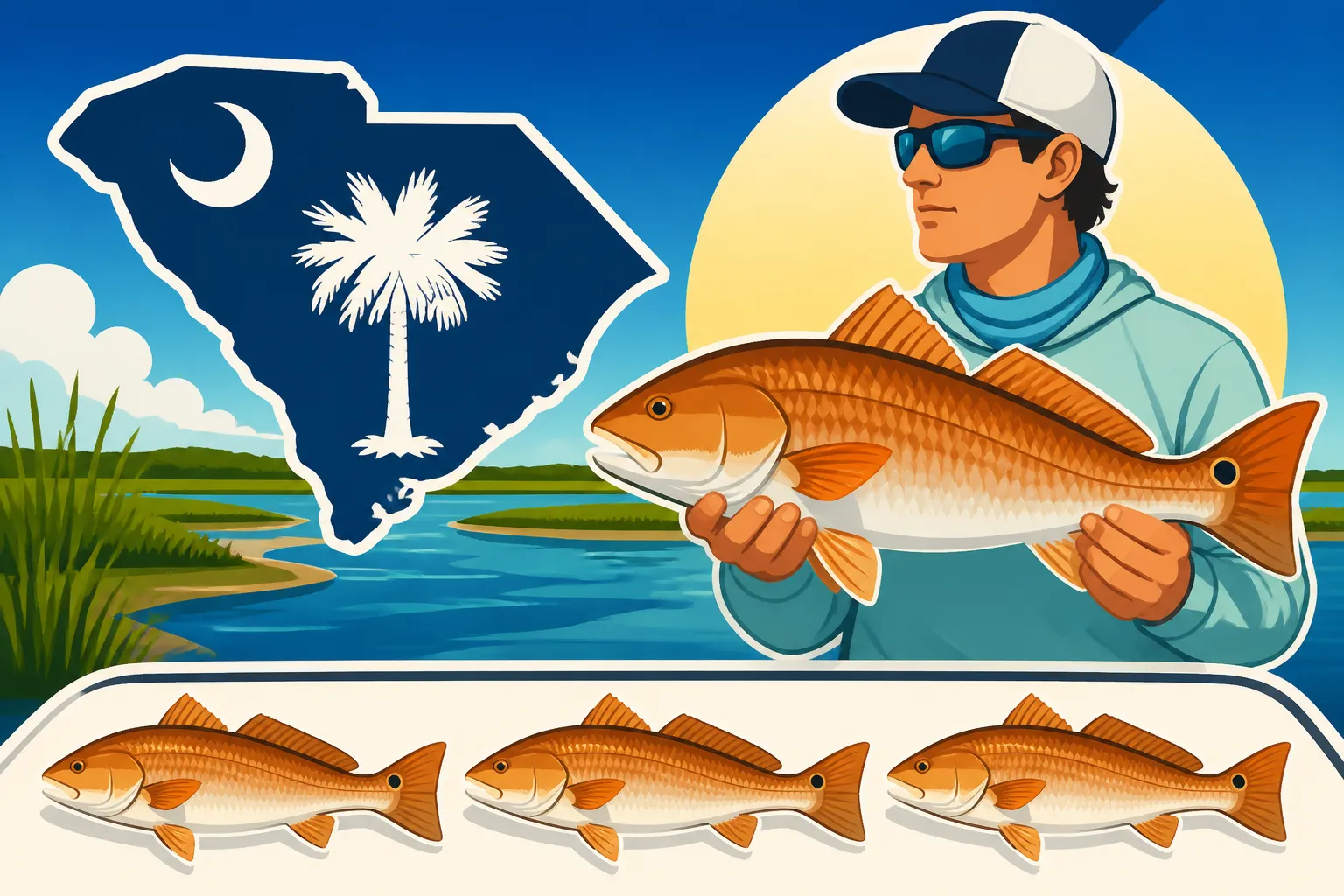
Let's cut right to the chase: The current daily bag limit for redfish in South Carolina is two fish per person per day. This means that no matter how many hungry redfish you encounter, you are legally permitted to keep only two for yourself in a 24-hour period. This limit is designed to spread the harvest among more anglers and reduce pressure on the overall redfish stock. It’s important to remember this isn't just a suggestion; it's a legal requirement enforced by the South Carolina Department of Natural Resources (SCDNR).
However, the bag limit doesn't stand alone. It works hand-in-hand with a strict "slot limit," which dictates the size range of redfish you can legally retain. You might be able to catch dozens of redfish in a day, but only those that fall within the legal slot and are part of your two-fish bag limit can be kept. This combination of rules aims to protect the smaller, immature fish so they can grow and reproduce, as well as the larger, more prolific breeders that are vital for spawning.
It's a system that requires a little extra attention from anglers, but it's fundamentally about sustainability. If you're planning a trip, always double-check the Current Redfish Regulations for Coastal Waters to ensure you have the latest information, as these rules can change based on scientific assessments of the fish population.
Why These Limits Matter for Conservation
Conservation isn't just a buzzword; it's the bedrock of sustainable fishing. The redfish daily bag limit and slot limit are direct tools used to manage fish populations, preventing overfishing and ensuring a healthy ecosystem. Redfish, while hardy, can be susceptible to intense fishing pressure, especially in popular inshore areas like Murrells Inlet or Charleston Harbor. Without these limits, it wouldn't take long before we started seeing a significant decline in their numbers, impacting not just anglers but the entire coastal food web.
These regulations are informed by scientific research and population assessments conducted by agencies like the SCDNR. They look at factors such as spawning success, fish growth rates, and angler harvest data to determine what levels of harvest are sustainable. The goal is to strike a delicate balance: allowing anglers to enjoy their sport while safeguarding the resource for the long haul. Imagine a future where redfish are scarce – that's what these limits are designed to prevent.
Beyond just the numbers, these limits also encourage a mindset of responsible angling. It fosters an appreciation for catch-and-release, especially for fish outside the slot, and reminds us that we are stewards of these natural resources. When you consciously adhere to these rules, you're directly contributing to the health and vitality of South Carolina's cherished redfish fishery.
The Role of SCDNR in Setting Limits
The South Carolina Department of Natural Resources (SCDNR) is the primary agency responsible for managing the state's marine and freshwater fisheries. When it comes to setting redfish daily bag limits and other regulations, they don't just pull numbers out of a hat. Their process is thorough, science-based, and often involves public input. Marine biologists and fisheries managers within the SCDNR continuously monitor redfish populations through various studies, including tagging programs, spawning assessments, and angler surveys.
This data allows them to understand the health of the redfish stock, identifying trends in population size, age structure, and reproductive success. If data suggests that the population is declining or under stress, the SCDNR may propose stricter limits or other management measures. Conversely, if the population is robust and healthy, they might maintain or even slightly relax restrictions, though this is a less common scenario for highly prized species. Understanding How Often Redfish Regulations Get Updated can give you an appreciation for the continuous effort involved in maintaining this balance.
The SCDNR also plays a crucial role in enforcement. Their wildlife officers and marine patrol ensure that anglers are adhering to the established regulations. These officers are often seen patrolling coastal waters, checking licenses, measuring fish, and ensuring compliance. Their presence is a reminder that these rules are serious and necessary for the long-term enjoyment of South Carolina's fantastic fishing opportunities.
Navigating the Redfish Slot Limit
The daily bag limit is one piece of the puzzle, but the redfish slot limit is arguably where things can get a little more intricate for anglers. It's not enough to simply keep two fish; those two fish must fall within a very specific size range. This rule is particularly effective for redfish because it protects both the young fish, giving them a chance to mature and contribute to future spawns, and the very large, older fish, which are often the most prolific breeders.
What the 18-25 Inch Slot Means
In South Carolina, the legal slot limit for redfish is 18 to 25 inches, total length. This means that any redfish you keep must be at least 18 inches long from the tip of its snout to the tip of its tail, and it cannot exceed 25 inches in length. Fish that are shorter than 18 inches are considered "undersized" and must be immediately released. Similarly, fish longer than 25 inches are "oversized" and also must be immediately released. You can explore more about these specific dimensions in South Carolina Redfish Slot Limit 18 to 25 Inches.
This "slot" approach is highly beneficial for redfish conservation. The smaller fish get to grow past their juvenile stage, and the larger fish, often called "bull reds," are protected because they are the most important for successful spawning. These big breeders produce significantly more eggs than younger fish, making their protection paramount for the species' future. It's a smart strategy that ensures a healthy genetic diversity and reproductive capacity within the redfish population.
It also means that as an angler, you need to be prepared to measure every redfish you intend to keep. Don't eyeball it; that's a recipe for a potential violation. A reliable measuring device is an absolute necessity if you plan on targeting redfish. You can easily find robust, clearly marked measuring boards or flexible tape measures on platforms like Amazon that are perfect for this purpose.
Measuring Your Catch Correctly
Accurately measuring your redfish is critical to staying within the legal slot limit. There's a specific method to ensure your measurements are correct and compliant with SCDNR regulations. You measure the "total length" of the fish, which means from the tip of the snout to the furthest tip of the tail, with the tail compressed. Lay the fish flat on its side on a measuring board or against a tape measure, ensuring its mouth is closed and pressed against the measuring stop. Then, gently pinch the tail lobes together to get the maximum length reading.
A common mistake is trying to measure a flopping fish or using a flexible tape measure without properly compressing the tail. This can lead to inaccurate readings, potentially causing you to keep an undersized or oversized fish by mistake. It’s always better to err on the side of caution. If it's borderline, release it. Many experienced anglers use a solid, flat measuring board that has a nose stop and clear markings, which minimizes errors and speeds up the measurement process, reducing stress on the fish.
Having a good measuring device readily accessible on your boat or in your tackle box is non-negotiable for redfish anglers. If you're on a fishing trip and realize you've forgotten yours, a quick search on Amazon for a "fish measuring board" will show you many options, some even floating for easy retrieval if dropped overboard. Proper measurement isn't just about following the rules; it's about respecting the fish and the fishery.
Handling and Releasing Out-of-Slot Fish
Catching a beautiful redfish only to realize it's outside the legal slot can be a bittersweet moment. While you might be disappointed you can't keep it, proper handling and release are crucial to ensure that fish swims away healthy and can contribute to the population. The survival rate of released fish depends heavily on how they are handled. Minimize the time the fish is out of the water; every second counts, especially in warmer temperatures.
When handling a redfish for release, try to keep it horizontal and support its belly. Avoid holding it vertically by the jaw or gill plate, as this can cause internal damage. Use wet hands or a wet towel to protect the fish's slime coat, which is vital for its immune system and protection against disease. If you're using a net, opt for a rubberized, knotless net, as these are much gentler on fish scales and fins compared to traditional knotted nylon nets.
If the fish is deeply hooked, especially in the gills or gut, it's often best to cut the line as close to the hook as possible rather than trying to remove the hook, which can cause more damage. Circle hooks are highly recommended when fishing with bait for redfish, as they significantly reduce the incidence of deep hooking by typically hooking in the corner of the mouth. Taking these extra steps ensures that the redfish you release has the best possible chance of survival, helping to sustain the fishery.
Vessel Limits and Group Fishing Considerations
Fishing solo is one thing, but when you're out with a group on a boat, the rules can get a little more complex. It's not just about each individual's bag limit; South Carolina also implements a "vessel limit" for redfish. This is a critical regulation that many anglers, especially those visiting from out of state, sometimes overlook or misunderstand. It’s designed to prevent a large group of anglers from harvesting an unsustainably high number of fish on a single outing, even if each individual adheres to their personal limit.
How the Vessel Limit Works
The South Carolina redfish vessel limit currently stands at six fish per boat, per day. This means that regardless of how many licensed anglers are on your boat, the combined total number of legal redfish you can keep cannot exceed six. For instance, if you have three anglers on board, and each person catches their two-fish daily limit, you've hit the maximum of six fish for the boat. But if you have four or more anglers, you still cannot keep more than six redfish collectively. This important rule is detailed in South Carolina Redfish Vessel Limit Explained.
This regulation is particularly important for charter operations or large private fishing parties. It prevents a scenario where, for example, five anglers each keep two fish (totaling ten redfish), which would be far too much pressure on the local population. The vessel limit acts as an overarching cap to ensure that even with multiple people fishing, the total harvest from a single trip remains within conservation-minded parameters.
Anglers need to communicate clearly within their group about who has kept what, and how many fish are already in the cooler. It's the captain's or boat owner's responsibility to ensure the vessel limit is not exceeded, but every angler on board shares the accountability. Failure to abide by this rule can lead to significant penalties, not just for the individual who exceeded their personal limit, but potentially for everyone on board and the boat owner.
Angler Responsibility in Group Settings
When you're part of a group fishing trip, whether it's with friends, family, or on a charter, individual responsibility remains paramount, but it also merges with a collective duty to follow all regulations. Every person fishing from the vessel must possess a valid South Carolina fishing license. You can find detailed information on this by looking up the South Carolina Fishing License Guide. It's not uncommon for officers to board boats and ask each individual to produce their license and verify their catch.
Beyond the license, each angler is personally responsible for understanding and adhering to their two-fish daily bag limit and the 18-25 inch slot limit. This means you can't "share" your bag limit with someone else who might have caught more or less. If you catch two legal redfish, those are your two fish. If another angler on the boat catches zero, they don't get to claim one of your fish to fill their "personal" quota after the fact.
The ultimate responsibility for the vessel limit often falls to the person operating the boat or the designated group leader, but everyone has a role to play. A good practice is to have an open conversation before the trip starts about the rules, especially if some members of the group are new to South Carolina's fishing scene. It's a team effort to ensure everyone has fun, catches fish, and respects the regulations.
Practical Scenarios for Group Fishing
Let's imagine a few scenarios to make the vessel limit crystal clear.
Scenario 1: Two Anglers
You and one friend are on a boat. Each of you can legally keep two redfish within the 18-25 inch slot. This brings your total boat limit to four fish. Since the vessel limit is six, you are well within the regulations.
Scenario 2: Three Anglers
You, two friends, and a total of three licensed anglers are on the boat. Each of you can keep two redfish. This brings your total boat limit to six fish. This hits the vessel limit, so once the sixth legal redfish is put in the cooler, no one on that boat can keep any more redfish, even if they haven't caught their individual two-fish limit yet.
Scenario 3: Four Anglers
You, three friends, and a total of four licensed anglers are on the boat. Each person could individually keep two redfish, totaling eight fish. However, the vessel limit is six fish. Therefore, once six legal redfish are in the cooler, the entire boat must cease keeping redfish for the day, even though each individual angler hasn't reached their personal two-fish bag limit. This is a crucial point where the vessel limit overrides individual potential.
Scenario 4: Charter Trip with Five Anglers
You're on a guided charter with five paying anglers plus the captain (who may or may not be actively fishing for a personal quota, depending on charter rules). The total number of redfish kept by everyone on that boat cannot exceed six. The captain will typically manage this very closely, advising anglers when the boat limit has been reached. It's imperative for guests to listen to their guide, who is an expert on Redfish Slot Limit Rules for Coastal Anglers and all other local regulations.
These examples highlight why clear communication and meticulous tracking of your catch are essential on any group redfish fishing trip in South Carolina.
Staying Informed and Avoiding Penalties
Fishing regulations, especially for highly managed species like redfish, aren't set in stone forever. They are dynamic, evolving with the health of the fish populations and changing environmental conditions. It's the angler's responsibility to stay informed about the latest rules. Falling behind can lead to costly and frustrating penalties, even if your violation was unintentional.
Resources for Up-to-Date Regulations
The absolute best and most reliable source for current South Carolina fishing regulations is the South Carolina Department of Natural Resources (SCDNR) website. They publish an annual regulations booklet, which is available online and often in print at tackle shops, licensing vendors, and SCDNR offices. This booklet covers everything from bag limits and slot sizes to specific rules for different bodies of water and species. Making it a habit to review this document at the start of each fishing season, or before any specific trip, is highly recommended.
Beyond the official website, several other resources can help you stay informed. Local bait and tackle shops are often excellent hubs of information, as their owners and staff are usually avid anglers themselves and interact daily with the SCDNR. Many will have current regulation summaries posted or readily available. Reputable fishing guides also make it their business to know the latest rules inside and out, so if you're ever on a charter, don't hesitate to ask your captain about any specifics. Furthermore, apps like those provided by the SCDNR or other fishing information services can provide digital access to regulations, which you can keep on your phone for quick reference while on the water.
Given that these rules can change, it's wise to make a habit of checking the SCDNR website specifically for Why You Should Always Double-Check Current Redfish Rules before each major fishing outing. This proactive approach will save you a lot of potential headaches and ensure you're always fishing legally and ethically.
Common Mistakes Leading to Violations
Even the most well-intentioned anglers can inadvertently run afoul of redfish regulations. One of the most common mistakes is simply not checking the current regulations. Assumptions based on past trips or other states' rules are a surefire way to get into trouble. Regulations for popular species like redfish can and do change, sometimes with little lead time.
Another frequent error is improper measurement. As discussed, "eyeballing" a fish to see if it fits the 18-25 inch slot is a gamble that rarely pays off. A fraction of an inch can be the difference between a legal fish and a violation. Always carry a reliable measuring device and know how to use it correctly. Similarly, miscounting your catch when fishing with a group can lead to exceeding the vessel limit. It's easy to lose track when multiple people are catching fish, especially during a hot bite. A simple tally system or designated "fish counter" for the boat can prevent this.
Finally, not understanding the difference between a personal bag limit and a vessel limit is a major pitfall for groups. Believing that "everyone on the boat can keep their two fish, no matter what" when you have more than three anglers will put you over the six-fish vessel limit every time. Every angler should be aware of South Carolina Redfish Vessel Limit Explained to avoid group infractions. These are all preventable mistakes with a little preparation and awareness.
Penalties for Fishing Without a License or Exceeding Limits
The consequences for violating fishing regulations in South Carolina can range from inconvenient to severe, depending on the nature and extent of the infraction. Getting caught fishing without a valid license, for example, will almost certainly result in a fine. This can be particularly frustrating if you've simply forgotten to renew your South Carolina Fishing License Requirements in South Carolina. Wildlife officers frequently check licenses, so always have yours readily accessible, either a physical copy or on your phone if it's a digital version.
Exceeding the daily bag limit, keeping undersized or oversized fish, or violating the vessel limit can lead to much heftier penalties. Fines for such violations can be substantial, often hundreds of dollars per offense. In addition to monetary fines, officers may confiscate illegally caught fish, and in more serious or repeat cases, you could face court appearances, loss of fishing privileges, or even jail time. The specific Penalty for Fishing Without a License in South Carolina or for exceeding bag limits will vary based on the circumstances, but it's never a pleasant experience.
It's crucial to remember that ignorance of the law is not an excuse. Wildlife officers are professionals whose job it is to enforce these regulations to protect South Carolina's natural resources. While they might show leniency for minor, first-time, accidental infractions in some cases, you should never count on it. The best way to avoid these penalties is to simply know the rules and follow them diligently.
| Regulation Type | Redfish Limit in South Carolina (Current) | Details |
|---|---|---|
| Daily Bag Limit | 2 fish per person, per day | Each licensed angler may keep a maximum of two redfish within a 24-hour period. |
| Slot Limit | 18 to 25 inches, total length | All retained redfish must measure at least 18 inches and not exceed 25 inches from snout to compressed tail. |
| Vessel Limit | 6 fish per boat, per day | The total number of legal redfish retained on a single boat cannot exceed six, regardless of the number of anglers on board. |
| Gear Restriction | Not more than 3 rods per angler at one time | While not a bag limit, this is a common regulation to note for efficiency and fair play, typically enforced for actively fishing rods. |
Disclaimer
The information provided in this guide is intended for general informational purposes only and is subject to change. Fishing regulations in South Carolina are dynamic and can be updated by the South Carolina Department of Natural Resources (SCDNR) at any time. It is the angler's sole responsibility to consult the official SCDNR website or current fishing regulations pamphlet for the most accurate and up-to-date rules before engaging in any fishing activity. Reliance on this information is at your own risk.