How Long Does It Take a Flounder to Grow to Keeper Size?
It's incredibly frustrating, isn't it? You spend a beautiful day out on the water, you feel that tell-tale thud of a flounder hitting your bait, you reel it in with excitement, only to find it's just a hair shy of the legal minimum length. It happens to the best of us, and it leaves you wondering: just how long does it take for these flatfish to grow big enough to keep? This guide is going to dive deep into the fascinating life of the South Carolina flounder, exploring their growth journey and giving you a realistic understanding of what it takes for them to reach that coveted keeper size.
Understanding Flounder Growth in South Carolina Waters
Flounder are one of the most sought-after inshore species in South Carolina, prized for their delicious white meat and their unique ambush hunting style. But their growth isn't a simple, linear process. It's a complex dance influenced by a variety of factors that can make one flounder shoot up in size while another in the same creek seems to stall out. Understanding these dynamics is key to appreciating the fishery and, perhaps, even improving your chances of landing a legal-sized fish.
Factors Influencing Flounder Growth Rates
Just like us, a flounder's growth isn't just about how much food they eat, though that's certainly a huge part of it! Several environmental and biological factors play a critical role in how quickly a flounder reaches that keeper length.
First and foremost is food availability. South Carolina's estuaries and coastal waters are incredibly rich ecosystems, teeming with small baitfish, shrimp, and crabs – all prime food sources for flounder. However, local conditions can vary. A creek with an abundance of bait will likely produce faster-growing flounder than a less productive area. Think of it like a buffet: if the food is plentiful, they'll eat more and grow more. Conversely, if competition for food is high or the prey base is scarce due to environmental shifts, growth can slow down significantly. Water temperature also plays a massive role. Flounder are cold-blooded, meaning their metabolism, and thus their growth rate, is directly tied to the temperature of the water. Warmer waters generally mean a higher metabolism, more feeding, and faster growth, while cooler winter months can slow things down considerably. The length of the growing season in South Carolina, with its extended warm periods, is definitely a boon for flounder growth compared to more northern climates.
Beyond food and temperature, habitat quality is another huge factor. Healthy marsh grass, oyster beds, and intricate creek systems provide both ample foraging opportunities and crucial protection from predators for young flounder. Areas with good water quality, sufficient oxygen levels, and minimal pollution also contribute to healthier, faster-growing fish. Lastly, there's always a degree of genetic variation within any fish population. Some flounder are simply programmed to grow larger and faster than others, even if they're eating the same food in the same water. It’s the luck of the draw sometimes, which adds another layer to the challenge of catching a big one.
The Life Cycle of a South Carolina Flounder
The life of a flounder is truly fascinating, especially the dramatic transformation they undergo. It's a journey that directly impacts how and when they reach keeper size. Most of the flounder we encounter in South Carolina are Southern Flounder, which have a distinctive lifecycle.
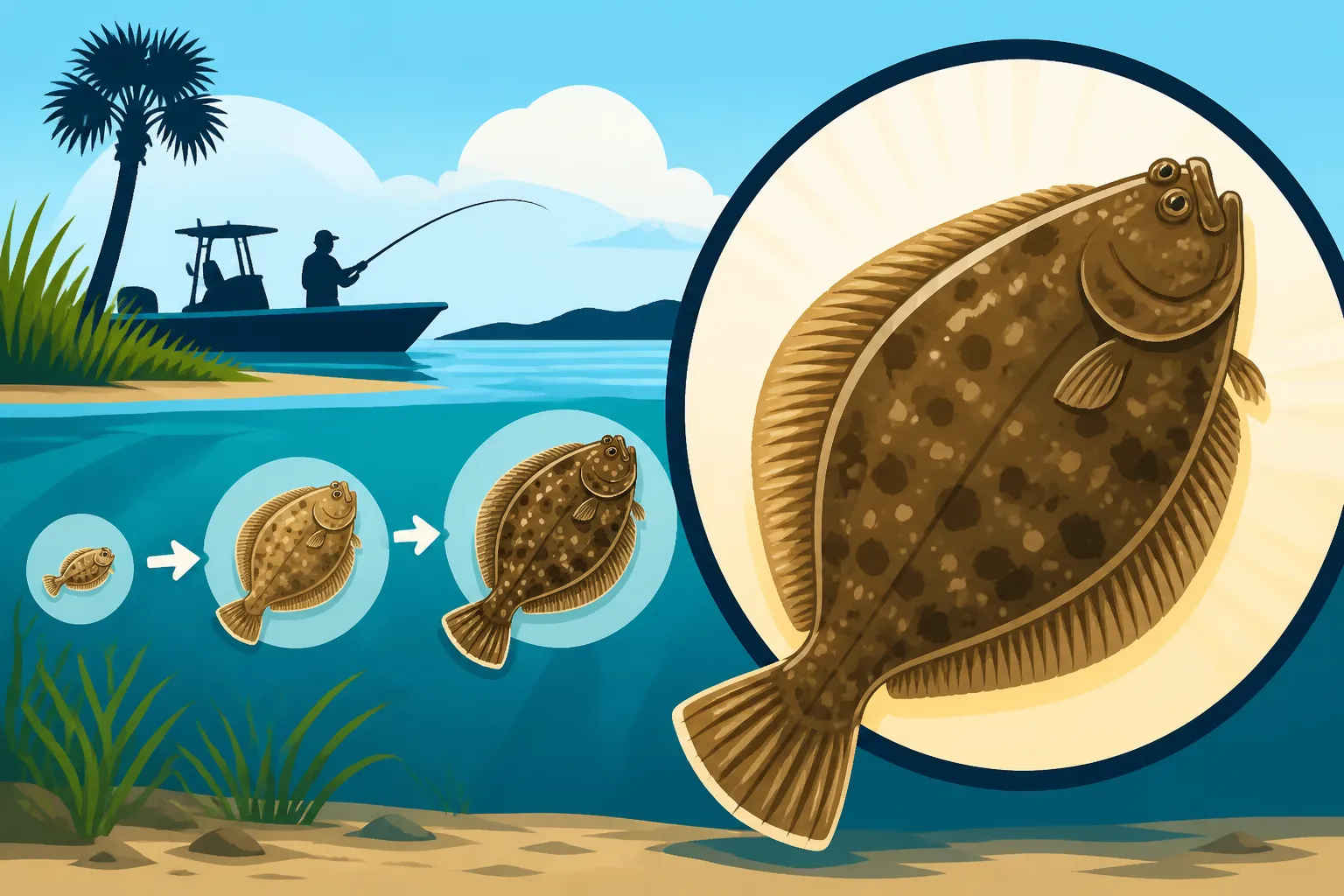
Their journey begins offshore, often in deeper ocean waters, where adults migrate to spawn during the late fall and winter months. The fertilized eggs drift in the currents, eventually hatching into tiny larvae. These larval flounder look like typical fish, swimming upright with an eye on each side of their head. This stage is absolutely critical, as they drift back towards the shallower, nutrient-rich estuaries and inlets of the South Carolina coast, sometimes a journey of many miles. It's during this migration that their incredible metamorphosis occurs. As they grow, one eye begins to migrate over the top of their head until both eyes are on the same side, and they gradually flatten out. This transformation is essential for their adult, bottom-dwelling lifestyle. Once they've settled into the shallow, brackish waters of the estuaries, they enter the juvenile stage. This is where rapid growth truly begins. With access to abundant food in protected creeks, they pack on size quickly. They spend their summers growing and feeding heavily in these nursery grounds, often moving into slightly deeper channels as they get bigger. As fall approaches, many mature flounder will begin their migration back out to sea to complete the cycle and spawn themselves. The strong currents and vast productive marshes of the South Carolina Lowcountry, like those found around Mount Pleasant Redfish and Trout Fishing Spots or Charleston Harbor Fishing Spots for South Carolina Anglers, provide ideal conditions for these critical early life stages, giving flounder a head start on their path to becoming a keeper.
South Carolina's Flounder Regulations and "Keeper Size"
One of the biggest heartbreaks for any angler is reeling in a beautiful flounder, only for it to be just a quarter-inch short of the legal limit. It happens all the time, and it’s why understanding the regulations – and the reasoning behind them – is so crucial. These rules aren't there to annoy us; they're essential for ensuring a healthy and sustainable flounder population for years to come.
Defining the "Keeper Size" in South Carolina
In South Carolina, "keeper size" for Southern Flounder refers to the minimum length a fish must be to legally harvest and take home. This length is measured from the tip of the snout to the end of the tail with the tail compressed. While specific numbers can change (so always double-check the latest regulations from the SCDNR), the minimum length requirement for flounder in South Carolina is typically around 15 inches. This might feel like a big fish when you're used to catching plenty of 12 or 13-inchers, and that's precisely the point.
These regulations are put in place for a very important reason: conservation. The minimum size limit ensures that most flounder have at least one, and ideally several, opportunities to reproduce before they are harvested. This allows them to contribute to the next generation of flounder, helping to maintain a healthy and robust population. When you're constantly catching fish that are just under the mark, it can definitely feel like a bit of a tease. You might think, "One more inch, come on!" But that extra inch represents vital growth, maturity, and potential spawning activity for that fish. We've all been there, holding a beautiful flounder up against the ruler on our boat or a reliable fish measuring tool from Amazon, only to sigh and gently release it. It's tough, but it's part of being a responsible angler. You can find more comprehensive details on the rules in our guide to South Carolina Flounder Fishing Regulations Explained.
How Regulations Impact Our Understanding of Growth
The very existence of a minimum size limit fundamentally shapes how we perceive flounder growth. We, as anglers, tend to focus on the period of growth up to the keeper size, rather than the entire life cycle of the fish. This means that our subjective experience often involves catching a lot of fish in that "tween" stage – too big to be considered a juvenile, but not quite an adult ready for the cooler.
This focus means we often don't think about the rapid growth that happens in their first year when they might go from being a tiny, eye-migrating larva to a feisty 8-10 inch juvenile in the back creeks. Instead, our attention is usually drawn to that slow, often frustrating progression from 13 to 15 inches, which can feel like an eternity. But understanding that these regulations are designed to allow fish to mature sexually before harvest helps frame that waiting game. It's a testament to the fact that those 13 and 14-inch flounder you're catching and releasing are still young adults, contributing to the health of the fishery by growing bigger and, importantly, having the chance to spawn. Always make sure you're up-to-date on the rules, as they can sometimes be adjusted based on scientific assessments of the fish stock. Being informed about South Carolina's Redfish Slot Limit Rules and other species helps us understand the careful balance that wildlife agencies try to maintain.
Estimating Time to Keeper Size for South Carolina Flounder
So, the big question remains: how long does it actually take for a flounder to hit that magic number? While it’s impossible to give an exact age for every single flounder you might catch, we can look at general benchmarks and understand the factors that speed up or slow down this journey.
General Growth Benchmarks for Southern Flounder
Based on fisheries research and general biological understanding, Southern Flounder in optimal South Carolina conditions can exhibit fairly rapid growth in their first year. After settling into the estuaries, they might reach anywhere from 8 to 12 inches within their first year of life. That's a pretty impressive feat, going from a tiny larva to a respectable-sized fish! However, that initial burst of growth often slows down as they mature.
Reaching the typical South Carolina keeper size, which, as we discussed, is generally around 15 inches, often takes 2 to 4 years for a Southern Flounder. This wide range accounts for all those influencing factors we talked about earlier: how good the food source is in their specific creek, water temperature fluctuations, and even individual genetic differences. A flounder that settles into a prime feeding ground with abundant shrimp and mild winters might hit 15 inches on the younger side of that range, perhaps by two and a half years old. Another, facing tougher conditions or simply not being a "fast grower," might take closer to four years. It's also worth noting that female flounder generally grow faster and attain larger maximum sizes than males, a common trait among many fish species. So, if you're consistently catching slightly smaller flounder, it's possible you're encountering more males or fish that are on the lower end of the growth spectrum for their age.
The Frustration of "Close but Not Quite"
We've all been there: you land a flounder that looks absolutely massive in the net, your heart pounds, you're already picturing it on the dinner plate. Then you lay it on your measuring board, and it's 14 ¾ inches. Ugh! That "close but not quite" feeling is a universal angler frustration, and it's especially common with flounder.
That last inch or two to reach keeper size can often feel like the slowest growth period. While juveniles pack on size quickly, that transition to full maturity and legal length can be a slow grind. This is largely because, as fish get older and larger, their growth rate naturally slows down. They're no longer just rapidly developing; they're now putting energy into maintaining their larger body mass, potentially reproducing, and simply surviving. So, those few extra inches often take more time and more meals than the first many inches did. It’s a common experience for anglers to catch several flounder in the 13-14 inch range throughout a fishing season, leading to that persistent question of how much longer it will take. This is why proper catch and release for undersized fish is so critical. A sturdy pair of pliers for hook removal, easily found on Amazon, can minimize harm, ensuring that those "almost there" flounder get to grow up and potentially become a keeper on your next trip.
Practical Tips for Targeting Keeper Flounder and Responsible Angling
While we can't magically make flounder grow faster, we can certainly adjust our approach to increase our chances of hooking into those legal-sized fish. It also reminds us of our responsibility as anglers to support healthy fish populations.
Understanding Preferred Habitats for Larger Flounder
If you want to catch bigger flounder, you often need to think like a bigger flounder. Where do they feel safe? Where do they find the best meals without expending too much energy? Larger flounder tend to prefer specific types of habitats that offer both cover and abundant prey.
Look for areas with structure: oyster beds, submerged logs, rock piles, bridge pilings, and dock lines are all prime ambush points. Flounder are masters of camouflage, burying themselves in the bottom and waiting for an unsuspecting meal to swim by. Structure gives them an edge. Deeper channels and creek mouths, especially where there's good current, are also hotspots. The current delivers food right to them, and deeper water provides a bit more thermal stability and protection. Marsh edges, particularly those with a drop-off into a deeper channel, can be fantastic during incoming or outgoing tides, as baitfish move in and out with the water. Focusing your efforts on these prime locations, rather than just randomly casting, significantly increases your odds. Places like Murrells Inlet Redfish Fishing Spots in South Carolina or even Charleston Harbor Sheepshead Fishing Spots will often hold larger flounder due to their complex underwater structure and tidal flows.
Gear and Techniques for Targeting Larger Fish
While a small flounder will hit almost any bait, targeting larger keepers might require a slight adjustment to your gear and technique. It's not about making it harder to catch them, but more about appealing to the size of fish you're looking for.
Consider using slightly larger baits than you might for smaller panfish. Live mud minnows, finger mullet, or shrimp are classic flounder baits. Using a slightly bigger live bait can sometimes deter the smaller, juvenile flounder, allowing a larger fish to get to it first. Artificial lures, such as soft plastics rigged on jig heads (like a Z-Man PaddlerZ or a Gulp! Shrimp), can also be very effective. A 1/4 to 3/8 ounce jig head is a good starting point, and you can experiment with slightly heavier options if you're fishing deeper water or stronger currents. Ensure your tackle is appropriate – a medium-light to medium action rod with a sensitive tip, paired with a reliable spinning reel spooled with 10-20 lb braided line, will allow you to feel those subtle flounder bites and have the backbone to fight a larger fish. Many reputable fishing gear brands are readily available on Amazon and can withstand the rigors of inshore fishing. Patience is key with flounder. They often "thump" a bait first, then hold onto it for a moment before really committing. Resist the urge to set the hook immediately. Give them a few seconds to fully take the bait before a firm, upward sweep of the rod. For more details on effective flounder fishing, check out Flounder Fishing Tips for Beginners in South Carolina.
The Role of Conservation in Future Flounder Populations
Ultimately, the best way to ensure there are always keeper-sized flounder to catch in South Carolina is through responsible angling and strong conservation efforts. Every time you release an undersized flounder, you're not just following the law; you're actively contributing to the future health of the fishery.
Proper catch and release techniques are paramount. Minimize handling time, use a de-hooking tool if the fish has swallowed the hook, and support the fish horizontally when releasing it. If you're fishing from a boat, having a quality measuring board attached to your cooler or boat deck is essential for quick and accurate measurements, reducing stress on the fish. You can find excellent, durable measuring boards, sometimes with adhesive backs, on Amazon. These tools ensure you make the right call quickly. Remember, the regulations are designed to allow flounder to mature and reproduce, which safeguards the population. Adhering to bag limits and size restrictions, and being an advocate for healthy aquatic environments, helps ensure that future generations of anglers will have the same opportunities to enjoy flounder fishing that we do today.
Here's a quick look at the factors influencing how fast a flounder grows:
| Factor | Impact on Growth Rate | Description |
|---|---|---|
| Food Availability | High | Abundance of baitfish, shrimp, crabs leads to faster growth. |
| Water Temperature | High | Warmer water increases metabolism, leading to more feeding and growth. |
| Habitat Quality | High | Healthy marsh, oyster beds, clean water provide resources and protection. |
| Genetic Variation | Moderate | Some individual flounder naturally grow faster/larger than others. |
| Age of Fish | Decreases with age | Younger flounder grow very rapidly; growth slows as they mature. |
| Gender of Fish | Varies | Females often grow faster and larger than males. |
Disclaimer
This article is for general informational purposes only and does not constitute professional advice. Laws, prices and regulations vary by location and change over time. Consult a qualified professional for guidance on your specific situation.