Striped Bass Winter Fishing Patterns in Freshwater Lakes
Oh, winter striped bass fishing in South Carolina – it's a whole different ballgame compared to the warm, lazy days of summer. Many anglers get frustrated because the fish seem to vanish or become incredibly lethargic once the water temperatures drop. It’s easy to feel like you're just casting into an empty lake, but I promise you, those stripers are still there, they've just changed their hangout spots and their eating habits. This guide is all about helping you understand those elusive winter patterns, so you can adapt your approach and keep catching these powerful fish even when the air bites.
Understanding Winter Striped Bass Behavior in South Carolina Lakes
When the calendar flips to winter and those crisp mornings settle over the Palmetto State, the whole ecosystem in our freshwater lakes shifts. Striped bass, being warm-blooded creatures (well, kind of – they're ectothermic, meaning their body temperature depends on their environment!), react significantly to these changes. Understanding why they behave differently in cold water is the first step to figuring out how to catch them.
Why Stripers Change Their Habits in Cold Water
Think about it from a striper's perspective. As the water cools, their metabolism slows down dramatically. They don't need to feed as often or as aggressively to maintain their energy levels. This means they're not chasing baitfish all over the lake like they might in spring or fall. Instead, they become more concentrated and often hold tighter to structure. The baitfish themselves also react to the cold, often schooling up in deeper, more stable water where temperatures are less volatile. Stripers will follow this forage. It’s a game of hide-and-seek, but instead of hiding for warmth, they’re hiding in comfort, often near their food source. This shift means you need to slow down your presentation and focus on precision.
Key Environmental Factors Affecting Winter Stripers
Several environmental factors play a huge role in where you'll find stripers in the winter. First and foremost is water temperature. Stripers prefer cooler water, generally in the 50s and low 60s, but in winter, the surface can dip much lower. They'll seek out the most stable temperature bands, which are often found deeper in the water column. This could be 30, 40, or even 60 feet down. Don't be afraid to fish deep!
Next is depth and structure. Cold water often means less oxygen at the surface, pushing fish deeper. Stripers will congregate around deep structures like submerged humps, ledges, creek channels, and even the main lake channel itself. They use these features for cover and ambush points as baitfish move through.
Finally, water clarity can be a factor. While stripers are primarily sight feeders, very clear winter water might make them a bit more wary. Conversely, a slight stain can sometimes concentrate them further, as their visibility is reduced, making them rely more on other senses. The key is finding that sweet spot where baitfish are abundant and the water temperature is consistent. South Carolina's Best Striped Bass Waters will give you some excellent starting points for identifying prime striper lakes that hold up well in winter.
Prime Locations for Winter Striped Bass
So, where exactly do these fish hang out when it's chilly? Forget the shallow coves and bustling boat docks you might hit in summer. Winter stripers go deep.
- Deep Main Lake Channels and River Bends: These are often highways for baitfish and offer consistent, deeper water. Stripers will patrol these areas, often suspended over the channel or holding right on the edge of a significant drop-off.
- Submerged Humps and Ledges: Any underwater structure that rises significantly from the bottom is a magnet. Stripers will position themselves on the downcurrent side of these humps, waiting to ambush bait. On Lake Murray, for example, identifying these key humps can be a game-changer for winter success. Check out Fishing Dreher Island's Submerged Humps for South Carolina Stripers for a specific example of this strategy.
- Power Plant Discharges: These can be goldmines in the winter. The warmer water discharged from power plants creates an anomaly that attracts baitfish and, in turn, hungry stripers. The consistent, slightly elevated temperature can keep fish more active than in other parts of the lake.
- Bridges and Deep Docks: While docks are often summer spots, if a dock extends into very deep water or a bridge crosses a deep channel, it can provide vertical structure that baitfish and stripers will relate to. Don't overlook the pilings of large bridges, as they can hold a surprising number of fish.
Remember, once you find the bait, the stripers are usually not far behind. Your fish finder is your best friend in locating these congregations.
Essential Gear and Bait for Winter Striper Fishing
Winter fishing isn't just about finding the fish; it's also about having the right tools to get your bait to them and then land them. Cold conditions often mean sensitive bites and heavier fish, so your setup needs to be up to the task.
Rods, Reels, and Line for Cold Weather
For winter striper fishing, you want a setup that offers both power and sensitivity.
- Rods: A medium-heavy to heavy action casting or spinning rod, typically 7 to 7.5 feet long, is ideal. The longer rod helps with casting distance and provides better leverage when fighting a strong striper in deep water. Look for rods with a fast tip for detecting subtle bites, but enough backbone to handle a fish that might be 10, 20, or even 30 pounds. If you're going for big stripers, don't skimp on rod quality.
- Reels: A sturdy baitcasting reel with a good drag system is excellent for precise drops and handling heavy lures, especially if you're vertical jigging. For spinning gear, a 4000-5000 series reel with a smooth retrieve and strong drag will serve you well. Make sure the reel has enough line capacity for those deep runs.
- Line: Braided line, in the 20-30 lb test range, is highly recommended. Its low stretch offers incredible sensitivity, allowing you to feel even the slightest tap in deep water. It also provides superior strength for landing big fish. Attach a 6-10 foot fluorocarbon leader (15-25 lb test) for abrasion resistance and invisibility in clear winter waters. Fluorocarbon is also less prone to freezing than mono, which can be a small but annoying consideration on truly frigid days. Many anglers find great deals on quality braided lines and fluorocarbon leaders on platforms like Amazon.
Top Baits and Lures for Winter Stripers
Winter stripers are often less active, but they still need to eat. The key is presenting something enticing and often, something that mimics their natural forage.
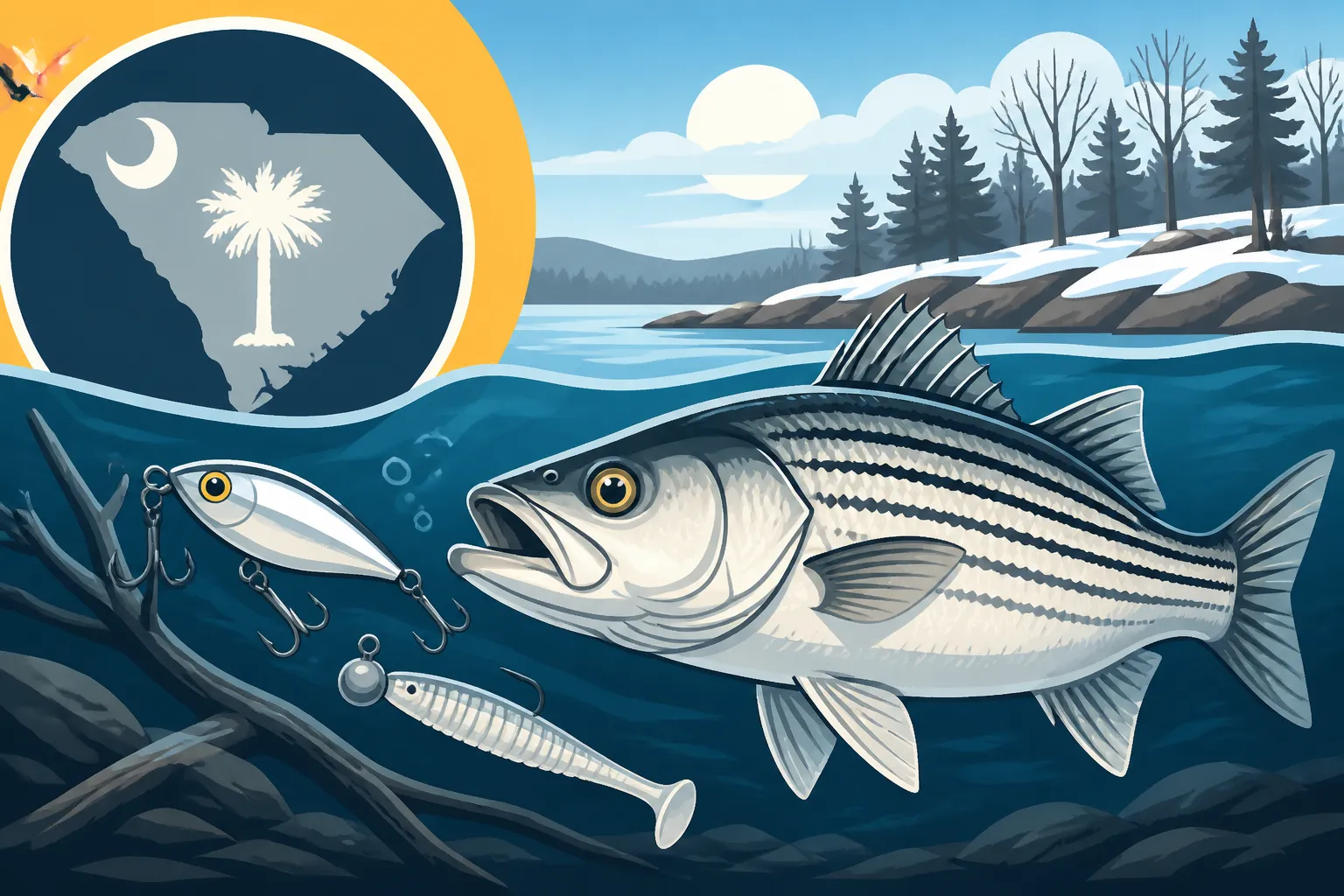
- Live Bait: This is often the undisputed champion for winter stripers. Shad (threadfin or gizzard), blueback herring, or even large shiners are excellent choices. Stripers are opportunistic predators, and a struggling baitfish is an easy meal. Using downriggers or simple downlines with a heavy sinker to get your live bait to the exact depth where fish are suspended is crucial.
- Jigging Spoons: Heavy metal jigging spoons (1 to 3 ounces) are incredibly effective. They mimic dying baitfish as they flutter and fall. Drop them directly over marked fish and use a sharp, vertical jigging motion. The flash and vibration can trigger strikes from otherwise lethargic stripers.
- Soft Plastic Jigs: Large soft plastic paddle tail swimbaits or flukes rigged on a heavy jig head can also work wonders. Again, the key is getting them to the right depth and imparting a subtle, enticing action.
- Umbrella Rigs: These are fantastic for trolling. An umbrella rig simulates a small school of baitfish, making it highly attractive to hungry stripers. Pair it with appropriate swimbait trailers. Best Lures for Striped Bass in South Carolina delves deeper into effective lure choices for these conditions.
The choice between live bait and artificials often comes down to the activity level of the fish. If they're actively feeding, artificials can be faster and more efficient. If they're sluggish, live bait often gets the nod.
Electronics and Accessories
Modern electronics are practically non-negotiable for successful winter striper fishing.
- Fish Finder/Sonar: A high-quality fish finder with down imaging and side imaging capabilities is essential for locating deep structure and, more importantly, finding schools of baitfish and the stripers lurking beneath them. Pay close attention to arcs or lines of fish on your screen, noting their depth.
- GPS/Chartplotter: Once you find a productive spot, mark it! A GPS allows you to return to the exact same humps, ledges, or channel bends time and time again. Mapping features can also help you identify potential deep-water structures before you even get there.
- Warm Clothing: This might seem obvious, but it’s critical. Layering is key: a good base layer to wick moisture, an insulating mid-layer, and a waterproof/windproof outer shell. Don't forget a warm hat, gloves, and waterproof boots. Being cold will cut your trip short and make you miserable. You can find excellent cold-weather fishing gear, including thermal underwear and waterproof gloves, by searching on Amazon.
- Thermos: A hot cup of coffee, tea, or even soup can make a huge difference in staying comfortable and focused on a chilly winter morning.
Effective Techniques for Winter Striped Bass
Now that you understand where they are and what gear you need, let's talk about how to actually get those winter stripers to bite. Patience and precision are your watchwords here.
Vertical Jigging and Spooning
This technique is all about getting your lure right into the strike zone. Once your fish finder lights up with bait and stripers beneath it, you need to present your jigging spoon or heavy jig straight down to their depth.
- Drop and Detect: Drop your spoon or jig past the fish, let it hit the bottom, and then reel up a few feet. The retrieve should be a series of sharp lifts (1-3 feet) followed by a controlled fall on a semi-slack line. Most strikes occur on the fall as the lure flutters like a dying baitfish.
- Feel the Fall: Pay very close attention to your line during the fall. Sometimes, a striper will just "tick" the bait, or your line might go slack unexpectedly. This often signals a bite.
- Target Depth: If you see fish at 40 feet, try to hold your lure between 35 and 45 feet. Don't be afraid to experiment with how high you lift the spoon and how fast you let it fall. Sometimes a slower, more deliberate action is all it takes for a cold-water bite.
Trolling Deep for Suspended Fish
Trolling is an excellent way to cover water and find scattered schools of stripers that might be suspended over open water or along deep channels.
- Umbrella Rigs: These are particularly effective. Deploy them at various depths using lead core line, downriggers, or heavy inline weights to get them down to where the fish are.
- Deep-Diving Crankbaits and Jerkbaits: While less common for winter stripers, large, deep-diving crankbaits can sometimes entice a strike, especially if fish are slightly shallower (20-30 feet).
- Speed Control: Slow your trolling speed down considerably compared to warmer months. Think 1.5 to 2.5 miles per hour. This allows the fish more time to react to your presentation and gives your lures a more natural, subtle action.
- Contour Trolling: Follow the contours of deep creek channels or main lake ledges. This keeps your lures in the most productive zones. You'll want to carefully monitor your depth sounder to stay on the edge.
Live Bait Presentation
When fish are sluggish, live bait often provides that irresistible, natural appeal. How to Catch Striped Bass in Cold Water provides more insights into the effectiveness of live bait during the colder months.
- Downlines: This is a classic method. Attach a heavy sinker (1-3 ounces) to a swivel, then a leader (2-4 feet) to a circle hook. Hook a live shad or herring through the nose or back, and lower it directly to the depth where you’re marking fish. Keep your rod in a holder and wait for the distinctive "thump" of a striper taking the bait.
- Free-Lining (Limited): While less common in deep winter, if stripers are feeding on bait pushed against a deep bluff or holding shallower than expected (perhaps near a warm water discharge), a free-lined bait with minimal weight might work. Let the bait swim naturally into the zone.
- Bait Selection: Fresher, livelier bait is always better. Keep your bait tank well-aerated and maintained with good water quality. Dead or dying bait will be largely ignored by discerning winter stripers. Consider using a quality bait tank that can keep your bait robust, many of which can be purchased through retailers like Amazon.
Adjusting to Weather Changes
Winter weather in South Carolina can be unpredictable. You might have a clear, sunny day followed by a cold, cloudy front. These changes will affect the fish.
- Sunny Days: On bright, clear days, stripers might hold slightly deeper to avoid direct sunlight, or they might become more active if the sun warms the upper water column even slightly. Don't be afraid to fish the sunny side of structures in the afternoon.
- Cloudy Days/Cold Fronts: A fresh cold front can shut fish down. They often move even deeper and become less willing to chase. This is when your live bait and slow, deliberate presentations become even more critical. Fishing just before a front sometimes offers a small window of increased activity. Conversely, after a prolonged cold snap and a few days of stable, chilly weather, fish can start to become more predictable again.
| Technique | Preferred Depth | Best Conditions | Primary Baits/Lures | Key Action/Notes |
|---|---|---|---|---|
| Vertical Jigging | Deep (30-70+ ft) | Marked fish, calm wind | Metal spoons, heavy soft plastics | Sharp lifts, controlled falls; feel for subtle bites |
| Deep Trolling | Suspended (20-60 ft) | Covering water, scattered fish | Umbrella rigs, deep-diving crankbaits | Slow speed (1.5-2.5 mph); follow contours |
| Live Bait | Any depth | Lethargic fish, precise targeting | Shad, herring, large shiners (downlines) | Get bait to exact fish depth; wait for "thump" |
Safety and Comfort on Winter Fishing Trips
Alright, let's talk about something incredibly important: staying safe and comfortable. Winter fishing isn't just about catching fish; it's about being prepared for the elements. South Carolina winters might not be as harsh as up north, but cold water and air can still be dangerous.
Dressing for Success
Layering, layering, layering! I can't stress this enough.
- Base Layer: Start with a good moisture-wicking base layer (merino wool or synthetic). This keeps sweat off your skin, which is crucial for staying warm.
- Mid-Layers: Add insulating layers like fleece or down vests/jackets. These trap warm air close to your body.
- Outer Shell: Finish with a waterproof and windproof outer jacket and pants. This protects you from spray, rain, and bitter winds. A good quality set will make a world of difference.
- Extremities: Your hands, feet, and head lose heat quickly. Invest in warm, waterproof gloves, thermal socks, and waterproof boots. A warm beanie or a balaclava can be a lifesaver. Even if the day starts chilly and warms up, you can always shed layers. It's much harder to warm up once you're already cold.
Boat Safety in Cold Conditions
Cold water is unforgiving. Hypothermia is a real threat, even in milder winter temperatures.
- Wear Your PFD: Always, always wear your personal flotation device (PFD) or life jacket. If you unexpectedly go into cold water, your body will rapidly lose heat, and swimming can become impossible very quickly. A PFD will keep you afloat and increase your chances of survival.
- Tell Someone Your Plan: Before you leave, let a friend or family member know where you're going, when you expect to be back, and who you're with. This is basic boat safety, but it's even more critical in winter when fewer people are on the water.
- Check Your Gear: Ensure your boat's safety gear is in top condition: working lights, charged battery, emergency kill switch lanyard, fully functional bilge pump, and a VHF radio (for offshore or large lakes). Make sure you have dry bags with extra layers, a first-aid kit, and an emergency blanket.
- Avoid Overloading: Don't overload your boat. Cold water can stiffen steering cables and make controls less responsive, so be extra cautious.
Planning Your Trip
A little planning goes a long way to ensure a successful and safe winter fishing trip.
- Check the Forecast: Don't just look at the air temperature; check the wind chill and any precipitation forecasts. A calm, 40-degree day feels much different than a windy, 40-degree day with mist.
- Prepare Your Boat: If you've been putting off winterizing, a good cleaning and check of your systems is a must. Make sure your fuel is fresh and your motor is running smoothly. South Carolina Fishing License Guide is a great resource to make sure all your permits are in order before heading out.
- Bring Warm Drinks and Snacks: A thermos of hot coffee, tea, or chocolate, along with some easy-to-eat snacks, will help keep your energy up and spirits high.
- Fish with a Buddy: Whenever possible, fish with a friend. There’s safety in numbers, and it’s always more fun to share the experience – especially when you land that trophy winter striper!
Winter striped bass fishing in South Carolina's freshwater lakes offers a unique and rewarding challenge. It demands a different approach, a keen understanding of fish behavior, and a commitment to preparation. But for those willing to brave the chill and adapt their techniques, the rewards can be significant. So, bundle up, cast with confidence, and enjoy the serene beauty of a winter day on the water, knowing you’re chasing one of the Palmetto State’s most thrilling freshwater catches.
Disclaimer
This article is for general informational purposes only and does not constitute professional advice. Laws, prices and regulations vary by location and change over time. Consult a qualified professional for guidance on your specific situation.