Best Lures for Spotted Bass in Rocky Lakes
Fishing for spotted bass in South Carolina's rocky lakes can be an incredibly rewarding experience, but it also presents a unique set of challenges. These feisty fish love to hang out around submerged rock piles, ledges, and riprap, making lure selection a critical factor for success. If you've ever felt like your usual bass lures just aren't cutting it when you're targeting spots in these hard-bottomed environments, you're not alone. This guide is here to walk you through the best lures designed to entice those South Carolina spotted bass, helping you land more fish and enjoy your time on the water.
Understanding Spotted Bass Behavior in Rocky Environments
Before we dive into specific lures, it's really helpful to understand why spotted bass behave the way they do, especially when they're living in rocky lakes. Unlike their largemouth cousins who often prefer woody cover or weed beds, spotted bass are absolute rock hounds. They thrive in clear, deep water with plenty of hard structure, using it for ambush points, protection, and foraging.
Why Rocks are Prime Spotted Bass Real Estate
Think about it from a spotted bass's perspective. Rocky areas, whether they're natural rock outcroppings, man-made riprap along causeways, or submerged rock piles on deep points, offer a smorgasbord of benefits. These structures attract baitfish like shad and sunfish, which seek shelter and food among the crevices. Spotted bass, being opportunistic predators, know this and will actively patrol these areas. They're also often suspended slightly off the bottom around these structures, ready to dart out and ambush prey. This behavior means your lures need to be able to get into their strike zone effectively, often making contact with the very rocks they're hiding in without getting hopelessly snagged. You might be interested in learning more about Spotted Bass Identification and Where to Find Them in South Carolina.
Another reason rocks are so crucial is temperature stability. In deeper, rocky lakes, these structures absorb and release heat more slowly than other types of cover, creating more stable water temperatures that spotted bass appreciate, especially during seasonal transitions. This consistency keeps baitfish in the area, and where the bait goes, the bass follow. This is particularly true in places like Lake Hartwell or Lake Keowee, where rocky bottom is prevalent and spotted bass are king.
How Seasonal Changes Affect Lure Choice in Rocky Lakes
Just like us, fish change their habits with the seasons, and spotted bass are no exception. Understanding these shifts is key to selecting the right lure for those rocky haunts.
In the spring, spotted bass will often move shallower, congregating around rocky points and coves as they prepare to spawn. During this time, they can be aggressive, and lures that mimic baitfish or crawfish are highly effective. Think shallow-diving crankbaits that deflect off rocks, or finesse jigs slowly dragged along rocky bottoms. The fish are often more active and willing to chase.
As summer heats up, spotted bass tend to move deeper, seeking cooler, oxygenated water. They'll relate to deep rock piles, ledges, and submerged humps, often suspending over open water near these structures. Vertical presentations like drop shots or deep-diving crankbaits that reach these depths become indispensable. Sometimes, a faster retrieve with a swimbait over deep structure can trigger a reaction strike from suspended fish. Lake Hartwell Spring and Fall Bass Fishing Patterns in South Carolina delves into how these patterns shift in specific lakes.
Fall sees them becoming highly active again, often schooling and chasing baitfish near rocky points and creek channels. Moving baits like jerkbaits, swimbaits, and even topwater lures on calmer days can be deadly as they gorge themselves before winter. They're trying to pack on weight, so aggressive presentations can work wonders.
In winter, they'll generally hold tight to deep, rocky structure, often in large schools. Slow, methodical presentations with jigs, spoons, or blade baits are usually the ticket. Think subtle movements and persistent targeting of known deep spots. Patience is a virtue when the water is cold, and fish activity slows down.
Essential Lures for Targeting Spotted Bass in Rocky Lakes
Now that we've covered the "why," let's get into the "what." Certain lures are just absolute must-haves when you're chasing spotted bass around rocks. These aren't just good options; they are often the difference-makers.
Crankbaits: The Deflecting Dynamo
Crankbaits are a staple for any bass angler, but for spotted bass in rocky lakes, they take on a special role. The ability of a crankbait to deflect off submerged rocks without getting hung up is what makes it so deadly. That sudden, erratic deflecting action often triggers an immediate reaction strike from a spotted bass that might otherwise ignore a smoothly retrieved bait.
Squarebill Crankbaits for Shallow Rocks and Riprap
When you're fishing shallower rocky banks, riprap, or rocky points that only go down a few feet, squarebill crankbaits are your best friend. Their unique square lip is designed to deflect off cover, creating a sudden, unpredictable change in direction that mimics a fleeing baitfish. It's truly magical how often a fish will hit a squarebill right after it bounces off a rock. I always make sure to have a few in natural baitfish patterns and some brighter options for stained water. You can find a huge selection of these on Amazon, often with reviews that highlight their effectiveness in specific conditions.
The key to fishing a squarebill effectively in rocky lakes is to make contact with the bottom or the rocks. Don't be afraid to let it bounce and grind. That's when it works best. Use a medium-heavy rod with a fast tip and a fluorocarbon line to feel those subtle deflections and have the backbone to pull fish out of the cover. This lure is fantastic for covering water quickly and finding active fish that are willing to chase. It's an excellent choice for casting around structures near shore on lakes like Lake Jocassee or the upper sections of Lake Keowee where rocky banks are common.
Deep-Diving Crankbaits for Submerged Ledges
When those spotted bass move deeper, hanging around submerged rock ledges, humps, and points, you need a crankbait that can reach them. Deep-diving crankbaits, with their long bills, are designed to get down quickly and stay in the strike zone. Just like squarebills, the magic happens when they make contact with the hard bottom or structure. The deflection sends vibrations and an erratic action that spotted bass can't resist.
Look for models that dive to the specific depths you're targeting. If you're fishing a ledge at 15 feet, choose a crankbait rated for 15-20 feet. Colors that mimic crawfish or shad are typically very effective. A slow, steady retrieve with occasional pauses or pulls will often trigger a bite. These are particularly useful when you're graphing fish on your electronics and see them suspended near deep structure. Trying to drag a deep crankbait over a rocky hump and feeling it "climb" over the rocks before dropping off can be an incredibly productive technique. This strategy is prime for targeting deeper areas of Lake Murray Fishing Guide for South Carolina Anglers or Lake Greenwood.
Jigs: The Master of Subtle Presentation
Jigs are perhaps the most versatile lure for bass fishing, and they truly shine when targeting spotted bass in rocky lakes. Their compact profile and weed guard (on many models) allow them to be fished in heavy cover where other lures would snag instantly. They excel at presenting a subtle, tempting meal to less aggressive fish or those holding tight to structure.
Football Jigs for Deep Rock Contact
Football jigs get their name from their football-shaped head, which helps them walk and crawl over rocky bottoms without getting wedged. This design makes them absolutely perfect for targeting spotted bass on deep points, ledges, and humps where rocks are abundant. They are designed for bottom contact, mimicking a crawfish scurrying along the lakebed—a favorite meal for spotted bass.
Pair a football jig with a crawfish-imitating trailer in colors like green pumpkin, brown, or black and blue. The key retrieve is to drag it slowly, occasionally hopping it, maintaining contact with the bottom. You'll feel every rock, every pebble, and hopefully, every subtle "thump" of a spotted bass inhaling your bait. This is a fantastic search bait for those deeper, rocky stretches and is often a go-to for tournament anglers on lakes known for their spotted bass populations, such as Best Bass Spots on Lake Keowee.
Finesse Jigs for Tricky Bites
Sometimes, spotted bass can be a bit finicky, especially in clear, highly pressured waters or during tough weather conditions. This is where finesse jigs come into their own. Smaller in size and often with a lighter wire hook, they offer a less intimidating presentation that can tempt even the most hesitant fish. Think about pitching a tiny jig into a rock crevice or slowly working it around isolated boulders.
Pair these jigs with small plastic craws or grubs as trailers. The lighter line and more subtle action make them ideal for when you suspect fish are there but aren't committing to larger presentations. The retrieve is usually slow, short hops or a continuous drag, letting the skirt and trailer do their subtle dance. They're also excellent for fishing around boat docks with rocky foundations or pitching into tight spots where a larger jig would be too cumbersome. This is a situation where a good selection from a brand like Amazon can really save the day when you're looking for those specialized finesse options.
Soft Plastics: Versatility in Every Form
Soft plastics offer unparalleled versatility, allowing you to imitate a huge range of forage and present baits in countless ways. For spotted bass in rocky lakes, their ability to be rigged weedless and fished slowly makes them indispensable.
Drop Shot Rigs for Vertical Presentations
The drop shot rig is a finesse technique that is deadly for spotted bass, especially when they are suspended over deep rocky structure or holding tight to vertical rock faces. The key advantage is that it allows your bait to hover at a specific depth, directly in the fish's strike zone, while the weight maintains bottom contact. This is particularly effective on electronics, as you can see fish on your sonar and present your bait right above their heads.
Use small worms, minnow imitations, or creature baits on a light-wire hook. The retrieve is usually very subtle – just a slight shake of the rod tip to impart action to the bait, letting it dance in place. This technique is excellent for those times when you mark fish on your fish finder but they seem unwilling to chase faster-moving lures. It requires a bit of patience, but the rewards are often chunky spotted bass. Consider this rig when exploring the deep clear waters of Lake Jocassee.
Shaky Head Jigs for Bottom-Bouncing Action
The shaky head jig is another finesse powerhouse for rocky environments. It consists of a worm-style hook molded into a small, usually aspirin-shaped or round lead head. When rigged with a straight-tail worm, it stands upright on the bottom, offering a tempting, quivering presentation that spotted bass find hard to resist. The exposed hook can be a bit of a drawback in heavy cover, but many anglers swear by its effectiveness.
The shaky head is incredibly easy to fish. Cast it out, let it sink to the bottom, and then simply shake your rod tip while slowly reeling in slack. The worm will dance and quiver, looking like an injured or foraging creature. It's a fantastic choice for dragging along rocky points, ledges, and humps. It's especially good for covering water and feeling for subtle bites. Many anglers will keep a variety of these in their tackle boxes, often stocking up on different weights and hook sizes from places like Amazon to match various conditions.
Topwater and Moving Baits: When Fish Are Active
While jigs and soft plastics excel in subtle presentations, spotted bass, especially active ones, will absolutely smash a well-presented topwater or fast-moving subsurface bait. These are excellent choices for covering water quickly and drawing aggressive reaction strikes.
Topwater Poppers and Walking Baits
There's nothing quite like a topwater strike. For spotted bass in rocky lakes, especially during low light conditions (dawn, dusk) or on overcast days, topwater lures like poppers and walking baits can be incredibly effective. They mimic injured baitfish or even small critters that have fallen into the water.
Poppers create a splashing, gurgling sound that draws fish up, while walking baits like a Heddon Zara Spook "walk the dog" across the surface in a mesmerizing side-to-side motion. Focus on casting these around rocky points, submerged humps that come close to the surface, or along riprap shorelines. The key is to vary your retrieve until you find what the fish want – sometimes fast, sometimes slow with long pauses. This is especially exciting on a calm morning on a lake known for spotted bass.
Swimbaits and Underspins for Suspended Fish
When spotted bass are suspended over deep rocky structure or chasing schools of baitfish in open water, a swimbait or an underspin can be incredibly effective. These lures accurately mimic baitfish and are designed to be retrieved steadily, allowing you to cover vast amounts of water quickly.
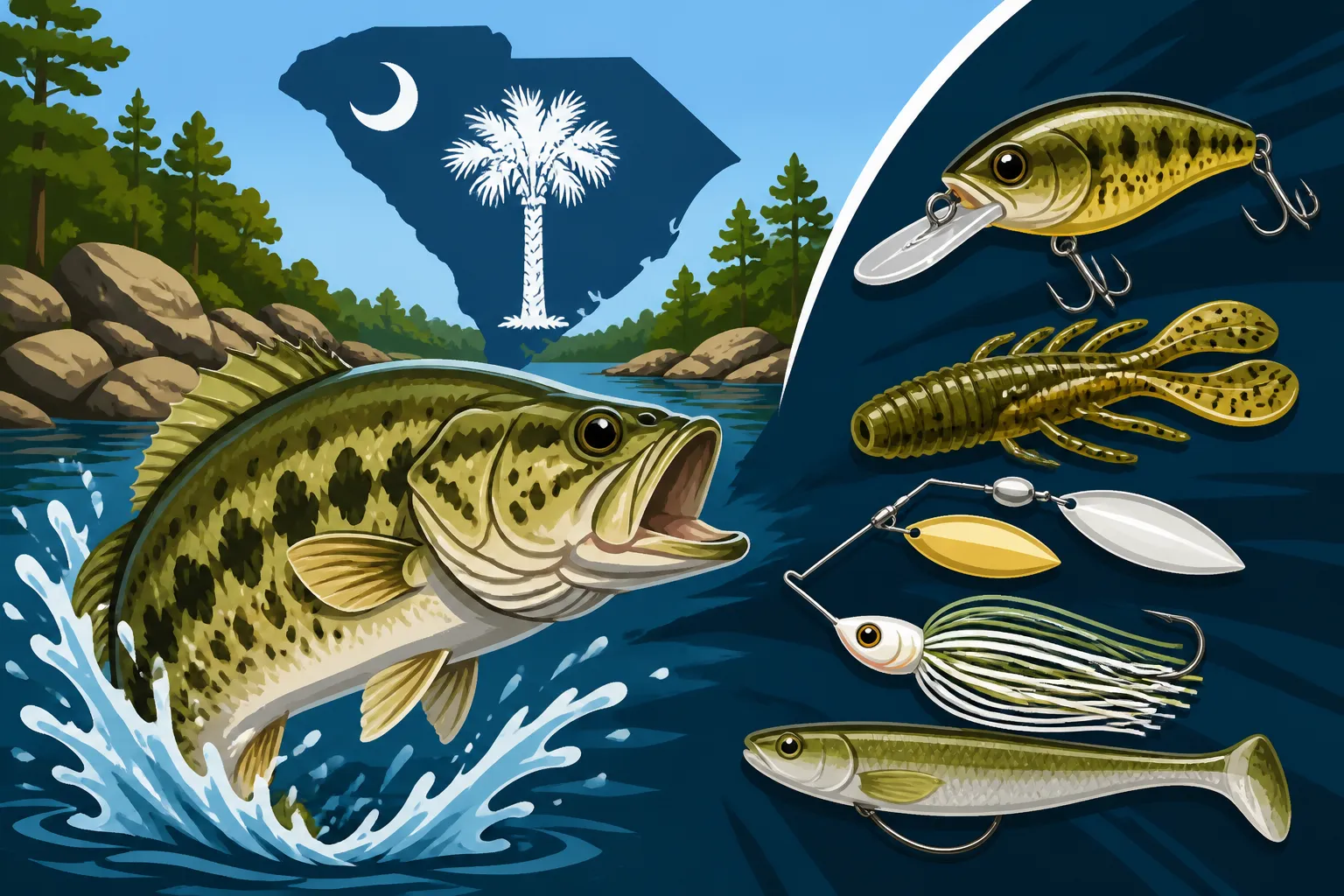
A realistic swimbait, either paddletail or boot-tail, can be rigged on a weighted swimbait hook or a jig head. An underspin is essentially a jig head with a small spinner blade attached beneath it, adding flash and vibration. These lures are excellent for matching the hatch when spotted bass are keyed in on shad or other baitfish. Retrieve them at a steady pace, trying to keep them just above where you see fish suspended on your electronics. This technique is often incredibly productive on deeper, clearer lakes with healthy baitfish populations, where bass are constantly on the move. You might also want to look into Lure Choices for Warm Weather Fishing for more ideas on moving baits.
Practical Tips for Fishing Rocky Lakes
Beyond the lures themselves, there are some essential practical tips that will significantly increase your success when targeting spotted bass in South Carolina's rocky lakes. These aren't just minor suggestions; they can truly make or break your day on the water.
Line Selection and Knot Tying
When you're fishing around jagged rocks, your line is constantly at risk of fraying or breaking. This means line selection is paramount.
Fluorocarbon line is often the top choice for spotted bass fishing in rocky lakes. It offers excellent abrasion resistance, is nearly invisible underwater, and has very little stretch, giving you superior feel for subtle bites and bottom contact. Use a pound test appropriate for the lure and cover you're fishing – typically 10-15 lb test for most applications, but lighter for finesse techniques.
Alternatively, some anglers prefer to use braided line for its extreme sensitivity and strength, especially in deeper water. If you go this route, always tie on a fluorocarbon leader (typically 6-10 feet) to the end of your braid using a strong knot like the FG knot or an Albright knot. The leader provides the invisibility and abrasion resistance where it matters most, near the lure.
Regardless of your line choice, invest time in learning strong knots. A Palomar knot is excellent for tying on jigs and hooks, and a uni knot is reliable for most applications. Retie often, especially after catching a fish or feeling your line scrape against rocks. That little bit of extra care can save you from losing a trophy fish. You don't want to spend your entire trip reeling in nothing but snapped lines!
Using Electronics to Your Advantage
Modern fishing electronics are game-changers, especially in rocky lakes where fish often suspend or relate to subtle underwater features. Don't just motor around hoping to stumble upon fish; actively use your sonar to locate them and the structure they're holding on.
Side imaging and down imaging technologies are invaluable for finding rock piles, ledges, and humps that might not be visible on a traditional 2D sonar. You can literally "see" the underwater landscape and pinpoint key ambush points. Once you locate promising structure, switch to 2D sonar to look for individual fish or schools of bass. Pay attention to how deep they are and whether they're hugging the bottom or suspended.
This information directly influences your lure choice and presentation. If you see fish at 20 feet over a rock pile, a deep-diving crankbait, a football jig, or a drop shot rig positioned precisely at that depth will be far more effective than blindly casting a shallow lure. Learn to interpret your screen, and you'll unlock a whole new level of understanding of where those spotted bass are hiding.
The Importance of Boat Positioning
Your boat's position can be just as important as your lure choice, particularly when fishing rocky structure. Think about angles and how you can best present your lure to the fish without spooking them or getting snagged.
When fishing rocky points or ledges, try to position your boat to cast across the structure, allowing your lure to run parallel to the contours. This keeps your bait in the strike zone longer. If fish are holding on a specific depth break, try to stay at that depth, making repeated casts to the same area. A good trolling motor with GPS Spot-Lock capabilities is a dream for this, allowing you to hold your position precisely over a productive area even in wind or current.
Also, consider the sun's position. Casting with the sun at your back might give you better visibility into the water, but it could also cast your boat's shadow over the very spot you're trying to fish, potentially spooking wary bass. Experiment with different angles and approaches until you find what works best for the day. Precision and stealth are your allies when targeting spotted bass in clear, rocky waters.
Lure Comparison for Rocky Lakes
Here's a quick comparison of some of the best lure types for spotted bass in rocky lakes to help you decide which to tie on.
| Lure Type | Best for Depth | Best for Contact with Rocks | Retrieve Style | Target Bass Behavior |
|---|---|---|---|---|
| Squarebill Crankbait | Shallow (0-8 ft) | High | Erratic, deflects off cover | Aggressive, reaction strikes |
| Deep-Diving Crankbait | Mid-Deep (8-25+ ft) | High | Steady, deflects off deep structure | Actively feeding, reaction |
| Football Jig | Deep (10-40+ ft) | High | Drag, hop, bottom contact | Bottom-oriented, crawfish eaters |
| Finesse Jig | Shallow-Deep (0-20 ft) | Medium-High | Slow drag, short hops, subtle | Finicky, cover-oriented |
| Drop Shot Rig | Mid-Deep (10-40+ ft) | Low (bait above bottom) | Vertical, subtle shakes | Suspended, neutral fish |
| Shaky Head Jig | Shallow-Deep (0-20 ft) | Medium-High | Shake and drag, bottom contact | Foraging, slightly active |
| Topwater Lure | Surface | Low | Walk the dog, pop, splash | Aggressive, surface feeding |
| Swimbait/Underspin | Mid-Deep (5-30 ft) | Low | Steady retrieve | Suspended, chasing baitfish |
Frequently Asked Questions About Spotted Bass Lures
I get a lot of questions from anglers, both beginners and experienced, about the nuances of spotted bass fishing. It's a journey, not a destination, and there's always something new to learn!
How do I avoid getting snagged in rocky cover?
Ah, the eternal struggle! Snags are inevitable when you're fishing rocky cover, but you can definitely minimize them. First, choose lures designed for deflection, like squarebill crankbaits, or those with weed guards, like many jigs. Secondly, use a heavier line (fluorocarbon is great for abrasion resistance) and a stout rod so you can often "pop" a lure free if it gets wedged. When you feel your lure make contact with a rock, often a slight pause or a twitch can help it "climb" over rather than dig in. If it does get stuck, try slowly pulling from different angles, or even releasing some line and letting your boat drift to change the angle of pull. Sometimes a plug knocker can retrieve stubborn lures. But honestly, expect to lose some tackle; it's part of the game when you're effectively targeting spotted bass in their rocky domains.
What are the best colors for spotted bass lures in clear rocky lakes?
In clear water, natural colors that mimic the local forage tend to be most effective. Think shad patterns (silvers, whites, light blues) for crankbaits and swimbaits, or crawfish patterns (greens, browns, oranges) for jigs and soft plastics. Sometimes, a translucent "ghost" color can work wonders. However, don't be afraid to experiment! On overcast days or in slightly stained water, a bit of chartreuse or even a bright red can sometimes trigger a reaction. It's always a good idea to have a range of natural and a few "pop" colors in your tackle box, as the fish's preference can change from day to day, or even hour to hour.
Do I need different lures for different South Carolina rocky lakes?
While many lures are universally effective for spotted bass, local forage and specific lake characteristics can influence what works best. For example, on Lake Hartwell, which has a strong blueback herring population, lures that mimic herring (like chrome or blue-back swimbaits and jerkbaits) might be particularly effective. On a lake where crawfish are abundant, more crawfish-imitating jigs and crankbaits will shine. Always pay attention to what the baitfish look like in the lake you're fishing. Reading local fishing reports or talking to bait shop owners in the area can also give you valuable insights into what's currently working. Ultimately, a varied tackle box with a good selection of the lures discussed here will serve you well across most of South Carolina's rocky lakes.
How does the South Carolina Redfish Slot Limit Rules compare to spotted bass regulations?
That's an interesting question that highlights the differences between freshwater and saltwater fishing regulations! While both are geared towards conservation, the specific rules for redfish, which are a saltwater species, are quite different from those for freshwater spotted bass. Redfish in South Carolina have a strict "slot limit," meaning you can only keep fish within a certain size range (e.g., 15 to 23 inches), and there's often a low daily bag limit per person and even a vessel limit. This is designed to protect larger breeding fish. For freshwater bass like spotted bass, regulations typically focus on a minimum size limit (if any) and a daily creel limit per person, without a slot limit. Always check the latest SCDNR regulations for the specific body of water you're fishing, as they can change and vary by species. This is super important to stay legal and support conservation efforts for all our amazing South Carolina fish.
Is there a good time of year for Best Fishing Spots Near Columbia, South Carolina for spotted bass?
While Columbia isn't typically known for its "rocky lakes" in the same way the Upstate reservoirs are, the Congaree River and parts of Lake Murray (a bit west of Columbia) do have rocky stretches where spotted bass can be found, particularly in clearer water sections of Lake Murray. Spotted bass fishing tends to be good throughout the warmer months, especially spring and fall when they are most active. In summer, they'll often be deeper. Winter can be productive with slow presentations. However, if your primary target is spotted bass in rocky lakes, you'll generally find more consistent action in the western and northwestern parts of the state, like Lake Hartwell or Lake Keowee. The rivers near Columbia are more known for largemouth and catfish, so the tactics would shift for those species.
Disclaimer
This article is for general informational purposes only and does not constitute professional advice. Laws, prices and regulations vary by location and change over time. Consult a qualified professional for guidance on your specific situation.