Smallmouth Bass vs Largemouth Bass Size Comparison
If you've spent any time casting a line in South Carolina, especially across our diverse freshwater systems, you've likely encountered both largemouth and smallmouth bass. But what if you've reeled one in and found yourself scratching your head, wondering "Which one is this, and how big do they really get compared to each other?" It's a common dilemma that can make identifying your catch a real head-scratcher. This guide is here to unravel that mystery, giving you a clear comparison of the size differences and other key characteristics of these two popular game fish.
The Tale of Two Bass: Understanding Their Fundamental Differences
While both largemouth and smallmouth bass are members of the black bass family (genus Micropterus), they are distinct species with different attributes, and their size is one of the most obvious. Understanding these differences isn't just about satisfying your curiosity; it can directly impact your fishing strategy, from the tackle you choose to the spots you target. Knowing what you're up against helps you anticipate the fight and appreciate the fish.
Size and Growth Potential: Who Gets Bigger?
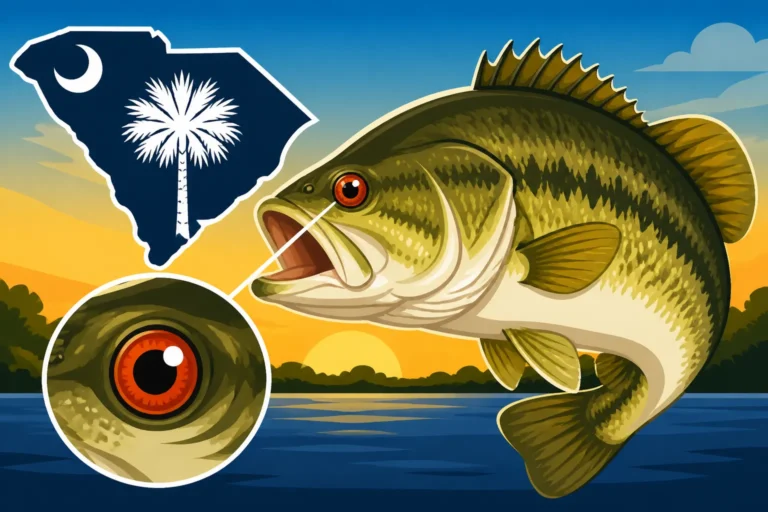
When it comes to sheer size, the largemouth bass is generally the heavyweight champion. These fish are built for bulk, with a deep body and a large, cavernous mouth that gives them their name. They thrive in warmer, often murkier waters, where their ambush predator style of hunting allows them to grow impressively large by consuming a wide variety of prey, from smaller fish to frogs, crawfish, and even ducklings. Think of a big largemouth as the sumo wrestler of the bass world—powerful and substantial.
Smallmouth bass, on the other hand, tend to be leaner, more torpedo-shaped fish. While they can put up an incredible fight for their size, they rarely reach the colossal weights of their largemouth cousins. They prefer cooler, clearer water with rocky bottoms and swift currents, often found in rivers and the cooler sections of larger lakes in places like the Upstate of South Carolina. Their diet typically consists of crawfish, insects, and smaller baitfish, which contributes to their more moderate growth rate. If the largemouth is a sumo wrestler, the smallmouth is a nimble boxer, quick and tenacious.
Body Shape and Distinctive Features
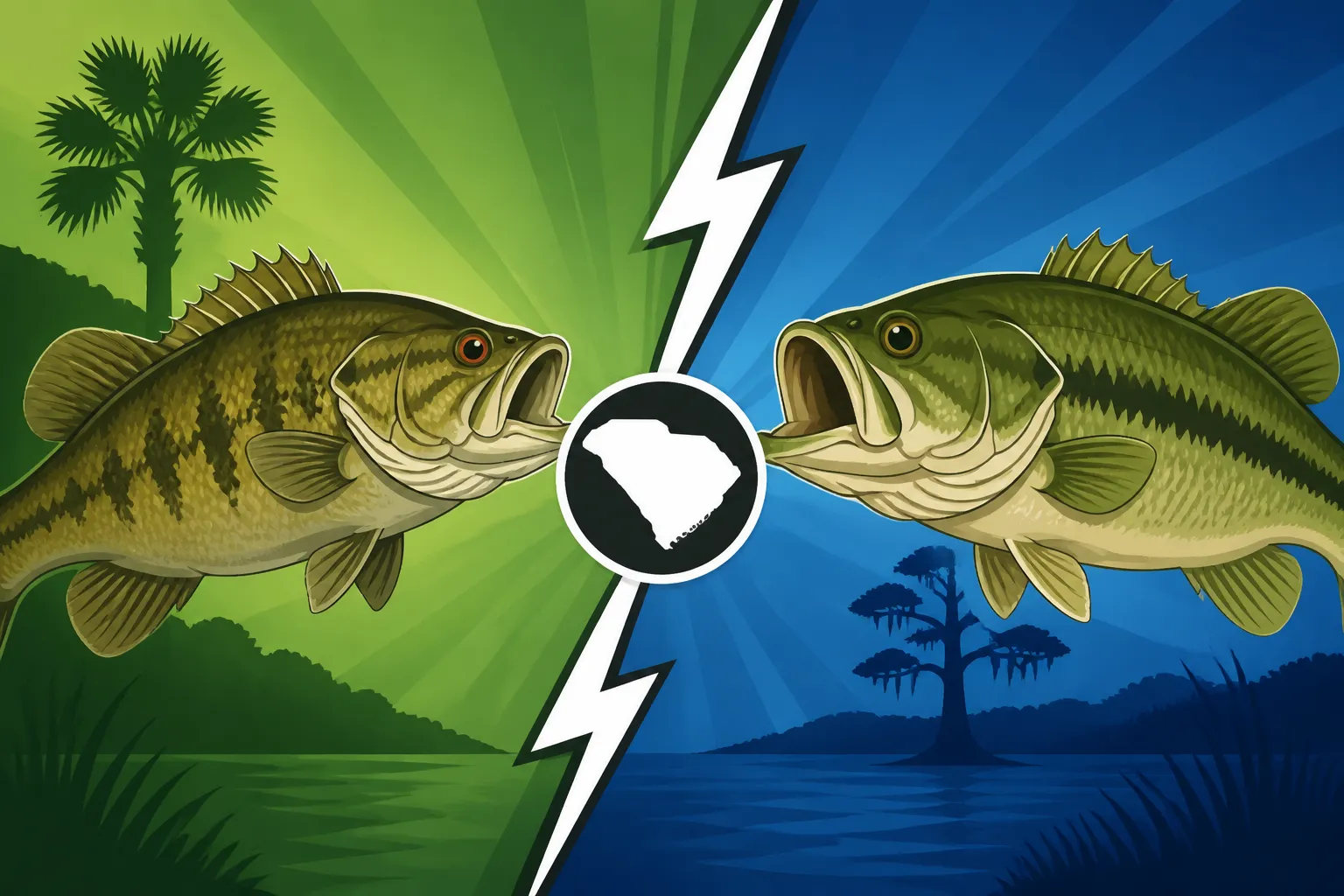
Beyond overall size, the body shape and other features are crucial for distinguishing these two. A largemouth bass has a noticeably larger mouth, with the hinge of its jaw extending well behind the eye when closed. Its body is typically deeper and more compressed laterally, giving it a somewhat "slab-sided" appearance. The coloration can vary widely depending on habitat, but they often have a distinct horizontal dark stripe or blotchy pattern along their sides. The dorsal fin usually appears deeply notched, almost like two separate fins. For a deeper dive, check out How to Identify a Largemouth Bass.
Smallmouth bass possess a more streamlined, muscular body, which makes them incredibly agile in current. Their mouth is smaller, with the jaw hinge typically not extending past the middle of the eye. Coloration is generally a bronze to brown hue, often with vertical bars or tiger stripes along the sides, giving them a "bronzeback" nickname. Their dorsal fins are less deeply notched, appearing more connected than the largemouth's. When you hold a smallmouth, you'll immediately notice its compact, powerful build compared to the broader, heavier feel of a largemouth.
Habitat Preferences: Where They Call Home
Their preferred habitats also play a significant role in their typical sizes and how they develop. Largemouth bass are masters of adaptation, found across almost all of South Carolina's freshwater systems, from large reservoirs like Lake Murray and the Santee Cooper lakes to farm ponds and slow-moving rivers. They love thick vegetation, submerged timber, and any structure that allows them to ambush prey. Their growth is optimized in these warmer, nutrient-rich environments. You're far more likely to hook a giant largemouth in a weed-choked cove than in a fast-moving river. Many anglers specifically target these giants, and understanding Largemouth Bass Fishing in South Carolina: The Complete Guide can be very helpful.
Smallmouth bass, as mentioned, are particular about their environment. In South Carolina, you'll find them primarily in the cooler, clearer rivers and reservoirs of the Upstate, such as the upper reaches of Lake Jocassee or the mountain streams that feed into larger lakes. They prefer rocky bottoms, ledges, and areas with current, where they can feed on crawfish and other invertebrates. Their more specialized habitat means they don't have the same widespread distribution or reach the same maximum sizes as largemouths do in the Palmetto State. If you're looking for Smallmouth Bass Fishing in South Carolina's Upstate Rivers, you'll be focusing on these specific types of waters.
Dissecting the Numbers: Average Sizes and Record Holders
When anglers talk about "size," they usually mean length and weight. While averages can give you a good benchmark, it's always those exceptional catches that truly capture the imagination. South Carolina has produced some incredible specimens of both species, though one clearly dominates the record books for maximum weight.
Typical Length and Weight for Largemouth Bass
A "keeper" largemouth bass in South Carolina often falls in the 12 to 16-inch range, weighing between 1.5 to 3 pounds. These are healthy, robust fish that provide excellent sport. However, largemouth have the potential for much greater size, especially in our major reservoirs. It's not uncommon to catch largemouth in the 5 to 8-pound range, particularly during the spawn or when they've had a few good years of growth. Fish pushing into the double digits—10 pounds or more—are considered true trophy catches and are the dream for many anglers. The state record for largemouth bass in South Carolina is a truly massive fish that weighed over 16 pounds! Understanding Largemouth Bass Average Size in Freshwater Lakes can help set realistic expectations for your trip.
| Largemouth Bass Size Range | Length (inches) | Weight (pounds) | Notes |
|---|---|---|---|
| Average Keeper | 12-16 | 1.5-3 | Common and fun to catch |
| Quality Fish | 17-20 | 4-7 | Excellent catches, strong fighters |
| Trophy | 20+ | 8-10+ | Rare, highly sought after |
| State Record | ~26 | 16+ | The pinnacle of South Carolina bass fishing |
Typical Length and Weight for Smallmouth Bass
Smallmouth bass in South Carolina typically range from 10 to 18 inches in length, weighing anywhere from 1 to 3 pounds. A 4-pound smallmouth is considered a fantastic catch, showcasing the species' fighting prowess in a more compact package. While they are incredibly fun to catch, with their aerial acrobatics and powerful runs, they simply don't have the genetic potential to reach the weights of largemouth bass. The South Carolina state record for smallmouth bass is still an impressive fish, usually in the 5-6 pound range, but it's significantly less than the largemouth record. This difference highlights the inherent growth potential between the two species.
South Carolina's Record-Breaking Bass
South Carolina is home to some truly monstrous bass, particularly largemouth. The state record largemouth bass, caught in the early 1940s, stands as a testament to the incredible growth potential of these fish in our waters. Anglers still chase that elusive double-digit fish, with many dreaming of breaking the South Carolina Largemouth Bass Record Chasers Guide. These record catches are usually the result of perfect conditions: abundant food, stable environment, and careful management, allowing these fish to live long and grow large.
For smallmouth bass, while the state record is substantial for the species, it doesn't quite hold the same legendary status as the largemouth record simply due to the species' inherent size limitations. It's a reminder that both species offer fantastic angling opportunities, but if you're purely chasing the biggest, heaviest bass, the largemouth is generally your target. Remember, you can always find official state records through the South Carolina Department of Natural Resources (SCDNR) website to keep up with the current reigning champions.
Practical Implications for Anglers: What This Means for Your Fishing Trip
Understanding the size difference between largemouth and smallmouth bass isn't just a matter of trivia; it has real, tangible impacts on how you approach your fishing. From the moment you decide where to cast your line to the gear you choose and the techniques you employ, these distinctions can make or break your success.
Gear Selection Based on Expected Size
Because largemouth bass generally grow larger and are often found in areas with heavy cover, anglers typically opt for heavier tackle. This means medium-heavy to heavy action rods (around 6'6" to 7'6" in length), spooled with braided line (30-65 lb test) or heavier monofilament/fluorocarbon (15-25 lb test). This robust setup allows you to horse big fish out of dense vegetation or submerged timber and handle their powerful head shakes. When you're targeting those potential 8+ pound largemouths, having the right gear is non-negotiable. You can find a wide range of suitable rods, reels, and lines on online marketplaces like Amazon, often with reviews that highlight their effectiveness for specific bass sizes.
For smallmouth bass, while they fight exceptionally hard, their smaller size and preference for open, rocky areas mean you can often get away with lighter tackle. A medium to medium-light action rod (6' to 7' feet) with a fast tip is ideal for detecting subtle bites and enjoying the fight. Pairing this with 8-12 lb fluorocarbon or monofilament line, or lighter braid with a fluorocarbon leader, provides enough strength for the fish but allows for better casting of lighter baits. This setup allows the smallmouth to show off its full fighting capabilities without overwhelming your gear. A quality digital scale, easily found on Amazon, is also a great tool for accurately measuring your catch, especially when comparing species.
Tailoring Techniques to Each Species' Behavior
The size and habitat preferences of each bass species directly influence the most effective fishing techniques. Largemouth bass are often ambush predators, hiding in cover and striking unsuspecting prey. This means techniques that present baits near or in heavy cover are highly effective. Think pitching jigs into lily pads, flipping Texas-rigged worms into brush piles, or slowly retrieving spinnerbaits through submerged grass. Big, bulky baits that mimic large prey items, like substantial plastic worms or creature baits, are excellent for attracting bigger largemouths. For more specific insights into what they eat, consider What Do Largemouth Bass Eat in South Carolina Ponds?.
Smallmouth bass are more active hunters, often chasing down prey in open water or along rocky structures. Techniques that cover water and mimic their natural forage are key. Think about casting crankbaits or jerkbaits along rocky points and ledges, vertically jigging blade baits or drop shots over deep structure, or throwing small swimbaits in current. They're less prone to hiding in dense vegetation and will often strike moving baits aggressively. Many anglers find the intense fight of a smallmouth on light tackle to be one of the most exhilarating experiences in freshwater fishing. Best Bait for Smallmouth Bass in Cold Water can give you an edge in specific conditions.
The Thrill of the Catch: Fight Differences
Don't let the largemouth's larger average size fool you into thinking it's always the harder fight. While a big largemouth will absolutely try to bury itself in the thickest cover it can find, leading to powerful, bulldog-like tugs, smallmouth bass are renowned for their incredible tenacity and acrobatic displays. A smallmouth, even a smaller one, will often jump clear out of the water multiple times, shake its head violently, and make long, powerful runs. They are often described as "bronze bombers" or "brown fish with attitude."
The fight from a largemouth is more about raw power and leverage, especially when trying to pull them from heavy cover. It's a test of strength and careful rod control. A smallmouth fight is more about speed, agility, and a seemingly endless well of energy. It's exhilarating to feel those quick bursts and see those jumps. So, while largemouth may be bigger, many anglers argue that the smallmouth delivers a more exciting, action-packed battle, particularly on appropriately lighter gear.
Beyond Size: Other Identification Clues
Sometimes, size alone isn't enough to definitively identify your catch, especially if you're new to bass fishing or if you catch an unusually large smallmouth or a smaller largemouth. There are several other physical characteristics that will help you tell these two apart, ensuring you correctly identify the species.
Jawline Test and Dorsal Fin Separation
One of the most reliable ways to distinguish between a largemouth and a smallmouth is by examining their jawline. With the mouth closed, visualize a line extending vertically from the back of the eye. If the jaw hinge extends significantly behind that line, it's a largemouth bass. If the jaw hinge aligns more or less with or in front of the middle of the eye, you're holding a smallmouth. This "jaw test" is a quick and accurate method used by experienced anglers.
Another key identifier lies in their dorsal fins. The largemouth bass possesses a dorsal fin that appears almost like two distinct fins due to a deep notch in the middle. You can often easily separate the spiny front section from the soft-rayed rear section with your finger. In contrast, the smallmouth bass has a dorsal fin that is much more continuous and less deeply notched, appearing as one, albeit divided, fin. This might seem like a subtle difference, but once you know what to look for, it's quite obvious.
Coloration and Markings
While color can be influenced by habitat and water clarity, there are general patterns that hold true. Largemouth bass typically range from a bright green to a dark olive green on their backs, fading to lighter green or white on their bellies. They most often display a prominent, often broken or blotchy, horizontal dark stripe running down their lateral line. In very clear water, this stripe might be less defined, but it's usually there. For additional details on specific coloration patterns, you might want to read Redeye Bass vs Largemouth Bass: How to Tell Them Apart.
Smallmouth bass are often called "bronzebacks" for a reason. Their coloration tends to be a more uniform bronze, brown, or golden-green on their backs and sides, fading to a creamy white belly. Instead of a horizontal stripe, they frequently have distinct vertical bars or "tiger stripes" along their sides, especially when stressed or in very clear water. These markings can vary in intensity but are a strong indicator of a smallmouth. The eyes of a smallmouth also tend to be reddish, while a largemouth's eyes are typically golden or yellowish.
How to Accurately Weigh and Measure Your Catch
Whether you're practicing catch and release or keeping a legal fish, knowing how to accurately weigh and measure your catch is important, especially for potential record breakers or simply to track your personal best. For length, a simple measuring board or a soft tape measure (available on Amazon) is sufficient. Lay the fish flat on its side, ensuring its mouth is closed, and measure from the tip of the nose to the tip of the tail (with the tail compressed). Always measure quickly and gently to minimize stress on the fish.
For weight, a digital scale is your best friend. Many scales designed for fishing are waterproof and can accurately weigh fish up to 50 pounds or more. When weighing, try to use a lip gripper or a cradle to support the fish evenly, minimizing strain on its jaw or body. Zero out your scale before weighing to ensure accuracy. If you're planning to release the fish, wet your hands before handling to protect its slime coat, and perform all measurements swiftly. This commitment to proper handling helps ensure that South Carolina's incredible bass populations continue to thrive for future generations of anglers.
Disclaimer
This article is for general informational purposes only and does not constitute professional advice. Laws, prices and regulations vary by location and change over time. Consult a qualified professional for guidance on your specific situation.