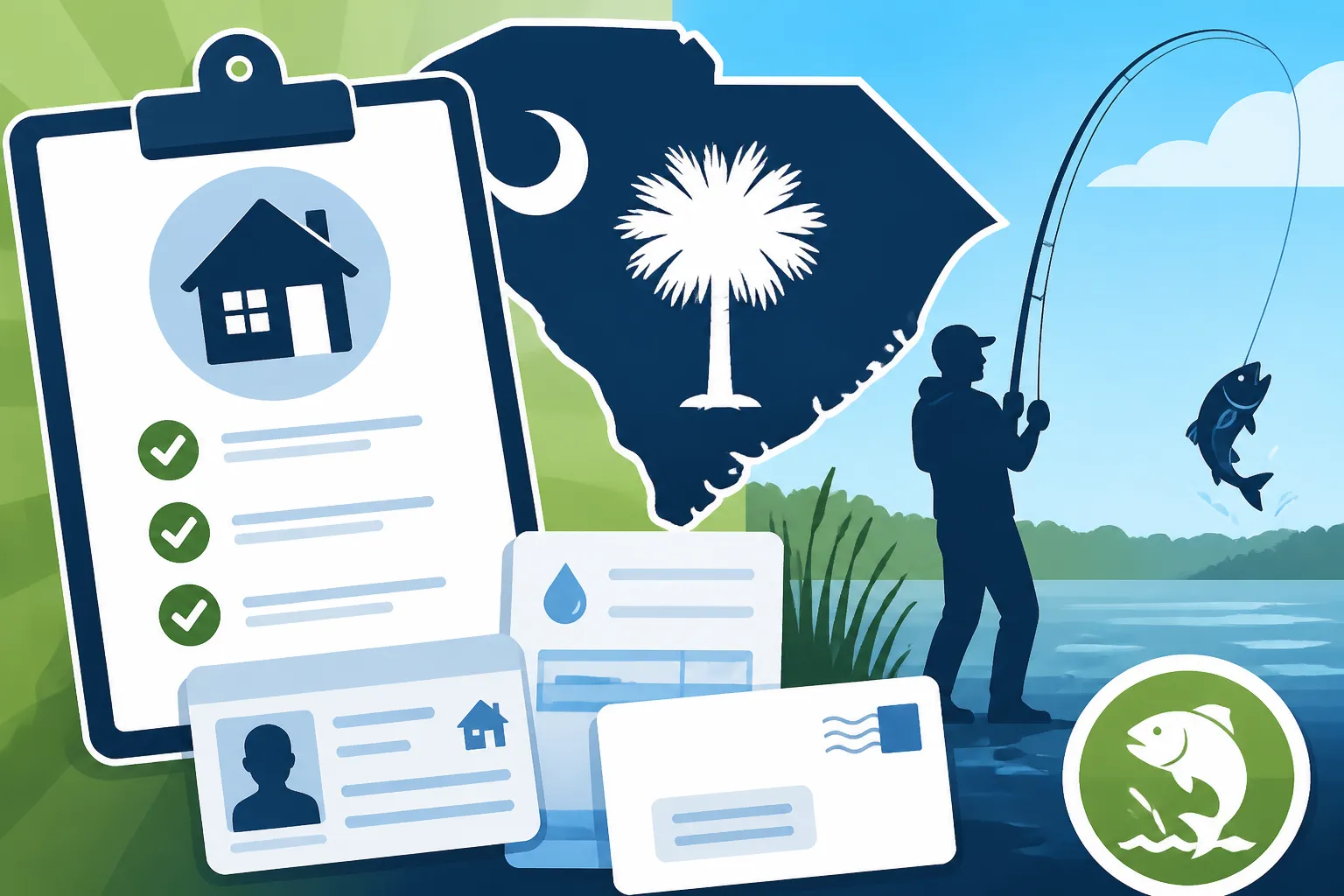
What Counts as Proof of Residency for a Resident License?
Getting a South Carolina fishing license can feel straightforward until you hit that little checkbox asking if you're a resident. Suddenly, you're wondering what really counts as proof, especially if you're new to the state, a student, or military. This guide is here to untangle the confusion, helping you understand exactly what documents the South Carolina Department of Natural Resources (SCDNR) accepts so you can confidently grab your resident license and hit the water without a hitch.
Understanding South Carolina Residency for Fishing Licenses
It might seem like a simple question, but the definition of "resident" can have quite a few nuances when it comes to official state documents like fishing licenses. For many, thinking they qualify only to be told otherwise at the point of purchase can be a real headache. Let's break down why this distinction is so important and what it generally means to be considered a resident angler in the Palmetto State.
Why Residency Matters for Anglers
The most obvious reason residency matters is the cost. South Carolina, like most states, offers significantly reduced fees for its residents when it comes to fishing licenses. This isn't just a perk; it's a way for the state to acknowledge that its residents contribute to the local economy and tax base, which in turn helps fund wildlife management, conservation efforts, and the maintenance of public access points. Think about it: a resident might pay just a fraction of what a non-resident does for the same annual license. It’s a substantial saving that truly adds up, especially if you plan to fish throughout the year or need multiple licenses, like a combination freshwater and saltwater option. Without clear proof of residency, you'd unfortunately be stuck paying the higher non-resident rates, which can be a bummer when you're just trying to enjoy your local waterways. Understanding these categories is also crucial when looking into specific license types, such as the various options for a South Carolina 3-Year Fishing License, which typically offer even more savings for committed residents.
The Basic Definition of a Resident Angler
At its core, a South Carolina resident for fishing license purposes is someone who has lived in the state continuously for at least 30 consecutive days immediately prior to applying for a license. During this 30-day period, you must have established a domicile (your fixed, permanent home) in South Carolina, and you can't be claiming residency in any other state for any other purpose. This isn't just about crashing at a friend's place for a month; it's about demonstrating a clear intent to make South Carolina your home.
The SCDNR specifies that to be considered a resident, you must be a citizen of the United States or a resident alien, and you must maintain your domicile in South Carolina. This means your primary residence, where you return to regularly, is within the state's borders. It excludes temporary visitors, vacationers, or those just passing through, even if they stay for longer than 30 days. It’s designed to ensure that those benefiting from resident rates are genuinely invested in the state. If you're planning to make South Carolina your home, keep these requirements in mind as you prepare to purchase your fishing license. You can find more details in the comprehensive South Carolina Fishing License Guide.
Primary Documents Accepted as Proof of Residency
When you go to purchase your South Carolina fishing license, whether online or in person, you'll need to back up your residency claim with solid documentation. The SCDNR is pretty clear on what they'll accept, and having your paperwork in order beforehand can save you a lot of hassle and potential delays. Let's walk through the most common and widely accepted forms of proof.
South Carolina Driver's License or State ID
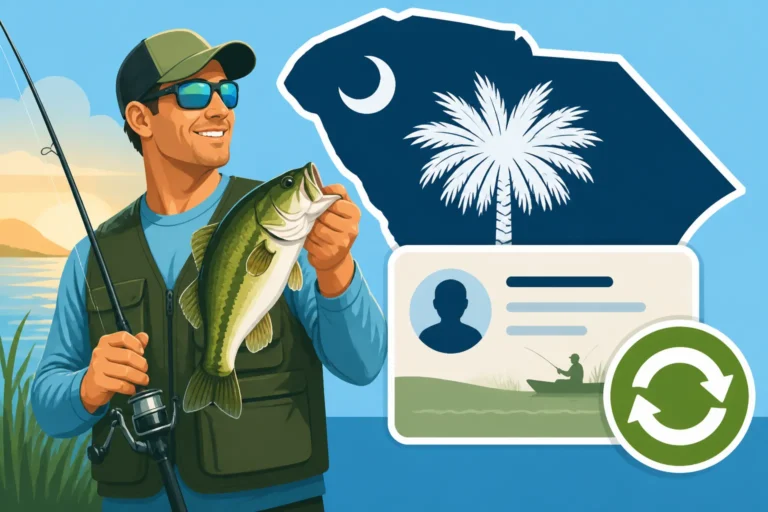
This is, hands down, the easiest and most universally accepted form of residency proof. If you have a valid South Carolina driver's license or an official state-issued identification card, you're usually golden. The address printed on your license or ID card is typically sufficient evidence that you reside in the state. This is because to obtain these documents, you've already gone through a verification process with the Department of Motor Vehicles (DMV) proving your residency.
When you're applying for your fishing license, simply present your SC driver's license or ID. The information will be quickly verified, and you'll be on your way. It’s the most straightforward path, and it’s why many new residents prioritize getting their local driver's license as soon as they settle in. If you're wondering how to get a fishing license in South Carolina, having this ID is often the first step mentioned.
Vehicle Registration and Property Tax Records
For those who might not have an SC driver's license yet, or in cases where additional proof is requested, documents showing you own property or a vehicle registered in South Carolina can also serve as powerful evidence.
- Vehicle Registration: If your vehicle is registered in South Carolina, the registration card will show your state address. This indicates that you've established a presence and are operating within state laws, which is a good indicator of residency. Make sure the address on the registration matches your current physical address.
- Property Tax Records: If you own property in South Carolina, your property tax statements or deeds will clearly list your South Carolina address. These are strong indicators of a permanent domicile in the state.
These documents are often used in conjunction with other forms of ID, especially if there's any ambiguity. They demonstrate a long-term commitment to living in the state, which aligns perfectly with the SCDNR's definition of a resident. Keeping these records organized, perhaps in a digital file or a dedicated folder you can buy from a retailer like Amazon, makes them easy to access when needed.
Voter Registration and Utility Bills
Beyond driver's licenses and property records, other official documents can help cement your claim to South Carolina residency.
- Voter Registration Card: Being registered to vote in South Carolina is a clear statement of your intent to be a resident. Your voter registration card will typically show your South Carolina address, making it a viable piece of evidence. It signifies your participation in local governance and your claim to a fixed abode.
- Utility Bills: Recent utility bills (electricity, water, gas, landline phone, or internet) addressed to you at your South Carolina residence are excellent supporting documents. These show continuous occupation of a dwelling within the state. The SCDNR usually prefers bills from within the last 30-60 days to ensure they reflect your current living situation. They indicate that you are actively living and consuming services at a South Carolina address.
When using utility bills, make sure they are in your name and display the physical address you're claiming as your residence. Avoid using PO box addresses, as these do not prove physical residency. A combination of these documents is often accepted if you don't have a South Carolina driver's license yet. It reinforces the picture of your established life in the state, making your application for a resident fishing license smooth sailing. For instance, when purchasing your license online through a platform like Go Outdoors South Carolina, you might be prompted to upload digital copies of these documents for verification.
Navigating Specific Situations and Exceptions
While the general rules for residency are pretty clear, life isn't always that simple. There are several specific scenarios that often bring up questions about what counts as proof, especially for groups like military personnel, students, or families with minors. It’s important to understand these specific situations to ensure you don’t run into unexpected hurdles when trying to obtain your South Carolina fishing license.
Military Personnel and Their Families
South Carolina is home to several major military installations, and understanding residency for service members and their families is critical. Generally, active-duty military personnel permanently stationed in South Carolina, along with their spouses and dependent children, are considered residents for fishing license purposes, regardless of their state of legal residence (home of record). This is a common courtesy extended by states to those serving our country.
- Proof for Military: Active-duty military members will typically need to show their military ID and official orders that station them in South Carolina. For spouses and dependents, a military ID and documentation proving their relationship to the service member (e.g., marriage certificate, birth certificate) along with the service member's orders usually suffice. This allows them to access the same favorable resident rates as any long-term civilian resident, avoiding the higher South Carolina Nonresident Fishing License Guide fees.
It's a huge benefit for military families who are temporarily calling South Carolina home, allowing them to fully enjoy the state's incredible fishing opportunities without the financial burden of nonresident fees.
Students Attending South Carolina Institutions
Full-time students enrolled in a college or university within South Carolina can also qualify for resident fishing licenses, even if their permanent home address is in another state. This is another thoughtful exception designed to encourage engagement with local activities.
- Proof for Students: Students will generally need to provide proof of full-time enrollment (such as a current student ID, tuition bill, or official transcript) along with documentation showing their physical residence in South Carolina (like a lease agreement for an apartment, a utility bill, or a letter from university housing). The key is demonstrating that they are residing in South Carolina for the duration of their studies. This helps students enjoy their time in the Palmetto State, whether they're hitting Lake Murray for bass or coastal waters for redfish, all while paying the same rates as other residents.
This provision makes it much more affordable for students to enjoy fishing during their time here, whether it’s a quick trip to a nearby lake or an extended spring break fishing adventure.
Minors and Dependent Children
When it comes to children, the rules often follow the parents' or guardians' residency. Children under the age of 16 typically don't need a fishing license in South Carolina, making it easy for families to introduce kids to the sport. However, once a child turns 16, they need their own license.
- Proof for Minors (age 16+): For minors aged 16 and older who need a license, their residency is usually determined by the residency of their parent or legal guardian. The parent/guardian's South Carolina driver's license or state ID, along with proof of the child's dependency (e.g., birth certificate), is often sufficient. If the minor has their own South Carolina state ID, that will also work. This aligns with the South Carolina Fishing License Age Requirements, ensuring that as soon as they are legally required to have a license, their residency status is clear based on their family's established home.
New Residents and Transitional Periods
Moving to a new state is exciting but also comes with a lot of administrative tasks. For new residents, the 30-day continuous residency requirement can sometimes be a sticking point.
- Proof for New Residents: During this initial 30-day period, if you haven't yet established your South Carolina driver's license or accumulated sufficient utility bills, you might need a combination of documents. This could include a lease agreement, a mortgage statement, vehicle registration in SC, and even a dated letter from an employer confirming your relocation to the state. The goal is to show a clear and continuous intent to reside in South Carolina for at least 30 days prior to applying. It's often a good idea to gather as much supporting documentation as possible during this transitional phase.
Once you pass that 30-day mark, and especially once you get your official South Carolina driver's license, the process becomes much simpler. It's all about demonstrating a tangible commitment to making the Palmetto State your new home.
Common Pitfalls and How to Avoid Them
Even with all the guidelines, it's easy to make a mistake or misunderstand a nuance when proving residency. Avoiding these common pitfalls can save you time, frustration, and ensure you get your resident fishing license without a hitch. Nobody wants to be turned away from the bait shop or get home from an online application only to realize they didn't provide enough information.
The Importance of Up-to-Date Documentation
One of the biggest issues people face is presenting outdated or insufficient documentation. Life happens – addresses change, licenses expire, and bills get misplaced. The SCDNR needs to see current, valid proof.
- Expired IDs: An expired driver's license or state ID, even if it has a South Carolina address, will likely not be accepted. Make sure your ID is current.
- Old Bills: Utility bills should typically be from the last 30-60 days. An electric bill from a year ago won't prove your current residency.
- Inconsistent Addresses: If your driver's license shows one address, but your vehicle registration shows another (and neither is your current SC residence), it raises red flags. All documents should ideally reflect your most current South Carolina address.
- Lack of Sufficient Proof: Sometimes, one document isn't enough, especially if you don't have an SC driver's license. Always aim to have a combination of documents, like a lease agreement and a recent utility bill, or vehicle registration and voter registration. The more comprehensive your proof, the smoother the process will be. If you're buying a South Carolina Fishing License Online, they often have specific upload requirements, so having everything ready is key.
Remember, the goal is to clearly and unequivocally demonstrate your continuous residency for at least 30 days.
What NOT to Use as Proof
Just as important as knowing what to use, is knowing what not to use. Certain documents, while perhaps containing your name and an address, are generally not considered acceptable proof of residency for a fishing license.
- P.O. Box Address: A Post Office Box (P.O. Box) simply indicates where you receive mail, not where you physically live. The SCDNR requires a physical street address to confirm residency.
- Bank Statements: While a bank statement shows your address, it's not typically accepted as primary proof of residency. It's easily changed and doesn't carry the same weight as government-issued IDs or property records.
- Personal Mail: General mail, like junk mail or even letters from friends, does not count. It's not an official document issued by a verifiable entity confirming your address.
- Informal Documents: Anything that isn't an official government-issued ID, a verifiable utility bill, a property record, or a formal lease/mortgage document is unlikely to be accepted. This means things like gym memberships, store loyalty cards, or informal letters won't fly.
Stick to the list of accepted documents to avoid any unnecessary back-and-forth.
How to Confirm Your Status with SCDNR
If you're ever in doubt about whether your specific situation or documentation will qualify, the best course of action is always to contact the South Carolina Department of Natural Resources (SCDNR) directly. Their staff are there to help and can provide the most accurate and up-to-date information.
- Visit Their Website: The SCDNR website (dnr.sc.gov) is a treasure trove of information. Look for sections on "Fishing Licenses" or "Regulations & Licenses" where they often detail residency requirements.
- Call Them: Don't hesitate to call their licensing division. Explain your specific situation, and they can guide you on what documents you'll need. This is especially helpful for unique cases, like if you're a recent transplant or have a complex living arrangement.
- Visit a Local Office: If you're near an SCDNR office or an authorized license vendor, a face-to-face conversation can often clarify things quickly. They can look at your documents and tell you exactly what's needed.
Being proactive and confirming your residency status before you apply can prevent headaches and ensure you're ready to purchase your license, whether it's a Resident Freshwater Fishing License Annual Cost or a Saltwater Fishing License Cost for South Carolina Residents. Having your ducks in a row ensures you can enjoy the fantastic fishing opportunities South Carolina offers.
Here’s a quick reference table for common residency proof scenarios:
| Scenario | Primary Proof (Highly Recommended) | Secondary/Supporting Proof (If Primary Not Available) | What is Generally NOT Accepted |
|---|---|---|---|
| Standard Resident | SC Driver's License or SC State ID | Recent Utility Bill, SC Vehicle Registration, Voter Registration | P.O. Box, Bank Statement, Informal Mail |
| Active Military Personnel | Military ID + Official SC Stationing Orders | Lease Agreement, SC Vehicle Registration | Non-SC Driver's License without orders |
| Military Spouse/Dependent | Military ID + Service Member's SC Orders + Proof of Relationship | Lease Agreement, Recent Utility Bill (in their name) | Just military ID without orders |
| Full-time Student in SC | Current Student ID + Proof of Full-Time Enrollment | Lease Agreement, Recent Utility Bill, SC State ID | Student ID alone (without enrollment proof or SC address) |
| Minor (Age 16+) | SC State ID (if available) | Parent/Guardian SC ID + Birth Certificate | School ID without other proof |
| New Resident (<30 days) | (Not yet eligible for resident license) | Lease/Mortgage, Vehicle Registration (for intent demonstration) | Any document not reflecting SC residency |
| New Resident (>30 days, no SC ID) | Lease Agreement or Mortgage Statement | Two Recent Utility Bills, SC Vehicle Registration, Voter Registration | Outdated bills, P.O. Box |
Disclaimer
Please remember that fishing regulations and licensing requirements can change. While this guide provides comprehensive and up-to-date information, it is always your responsibility to verify the latest rules and regulations with the official South Carolina Department of Natural Resources (SCDNR) before purchasing a license or engaging in fishing activities. This content is for informational purposes only and should not be considered legal advice.