South Carolina’s Native Brook Trout vs Stocked Trout
If you've ever spent time wading a cool mountain stream in South Carolina, rod in hand, you've likely wondered about the trout that call these waters home. Are they all wild? Are some put there for us to catch? It's a common curiosity, and honestly, the answer is a little nuanced. Many anglers face the frustration of not knowing the difference, or worse, accidentally harming a precious native population. This guide will help you understand the distinct characteristics, habitats, and ecological roles of South Carolina's native Brook Trout compared to the stocked trout species, empowering you to fish responsibly and appreciate each catch even more.
The Allure of South Carolina's Trout Waters
South Carolina might be famous for its coastal fishing, but head northwest, up into the Blue Ridge Mountains, and you'll discover a completely different kind of angling paradise. The cool, clear waters flowing through these ancient mountains offer a serene escape and a unique challenge for trout enthusiasts. It's a world away from the bustling beaches and sprawling lakes, a place where the whisper of the wind through the pines and the gurgle of the stream are your only companions.
A Brief History of Trout in the Palmetto State
Believe it or not, South Carolina has always had trout. The native Brook Trout, often called "brookies," have called the highest elevation streams of our mountains home for millennia. These beautiful fish are a testament to the pristine nature of these ancient headwaters. However, as angling became more popular and human impact on natural habitats increased, there was a need to supplement these natural populations and provide more fishing opportunities. This led to the introduction of other trout species, primarily Rainbow and Brown Trout, through stocking programs, which began many decades ago. These efforts aimed to create robust "put-and-take" fisheries in more accessible waters, allowing more people to experience the joy of trout fishing without solely relying on the often-fragile native populations.
Why Trout Fishing Holds a Special Place
There's something inherently magical about trout fishing. It's not just about the catch; it's about the entire experience. The tranquility of being in nature, the puzzle of reading the water, the delicate presentation of a fly or lure – it all combines to create an incredibly rewarding pursuit. For many, it's a chance to disconnect from the hustle and bustle of daily life and reconnect with the natural world. Catching a vibrant, wild trout, especially a native brookie, feels like a true accomplishment, a connection to something ancient and pure. Even for stocked trout, the sheer joy of a bending rod and a fish on the line is enough to hook anyone, making it a fantastic gateway for beginners and families to get into fishing.
Understanding South Carolina's Native Brook Trout
The native Brook Trout is a true gem of South Carolina's mountain streams. It's a species that evokes a sense of wildness and history, a living testament to the untouched beauty of our highest elevations. To truly appreciate these fish, you need to understand what makes them so unique and vital to our ecosystem.
Identifying the "Southern Appalachian Brookie"
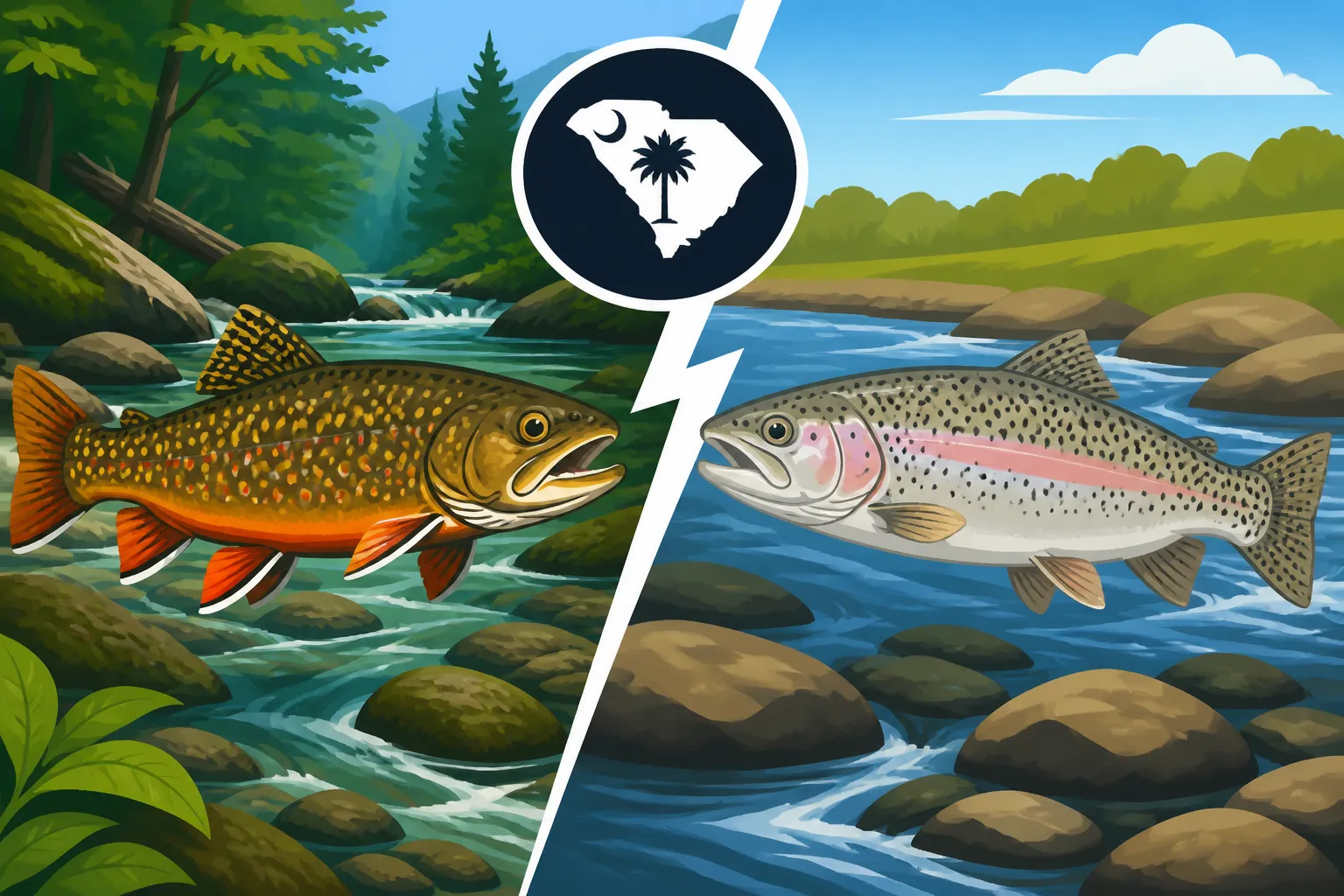
When you catch a native Brook Trout in South Carolina, you'll immediately notice its stunning, almost iridescent beauty. These aren't your average trout. They typically display a dark, mottled olive-green back, often with intricate, worm-like patterns (known as vermiculation) that transition into lighter sides. Their flanks are adorned with scattered red spots, often encircled by a pale blue halo, and interspersed with numerous lighter spots. But perhaps their most distinguishing feature is the vibrant white leading edges on their lower fins (pelvic, anal, and caudal), often followed by a band of black, giving them a distinct, almost painted appearance. Their bellies can range from white to a beautiful reddish-orange, especially on spawning males. They are generally smaller than stocked trout, rarely exceeding 10-12 inches in our state's headwater streams, and their vibrant colors are always more pronounced and deeper than their hatchery-raised counterparts.
Where the Native Brookies Thrive
You won't find native Brook Trout just anywhere in South Carolina. These fish are incredibly particular about their environment. They demand pristine, cold, highly oxygenated water, typically found only in the highest elevation headwater streams of the Blue Ridge Mountains. Think remote, forested areas with dense canopy cover that keeps water temperatures consistently low, even in the heat of summer. These streams are usually steep, rocky, and often difficult to access, which helps protect their fragile habitats from excessive human disturbance. They prefer small, clear tributaries where they can hide among rocks, fallen logs, and undercut banks, feeding on aquatic insects and small terrestrial critters that fall into the water. If you're looking to target these beauties, you'll be spending your time in places like the Chattooga River watershed or other secluded pockets deep within the Sumter National Forest. You can learn more about specific locations in Best Streams for Brook Trout in the Blue Ridge Mountains.
The Ecological Significance of Native Brook Trout
Native Brook Trout are more than just a beautiful fish to catch; they are a critical indicator species for ecosystem health. Their presence, or absence, tells us a lot about the purity and vitality of our mountain streams. Because they are so sensitive to pollution, sedimentation, and rising water temperatures, a healthy population of native brookies signifies a healthy, functioning aquatic environment. They play an integral role in the food web, both as predators of insects and as prey for larger fish, birds, and mammals. Conserving these native populations is paramount, not just for the fish themselves, but for the entire ecological tapestry of our mountain region. Their long-term survival is a constant reminder of the importance of protecting wild places and advocating for responsible land and water management practices.
The Role and Characteristics of Stocked Trout
While native brookies hold a special place, stocked trout are the backbone of many recreational fisheries in South Carolina, providing abundant opportunities for anglers of all skill levels. They serve a crucial purpose in balancing conservation with public access to fishing enjoyment.
What are Stocked Trout and Why are They Introduced?
Stocked trout are fish that have been raised in hatcheries and then released into public waterways by state agencies, primarily the South Carolina Department of Natural Resources (SCDNR). The main species stocked in South Carolina are Rainbow Trout and, to a lesser extent, Brown Trout. The primary reason for stocking is to create "put-and-take" fisheries. This means the fish are stocked specifically for anglers to catch and keep, providing immediate fishing gratification, especially in waters that might not naturally support a self-sustaining trout population or where native populations are too fragile to withstand heavy angling pressure. Stocking helps distribute fishing pressure, takes the burden off native species, and introduces trout fishing to areas that would otherwise lack it, making the sport more accessible to a wider audience.
Telling a Stocked Trout Apart from a Wild One
Distinguishing a stocked trout from a wild one, even a wild Rainbow or Brown Trout (which do exist in some areas, though less commonly than brookies), usually isn't too difficult once you know what to look for. Stocked trout often have visibly worn or damaged fins, particularly the dorsal and pectoral fins, due to being raised in crowded hatchery raceways. Their colors tend to be duller and less vibrant than wild fish, appearing somewhat washed out or muted. They might also have slight deformities or abrasions on their bodies from the hatchery environment. Wild fish, on the other hand, will typically have perfectly formed, sharp fins and intensely vivid coloration, reflecting their natural diet and active lifestyle in diverse habitats. Behaviorally, stocked trout are often less wary and more eager to bite, having been accustomed to being fed, which makes them easier targets for anglers.
Common Stocked Trout Species in South Carolina
In South Carolina, you're most likely to encounter two main species of stocked trout:
- Rainbow Trout (Oncorhynchus mykiss): These are by far the most common stocked trout. They're named for the iridescent, reddish-pink band that runs along their lateral line, though the intensity of this band can vary. Their bodies are typically covered in small black spots, and they have a more torpedo-shaped body. Rainbows are known for their spirited fights and willingness to take a variety of baits and lures, making them extremely popular for put-and-take fisheries. They adapt well to different water conditions, as long as temperatures remain cool enough.
- Brown Trout (Salmo trutta): While not stocked as extensively as Rainbows, Brown Trout are also released in some South Carolina waters. They can be identified by their overall brown to golden-brown coloration, often with larger dark spots and distinctive reddish or orange spots, many of which have light halos. Brown Trout are known for being a bit more elusive and harder to catch, and they can grow to impressive sizes, offering a greater challenge for experienced anglers. They also tolerate slightly warmer water temperatures than Brook or Rainbow Trout, which can be an advantage in some Southern streams.
Both species provide excellent fishing opportunities, whether you're fly fishing or using traditional spin gear.
Fishing for Native vs. Stocked Trout: A Different Experience
The type of trout you're targeting profoundly influences your approach, gear, and overall fishing experience. It's not just about the fish itself, but the journey and the environment you immerse yourself in.
The Challenge of Chasing Native Brookies
Fishing for native Brook Trout is less about quantity and more about the quality of the experience. It's an exercise in stealth, patience, and finesse. These fish live in some of the most remote and rugged terrain in South Carolina's mountains, often requiring a good hike to reach. The streams themselves are usually narrow, overgrown, and full of obstacles, demanding accurate casts and careful wading. Anglers typically use ultralight spinning gear with very light line (think 2-4 pound test) or lightweight fly rods (like a 2 or 3-weight) to present small dry flies, nymphs, or tiny spinners and spoons. You'll need to sneak up on pools and runs, often kneeling or crouching to avoid spooking these wary fish. Catching a native brookie is a badge of honor, a reward for your effort, skill, and respect for their fragile environment. It's a truly wild encounter that connects you deeply with nature. If you're ready for the adventure, consider checking out Best Streams for Brook Trout in the Blue Ridge Mountains.
Enjoying the "Put-and-Take" Stocked Trout Fisheries
Stocked trout fisheries, on the other hand, are designed for accessibility and success. These waters are often easier to reach, found in state parks, designated trout streams, and even some urban ponds. The fish are less wary and generally more abundant, making it an ideal setting for beginners, families, or anyone looking for consistent action. You don't need highly specialized gear; a standard light to medium-light spinning rod and reel combo with 4-8 pound test line will do just fine. A wide array of baits like corn, powerbait, worms, or small marshmallows, along with popular lures like inline spinners, small spoons, and even tiny crankbaits, will often yield results. Fly fishing for stocked trout can also be incredibly productive, as they are often eager to rise to a well-presented dry fly or aggressively chase a streamer. These fisheries offer a relaxed atmosphere where the emphasis is on enjoying the outdoors and bringing home some fresh fish for dinner, as allowed by Stocked Trout Limits in South Carolina.
Ethical Angling and Conservation for Both
Regardless of whether you're targeting native or stocked trout, ethical angling and conservation should always be top of mind. For native Brook Trout, especially given their vulnerable habitats, catch-and-release is almost universally recommended. Handle these fish as little as possible, with wet hands, and release them quickly to ensure their survival. Consider using barbless hooks to minimize harm. For stocked trout, you generally have more leeway to harvest fish, adhering strictly to the daily bag and size limits set by SCDNR, which are detailed in South Carolina's Freshwater Fishing Regulations. However, even with stocked fish, responsible harvesting means only taking what you will eat, and leaving plenty for other anglers. Always dispose of trash properly, respect private property, and be mindful of other anglers. These practices ensure healthy fisheries and enjoyable experiences for everyone, for years to come.
Conservation Efforts and the Future of South Carolina Trout
The future of trout fishing in South Carolina, particularly for our cherished native Brook Trout, hinges on robust conservation efforts and the active participation of anglers. It’s a delicate balance between preserving natural heritage and providing recreational opportunities.
Protecting Native Brook Trout Habitats
The biggest threat to native Brook Trout is habitat degradation. This includes sedimentation from logging or development, pollution from agricultural runoff or inadequate septic systems, and rising water temperatures due to climate change or removal of riparian buffer zones. Conservation efforts are intensely focused on protecting and restoring these critical habitats. This involves maintaining healthy forest cover along stream banks to provide shade and stabilize soil, implementing sustainable forestry practices, and educating landowners about protecting water quality. Stream restoration projects, which might involve adding structure, removing barriers, or planting native vegetation, are also vital. Organizations like Trout Unlimited, in partnership with SCDNR and the U.S. Forest Service, work tirelessly on these initiatives. Their work is essential for ensuring that future generations can still experience the thrill of catching a wild brookie in its natural, pristine environment.
Sustainable Stocking Programs
While native populations require protection, stocking programs for Rainbow and Brown Trout play a key role in providing sustainable angling opportunities. The SCDNR manages these programs meticulously, considering water temperatures, angler access, and the proximity to native trout populations to minimize any potential negative impacts. Stocked fish are typically placed in waters where natural reproduction is limited or nonexistent, creating a fishery without putting pressure on wild stocks. The department also adjusts stocking schedules and locations based on angler feedback and scientific data to ensure a healthy balance. The idea is to create a put-and-take fishery that serves as a recreational outlet, taking pressure off the wild fish while still fostering a love for trout fishing. This thoughtful approach helps maintain South Carolina as a viable trout fishing destination. You can find out more about the specific rules for keeping these fish in Stocked Trout Limits in South Carolina.
How Anglers Can Contribute
As anglers, we have a profound responsibility to contribute to the conservation of South Carolina's trout. The simplest way is to simply follow all fishing regulations, including bag limits, size restrictions, and license requirements, like those outlined in the South Carolina Fishing License Guide. Beyond that, educating yourself and others about the differences between native and stocked trout, and the importance of each, is crucial. Participating in stream cleanups, volunteering with conservation groups, or simply practicing "Leave No Trace" principles when you're on the water all make a significant difference. Supporting organizations dedicated to trout conservation also provides vital resources. Every little bit helps ensure that the cool, clear mountain streams of South Carolina continue to flow with healthy trout populations for generations to come.
Essential Gear for South Carolina Trout Fishing
Having the right gear is crucial for a successful and enjoyable trout fishing trip, whether you're stealthily pursuing native brookies or casting for stocked fish in a popular stream. The equipment often varies significantly based on your target and preferred technique.
Tackle for Native Brookies
When targeting native Brook Trout, the name of the game is finesse and minimalism. These fish are typically small, and their habitats are often tight and overgrown, demanding light tackle.
- Rods and Reels: An ultralight spinning rod (4.5 to 6 feet long) paired with a small spinning reel (500 or 1000 series) spooled with 2-4 lb monofilament or fluorocarbon line is ideal. For fly anglers, a 2- or 3-weight fly rod (6.5 to 7.5 feet) with a matching reel and a weight-forward floating line is perfect. The shorter rod lengths help navigate dense stream-side vegetation.
- Lures and Flies: Native brookies respond well to tiny inline spinners (like Panther Martin or Mepps in 1/32 to 1/8 oz), small spoons, or micro jigs. Fly anglers will find success with small dry flies (such as Elk Hair Caddis or Parachute Adams in sizes #16-20), small nymphs (like Hare's Ear or Pheasant Tail in sizes #18-22), or tiny terrestrial patterns (ants, beetles).
- Accessories: A small pair of forceps or hemostats for hook removal, a small net with rubber mesh to protect the fish, and a small backpack for essentials are highly recommended. A good pair of polarized sunglasses is also invaluable for spotting fish and navigating rocky streambeds. Many of these specialized items can be found conveniently on platforms like Amazon.
Gear for Stocked Trout
Fishing for stocked trout often allows for a bit more versatility in gear, as these fish are less particular and waters are usually more open.
- Rods and Reels: A light to medium-light spinning rod (6 to 7 feet) with a 2000 or 2500 series spinning reel, spooled with 4-8 lb monofilament or fluorocarbon, is a great all-around choice. This setup provides enough backbone for larger stocked fish while still being sensitive enough for delicate bites.
- Baits and Lures: For bait fishing, common choices include PowerBait dough or nuggets, garden worms, corn, and even small marshmallows. For lures, slightly larger inline spinners, spoons, small crankbaits, and soft plastic grub jigs are all effective. Fly anglers will have success with larger dry flies (like Stimulators or Woolly Buggers) and various nymph patterns. For more specific techniques, check out Fly Fishing Basics for Stocked Trout and Spin Fishing Techniques for Stocked Trout Streams.
- Terminal Tackle: A selection of small hooks (sizes #8-14), split shot weights, bobbers (slip bobbers are great for precise depth control), and swivels are essential. Having a tackle box organized with these items, perhaps one you picked up from Amazon, will make your day much smoother.
Wading Safety and Stream Etiquette
No matter which type of trout you're after, safety and etiquette are paramount.
- Wading Gear: Waders (chest waders are often best for deep crossings and cold weather) and wading boots with good grip are crucial. Felt soles or studded soles offer superior traction on slippery rocks. Always use a wading belt.
- Layered Clothing: Dress in layers, even on warm days, as mountain temperatures can change quickly. Quick-drying, moisture-wicking materials are always a good choice.
- Stream Etiquette: Be mindful of other anglers. Give them space, especially if they are fly fishing or actively working a stretch of water. If you're coming downstream, try to be quiet and not disturb the water too much. If you see trash, pack it out, even if it's not yours. Always check Checking a Stream's Trout Limit Before You Fish It before you go to ensure you're compliant with current regulations for your specific stream.
By preparing adequately and respecting the environment and fellow anglers, you're sure to have a memorable experience chasing trout in the beautiful waters of South Carolina.
| Feature | Native Brook Trout (Southern Appalachian) | Stocked Trout (Rainbow/Brown) |
|---|---|---|
| Species | Salvelinus fontinalis (Char, not true trout) | Oncorhynchus mykiss (Rainbow), Salmo trutta (Brown) |
| Appearance | Dark green/olive back with worm-like patterns (vermiculation), red spots with blue halos, white leading edges on lower fins. Vibrant. | Often duller colors, fewer distinct markings, black spots (Rainbow), red/orange spots with halos (Brown). |
| Fins | Perfectly formed, sharp fins. | Often worn, frayed, or blunt fins from hatchery conditions. |
| Size | Generally smaller (6-12 inches typical in SC). | Can be larger, often 8-16 inches when stocked, with potential for trophy size. |
| Habitat | Pristine, high-elevation, cold (below 68°F), highly oxygenated headwater streams; dense canopy cover. | More tolerant of varied conditions, stocked in larger streams, rivers, and sometimes lakes/ponds. |
| Behavior | Highly wary, elusive, prefers natural baits/flies, excellent fighters for their size. | Less wary, often eager to bite a variety of baits and lures, can be more sluggish initially. |
| Reproduction | Self-sustaining wild populations, naturally reproducing. | Primarily "put-and-take" fisheries, little to no natural reproduction in stocked waters. |
| Conservation | Critical indicator species, focus on habitat protection and catch-and-release. | Provides recreational opportunity, diversifies fishing pressure from native species. |
| Fishing Style | Finesse, stealth, ultralight gear, small flies/lures, wilderness experience. | More accessible, versatile gear, various baits/lures, often higher catch rates. |
Disclaimer
This article is for general informational purposes only and does not constitute professional advice. Laws, prices and regulations vary by location and change over time. Consult a qualified professional for guidance on your specific situation.