Redeye Bass vs Largemouth Bass: How to Tell Them Apart
Oh, the age-old dilemma when you're out on a peaceful South Carolina lake or tucked away in a cool mountain stream! You feel that familiar tug, reel in your catch, and for a split second, you're staring at it, thinking, "Is this a largemouth, or did I just land one of those feisty redeyes?" It's a common confusion, and honestly, both species are fantastic fighters, but knowing which one you have can really deepen your understanding of our state's incredible fisheries. This guide is here to help you confidently tell the difference between a Redeye Bass and a Largemouth Bass, so you can appreciate each one for its unique qualities and the specific environments they call home.
The Largemouth Bass: South Carolina's Iconic Freshwater Fighter
Let's start with the undisputed heavyweight champion of many South Carolina fishing stories: the Largemouth Bass. This fish is practically synonymous with freshwater angling across the state, and for good reason. They're aggressive, grow to impressive sizes, and offer a thrilling fight that keeps anglers coming back for more. But beyond their fighting spirit, Largemouth Bass have several telltale characteristics that, once you know them, make identification much simpler.
Distinctive Physical Traits of the Largemouth
When you've got a Largemouth Bass in hand, the first thing you'll likely notice, living up to its name, is that enormous mouth. Seriously, it's a gaping maw! If you close the fish's mouth, the hinge of the jaw extends noticeably past the back of its eye. This is probably the most reliable and immediate indicator you'll find. Their body coloration can vary quite a bit depending on the water clarity and bottom composition of their habitat, but generally, they feature a dark green to olive green back that fades into lighter green or yellowish-white flanks. A distinct, often broken, dark lateral line runs horizontally along their sides from gill plate to tail, looking almost like a series of connected blotches or a jagged stripe.
Another key feature is their dorsal fin. The Largemouth Bass has two dorsal fins, but they are clearly separated, almost appearing as two distinct fins rather than one continuous structure. The front dorsal fin is spiny, and the rear is soft-rayed. You'll also notice their scales are relatively large, and their body tends to be robust and deep-bodied, especially as they mature. In South Carolina, these fish can range from panfish-sized youngsters to truly massive trophy specimens, often weighing in the double digits in our larger reservoirs. You can learn more about how they grow and where to find them in our guide, Largemouth Bass Growth Rate From Fingerling to Trophy.
Typical Largemouth Habitat in South Carolina
In South Carolina, if you're fishing in a large reservoir, a slow-moving river, a private pond, or pretty much any sizable body of freshwater with plenty of cover, you're in prime Largemouth Bass territory. They absolutely thrive in environments rich with submerged vegetation, fallen timber, rock piles, docks, and other structures that offer ambush points and shade. Think of our iconic lakes like Lake Murray, the sprawling Santee Cooper Lakes (Marion and Moultrie), or the productive waters of Lake Hartwell. These are all largemouth havens.
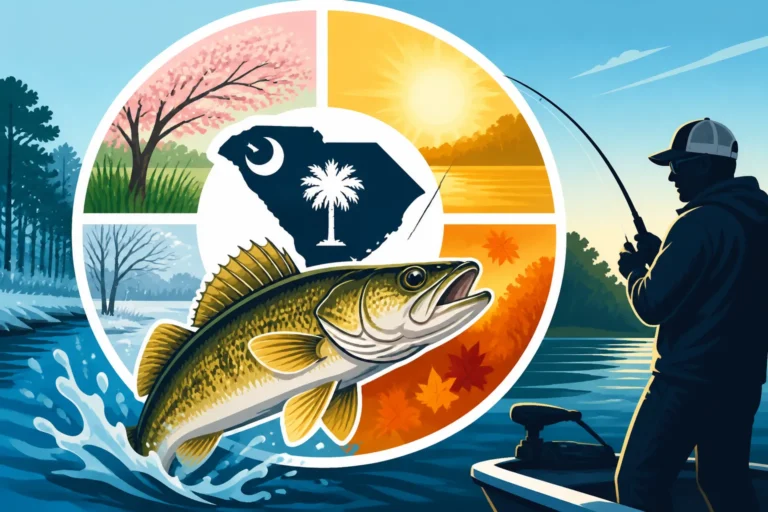
These bass are warm-water fish, preferring temperatures that allow them to be active predators. They'll hug the banks in the spring during the spawn, move to deeper ledges and humps in the heat of summer, and then transition back to shallower feeding grounds in the fall. Understanding their preferred hangouts is often your first clue when trying to identify your catch; if you're in a big, warm-water lake, chances are you've got a largemouth on the line. For a deeper dive into their world, check out Best Largemouth Bass Spots on Lake Murray, South Carolina or our general guide, South Carolina's Best Bass Fishing Lakes.
Fishing for Largemouth: What to Expect
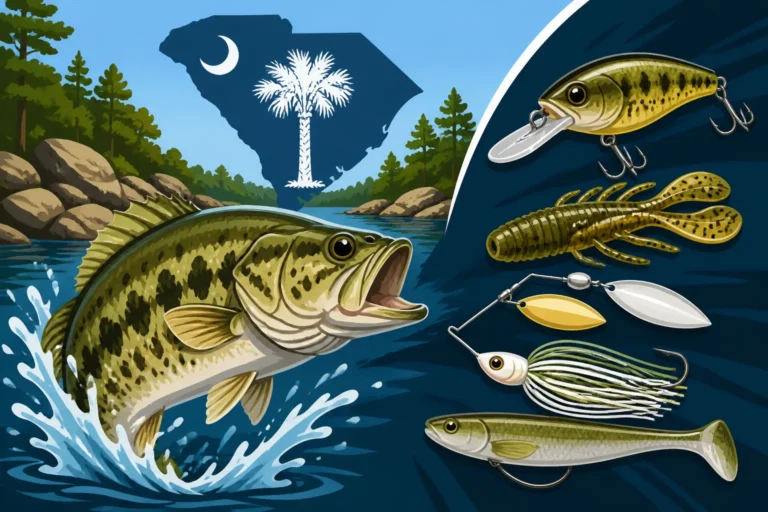
Fishing for Largemouth Bass is a whole culture in South Carolina, and it draws anglers from all walks of life. Because of their size and aggressive nature, anglers typically use medium to heavy action rods paired with baitcasting or spinning reels. The array of lures and baits is mind-boggling, from plastic worms, jigs, and crankbaits to spinnerbaits and topwater frogs. They hit hard and fight dirty, often jumping and trying to throw the hook.
Many anglers are targeting these fish for sport, but they are also considered excellent table fare by many. If you're wondering about that aspect, our article Is Largemouth Bass Good to Eat? A South Carolina Angler's Guide has some great insights. The thrill of a largemouth strike is something truly special, and it's a rite of passage for many who discover the joys of fishing in the Palmetto State.
The Elusive Redeye Bass: A Mountain Stream Gem
Now, let's turn our attention to the Redeye Bass, often called a "Coosa Bass" in many areas due to its prevalence in the Coosa River system. While not as widespread or as large as the largemouth in South Carolina, the redeye holds a special place in the hearts of anglers who venture into the state's cooler, rockier, and often more remote mountain streams. These fish are a true testament to the beauty and diversity of our state's natural resources.
Key Identification Marks of the Redeye Bass
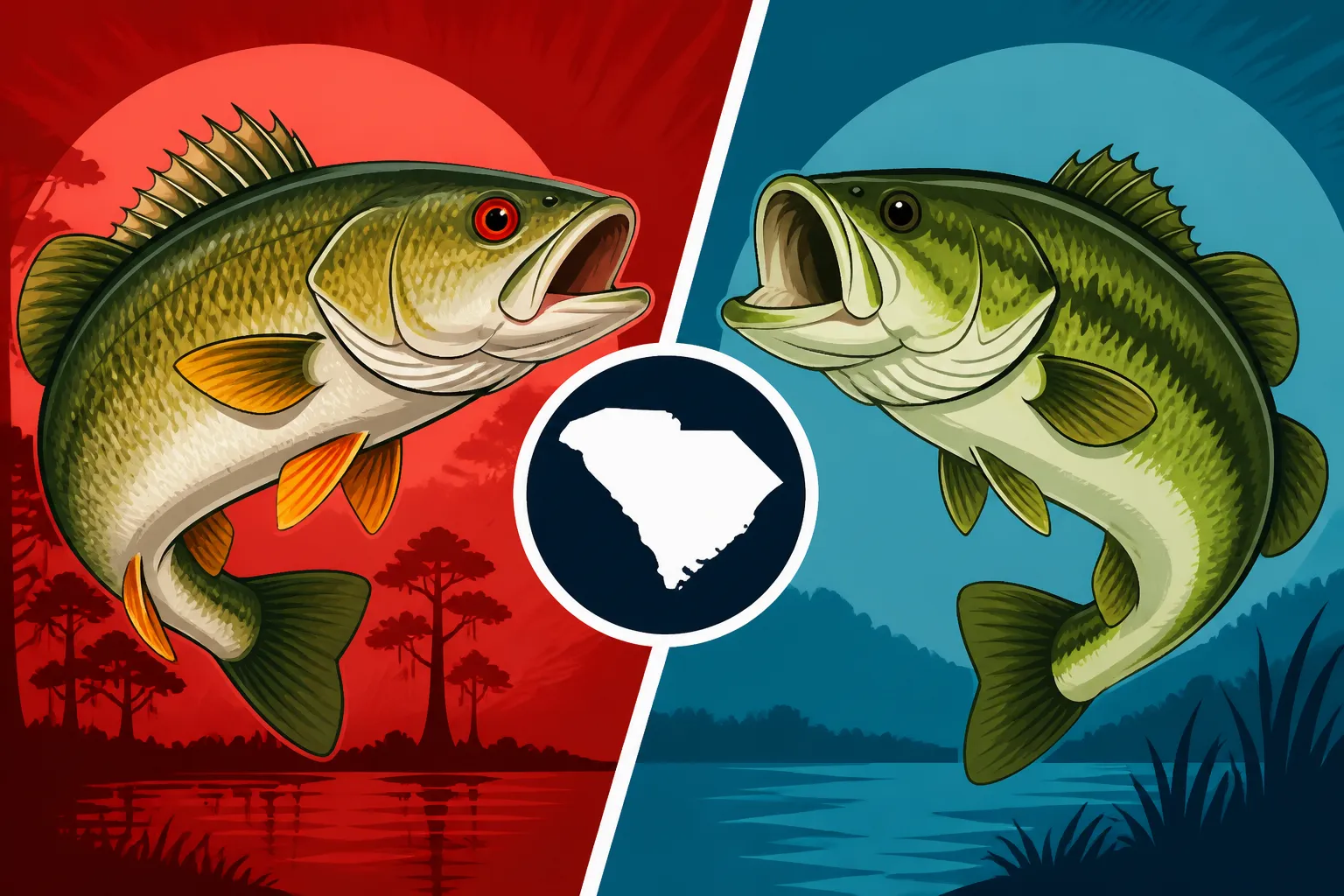
The most defining characteristic of the Redeye Bass, as its name cleverly suggests, is its vibrant reddish-orange eye. While sometimes a largemouth might have a slight reddish tint in its eye, the redeye's eye color is typically far more pronounced and distinct. Beyond the eye, their mouth is noticeably smaller than a largemouth's; when you close the redeye's mouth, the jaw hinge will typically not extend past the middle of its eye, and often barely reaches the front edge.
Their coloration tends to be a more uniform dark olive to bronze, often with distinct dark spots on the centers of their scales, which can give them a somewhat "speckled" appearance, especially on their lower flanks. Unlike the largemouth, the redeye's two dorsal fins are connected, forming one continuous, albeit notched, dorsal fin. They also lack the distinct dark lateral stripe of the largemouth, often showing more subtle, vertical bar patterns on their sides, particularly when stressed or in specific lighting. Redeyes are also generally much smaller than largemouths, with most catches being in the 8-12 inch range, though larger ones can be found. You can dive deeper into their unique traits in How to Identify a Redeye Bass.
Where Redeye Bass Call Home in South Carolina
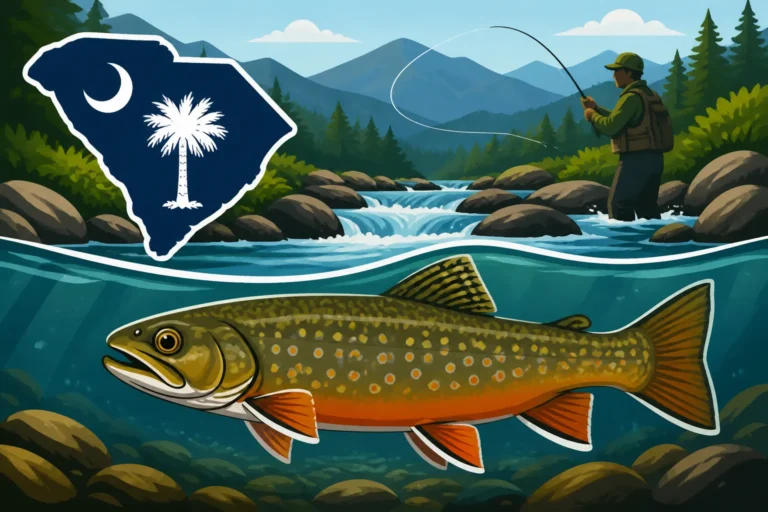
If you want to find a Redeye Bass in South Carolina, you need to head for the hills – specifically, the cool, clear, rocky mountain streams and rivers of the Upstate. These fish thrive in oxygen-rich, flowing waters, often with a gravel or rock bottom, and a canopy of trees overhead that helps keep water temperatures down. They prefer areas with current, hiding behind boulders, in plunge pools, or near submerged logs. You won't find them in the vast, warm-water reservoirs where largemouths dominate.
Think of the smaller tributaries flowing through areas like Sumter National Forest, parts of the Chattooga River basin, or the upper reaches of rivers like the Chauga. These are pristine, often challenging-to-access environments, but they offer a unique angling experience and are precisely where these beautiful bass prefer to reside. It's a completely different fishing adventure than casting a frog in a lily pad field. For specific locations, our guide Where to Catch Redeye Bass in South Carolina's Mountain Streams is a fantastic resource.
The Art of Redeye Bass Fishing
Fishing for Redeye Bass is often a more delicate and stealthy affair compared to largemouth fishing. Anglers targeting redeyes typically employ lighter tackle, often ultralight spinning gear or even fly fishing setups. Small artificial lures like inline spinners, tiny crankbaits, jigs, or soft plastics mimicking small crayfish and insects are highly effective. For fly anglers, various nymphs, wet flies, and small streamers can entice a strike.
The challenge isn't just hooking them, but often just getting to them. Their habitat can involve hiking through rugged terrain and wading pristine, slippery streams. It's an immersive experience that connects you deeply with nature, and the fight, while on lighter tackle, is incredibly spirited. They may not jump like a largemouth, but their powerful runs in current are unforgettable. Our article Redeye Bass Fishing Tips for Upstate South Carolina offers excellent advice for those looking to pursue these spirited fish.
Side-by-Side Comparison: Spotting the Differences
Okay, so we've looked at them individually. Now, let's put them head-to-head. Sometimes, when you've got a fish in your hand, especially a smaller one, you need a quick checklist to make that confident identification. This comparison will give you the most reliable visual cues.
Mouth Size: The Easiest Clue
Hands down, the simplest and most consistently accurate way to distinguish between a Redeye Bass and a Largemouth Bass is by examining the position of their jaw hinge relative to the eye.
- Largemouth Bass: Close its mouth. The hinge of the upper jaw (maxilla) will extend well past the back edge of the eye. This is why they're called "largemouths" – their mouth is just proportionally huge! You can even slide your thumb into the corner of their mouth and feel that extension.
- Redeye Bass: Close its mouth. The hinge of the upper jaw will not extend past the middle of the eye, and often just barely reaches the front edge of the eye. Their mouth is much more proportionate to their head size, making them look less "gappy" than a largemouth. This difference is stark once you've seen it a few times.
Eye Coloration and Dorsal Fin Details
While mouth size is king, these features offer strong supporting evidence.
- Eye Color:
- Largemouth Bass: Typically has a gold or brownish eye, sometimes with a faint reddish tint, but never a deep, vibrant red.
- Redeye Bass: Possesses a distinct, often vivid, reddish-orange eye. This is a very strong indicator and where the "redeye" name originates. It's not just a reflection; it's a deep coloration in the iris.
- Dorsal Fin Connection:
- Largemouth Bass: Has two distinct dorsal fins that are clearly separated. You can typically see a visible gap between the spiny front fin and the soft-rayed rear fin.
- Redeye Bass: Has two dorsal fins that are connected, forming a single, continuous dorsal fin, though there will be a noticeable dip or notch where the spiny section meets the soft-rayed section.
Body Shape and Scale Patterns
Subtle differences in their overall build and markings can also help, especially if you're looking closely.
- Body Shape:
- Largemouth Bass: Generally more robust, deep-bodied, and laterally compressed (taller than it is wide). They look like a powerful, stocky predator.
- Redeye Bass: Tends to be more streamlined and slender, reflecting its life in faster currents. They look a bit more "torpedo-shaped" by comparison.
- Lateral Line and Scale Markings:
- Largemouth Bass: Features a prominent, often broken or irregular, dark horizontal stripe (lateral line) running down its side. Scales are generally uniform in color.
- Redeye Bass: Lacks the distinct lateral stripe. Instead, you'll often see distinct dark spots on the center of many scales, especially on their flanks below the lateral line. They might also have subtle, blotchy vertical bars on their sides.
Habitat as a Primary Indicator
Sometimes, the simplest clue is simply where you caught the fish.
- Largemouth Bass: If you're fishing in a large, warm-water lake, a pond, or a slow-moving river with plenty of vegetation or woody cover, it is overwhelmingly likely to be a largemouth.
- Redeye Bass: If you're deep in the cool, clear, fast-flowing, rocky mountain streams of the Upstate, especially those with good overhead tree cover, then you're almost certainly in redeye territory. You'd be extremely hard-pressed to find a redeye in a sprawling lowland reservoir. This geographic distinction is incredibly helpful.
Here's a quick comparison table to keep handy:
| Feature | Largemouth Bass | Redeye Bass |
|---|---|---|
| Jaw Hinge | Extends noticeably past the back of the eye. | Does not extend past the middle of the eye. |
| Eye Color | Gold or brownish, sometimes a faint reddish tint. | Distinctive, vibrant reddish-orange. |
| Dorsal Fins | Clearly separated into two distinct fins. | Connected, forming one continuous, notched fin. |
| Lateral Line | Prominent, often broken, dark horizontal stripe. | Absent; instead, often has dark spots on scales and/or vertical bars. |
| Body Shape | Robust, deep-bodied, laterally compressed. | More slender, streamlined, built for current. |
| Typical Habitat | Large lakes, ponds, slow rivers, abundant cover. | Cool, clear, fast-flowing mountain streams (Upstate). |
| Average Size | Can grow very large (multiple pounds). | Generally smaller (under a pound, often 8-12 inches). |
Why Correct Identification Matters to Anglers and Conservation
Beyond the simple satisfaction of knowing your fish, being able to accurately identify a Redeye Bass versus a Largemouth Bass carries significant weight. It impacts everything from following regulations to contributing to vital conservation efforts and, ultimately, enhancing your entire angling experience. It's not just about a name; it's about respecting the fish and the ecosystems they inhabit.
Understanding Regulations and Bag Limits
While bass regulations in South Carolina are often broad for "black bass" species, there can be nuances. Knowing which species you've caught ensures you're complying with any specific rules that might apply to a particular body of water or species. For instance, some smaller, more sensitive stream systems might have different limits or even catch-and-release only rules for certain native species to protect their populations. Always check the current regulations for the specific waters you're fishing, as they can sometimes differ.
Even if the overall bass limit is the same, understanding the species helps you manage your catch responsibly. Are you taking home an abundance of common largemouth, or inadvertently over-harvesting a more sensitive redeye population? Staying informed about these rules is a critical part of being a responsible angler in the Palmetto State. For a comprehensive overview, you can check out our article South Carolina Fishing Bag Limits Explained.
Conservation and Species Preservation
Redeye Bass, being native to specific, often more fragile, stream environments, are particularly important from a conservation standpoint. Their populations can be more susceptible to habitat degradation, pollution, and competitive pressures from introduced species. By accurately identifying them, anglers can contribute to better data collection and awareness about the health of these unique stream ecosystems.
For example, unknowingly over-harvesting redeyes or introducing non-native species into their habitat could have long-term negative impacts. Understanding that these smaller, often more remote fish exist and are a vital part of our natural heritage encourages stewardship of those precious mountain streams. It reminds us that our actions as anglers have a direct impact on the future of South Carolina's diverse fish populations.
Enhancing Your Fishing Experience
Let's be honest: there's immense satisfaction in being knowledgeable about your quarry. Knowing whether you've landed a feisty redeye that fought hard in a cold mountain stream or a powerful largemouth from a sprawling reservoir adds depth to your experience. It helps you tailor your techniques, choose the right bait, and even select the most appropriate gear for each species. You'll learn to appreciate the subtle differences in their behavior and fighting style.
Furthermore, it allows you to connect more deeply with the environment. Fishing for redeyes takes you to breathtaking, pristine natural settings that offer a different kind of beauty than our larger lakes. Recognizing these species helps you understand the interconnectedness of our diverse aquatic habitats and makes every catch a more educational and fulfilling moment. It’s about being a true outdoors person, not just someone who casts a line.
Gear and Techniques for Distinguishing Bass Species
Beyond just looking at the fish, there are some practical tips and even gear considerations that can aid you in distinguishing between these bass species. Sometimes, the fish are small, or you're in a hurry to release them, so having a method to quickly and accurately get the information you need is key.
Photography and Measurement Tools
In today's world, your smartphone is often your best fishing buddy for identification!
- High-Quality Photos: Take clear, well-lit photos of your catch before release. Make sure to get shots that clearly show the jawline relative to the eye, the dorsal fin, and the overall body shape and coloration. Multiple angles are always better. These photos can be reviewed later or even shared with experienced anglers or online communities for a second opinion. Many anglers even carry waterproof phone cases for this very reason, easily found on Amazon.
- Measurement Tools: A soft measuring tape or a rigid bump board (also readily available from retailers like Amazon) is invaluable. Not only does it help you adhere to length limits, but it also provides a scale for your photos. A fish's length can sometimes give you a hint, as redeyes rarely reach the larger sizes common for largemouths.
- Field Guides: Consider carrying a compact, waterproof field guide specific to freshwater fish in South Carolina. These guides often have clear illustrations or photos highlighting the distinguishing features of various species. There are fantastic regional guides available on Amazon that can fit right into your tackle box or backpack.
Having these tools at your disposal means you don't have to rush your identification. You can quickly snap a few photos, take a measurement, and then release the fish unharmed, allowing you to examine the details more thoroughly later.
Appropriate Tackle for Each Species
While you can technically catch both species on a variety of gear, the type of tackle you're using is often indicative of which bass you're likely to encounter, and it can influence how well you observe the fish.
- Largemouth Bass Tackle: Anglers targeting largemouths typically use heavier rods (medium to heavy action) with stronger lines (10-20 lb test mono or fluorocarbon, or heavier braid). This gear is built to handle larger fish in dense cover, allowing you to quickly land the fish and minimize stress. With a larger fish and sturdier gear, you often have more time to observe its features before release. This kind of robust gear is a staple for bass fishing in places like our major reservoirs.
- Redeye Bass Tackle: For redeyes in smaller, clearer streams, ultralight spinning gear (4-6 lb test line) or a lightweight fly rod is often preferred. This lighter approach is more sporting for smaller fish and allows for more precise presentations with tiny lures or flies. While the fish are smaller and need to be handled gently for release, the clarity of the water and the smaller size of the fish can actually make it easier to observe their distinct features right at the point of catch. If you find yourself in the serene, clear waters of the Upstate, it’s a good sign you should be geared for smaller, more agile catches.
By being mindful of your gear choices and having the right tools for documentation, you can not only enjoy the act of fishing but also become a more skilled and knowledgeable identifier of South Carolina's incredible bass species. It's all part of the continuous learning journey that makes fishing such a rewarding pursuit.
Disclaimer
This article is for general informational purposes only and does not constitute professional advice. Laws, prices and regulations vary by location and change over time. Consult a qualified professional for guidance on your specific situation.