How to Anchor for Catfish in Current
Oh, the sheer frustration of trying to hold your boat steady in a strong current when you're targeting those big South Carolina catfish! It feels like you spend more time re-anchoring than actually fishing, doesn't it? The river bottom seems to be made of greased-up bowling balls sometimes, and your anchor just won't bite. But don't you worry, my fellow angler. This guide is all about mastering the art of anchoring for catfish in current, giving you the steadfast stability you need to reel in those giants without constantly battling the flow.
Understanding the Challenge of Current for Catfish Anglers
Fishing for catfish in rivers, whether it's the Congaree or the Santee, means embracing the current. These mighty fish often use the flow to their advantage, but it can be a real headache for us anglers trying to stay put.
The Dynamic Nature of River Currents
River currents aren't just a simple, steady push. Oh no, they're far more complex and can be incredibly frustrating. You'll encounter varying depths, hidden underwater structures, and even subtle changes in the riverbed that can drastically alter how the current behaves. One moment you might be in a gentle eddy, the next you're fighting a strong pull that wants to drag your boat downstream. This constant flux is what makes anchoring so challenging. Your anchor might hold perfectly in one spot, but move just a few yards, and it's suddenly skipping across the bottom like a stone. It’s this unpredictable nature that often leads to anchors dragging, making it impossible to keep your bait in the prime feeding lanes where those big catfish lurk. Understanding these dynamics is the first step to conquering them.
How Catfish Relate to Current
It might seem counterintuitive, but catfish absolutely love current, even if we sometimes curse it. They're often found in spots where the current brings food right to them, but they're smart about it. They'll position themselves just out of the strongest flow, in seams, eddies, or behind submerged structures like log jams and rock piles. These are their ambush points – places where they can expend minimal energy while still having a steady buffet delivered. For us, the challenge is getting our boat to hold rock-solid in these exact locations. If your anchor isn't set properly, you'll be constantly pulled out of the strike zone, and those opportunistic catfish will pass right by your bait. That’s why learning to anchor effectively isn't just about boat control; it’s about putting yourself directly in the catfish's preferred feeding lanes. For more insights on where to find these elusive fish, check out our guide on South Carolina's Best Catfish Fishing Spots.
Essential Gear for Anchoring in Current
Having the right equipment can make all the difference between a successful, steady fishing trip and a constant battle against the river. Don't skimp on these critical components if you're serious about anchoring for catfish.
Choosing the Right Anchor Type
When you're dealing with river currents, not just any anchor will do. You need something designed to dig in and hold, often on bottoms that are a mix of mud, sand, gravel, and sometimes even debris.
- River Anchors (Fluke/Danforth Style): These are often a go-to for many freshwater anglers. Their wide, flat flukes are excellent for digging into soft bottoms like mud and sand, which you'll find plenty of in rivers like the Congaree River Catfish Fishing Spots Near Columbia. However, they can struggle on rocky or hard-packed bottoms, where they might just slide.
- Grapple/Grapnel Anchors: These anchors, with multiple sharp claws, are fantastic for snagging onto rocky bottoms, submerged logs, or dense vegetation. They excel where a fluke anchor might just bounce. The downside is that they can get truly stuck, requiring a clever retrieval system to get them back.
- Box Anchors (e.g., Digger Anchor, Slide Anchor): These innovative designs are quickly gaining popularity, especially for larger boats or very strong currents. They often feature a heavy, box-like design with angled fins or flukes that automatically dig in as tension is applied. They offer incredible holding power, especially in softer to medium bottoms, and are generally easier to retrieve than traditional grapples. While they might be a bit more of an investment, the peace of mind they offer is often worth it. You can often find a good selection of these specialized anchors on platforms like Amazon, offering various sizes and designs to suit your boat and the typical river conditions you face.
- Mushroom Anchors: While great for pontoon boats in calm, muddy lakes, they are generally not recommended for significant current due to their relatively low holding power unless they are exceptionally heavy for their size.
The key is to match your anchor to the prevalent bottom type and the strength of the current you expect to encounter. It's not uncommon for serious river catfish anglers to carry two different types of anchors to be prepared for varying conditions.
The Importance of Anchor Rode and Chain
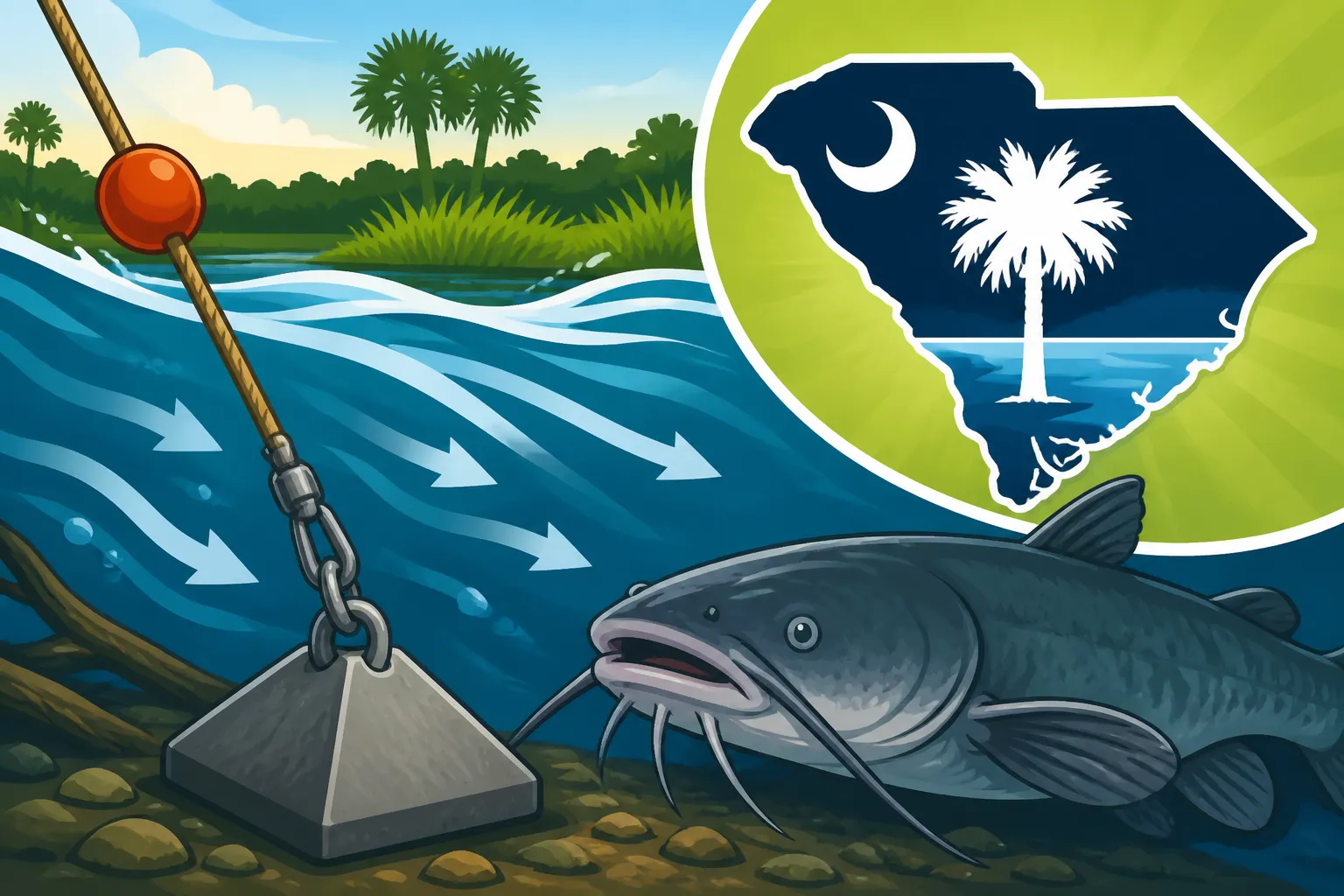
Your anchor is only as good as the line connecting it to your boat, known as the anchor rode, and the chain that attaches directly to the anchor. This isn't just a matter of strength; it's about physics.
- Anchor Chain: This is perhaps the most overlooked component. A good length of heavy chain (often 6-10 feet or more, depending on your boat size) between your anchor and your rope is crucial. The chain does two main things:
- Lowers the Angle: It creates a flatter pull on the anchor, allowing the flukes to dig horizontally into the bottom rather than being lifted straight up.
- Adds Weight: The chain's weight acts as a shock absorber, helping to prevent the anchor from breaking loose with sudden tugs from current or boat movement. It also helps the anchor reset if it does temporarily lose its bite.
- Anchor Rode (Rope): You want a sturdy, marine-grade rope that's appropriate for your boat's size and the currents you'll face. Nylon is a popular choice because it has some stretch, which acts as another shock absorber against boat surge and current, reducing the strain on your anchor and boat cleats. Polyester rope is also good for its strength and abrasion resistance. Make sure you have plenty of length – a general rule of thumb for anchoring is a scope of 7:1 (seven feet of rode for every one foot of depth, plus the distance from the waterline to your bow). In strong currents, you might even want more! Having plenty of strong, appropriately sized rope, along with enough chain, is crucial, and you can stock up on quality options on Amazon before your next trip.
Anchor Retrieval Systems and Safety Gear
Getting your anchor stuck or having to cut it loose is a major headache and can ruin a fishing day. Having a plan for retrieval and safety is essential.
- Anchor Retrieval Rings/Breakaway Systems: For grapple or river anchors that tend to get snagged, a breakaway system can be a lifesaver. This usually involves attaching the rode to the anchor's crown (the top part) and securing it to the shank with a weak link or zip tie. If the anchor gets stuck, you pull hard, the weak link breaks, and you can pull the anchor out backward, freeing it from the snag. Alternatively, an anchor retrieval ring (sometimes called an anchor buoy or anchor ball) allows you to pull the anchor up from the chain, essentially reversing the pull to free it. This is especially useful in the potentially snag-filled waters of the Santee River Fishing Spots for Catfish.
- Anchor Buoy: Even without a full retrieval system, an anchor buoy is invaluable. If you need to quickly release your anchor – perhaps to chase a big catfish that's pulling your boat, or in an emergency – you can tie a buoy to the end of your anchor rode and toss it overboard, marking your anchor's position for easy retrieval later.
- Safety Knife and Gloves: Always have a sharp knife readily accessible in case you need to cut your anchor rope in an emergency. Thick gloves are also a good idea when handling anchor lines, especially if they're wet or if you're pulling up a heavy anchor, to prevent rope burn or cuts.
Step-by-Step Guide to Anchoring for Catfish in Current
Once you have the right gear, it's time to put it to good use. Anchoring in current isn't just about dropping a weight; it's a calculated maneuver.
Scouting Your Spot and Approach
Before you even think about dropping your anchor, you need to understand where you're going and how the current will affect your approach.
- Reading the Water: Look for signs of current breaks, eddies, and seams. Catfish often hold on the downstream side of structure (like logs, rock piles, or ledges) or in deeper holes where the current is slightly slower, allowing them to ambush prey with less effort. Pay attention to how the surface water moves – ripples, swirls, and calm spots all tell a story about the underwater landscape. For tips on finding productive areas, you might want to review Best River Fishing Spots in the South Carolina Upstate to understand how topography influences fish location.
- Identifying Structure: Use your fish finder to locate submerged trees, brush piles, rock formations, or significant depth changes. These are prime catfish holding areas. Your goal is to position your boat just upstream of these spots, allowing your bait to drift naturally into their feeding zone.
- Approaching Upstream: Always approach your desired fishing spot from downstream. This allows you to motor slowly against the current, giving you maximum control. As you near your target, turn your boat so that your bow is facing directly upstream. This "bow-into-the-current" position is crucial for a stable anchor set and comfortable fishing. Trying to anchor while drifting sideways or stern-first is a recipe for disaster.
Deploying Your Anchor Effectively
This is where technique truly matters. A poorly deployed anchor is almost guaranteed to drag.
- Position Yourself Upstream: Motor slowly past your intended fishing spot (where you want your bait to land) by about 50-75 feet, or even more in very strong currents. The exact distance will depend on the depth, current speed, and your desired anchor scope. Remember that 7:1 scope rule!
- Come to a Near Stop: Once you're positioned, gently bring your boat to a near standstill, still facing upstream.
- Lower, Don't Throw: Gently lower your anchor into the water from the bow, not the stern. Never throw the anchor with force, as this can tangle the chain or rode. Let it sink steadily to the bottom.
- Pay Out Rode Slowly: As the current slowly pushes your boat backward downstream, gradually pay out anchor rode. Don't dump it all at once. This allows the chain and anchor to lie flat on the bottom and gives the anchor a chance to dig in.
- Feel for the Set: Once you've paid out enough scope (remember that 7:1 ratio for optimal holding), snub the line gently on a cleat. You should feel the anchor dig in. Give it a few seconds; if you feel a steady tension without your boat continuing to drift, your anchor is likely set. If it feels like it's dragging, you haven't set it properly.
- "Test" the Set: With the rode snubbed, put your boat's engine in a very slow forward gear, just enough to put slight pressure on the anchor, as if you're trying to pull it free. If the anchor holds firm, you're good to go! If it drags, repeat the deployment process, perhaps paying out more scope or moving slightly to find a better bottom.
Adjusting and Re-Anchoring Strategies
Even with a perfect set, conditions change, and sometimes you just need to move a little.
- Dealing with a Dragging Anchor: The most common frustration! If your anchor starts dragging, don't just sit there. Immediately pay out more scope. Often, simply increasing the amount of rope and chain on the bottom will give the anchor the extra leverage it needs to dig in. If it still drags, you'll need to pull it up, motor back upstream, and try again, perhaps choosing a slightly different spot or trying a different approach angle. Sometimes, the bottom is just too slick or rocky in one small area, and a few feet can make all the difference.
- Using Two Anchors: For pinpoint precision or in very strong, gusty winds combined with current, a two-anchor system is your best friend. We'll dive into this more in the advanced section, but it allows you to truly lock your boat in place.
- Understanding When to Move: Don't be afraid to pull up and move if a spot isn't producing. Maybe the current shifted, the fish moved, or your anchoring position just isn't optimal. Part of mastering river fishing is knowing when to cut your losses and find a new holding spot. For more general advice on fishing tactics, consider exploring Catfish Bottom Fishing Basics.
Advanced Tips for Difficult Currents and Conditions
Sometimes, the river throws everything it has at you – raging currents, swirling eddies, and relentless winds. These advanced techniques can help you stay put and keep your bait in the zone.
Employing a Two-Anchor System for Maximum Stability
When the current is really ripping, or if you want absolute control over your boat's position, a two-anchor system is indispensable. This setup allows you to not only hold your boat in place but also to precisely adjust its angle.
- Setting the Bow Anchor: Follow the single-anchor deployment steps, dropping your primary anchor (likely a heavy river or box anchor) from the bow well upstream of your target area. Let it set firmly with ample scope.
- Deploying the Stern Anchor: Once your bow anchor is holding, slowly drift further downstream past your target, paying out a bit more bow rode as you go. Then, from the stern of your boat, deploy a second, smaller anchor. This anchor doesn't need to be as heavy as your bow anchor, but it should still be sufficient to hold your stern against the current or wind. Pay out enough rode for this anchor as well.
- Fine-Tuning Your Position: Once both anchors are set, you can use them to precisely position your boat. Tighten the bow anchor rode to pull yourself slightly upstream, or loosen it to drift back. Tighten or loosen the stern anchor rode to adjust the boat's angle to the current. This method is incredibly effective for targeting specific structures or seams, especially when you're fishing in the tricky currents of the Edisto River Fishing Spots in South Carolina. You'll be amazed at how rock-steady your boat can become, allowing you to focus purely on fishing.
Using a Drift Sock in Conjunction with Your Anchor
A drift sock (sometimes called a sea anchor or drogue) isn't just for drifting; it can be a powerful tool to enhance your anchoring stability in current, too.
- Reducing Anchor Strain: When deployed from the bow or stern while anchored, a drift sock opens up underwater and creates significant drag. This drag acts as a cushion against the current, reducing the direct strain on your primary anchor. It's like having a giant brake underwater, slowing down the boat's tendency to surge with stronger currents or wind gusts. This can prevent your anchor from pulling free.
- Stabilizing Boat Angle: If the current or wind is constantly trying to spin your boat sideways, deploying a drift sock off one side (either the bow or stern, depending on the boat's tendency) can help keep your boat straight. This is especially useful in wider river sections where crosswinds can be a major issue.
- Before Anchoring: You can also use a drift sock before you anchor. If the current is extremely fast, deploy the drift sock off the bow as you motor upstream to your desired anchor drop zone. The sock will slow your boat down considerably, making it much easier to position precisely and gently deploy your anchor. You can find robust drift socks of various sizes on Amazon, which can be an excellent addition to your river fishing arsenal.
Considerations for Different Boat Types
The principles of anchoring remain the same, but the practicalities can vary significantly based on your vessel.
- Kayak Anchoring Challenges: Kayaks and smaller jon boats face unique hurdles. Their lighter weight means they are more susceptible to being pushed around by current and wind. A dedicated kayak anchor trolley system is almost a necessity. This allows you to position your anchor point anywhere along the length of your kayak, shifting your pivot point to match the current and wind, thus preventing the kayak from spinning. Smaller, specialized anchors like a folding grapnel or a super-heavy mushroom can work, but proper scope and even a small chain are still crucial.
- Larger Boat Advantages/Disadvantages: Larger fishing boats, with their heavier displacement, tend to hold better in current. They also offer more deck space for anchor storage and retrieval systems. However, their size can make them more of a sail in strong winds, putting immense strain on anchors. For larger vessels, investing in heavier, more advanced anchor systems (like the box anchors mentioned earlier) and ensuring you have an adequate amount of heavy chain is paramount. Power anchor winches can also be a game-changer for effortless deployment and retrieval.
| Anchor Type | Best For | Pros | Cons | Ideal River Conditions |
|---|---|---|---|---|
| River/Fluke | Muddy, sandy, soft bottoms | Excellent digging power in soft material, generally easy to retrieve | Poor holding on rock or hard clay, can drag if not properly set in current | Slower currents, soft bottomed areas (e.g., lower Santee River) |
| Grapple/Grapnel | Rocky bottoms, submerged wood, dense weeds | Hooks well onto snags, excellent for precise placement near structure | Can get permanently stuck, retrieval can be difficult without a breakaway system | Stronger currents, areas with significant structure/rocks (e.g., some parts of the Congaree) |
| Box Anchor | Mixed bottoms, moderate to strong currents | High holding power, often self-setting, relatively easy to retrieve | Can be bulky to store, generally more expensive than other types, may struggle on very hard rock | Versatile, good for most South Carolina rivers, especially the Congaree River Catfish Fishing Spots Near Columbia |
| Mushroom (Heavy) | Calm, muddy lakes (not ideal for strong current) | Digs deep in soft mud, won't snag | Low holding power relative to weight in current, rolls on hard bottoms | Very slow current or mostly still water sections |
Mastering the current is a journey, not a destination. It takes practice, the right gear, and a willingness to learn from each trip. But once you get the hang of it, you’ll spend less time fussing with your anchor and more time reeling in those magnificent South Carolina catfish! Knowing What Time of Day Do Catfish Bite Best and pairing it with solid anchoring skills will give you a significant edge. Don't forget to check out Best Bait for Summer Catfish Fishing and even consider Is Night Fishing Better for Catfish when planning your next steady-boat adventure. And for those times when the weather turns, our guide on How to Catch Catfish After Heavy Rain might also be helpful.
Disclaimer
This article is for general informational purposes only and does not constitute professional advice. Laws, prices and regulations vary by location and change over time. Consult a qualified professional for guidance on your specific situation.