How to Bottom Fish for Catfish
There’s nothing quite like the thrill of feeling that solid thump on your line, signaling a big catfish has found your bait waiting patiently on the bottom. But for many anglers, especially those new to the game or unfamiliar with targeting these whiskered warriors, figuring out how to consistently put your bait where the catfish are can feel like a guessing game. This guide is all about demystifying the art of bottom fishing for catfish, giving you the practical steps and insider tips to turn those guesses into guaranteed catches in South Carolina’s rich waters.
The Catfish's World: Understanding Their Bottom-Dwelling Nature
Catfish aren't just lounging on the bottom by accident; it's where they live, hunt, and thrive. Understanding why they prefer the depths will drastically improve your success rate when bottom fishing. It’s not just about dropping a line; it’s about presenting an irresistible meal right in their wheelhouse.
Why Catfish Stick to the Bottom
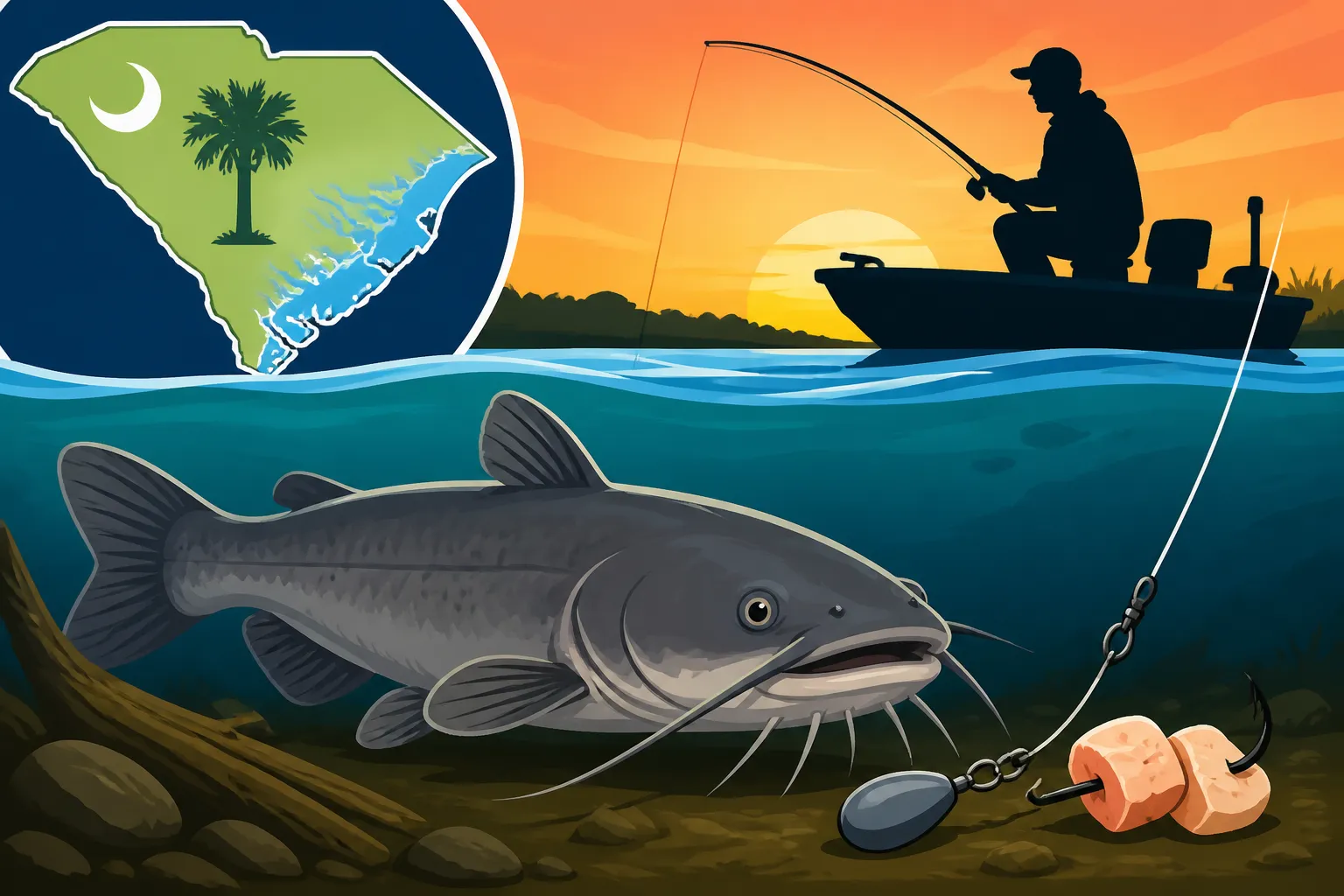
Catfish, particularly the larger blues and flatheads, are primarily demersal fish, meaning they inhabit the bottom of lakes, rivers, and reservoirs. This preference stems from a combination of their feeding habits, physical characteristics, and need for cover. Unlike sight-predators who chase down their meals, catfish rely heavily on their barbels (whiskers) to detect food using an incredible sense of smell and touch. The bottom accumulates all sorts of tasty morsels – decaying organic matter, small invertebrates, injured baitfish, and even dead fish. It’s a smorgasbord down there!
Their flattened heads and downward-pointing mouths are perfectly adapted for rooting around in the muck and gravel. You’ll often find them tucked away in deep holes, along ledges, or within dense underwater structure during the day, seeking refuge from bright sunlight and current. As evening approaches or on overcast days, they become more active, venturing out to patrol these same bottom structures for their next meal. Knowing this tells you exactly where your bait needs to be.
Prime Bottom-Fishing Locations in South Carolina
South Carolina is a catfish paradise, with diverse waters offering incredible opportunities for bottom fishing. When you’re looking for those prime bottom-fishing spots, think about where catfish can find both food and shelter.
One of the most legendary areas is the Santee Cooper Lakes, specifically Lake Moultrie Catfish Fishing Spots and Lake Marion. These vast reservoirs are renowned for their giant blue catfish and flatheads. Focus on deep channels, submerged timber fields (which provide excellent cover), and the mouths of creeks where baitfish might congregate. The diversion canal between the two lakes is also a hotbed for channel catfish and blues, especially where current is concentrated.
Rivers like the Congaree River Catfish Fishing Spots Near Columbia and the Santee River Fishing Spots for Catfish are fantastic, too. Here, you'll want to target deep river bends, scour holes behind obstacles like fallen trees or bridge pilings, and the downstream sides of sandbars or submerged humps. These areas create eddies and slack water where catfish can ambush prey without fighting strong currents. Even smaller lakes like Lake Wateree Catfish Fishing Spots and Lake Hartwell Catfish Fishing Spots have excellent bottom fishing opportunities, especially in their deepest basins and around old creek channels. If you're looking for trophy cats, these are the places where patiently presenting bait on the bottom often pays off.
Gearing Up: Essential Tackle for Bottom Fishing Success
You can’t just use any old rod and reel to wrangle a sizable South Carolina catfish from the bottom. These fish are powerful, and the environment they live in can be unforgiving on tackle. Having the right gear isn't about being fancy; it's about being prepared for the fight and ensuring your bait stays put.
Rods, Reels, and Line: The Foundation of Your Setup
For serious bottom fishing for catfish, you'll want a medium-heavy to heavy action rod, typically 7 to 10 feet long. The extra length helps with casting heavier baits and sinkers, and provides leverage when fighting a strong fish. Brands like Ugly Stik or Shakespeare Bigwater are popular choices because they're durable and can handle the abuse that comes with catfishing. You don't need a super sensitive tip; you need backbone to pull those hogs out of snags.
Pair that rod with a robust baitcasting reel or a large, strong spinning reel. For baitcasters, something like an Ambassadeur 7000 or a Penn Squall is ideal. For spinning reels, look for models in the 6000-8000 series from reputable brands like Shimano or Daiwa. The key is a strong drag system and high line capacity. You can find excellent options on Amazon, often with reviews that speak to their durability in tough fishing conditions.
When it comes to line, you've got a couple of choices. Many seasoned catfish anglers swear by braided line for its incredible strength-to-diameter ratio and lack of stretch, which helps detect subtle bites in deep water or current. A 50-80 pound test braid is common. Alternatively, a good quality monofilament line in 20-40 pound test can also work, especially if you prefer a bit more stretch for shock absorption when a big cat suddenly takes off. Whatever you choose, make sure it’s fresh and in good condition; a snapped line on a trophy fish is a heartbreak nobody wants.
Hooks, Weights, and Swivels: The Business End
The business end of your line needs to be tough and effective. For hooks, circle hooks are king for catfishing, especially if you plan to release fish or want to avoid gut-hooking. A 5/0 to 10/0 circle hook, depending on your bait size and target species, is a great starting point. The unique design of a circle hook usually results in a hook-up in the corner of the fish's mouth, making it easier to remove. Kahle hooks are another popular choice for cut bait, offering a wide gap and a slight offset. Ensure your hooks are sharp and strong enough not to bend out under pressure.
Weights are crucial for getting your bait to the bottom and keeping it there, especially in current. Pyramid sinkers are excellent for sandy or muddy bottoms in current, digging in and holding fast. No-roll sinkers or flat bank sinkers are good for slowing down the drift in lighter current or keeping your bait stationary on less snaggy bottoms. The weight size will vary based on current and depth, but typically ranges from 1 to 8 ounces. Having a variety on hand is always a good idea. You can stock up on different weights and hooks easily on Amazon before your next trip.
Finally, don't overlook swivels. Good quality barrel or ball-bearing swivels are essential for preventing line twist, especially when using cut bait that might spin in the current. They also serve as a connecting point for your main line, leaders, and sinkers in many popular rig setups, making your entire system more efficient.
The All-Important Bait: What Catfish Crave
Ask any seasoned catfisherman, and they'll tell you that bait is arguably the most critical component of bottom fishing. Catfish are opportunistic feeders, but they definitely have preferences, and those preferences can vary by species, season, and even specific body of water.
For big blue catfish and flatheads, cut bait is often king. Fresh-cut chunks of oily fish like shad, herring, mullet, or even panfish like bluegill work wonders. The scent trail they release in the water is irresistible to a hungry cat. For channel catfish, stink baits, chicken livers, and various prepared baits (often found at local tackle shops) are incredibly effective. You can find some excellent commercial stink baits and attractants on Amazon if you're looking to experiment.
Live bait, particularly smaller panfish or baitfish, is another deadly option for flathead catfish, which prefer live, struggling prey. You might need a separate cast net or baitfish trap to secure these. Always check local regulations regarding the use of live baitfish. For those truly monstrous catfish, some anglers even use whole small carp or large gizzard shad as bait, though this is a more specialized approach. Remember that "Best Bait for Summer Catfish Fishing" might differ slightly from winter preferences, so staying versatile is key.
Mastering the Art of Bottom Rigs for Catfish
Choosing the right rig is like choosing the right tool for a job—it can make all the difference. These rigs are designed to present your bait effectively on the bottom, minimize snags, and maximize your chances of a hook-up.
The Classic Carolina Rig: Simple and Effective
The Carolina rig is probably one of the most widely used and effective setups for bottom fishing for catfish. It’s simple, versatile, and allows your bait to move somewhat naturally on the bottom while keeping your weight stationary.
To tie a Carolina rig, you’ll first slide your sinker (pyramid, egg, or no-roll style) onto your main line. After the sinker, slide a bead onto the line. The bead protects your knot from the sinker's repeated impact. Next, tie a barrel swivel to the end of your main line. To the other end of the swivel, tie a leader line, usually 12-24 inches long, using a slightly lighter test line than your main line. This is your "breakaway" leader if you get snagged, saving your main line. Finally, tie your hook to the end of the leader.
The beauty of this rig is that the weight sits on the bottom, holding your line in place, while your bait, attached to the leader, can drift and flutter enticingly with the current or subtle movements of the water. This natural presentation is extremely appealing to catfish. It's a fantastic choice for open, relatively clear bottoms or when you want your bait to cover a small area with minimal movement.
The Santee Cooper Rig: Floating Your Bait Off the Bottom
When fishing over soft, mucky bottoms, or if you want to ensure your bait is highly visible and floating just above potential snags, the Santee Cooper rig is your best friend. This rig is especially popular in the Santee Cooper Lakes for its effectiveness.
The setup is very similar to a Carolina rig, but with one crucial addition: a float on your leader. You start by sliding your sinker onto your main line, followed by a bead, and then tie on a barrel swivel. Now, on the leader material (again, 12-24 inches), you’ll thread a small float—a peg float or a small cigar-shaped float works well—before tying on your hook. The float elevates your bait a few inches to a foot or more off the bottom, preventing it from sinking into mud or getting lost in thick vegetation.
This rig excels when fishing areas with dense aquatic growth, soft sediment, or when you suspect catfish might be cruising slightly above the bottom. It also helps present your bait more visibly in stained or murky water. If you're fishing a spot that gets a lot of pressure, making your bait stand out with a bit of lift can be incredibly effective.
Three-Way Swivel Rig: Versatility for Current
For situations involving stronger currents, or when you want to present multiple baits at different depths off the bottom, the three-way swivel rig offers excellent versatility. It’s a staple for many river anglers.
To construct this rig, you’ll tie your main line directly to one eye of a three-way swivel. To a second eye, tie a short piece of leader line (say, 6-12 inches) with a sinker at its end. This "drop shot" style weight leader is designed to break off if the sinker snags, saving the rest of your rig. To the third eye of the swivel, tie a longer leader line (12-36 inches) and attach your hook to its end.
The main advantage of the three-way swivel rig is its ability to hold your bait in place while allowing it to flutter freely in the current. The sinker hits the bottom and holds, while your bait dances enticingly above it. You can even experiment with different leader lengths off the third swivel eye to present multiple baits at varying distances from the bottom, increasing your chances of finding where the fish are feeding. This setup is particularly effective when you're anchored in a river channel, allowing the current to do some of the work of dispersing your bait's scent.
Here’s a quick comparison of these popular rigs:
| Rig Type | Best Use Case | Advantages | Considerations |
|---|---|---|---|
| Carolina Rig | Open bottoms, light to moderate current | Natural bait presentation, simple to tie | Bait can get lost in mud/snags on soft bottoms |
| Santee Cooper Rig | Soft/muddy bottoms, heavy vegetation, low visibility | Keeps bait off bottom, highly visible | Can be less natural in strong current |
| Three-Way Swivel Rig | Strong currents, targeting multiple depths, snaggy areas | Minimizes snags, good bait presentation in current | More complex to tie, can get tangled if not careful |
Techniques for a Successful Catfish Haul
Having the right gear and the perfect rig is just half the battle. How you deploy and manage your lines, and how you react to a bite, are just as crucial for consistent success. It’s where the "fishing" part truly comes in!
Casting and Positioning Your Bait
Once you've tied your chosen rig and baited your hook with something irresistible, the next step is getting it to the right spot. For most bottom fishing, you'll be making casts from the bank or from an anchored boat. Aim for areas where you suspect catfish are holding, based on your understanding of their habitat – deep holes, submerged logs, rock piles, or channel edges. Remember that the "How to Anchor for Catfish in Current" technique can make a huge difference in river fishing.
When casting, be mindful of the current. In a river, cast slightly upstream and allow your rig to drift and settle into the desired spot. From a lake bank, try fanning out several rods, casting to different distances and angles to cover more water. This helps you locate active fish more quickly. Once your bait hits the bottom, let out a little extra slack to allow the current to work the bait naturally, but not so much that you can't detect a bite.
The Waiting Game and Detecting Bites
Bottom fishing for catfish is often a game of patience. It’s not always about constant casting and retrieving; sometimes, it’s about letting your scent trail do its work. Place your rod in a sturdy rod holder – a must-have for bottom fishing – and keep your drag set appropriately. You want it tight enough to prevent the fish from spooling you immediately, but loose enough to allow line to run when a big cat makes a powerful surge.
Catfish bites can range from subtle taps to aggressive, rod-bending strikes. Sometimes, you’ll see the rod tip slowly bend over as the fish picks up the bait and swims off. Other times, it’ll be a violent jerk that nearly pulls the rod out of the holder. Pay close attention to your rod tip. If you’re using braided line, you might feel more of those subtle bumps and scrapes as a catfish mouths the bait. If the bite is particularly light or the current is strong, a bell on your rod tip can be a lifesaver, giving you an audible alert when something’s investigating your bait. If you’re fishing at night, consider Is Night Fishing Better for Catfish?, as some of the biggest cats are often caught after dark.
Setting the Hook and Fighting Your Fish
Once you detect a solid bite, the way you set the hook depends heavily on the type of hook you're using. If you're using a circle hook, resist the urge to rear back and set the hook aggressively. Instead, simply pick up the rod, reel down until you feel the weight of the fish, and slowly sweep the rod to the side. The design of the circle hook will usually do the work for you, embedding itself securely in the corner of the fish's mouth.
If you're using a J-hook or Kahle hook, a more traditional, firm upward or sideways sweep of the rod tip is usually needed to properly set the hook. After the hook set, it’s all about fighting the fish. Catfish are powerful fighters, often making strong, bulldogging runs and digging into the bottom. Keep steady pressure on the fish, use your rod's flexibility to tire it out, and let your drag do its job. Don't try to horse a big fish in; you'll likely pull the hook or break your line. Take your time, enjoy the battle, and guide the fish towards a net or a safe landing spot. Knowing "How to Rig Cut Bait for Catfish" correctly will ensure your hook is exposed for a clean set.
Common Bottom Fishing Mistakes to Avoid
Even seasoned anglers can make mistakes, and recognizing them is the first step to becoming a better catfisherman. One common error is using too much weight for the conditions. While you want your bait to stay put, excessive weight can bury your bait in the mud, making it less appealing, or make it difficult to detect subtle bites. Experiment with different weights until you find the minimum amount needed to hold your bait effectively.
Another mistake is sticking to one spot for too long without a bite. Catfish are mobile, especially the larger ones. If you haven't had any action after 30-60 minutes, it's often a good idea to move to a new spot or at least recast your lines to different areas. Don’t be afraid to change your bait as well. What worked yesterday might not work today. Also, neglecting your line's condition is a common oversight; frayed or old line is an invitation for heartbreak. Regularly inspect your line for nicks and abrasions, especially after fishing around heavy cover.
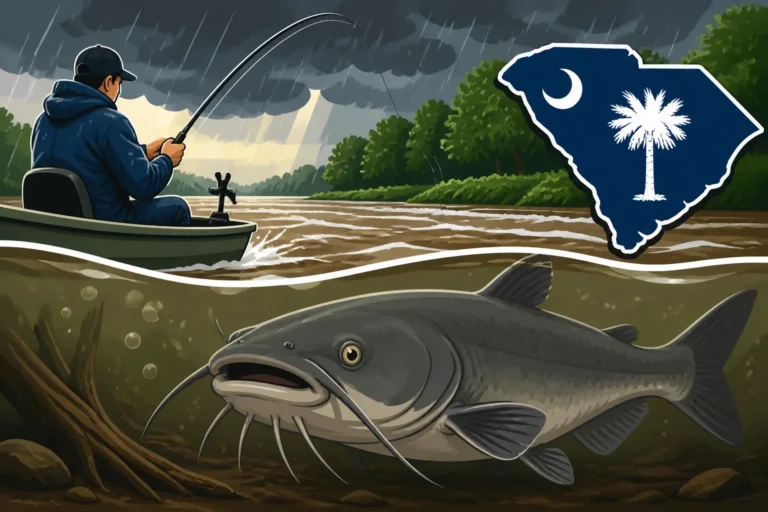
Finally, many anglers overlook the importance of environmental factors. For example, "How to Catch Catfish After Heavy Rain" often involves targeting different spots than during normal conditions, as rain can stir up food and change water levels and clarity. Similarly, temperature and time of day (or night) play a huge role in their activity levels, impacting your success. Always check the forecast and water conditions before heading out!
Disclaimer
Please remember that fishing regulations in South Carolina can change. Always consult the latest rules and guidelines from the South Carolina Department of Natural Resources (SCDNR) before heading out on the water. This guide is for informational purposes only and does not constitute legal advice.