South Carolina Spotted Seatrout Daily Bag Limit of 10 Fish
There's nothing quite as frustrating as landing a beautiful spotted seatrout, only to be unsure if you can actually keep it. With so many rules and regulations governing South Carolina's fisheries, it's easy to get confused about what's allowed and what's not. This guide is here to clear up any ambiguity surrounding the daily bag limit for spotted seatrout in our Palmetto State waters, ensuring you can fish with confidence and stay on the right side of the law.
Understanding the South Carolina Spotted Seatrout Daily Bag Limit
Fishing in South Carolina offers incredible opportunities, especially for popular inshore species like the spotted seatrout. However, to maintain healthy fish populations for future generations of anglers, the South Carolina Department of Natural Resources (SCDNR) establishes clear limits on how many fish you can keep. For spotted seatrout, this is a crucial piece of information for every angler.
The 10-Fish Rule Explained
Let's cut right to the chase: the daily bag limit for spotted seatrout in South Carolina is 10 fish per person. This means that in any 24-hour period, you, as an individual angler, cannot possess more than ten spotted seatrout. It's not a limit per boat, or per trip, but specifically per angler. So, if you're out with a buddy, each of you can keep up to 10 fish, for a combined total of 20, assuming you both have valid fishing licenses. This rule is designed to allow recreational anglers to enjoy their catch while still protecting the overall population from overfishing. It's a balance, and understanding this core number is your first step to responsible fishing.
Think of it this way: you wake up early, hit the water, and by lunchtime, you've already reeled in 10 beautiful spotted seatrout that meet the minimum size requirement. That's fantastic! But at that point, even if the bite is still hot, you need to either switch to catch-and-release fishing for that species or target something else entirely. Continuing to harvest spotted seatrout after you've hit your personal 10-fish limit would be a violation.
Why Bag Limits Matter for Conservation
It might seem like a hassle sometimes, these rules and regulations, but they exist for a really important reason: conservation. Spotted seatrout populations, while generally robust in South Carolina, can be vulnerable to pressures like habitat loss, environmental changes, and, yes, fishing pressure. Without bag limits, it would be far too easy for a small number of anglers to deplete local populations, especially during peak seasons or in popular fishing spots.
The SCDNR uses scientific data, population surveys, and angler feedback to determine these limits. They look at factors like spawning success, growth rates, natural mortality, and how many fish are being caught by both recreational and commercial fishermen. The 10-fish limit for spotted seatrout is a carefully considered number that aims to ensure that enough fish remain in the ecosystem to reproduce and sustain their numbers year after year. It's about securing the future of fishing in South Carolina, guaranteeing that our kids and grandkids will have the same, if not better, opportunities to enjoy reeling in these fantastic fish. When you adhere to the bag limit, you're actively participating in that conservation effort.
Spotted Seatrout Size Limits and How They Work Together
Just knowing the bag limit isn't enough; you also need to understand the size restrictions. The daily bag limit and the minimum size limit work hand-in-hand to protect the fishery, especially ensuring that younger fish have a chance to grow and spawn before they are harvested.
The 14-Inch Minimum Size Requirement
In addition to the 10-fish daily bag limit, there's a strict minimum size requirement for spotted seatrout in South Carolina: 14 inches total length. This means that any spotted seatrout you intend to keep must measure at least 14 inches from the tip of its snout to the end of its tail, with the tail compressed. Any fish shorter than this must be immediately released, regardless of how many fish you've already kept or how healthy they appear. This minimum size limit is critical because it allows spotted seatrout to reach sexual maturity and reproduce at least once, contributing to the next generation of fish before they are removed from the population.
Imagine you're having an amazing day, and you've caught a dozen spotted seatrout. You excitedly start putting them on your stringer or into your cooler. But before you do, you must measure each one. If six of those fish are, say, 12 or 13 inches long, they have to go back into the water. Only the ones that are 14 inches or longer count towards your 10-fish bag limit. It's a two-tiered system: you can only keep 10 fish and those 10 fish must all be at least 14 inches long. Neglecting either rule can lead to significant penalties. This system is put in place to ensure that the breeding stock remains healthy and viable.
Practical Tips for Measuring Your Catch
Accurately measuring your catch is non-negotiable, and it needs to be done quickly and carefully to minimize stress on the fish. There are several ways to do this, and having the right tools on hand can make all the difference. Many anglers use a simple, rigid measuring device like a bump board or a stick-on ruler attached to their cooler or boat deck. You can find these at almost any tackle shop, including on Amazon, or even make your own.
When you catch a fish you think might be a keeper, follow these steps:
- Wet your hands: Always wet your hands before handling the fish. This protects their delicate slime coat, which is their primary defense against disease.
- Handle gently: Support the fish horizontally, never vertically by the mouth or gills, especially if it's a larger fish. This prevents damage to their internal organs and jaw.
- Measure carefully: Place the fish on your measuring device with its snout against the bump stop. Gently compress the tail fin and read the measurement at the tip of the tail.
- Confirm the length: Double-check your measurement to be absolutely sure.
- Release promptly (if necessary): If the fish is too short, or if you've already reached your bag limit, release it as quickly and gently as possible. If it's a keeper, dispatch it humanely and place it on ice.
It's always a good idea to have a clear, easy-to-read measuring device readily available on your boat or kayak. Fumbling around for a tape measure while a fish is flopping around can injure the fish and potentially lead to an inaccurate measurement. Remember, it's better to err on the side of caution. If you're unsure if a fish makes the cut, it's always best to release it. For more details on rules, check out our comprehensive guide to Spotted Seatrout Size and Bag Limits in South Carolina.
Distinguishing Spotted Seatrout from Look-Alikes
Sometimes, in the heat of the moment, or for new anglers, it can be tough to tell one fish from another. South Carolina waters are home to a variety of species, and some, particularly juvenile fish, can be mistaken for spotted seatrout. Knowing the distinct features of a spotted seatrout is crucial for staying compliant with regulations.
Key Identification Features
Spotted seatrout (Cynoscion nebulosus) have several clear characteristics that set them apart:
- Distinct Spots: The most obvious feature, and where they get their name, is a series of dark, irregular spots scattered across their back and dorsal fins. These spots extend onto the tail. Other "trout" species, like speckled trout or weakfish, might have fewer or no spots, or different patterns.
- Two Canine Teeth: Look inside their mouth! Spotted seatrout have two prominent, sharp canine teeth at the front of their upper jaw. These are usually quite noticeable and are excellent for grasping prey.
- No Dorsal Spines: Unlike some other fish, their dorsal fin does not have hard, sharp spines that can poke you. It's generally soft-rayed.
- Elongated Body: They have a sleek, elongated body shape, typically silvery or grayish on the sides, fading to white on the belly, and a darker, often greenish or brownish, back.
- Distinct Lateral Line: Their lateral line, which runs down the side of their body, is often broken or faint.
If you're ever in doubt, it’s far better to release the fish than to keep something that might not be a spotted seatrout, or that doesn't meet the size and bag limits. It's part of being a responsible angler.
Common Misidentifications and Their Consequences
Anglers sometimes confuse spotted seatrout with other species found in South Carolina's coastal waters. Two common culprits are juvenile weakfish (Cynoscion regalis) and sometimes even juvenile red drum.
- Weakfish: Weakfish, also known as gray trout, are closely related to spotted seatrout and look quite similar, especially when they're young. However, weakfish generally have smaller, fewer, or no spots on their body and tail, and their overall coloration might be slightly different. They also tend to have smaller teeth. The bag and size limits for weakfish can differ from those for spotted seatrout, so misidentification could lead to unknowingly violating regulations.
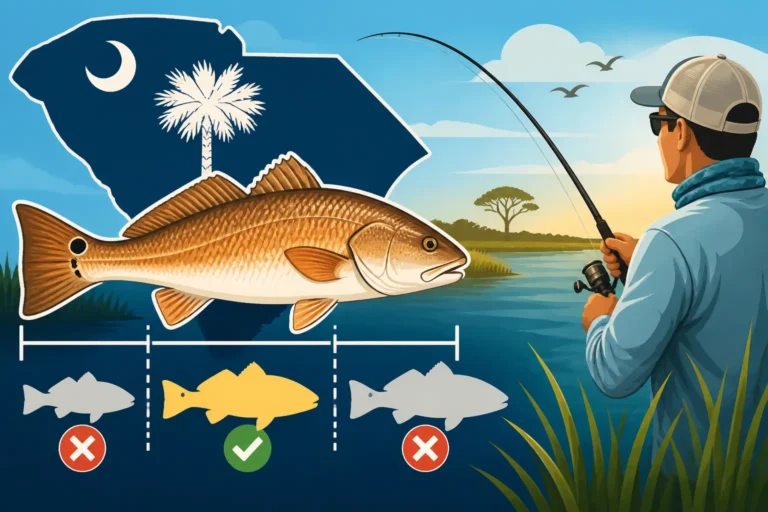
- Juvenile Red Drum (Redfish): While less common, very small red drum can sometimes be confused with spotted seatrout by novice anglers. Red drum are easily identified by the one or more prominent black spots at the base of their tail. Spotted seatrout never have this distinct black spot on their tail. Redfish also have a different body shape and mouth structure. South Carolina has very specific South Carolina Redfish Slot Limit Rules, and confusing the two could definitely land you in hot water.
The consequences of misidentification can range from a warning to a fine, and in some cases, even confiscation of your catch and gear. SCDNR enforcement officers are highly trained and know the species well. They are not likely to accept "I didn't know what it was" as an excuse, especially if you have several undersized or misidentified fish in your cooler. Always take the time to correctly identify your catch before deciding to keep it.
How to Ensure You Stay Within the Regulations
Staying within the spotted seatrout regulations isn't just about avoiding penalties; it's about being a conscientious angler who respects the resource. It requires preparation, a little bit of discipline, and understanding best practices.
Essential Gear for Responsible Angling
Before you even leave the dock, make sure you have the right tools in your tackle box. These aren't just luxuries; they're necessities for responsible fishing:
- Reliable Measuring Device: As mentioned earlier, a rigid measuring board or a durable stick-on ruler is essential. Keep it easily accessible and visible on your boat or cooler. Forget the flimsy tape measures that can stretch or be hard to handle with a flopping fish.
- Fish Cooler with Ice: A good cooler packed with plenty of ice is critical for keeping your legal catch fresh and preserving its quality. This isn't directly related to the limit, but it’s part of responsible harvesting.
- Dehooking Tool: Whether you prefer a long-nosed pliers, a hemostat, or a specialized dehooker, having a tool to quickly and safely remove hooks is vital, especially for fish you plan to release. This minimizes handling time and reduces injury to the fish.
- Landing Net or Lip Gripper: A rubber-coated landing net (to protect the fish's slime coat) or a quality lip gripper can help you control the fish for measurement and dehooking, preventing it from flopping on the deck and injuring itself.
- Fishing License: This might seem obvious, but always ensure you have a current South Carolina fishing license. An expired license, or fishing without one, is a separate and serious offense. You can find out more about how to get your license by reading our guide on How to Get a Fishing License in South Carolina.
Having these items readily available will make the process of catching, measuring, and either keeping or releasing fish much smoother and less stressful for both you and the fish.
Catch-and-Release Best Practices
Inevitably, you're going to catch spotted seatrout that are too small, or you'll reach your 10-fish limit but still want to enjoy the thrill of a bite. That's where proper catch-and-release techniques come into play. Your goal is to return the fish to the water in the best possible condition, maximizing its chances of survival.
Here are some key practices:
- Minimize Handling Time: The less time a fish is out of the water, the better. Have your dehooking tool and measuring device ready.
- Keep Fish in the Water if Possible: If you can, unhook the fish while it's still in the water, especially if you know it's undersized or you've hit your limit. This is the absolute best scenario.
- Wet Hands Only: As mentioned, always wet your hands before touching a fish. Dry hands can remove the protective slime layer, making the fish susceptible to fungal infections and diseases.
- Avoid Contact with Hard Surfaces: Don't let the fish flop around on the boat deck, sand, or rocks. If you must remove it from the water, place it on a wet, soft surface like a measuring board or a wet towel.
- Use Barbless Hooks: Consider crimping down the barbs on your hooks. Barbless hooks are much easier and quicker to remove, causing less trauma to the fish.
- Careful Hook Removal: Use your dehooking tool to gently remove the hook. If the fish is deeply hooked (which is rare with spotted seatrout that tend to strike aggressively), it's often better to cut the line as close to the hook as possible rather than trying to rip it out. The hook will eventually rust away.
- Revive the Fish: If a fish seems sluggish or stressed after a fight, gently hold it in the water, facing into the current (if there is one), and move it back and forth to force water over its gills. Release it only when it's strong enough to swim away on its own.
By following these guidelines, you contribute to a sustainable fishery and help ensure that those released fish can grow larger and spawn, enhancing the overall health of the spotted seatrout population in South Carolina. For specific rules regarding inshore trout fishing, you might also be interested in learning about South Carolina's Winter Gigging Ban for Seatrout, which further protects the species during vulnerable times.
Penalties for Exceeding Spotted Seatrout Limits
Nobody wants to face fines or legal trouble while enjoying a day on the water. Unfortunately, ignorance of the law is no excuse, and violating fishing regulations in South Carolina can lead to significant penalties. SCDNR enforcement officers are regularly patrolling our coastal waters, and they take these rules seriously.
What Happens If You Break the Rules
If you are caught possessing more than the 10-fish daily bag limit for spotted seatrout, or if you have undersized fish, you could be facing a number of consequences. The exact penalty can vary depending on the severity of the violation, your past record, and the discretion of the enforcement officer and the courts, but generally includes:
- Monetary Fines: This is the most common penalty. Fines can range from a few hundred dollars to over a thousand, especially for repeat offenses or for a large number of illegal fish. Each illegal fish might be considered a separate offense, multiplying the potential fine.
- Confiscation of Catch: Any illegally harvested fish will almost certainly be confiscated by the SCDNR officer.
- Confiscation of Gear: In more serious cases, or if you are a repeat offender, your fishing gear, boat, or other equipment might be confiscated.
- License Suspension/Revocation: Your South Carolina fishing license could be suspended or permanently revoked, meaning you wouldn't be able to legally fish in the state for a period of time or ever again.
- Court Appearances: You will likely be required to appear in court to answer for the violation, which means lost time and potentially legal fees.
- Jail Time: While less common for a first-time bag limit violation, egregious or repeated offenses could potentially lead to jail time.
It's really not worth the risk. A few extra fish simply aren't worth the financial headache, the legal trouble, and the potential loss of your fishing privileges. Always double-check your limits and measurements. If you're unsure about the rules, consult the latest SCDNR regulations guide or their website. Our guide on Penalty for Fishing Without a License in South Carolina also outlines the serious nature of fishing infractions.
SCDNR Enforcement and Your Responsibilities
The South Carolina Department of Natural Resources (SCDNR) has a dedicated force of wildlife officers and marine patrol officers whose job it is to protect our state's natural resources and ensure compliance with fishing and hunting regulations. These officers are often on the water, patrolling popular fishing areas, checking boats, and inspecting catches.
When an SCDNR officer approaches your boat or vehicle, it's important to be courteous, cooperative, and respectful. They are simply doing their job to enforce laws that are in place for the good of the fishery. You have a responsibility as an angler to:
- Possess a Valid License: Always have your South Carolina fishing license readily available, either a physical copy or a digital version on your phone.
- Adhere to All Regulations: Be knowledgeable about and follow all bag limits, size limits, and seasonal closures for the species you are targeting. This includes having the correct fishing license requirements in South Carolina.
- Allow Inspections: Be prepared to allow officers to inspect your cooler, livewell, and catch to ensure compliance. Refusal to cooperate can escalate the situation and lead to further legal issues.
- Report Violations: If you witness someone else violating fishing regulations, you can report it to the SCDNR. This helps protect the resource for everyone.
Staying informed and acting responsibly are your best defenses against potential violations. The SCDNR website and their annual regulations booklet are invaluable resources that every angler should consult regularly, as rules can and do change.
South Carolina Spotted Seatrout Regulations at a Glance
To make it easy, here's a quick summary of the key regulations for spotted seatrout in South Carolina. Keep this in mind every time you head out!
| Regulation Type | Specific Rule | Notes |
|---|---|---|
| Daily Bag Limit | 10 fish per person, per day | Applies to individual anglers, not per boat. |
| Minimum Size Limit | 14 inches total length (tail compressed) | All kept fish must meet or exceed this length. |
| Gigging Ban | December 1 – February 28 (or 29th in leap years) | Prohibits gigging for spotted seatrout during these months. |
| Vessel Limit | N/A (Individual limits apply) | No specific vessel limit for recreational spotted seatrout. |
| Proof of License | Must possess a valid SC fishing license | Digital or physical copy must be available for inspection. |
This table provides a snapshot, but it's always a good idea to check the most current regulations directly with the SCDNR, as rules can be updated.
Disclaimer
The information provided in this guide is for general informational purposes only and is not intended as legal advice. Fishing regulations in South Carolina can change, and it is the responsibility of each angler to consult the most current South Carolina Department of Natural Resources (SCDNR) rules and regulations before fishing. Always refer to the official SCDNR website or their latest fishing regulation guide for the most accurate and up-to-date information.