South Carolina Fishing License Reciprocity With Georgia
One of the most common headaches for any angler who loves to explore different waters, especially those beautiful rivers and lakes that straddle state lines, is figuring out fishing license requirements. It’s incredibly frustrating to plan a trip, get all your gear ready, only to then realize you might need a whole other license just to cast a line a few yards away from where you normally fish. This guide is here to clear up that confusion, specifically focusing on the ins and outs of fishing license reciprocity between South Carolina and Georgia.
Understanding Fishing License Reciprocity
The concept of fishing license reciprocity might sound complicated, but at its heart, it’s about making things a little easier for anglers who want to enjoy shared waterways. However, it's rarely a blanket "your license works everywhere" situation, and understanding the nuances is crucial to avoid any unexpected run-ins with wildlife enforcement.
What is Reciprocity and Why Does It Matter?
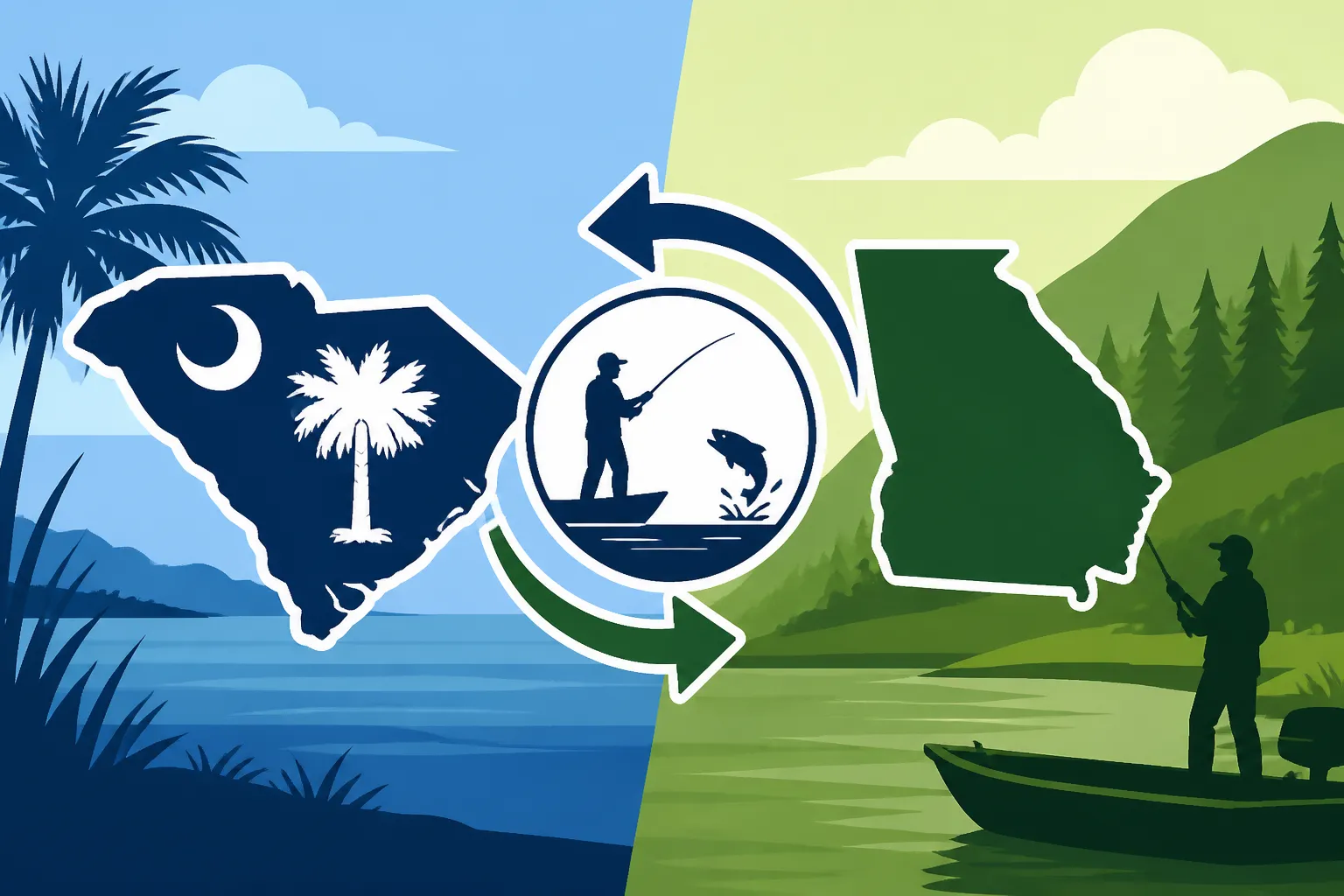
At its simplest, reciprocity means that a fishing license issued by one state is recognized as valid in certain, clearly defined areas of a neighboring state. For us anglers, this is a huge deal. Imagine you live in Augusta, Georgia, but your favorite fishing hole is just across the Savannah River in South Carolina. Without reciprocity, you’d need to buy two full, separate licenses – one for Georgia and one for South Carolina – even if you're only fishing in the middle of the river. This would be not only expensive but also a major hassle, especially if you’re a casual angler or just visiting for a weekend trip.
Reciprocity agreements are designed to eliminate this double-licensing burden on shared boundary waters. They acknowledge that these waters, by their very nature, blur state lines and that it's impractical, if not impossible, for an angler in a boat to know precisely which state's jurisdiction they're in at any given moment. These agreements usually come about through formal discussions and agreements between the wildlife and fisheries departments of the neighboring states, like the South Carolina Department of Natural Resources (SCDNR) and the Georgia Department of Natural Resources (GADNR). They're all about promoting access and enjoyment of natural resources without undue bureaucracy.
The General Rule: One License Per State
While reciprocity is a wonderful thing, it's vital to remember that it's the exception, not the rule. Generally speaking, if you want to fish in a particular state, you need that state's fishing license. If you're purely fishing in waters entirely within South Carolina, you need a South Carolina fishing license. Likewise, if you're only fishing in Georgia waters, you need a Georgia license. This baseline rule applies to all inland waters, coastal areas, and any bodies of water that are not specifically designated as "reciprocal" or "border waters" under an agreement.
For instance, if you're fishing Lake Murray, entirely within South Carolina, your Georgia license won't do you any good. You'll need to secure a proper South Carolina fishing license. Similarly, if you're hitting Lake Lanier in Georgia, a South Carolina license is irrelevant. Many anglers get caught up thinking their license is valid everywhere, especially when states are close by. It's an easy mistake to make, but one that can lead to fines if you're not careful. Always check the specific regulations for the body of water you intend to fish, not just the general state rules. A quick search on the SCDNR website or a call to a local bait shop can save a lot of trouble.
Specific Challenges on Border Waters
Border waters, by their very nature, present unique challenges. A river, for example, often serves as a natural boundary, but fish don't respect invisible lines drawn on a map. One moment, you might be casting into a eddy on the South Carolina side, and the next, your lure drifts into what is technically Georgia territory. This is where the importance of clear reciprocity rules truly shines. Without them, enforcement becomes a nightmare, and anglers are left in a constant state of uncertainty.
The main challenge is understanding which specific bodies of water are covered by these agreements. It's not usually every river or lake that touches both states. Often, it's limited to the main channel of a river or the open waters of a large reservoir that is shared. Smaller tributaries, creeks, or distinct coves that are clearly within one state's boundary might still require that state's specific license, even if they feed into a reciprocal waterway. This can be particularly confusing in areas with complex shorelines or numerous islands. Ignorance of these specific boundaries is no excuse, and wardens patrol these areas regularly. It's always best to be overly cautious and consult official maps or guides, perhaps even investing in a waterproof map you can keep in your tackle box from a retailer like Amazon that clearly delineates these boundaries.
South Carolina and Georgia's Border Waters Explained
When we talk about shared fishing waters between South Carolina and Georgia, there are specific areas that come to mind. These are the places where most anglers will encounter the question of license reciprocity. It's not a vast network, but it covers some pretty significant and popular fishing destinations.
The Savannah River: The Main Reciprocal Waterway
The Savannah River is, without a doubt, the most prominent and longest reciprocal waterway between South Carolina and Georgia. Flowing for hundreds of miles, it forms a natural boundary between the two states for much of its length, from the upper reaches of Lake Hartwell down to the Atlantic Ocean. This mighty river, along with its major impoundments, is where the reciprocity agreement truly comes into play. Anglers often flock to the Savannah River system for its diverse fisheries, from striped bass to catfish, and the ability to fish with either state's license is a huge benefit.
For much of the Savannah River, as long as you are on the water in a boat, a valid South Carolina fishing license or a valid Georgia fishing license will cover you. This applies to both freshwater and saltwater sections, as the river transitions from freshwater dominance upstream to brackish and then saltwater as it approaches the coast. However, it's critical to note that this generally only applies to the main channel of the river and the open waters of the major reservoirs. It does not typically extend to tributaries that flow entirely within one state or to private ponds that connect to the river. Many anglers are familiar with fishing the Savannah River border with a Georgia or South Carolina license, knowing they have flexibility.
Clarks Hill Lake (Lake Strom Thurmond) and Lake Russell
Beyond the river itself, the reciprocity agreement extends to the two large reservoirs that are part of the Savannah River system: Clarks Hill Lake, more formally known as Lake Strom Thurmond, and Lake Richard B. Russell. These massive lakes are immensely popular fishing destinations, known for their excellent bass, crappie, and striper fishing. Given their size and the fact that a significant portion of their waters lie directly on the state line, having a reciprocal agreement here is absolutely essential.
For both Clarks Hill Lake (Lake Strom Thurmond) and Lake Russell, a valid South Carolina fishing license is honored throughout the entire lake, as is a valid Georgia fishing license. This means if you launch your boat from a South Carolina ramp on Lake Thurmond, you can fish Georgia waters without needing an additional license, and vice versa. This flexibility makes planning fishing trips much easier for residents of both states, encouraging more anglers to explore the full extent of these fantastic fisheries. It's particularly helpful for tournament anglers, who often need to cover vast areas to find the winning fish. However, this convenience sometimes leads anglers to overlook specific state regulations beyond licensing, such as bag limits or size restrictions, which can sometimes differ.
Other Potential Border Waters and Ambiguities
While the Savannah River, Clarks Hill Lake, and Lake Russell are the primary areas where reciprocity is clearly defined and widely understood, some anglers might wonder about other, smaller waterways that occasionally touch both states. This is where ambiguities can arise, and caution is always advised. Generally, if a body of water is not explicitly mentioned in the reciprocity agreement, you should assume that separate licenses are required for each state's waters.
For example, smaller creeks or minor rivers that briefly form a boundary before veering entirely into one state might not be covered. The official agreements usually specify "the main stem of the Savannah River" or "the impounded waters of Clarks Hill Lake," which helps to draw clear lines. If you're venturing off the beaten path into a lesser-known stream, it's always best to check with the SCDNR or GADNR directly. Don't rely on hearsay from other anglers, as rules can change, and what applied to one river might not apply to another. It's better to be safe than sorry and avoid potential penalties for fishing without a license in South Carolina. For clarity, consider the detailed information available on official state wildlife websites regarding South Carolina's Freshwater Fishing Regulations.
Specific Reciprocity Rules for the Savannah River System
Navigating the Savannah River system requires a clear understanding of where your license is valid. While the general idea of reciprocity is straightforward, the devil is in the details, especially when considering different parts of the river and its impoundments.
Fishing License Requirements on the Savannah River
The Savannah River itself acts as a dividing line between South Carolina and Georgia for a significant portion of its course. From the freshwater stretches near Augusta, all the way down to the brackish waters closer to Savannah, Georgia and Hardeeville, South Carolina, a valid freshwater or saltwater fishing license from either state allows you to fish from a boat on the main stem of the river. This means if you have a current South Carolina annual fishing license, you can fish the entire river system (within reciprocal zones) without a Georgia license, and vice versa. This flexibility is a huge boon for local anglers who live near the border.
However, there's a critical caveat: this reciprocity generally only applies when you are actively fishing from a boat on the river. If you step out of your boat and begin fishing from the bank on the opposite side of your licensed state, you are then considered to be fishing within the jurisdiction of that specific state's landmass. For example, if you have a Georgia license and are fishing from a boat on the Savannah River, that's fine. But if you tie up to a South Carolina bank and cast from there, you would need a South Carolina license. This is a common misunderstanding and often catches anglers by surprise. The same principle applies if you enter a tributary that is wholly contained within one state; your reciprocal license generally won't cover you there.
Rules for Fishing Clarks Hill Lake (Lake Strom Thurmond)
Clarks Hill Lake, or Lake Strom Thurmond as it's officially known in South Carolina, is one of the largest inland lakes in the Southeast and a prime example of a shared reciprocal waterway. The agreement here is quite generous: a valid sport fishing license from either South Carolina or Georgia grants you permission to fish anywhere on the lake's open waters. This includes fishing from a boat, as well as accessing shorelines within public access areas, regardless of which state's side you are on. This makes it incredibly convenient for anglers from communities like McCormick, South Carolina, and Augusta, Georgia, to enjoy the entire lake.
Despite the licensing flexibility, anglers must always adhere to the more restrictive regulations concerning creel limits, size limits, and seasons if there's a difference between the two states. For example, if South Carolina has a 12-inch minimum size limit for a particular species and Georgia has a 10-inch limit, anglers on Clarks Hill Lake must follow the 12-inch minimum, regardless of which state's license they possess or where on the lake they caught the fish. This "most restrictive" rule is designed to protect fish populations and prevent overharvesting under less stringent rules. It's a key detail that even seasoned anglers can sometimes forget. Always carry a copy of both states' regulations or at least know where to find them quickly online, perhaps even printing out key pages and keeping them laminated in your boat from an office supply store or even from Amazon Basics.
Navigating Fishing Regulations on Lake Russell
Lake Richard B. Russell is another major reservoir on the Savannah River system that benefits from the South Carolina and Georgia reciprocity agreement. Similar to Clarks Hill Lake, a valid fishing license from either South Carolina or Georgia is accepted for fishing anywhere on Lake Russell's waters. This makes it a popular destination for anglers from communities like Calhoun Falls, South Carolina, and Elberton, Georgia, who can move freely across the lake's expanse.
However, Lake Russell has an additional layer of complexity due to its unique designation. Portions of Lake Russell are managed differently from other bodies of water, particularly concerning certain species or fishing methods. It's crucial for anglers to consult the specific regulations for Lake Russell, which are often detailed within each state's comprehensive fishing guide. For instance, South Carolina's Freshwater Fishing Regulations might have specific sections dedicated to Lake Russell that differ slightly from statewide rules. These unique regulations might pertain to specific species like largemouth bass or crappie, or even restrict certain types of bait or tackle. Understanding these nuances is paramount to a legal and successful fishing trip. You should never assume that the general reciprocity agreement implies identical fishing rules.
| Waterway | SC License Valid | GA License Valid | Reciprocity Condition | Key Considerations |
|---|---|---|---|---|
| Savannah River (Main Stem) | Yes | Yes | Fishing from a boat on the main channel. | Bank fishing requires the license of the state you are on. |
| Clarks Hill Lake (Lake Strom Thurmond) | Yes | Yes | Fishing anywhere on the open waters of the lake. | Follow the more restrictive bag/size limits between SC and GA. |
| Lake Richard B. Russell | Yes | Yes | Fishing anywhere on the open waters of the lake. | Check specific Lake Russell regulations, as they can differ from statewide rules. |
| Tributaries (Wholly within one state) | No | No | No reciprocity; requires license for the state the tributary is in. | Always verify if entering smaller feeder creeks or rivers. |
| Coastal Waters (Ocean/Estuaries) | Yes (Saltwater) | Yes (Saltwater) | Only for the main navigable channel of the Savannah River's coastal flow that borders both states. | Outside of the main channel, separate state licenses are required for state-specific coastal areas. |
Practical Implications for Anglers
Understanding reciprocity isn't just about avoiding a ticket; it's about being a responsible and prepared angler. These agreements are a privilege, and it’s up to us to respect the rules that govern them. Ignoring these practical implications can lead to wasted time, frustration, and even legal trouble.
What to Carry When Fishing Border Waters
Even with reciprocity, smart anglers know that preparedness is key. When fishing the Savannah River system, always have your valid fishing license (either SC or GA) readily accessible. This can be a physical copy, a digital copy on your phone through the Go Outdoors South Carolina app, or even a printout from when you completed your Buying a South Carolina Fishing License Online. Game wardens regularly patrol these areas, and they will ask for proof of your license. Don't make them wait while you dig through a messy tackle box or scroll endlessly through your photo gallery.
Beyond the license itself, it's a good practice to carry copies of both South Carolina and Georgia's current fishing regulations, especially for the specific reciprocal waters you're targeting. While your license might be reciprocal, bag limits, size restrictions, and seasons can and do vary between states, and you are always obligated to follow the most restrictive rule. You can find these online and print them, or download PDF versions to your phone. Some anglers even highlight the relevant sections for quick reference. Having these handy can prevent arguments or misunderstandings if a warden asks about a specific catch. It shows you’re a conscientious angler who respects the rules.
Staying Informed About Regulation Changes
Fishing regulations are not static; they change. Wildlife and fisheries departments continuously monitor fish populations, environmental conditions, and angler harvest data. As a result, size limits, bag limits, and even seasonal restrictions can be updated. What was legal last year might not be this year. This is particularly true for popular species like redfish or striped bass, which often have dynamic management plans. This is why always checking a stream's trout limit before you fish it is critical, for example, even if you’re on a reciprocal waterway.
For anglers regularly using border waters, it's imperative to stay updated on both South Carolina and Georgia's regulations. The best way to do this is to frequently check the official SCDNR and GADNR websites. Sign up for their newsletters or follow their social media channels, if available. Many bait and tackle shops near these border waters are also excellent resources, as they often have the most up-to-date printed regulations and can provide local insights. Don't assume that because your South Carolina Fishing License Reciprocity With North Carolina agreement has similar provisions, the Georgia agreement will be identical. Every state-to-state agreement is unique, and it’s up to you to know the specifics.
Potential Pitfalls and Misunderstandings
Even with clear rules, misunderstandings can occur. One common pitfall is the assumption that if you're licensed in one state, you're free to fish anywhere in the bordering state. This is absolutely not true. Reciprocity is strictly limited to the designated shared waters. If you leave the main stem of the Savannah River and enter a creek that flows exclusively through Georgia land, your South Carolina license is no longer valid, and you would need a Georgia license.
Another common misunderstanding revolves around boat ramp access. Just because you can fish a lake with either license doesn't mean you have free access to every boat ramp. Some ramps might require a specific state park pass or a county permit, regardless of your fishing license. Always check signage at launch points. Furthermore, some anglers get confused about Do You Need Two Licenses to Fish Border Lakes? The answer, in the case of South Carolina and Georgia, is generally no for the main body of water, but it's yes if you start fishing in a tributary or from the bank of the "other" state. These subtle distinctions are where most anglers find themselves in hot water.
When You Still Need Both Licenses
Despite the convenience of reciprocity, there are specific situations where you absolutely cannot rely on a single license to cover you in South Carolina and Georgia border regions. Being aware of these exceptions is just as important as knowing where reciprocity applies.
Fishing from the Bank on the Opposite Side
This is perhaps the most critical distinction and a frequent source of confusion. The reciprocity agreement for the Savannah River system primarily covers fishing from a boat on the main body of the river or lake. It assumes you are a boater navigating shared waters. However, if you are physically standing on the bank, pier, or any landmass that belongs to the state you are not licensed in, you are subject to that state's licensing requirements.
For instance, let’s say you’re a South Carolina resident with a valid SC license, fishing by boat on Clarks Hill Lake. You decide to pull up to a sandy beach on the Georgia side, get out, and cast your line from the shore. At that moment, you are legally considered to be fishing in Georgia waters from Georgia land, and your South Carolina license does not cover you. To legally fish from that Georgia bank, you would need a Georgia fishing license. The same logic applies if a Georgia angler steps onto a South Carolina bank to fish. This rule is often overlooked, but wildlife officers take it seriously. It essentially boils down to: where your feet (or the point of contact with the land) are, matters.
Entering Tributaries or Reservoirs Wholly Within One State
Reciprocity agreements are typically very specific about the bodies of water they cover. While the main channels of the Savannah River and the open waters of Lakes Thurmond and Russell are reciprocal, this often does not extend to the countless smaller creeks, streams, and impoundments that feed into them. If a waterway is wholly contained within the geographical boundaries of South Carolina, even if it eventually flows into the reciprocal Savannah River, you will need a South Carolina fishing license to fish it.
Imagine you're boating on Lake Russell with your Georgia license, and you decide to explore a promising-looking creek arm. If that creek arm is entirely within South Carolina's borders, your Georgia license becomes invalid once you enter it. You would need a South Carolina license to fish there. This distinction is usually well-marked on detailed fishing maps, and it's something to pay close attention to, especially when exploring new areas. Always check your maps to determine if the area you're entering is entirely within one state, because your reciprocal license will not protect you there. This applies whether you're fly fishing for native brook trout in a mountain stream or targeting bass in a lowland creek.
Considerations for Non-Resident Anglers
Non-resident anglers face an additional layer of complexity. If you are from a state other than South Carolina or Georgia, and you plan to fish these border waters, you still need to purchase a non-resident fishing license from either South Carolina or Georgia. Your home state's license will not be honored in this reciprocal agreement. For example, if you're visiting from Florida and want to fish Clarks Hill Lake, you would purchase either a South Carolina Nonresident Fishing License Guide or a Georgia non-resident license. Once you have one of those, you can then enjoy the reciprocal benefits on the shared waters.
However, the cost difference between non-resident licenses can sometimes be substantial, so it's worth checking Nonresident Freshwater Fishing License Costs in South Carolina and comparing them to Georgia's non-resident prices before you buy. If you plan to fish extensively in both states beyond the reciprocal waters (e.g., fishing Lake Murray in South Carolina AND Lake Lanier in Georgia), then you would indeed need separate non-resident licenses for each state. The reciprocity only applies to the designated shared waters, not to all waters within both states. It's a common mistake for non-residents to assume that if they have any license from one of the two states, they're good to go everywhere. Always check your specific situation to ensure full compliance.
Staying Legal and Enjoying Your Trip
The goal of understanding these regulations isn't just to avoid penalties; it's to ensure you can fully relax and enjoy your time on the water without worry. Being a responsible angler means being knowledgeable.
Tips for Ensuring Compliance
To make sure you're always on the right side of the law, here are a few simple tips for fishing South Carolina and Georgia border waters:
First, always purchase your fishing license well in advance of your trip. Don't wait until the last minute, and certainly don't rely on being able to purchase one on a Sunday morning if you're headed to a remote spot. Most licenses can be bought online through the SCDNR or GADNR websites, or at authorized license vendors. Second, carry your license with you in a waterproof holder or have a digital copy easily accessible on your phone. If you're using a digital copy, make sure your phone is charged!
Third, always have a current copy of the regulations for both states, focusing on the specific reciprocal waters. Many anglers use apps or PDF downloads for this, while others prefer printed copies for reliability. Remember the "most restrictive rule" for bag and size limits on reciprocal waters. Fourth, if you're ever in doubt about a specific area, default to caution. If you're unsure if a tributary is reciprocal, either avoid fishing it or assume you need a separate license for that state. A quick call to the local SCDNR or GADNR office can clarify any lingering questions. They are there to help educate anglers, not just enforce rules.
Resources for Up-to-Date Information
Staying informed is easier than ever thanks to digital resources. For South Carolina, the South Carolina Department of Natural Resources (SCDNR) website (dnr.sc.gov) is your primary resource. Here, you can find detailed information on South Carolina's Freshwater Fishing Regulations, purchase licenses, and view maps. Similarly, for Georgia, the Georgia Department of Natural Resources (GADNR) website (georgiawildlife.com) provides comprehensive guides to their fishing laws and license requirements. Both sites offer mobile-friendly versions, making it easy to check rules from your boat or shoreline.
Beyond the official state websites, local bait and tackle shops near the border waters are invaluable resources. Shop owners and staff often have up-to-the-minute information on local conditions, recent regulation changes, and can answer specific questions about where reciprocity applies. They also frequently have printed copies of current regulations. Angler forums and social media groups dedicated to fishing in the Carolinas and Georgia can also be helpful for sharing experiences and information, though always cross-reference any advice with official sources. Finally, remember that official publications or downloadable guides from Where to Buy a Fishing License in South Carolina are regularly updated, so make it a habit to check for the latest version each year.
Disclaimer
Please note that fishing regulations can change frequently. While every effort has been made to provide accurate and up-to-date information in this guide, it is ultimately the angler's responsibility to verify current rules and regulations with the official South Carolina Department of Natural Resources (SCDNR) and Georgia Department of Natural Resources (GADNR) before fishing. This guide is for informational purposes only and should not be considered a substitute for official legal advice or current state regulations.