Nonresident Saltwater Fishing License Costs in South Carolina
Figuring out the exact costs for a nonresident saltwater fishing license in South Carolina can feel like trying to untangle a stubbornly knotted fishing line. You're just trying to plan a relaxing trip, but suddenly you're faced with different durations, online portals, and a vague fear of getting it wrong and incurring a fine. This comprehensive guide is here to cut through that confusion, giving you a clear, detailed breakdown of all your nonresident saltwater fishing license options and their associated costs in the Palmetto State.
Navigating South Carolina's Nonresident Saltwater Fishing License Options
As an out-of-state angler, you've got a few choices when it comes to getting legal to fish South Carolina's beautiful coastline, estuaries, and offshore waters. It's not a one-size-fits-all situation, and what works best for a quick weekend getaway might not be the most economical for a longer vacation or multiple visits throughout the year. Understanding these options upfront can save you both money and headaches down the road.
The Annual Nonresident Saltwater License: Is It Right for You?
For many out-of-state visitors who find themselves drawn back to South Carolina's vibrant saltwater fisheries year after year, the annual nonresident saltwater fishing license is often the most straightforward and cost-effective choice. Priced at $75.00, this license provides you with a full 365 days of fishing eligibility from the date of purchase. Think of it as your season pass to chasing redfish in the marshes, trout in the creeks, or even venturing a bit offshore for bigger game.
This annual option is particularly ideal if you're planning more than two trips within a 12-month period, or if your single trip extends beyond seven days. For instance, if you're making a spring visit to Charleston and then returning in the fall for another shot at the fishery, two 7-day licenses would cost you $70, putting you just $5 shy of the annual option for potentially less fishing time. The convenience of not having to re-purchase a license every time you cross the state line is a huge bonus, allowing you to focus on the fishing, not the paperwork. Plus, it covers all the usual saltwater fishing activities, from casting a line off a dock to heading out on your own boat. You can read more about the overall process in our guide on how to get a fishing license in South Carolina.
Short-Term Solutions: 1-Day and 7-Day Nonresident Saltwater Licenses
South Carolina's Department of Natural Resources (SCDNR) understands that not everyone can commit to a full year of fishing in the state. That's why they offer flexible short-term nonresident saltwater fishing licenses designed for shorter stays. These options are incredibly popular with tourists and those just passing through who want to experience the thrill of saltwater fishing without the commitment of an annual pass.
The most popular short-term option is the 7-Day Nonresident Saltwater Fishing License, which will set you back $35.00. This is a fantastic choice for a week-long family vacation to Myrtle Beach or a long weekend spent exploring the tidal creeks around Murrells Inlet. It gives you ample time to get a feel for the local waters and reel in some memorable catches. For an even quicker trip, South Carolina also offers a 1-Day Nonresident Saltwater Fishing License for $11.00. This budget-friendly option is perfect for a spontaneous day trip, a quick fishing excursion while on a business trip, or if you're just dipping your toes into saltwater fishing for the very first time. While not explicitly listed as a "7-Day Saltwater License Option," the $35 option serves this purpose well for non-residents. These short-term licenses really shine when your travel plans are concise; paying for an entire year when you're only spending a few days fishing just doesn't make financial sense.
Understanding Combo Licenses and Special Requirements
While the focus here is on nonresident saltwater licenses, it's worth a moment to consider other types of licenses you might encounter or need. Currently, South Carolina doesn't offer a specific nonresident combination license that bundles both saltwater and freshwater fishing into a single package at a discounted rate, unlike some other states. If you're a nonresident planning to fish both freshwater lakes and saltwater estuaries, you'll generally need to purchase separate licenses for each. For instance, you might need a Nonresident Saltwater Fishing License and a Nonresident Freshwater Fishing License (which also has its own Annual, 14-day, and 3-year options) to cover all your bases.
Beyond the basic fishing license, there aren't many special requirements for general recreational saltwater fishing that would necessitate an additional nonresident permit, especially if you're simply using a rod and reel. However, if you plan on engaging in specific activities like crabbing or shrimping with traps or nets, you might need additional permits. It's always a good idea to check the latest South Carolina Fishing License Guide or the SCDNR website if your plans go beyond traditional rod and reel angling, just to be sure you're fully covered. This proactive approach ensures you avoid any unforeseen legal issues or interruptions to your fishing fun.
A Deep Dive into Nonresident Saltwater License Costs and Fees
Understanding the sticker price of a license is one thing, but knowing the full cost, including any extra fees, is another. It's frustrating when you think you have the exact amount ready, only to be hit with an unexpected service charge at checkout. Let's break down the true cost and help you navigate the system smoothly.
Comparing Annual, 7-Day, and 1-Day Nonresident Saltwater Pricing
To give you a clearer picture, let's put these nonresident saltwater license costs side-by-side. This table will help illustrate which option provides the best value depending on the length and frequency of your fishing trips to South Carolina.
| License Type | Cost | Duration | Ideal For |
|---|---|---|---|
| Nonresident Annual Saltwater | $75.00 | 365 Days | Frequent visitors, trips over 7 days, multiple trips |
| Nonresident 7-Day Saltwater | $35.00 | 7 Consecutive Days | Week-long vacations, extended weekends |
| Nonresident 1-Day Saltwater | $11.00 | 1 Day | Quick day trips, spontaneous fishing opportunities |
When you're trying to decide, think about your typical travel habits. If you visit South Carolina for a week every year, the 7-day license is a no-brainer. If you're someone who might pop down for a long weekend in the spring, then again for a fall fishing tournament, and maybe even a quick trip for some winter fishing, the annual license quickly becomes the most economical choice. It's about weighing the upfront cost against your potential usage over a 12-month period. For example, if you fish just three separate weekend trips in a year, three 1-day licenses would be $33, while three 7-day licenses would be $105—making the annual $75 license a clear winner in the latter scenario.
Breaking Down Additional Fees and Transaction Charges
While the core license costs are pretty straightforward, there's a small but important detail you need to be aware of: transaction fees. When you purchase your fishing license online through the Go Outdoors South Carolina portal, you'll typically encounter a nominal processing fee, often around $1.00. This isn't a huge amount, but it's an extra dollar you need to account for. These fees go towards maintaining the online system and ensuring smooth transactions, so while they might seem annoying, they do serve a purpose.
If you opt to purchase your license in person at a licensed vendor, like a tackle shop or a sporting goods store, some retailers might add a small convenience fee on top of the license cost and state processing fee. This isn't universally applied, but it's something to keep in mind, especially if you're trying to stick to a tight budget. Comparing purchasing options can sometimes save you a few dollars, though the convenience of buying locally might outweigh the minimal extra cost for some. It's all about balancing your priorities when it comes to time versus a few extra pennies.
Avoiding Unnecessary Expenses and Penalties
The absolute best way to avoid unnecessary expenses is to simply purchase the correct license before you cast your first line. Fishing without a proper license in South Carolina carries significant penalties, including fines that far exceed the cost of any license. Depending on the violation, fines can start from around $160 or more, plus court costs. Trust me, explaining to a South Carolina Department of Natural Resources (SCDNR) officer why you "forgot" or "didn't know" isn't a conversation you want to have, and it will definitely put a damper on your vacation. You can learn more about this in our guide on the Penalties for Fishing Without a License in South Carolina.
Another common pitfall for nonresidents is not understanding exactly what their license covers. For example, assuming a saltwater license will cover you for freshwater fishing, or vice versa. Always double-check the type of water you'll be fishing and ensure your license matches. If you're new to the area, it's also wise to research local regulations on bag limits and slot limits for popular species like redfish or spotted seatrout. Ignorance of the law is not an excuse, and violating these rules can also lead to hefty fines. A quick search on the SCDNR website before you head out is a small investment of time that can save you a lot of grief and money.
Your Guide to Purchasing a South Carolina Nonresident Saltwater License
Once you've decided which type of nonresident saltwater fishing license is best for your trip, the next step is actually getting your hands on it. Luckily, South Carolina offers a few convenient ways to do this, catering to different preferences and situations. Whether you're a tech-savvy planner or someone who prefers a face-to-face transaction, you'll find an option that works.
The Convenience of Buying Online Through Go Outdoors South Carolina
Without a doubt, the easiest and most common way for nonresidents to purchase a fishing license is online through the official "Go Outdoors South Carolina" portal, managed by the SCDNR. This platform is designed to be user-friendly, allowing you to buy your license from the comfort of your home, your hotel room, or even from your phone while you're driving down I-95 into the state. You can learn exactly how to do this in our detailed post, How to Buy a Fishing License on Go Outdoors South Carolina.
The process is pretty straightforward: you'll create an account (or log in if you already have one), select the nonresident saltwater fishing license option that suits your needs (1-day, 7-day, or annual), provide your personal details, and pay with a credit or debit card. Once purchased, your license information is immediately available digitally, which you can save to your phone or print out. This instant access means you can literally buy it minutes before you hit the water, giving you maximum flexibility. It's a huge convenience that many anglers appreciate, especially when trying to coordinate travel plans.
In-Person Retailers and SCDNR Offices
For those who prefer a more traditional approach, or if you simply find yourself needing a license last-minute while already in the state, numerous authorized retailers across South Carolina sell fishing licenses. These often include tackle shops, sporting goods stores, some Walmarts, and even certain convenience stores in coastal towns. Places like West Marine or local bait and tackle shops along the coast are prime spots to pick up a license. They're usually well-versed in the different license types and can help you ensure you're getting exactly what you need.
You can also purchase licenses directly from SCDNR regional offices during business hours. While these aren't as widespread as retail vendors, they can be a good option if you have specific questions or need assistance beyond a simple purchase. The benefit of buying in person is that you can ask questions and get immediate clarification if you're unsure about any aspects of your nonresident saltwater fishing license or local regulations. However, be mindful of business hours and potential lines, especially during peak seasons, which could eat into your valuable fishing time.
Proof of License: Digital vs. Physical Requirements
Once you've purchased your license, whether online or in person, you need to know how to carry proof of it. South Carolina allows anglers to carry either a physical copy of their license or a legible digital image on their smartphone or other mobile device. This flexibility is fantastic, as it means you don't necessarily have to worry about a soggy paper license if you're out on the water.
If you bought your license online, simply saving the PDF or a screenshot to your phone's photo gallery is usually sufficient. Just make sure your phone is charged! If you prefer a physical copy, print it out clearly and consider laminating it or keeping it in a waterproof bag to protect it from the elements. The key is that if a law enforcement officer, such as a SCDNR game warden, asks to see your license, you must be able to produce it clearly and quickly. Having it easily accessible, whether digitally or physically, is essential to a smooth interaction and ensuring you're compliant with South Carolina's fishing laws.
Addressing Specific Nonresident Fishing Scenarios and Common Questions
The world of fishing regulations can feel like a maze, especially when you're an out-of-state angler trying to figure out if your specific type of trip requires a different kind of license. Let's tackle some common scenarios and clear up those lingering questions so you can fish with confidence.
Fishing from Piers, Bridges, and Charter Boats: License Exemptions
This is a really common point of confusion for nonresidents visiting the coast. Do you need an individual license if you're fishing from a public pier or on a charter boat? The good news is, often, no!
- Public Fishing Piers: Many licensed public fishing piers in South Carolina, such as the Myrtle Beach State Park Pier or the Folly Beach Pier, operate under a blanket commercial pier license. If you're fishing directly from one of these licensed piers, your individual fishing license is typically not required. This is a huge bonus, especially for families or beginners who want to try saltwater fishing without the full commitment. Always check with the specific pier beforehand, but this is a general rule.
- Charter Boats: If you book a South Carolina Fishing Charter, whether it's an inshore trip in Charleston Harbor or an offshore excursion for mahi-mahi, your individual fishing license is almost always covered by the captain's commercial license. The captain holds a federal or state charter license that extends to all paying passengers on board. This means you just need to show up, enjoy the trip, and let the captain handle the licensing. This is one of the many perks of going on a guided trip. You can also explore options for Short-Term Fishing License Options in South Carolina if you plan on fishing from the bank on your own.
However, if you're fishing from a private pier or from bridges (which are public access but not covered by a commercial license), you will need your own individual nonresident saltwater fishing license. The distinction lies in whether the structure itself holds a commercial fishing license that covers its patrons. Always clarify if you're unsure.
Deciding Between Multiple Short Trips or a Longer Stay
When you're trying to stretch your fishing budget, the choice between short-term and annual licenses becomes a game of numbers. If you envision coming down for just one weekend or a single 5-day vacation, the 1-day ($11.00) or 7-day ($35.00) licenses are your most economical bet. For example, a single 7-day license is significantly cheaper than the $75.00 annual pass.
However, if you're like many anglers who fall in love with South Carolina's coastal waters and find themselves planning multiple returns, that annual license starts looking pretty good. Let's say you plan two separate 4-day trips within a year. You'd need two 7-day licenses, costing you $70.00 total. For just $5.00 more, you could have the annual license and be covered for any spontaneous trips or extended stays within that 365-day period. If you do three or more short trips, the annual license almost always makes more sense. It's truly about projecting your fishing frequency over a 12-month span.
Reciprocity with Neighboring States for Saltwater Fishing
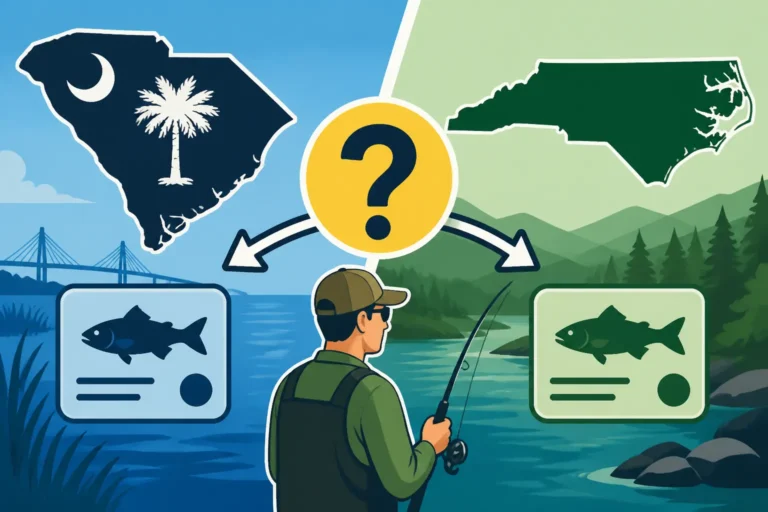
The concept of fishing license reciprocity, where a license from one state is valid in a bordering state's waters, is a common question, especially for nonresidents. While South Carolina does have some freshwater reciprocity agreements with Georgia and North Carolina for specific border rivers and lakes (like the Savannah River for Georgia or certain sections of the Catawba River for North Carolina), this generally does not apply to saltwater fishing.
For ocean and coastal estuary fishing, you will almost universally need a South Carolina nonresident saltwater fishing license if you are fishing in South Carolina's marine waters, regardless of whether you hold a saltwater license in Georgia or North Carolina. The distinct marine jurisdictions mean that each state manages its own ocean and tidal resources separately. So, if you're launching your boat from Brunswick, Georgia, and plan to fish in South Carolina's lower coastal waters, you'll need that SC license. The same goes for anglers coming from North Carolina's southern coast down into South Carolina's northern coastal zones. Always assume you need the specific state's license for saltwater fishing unless explicitly stated otherwise for a very specific, limited border water. This is an important distinction to avoid issues, as outlined in guides like South Carolina Fishing License Reciprocity With North Carolina or Georgia.
Enhancing Your Nonresident Saltwater Fishing Adventure
Getting your license squared away is just the first step! Now it's time to think about making your South Carolina saltwater fishing trip truly memorable. From the gear you'll need to the best times to hit the water, a little preparation goes a long way.
Essential Gear and Tackle for the South Carolina Coast
You don't need a boatload of expensive gear to have a great time, but having the right essentials can make all the difference. For most inshore saltwater fishing along the South Carolina coast – targeting redfish, spotted seatrout, and flounder – a medium-light to medium action spinning rod and reel combo spooled with 10-20 lb braided line is a versatile setup. You'll want to bring a variety of artificial lures, such as soft plastics (grub tails, shrimp imitations), hard plastics (topwater plugs, suspending twitch baits), and spoons. Live bait like mud minnows, shrimp, or mullet are also incredibly effective, especially when fished under a popping cork or on a Carolina rig.
Don't forget the small but mighty necessities: a good pair of pliers to remove hooks, a landing net or a set of lip grippers, sunscreen, sunglasses (polarized ones are a game-changer for seeing fish), a hat, and plenty of water. A cooler for your catch and some ice is also crucial. For convenience, many anglers find a lot of their gear, from rods to bait buckets, readily available on platforms like Amazon, allowing them to stock up before they even leave home. Having these basics ensures you're ready for whatever the Lowcountry waters throw at you.
Best Times and Prime Species for Your Saltwater Trip
South Carolina offers fantastic saltwater fishing opportunities year-round, but specific seasons shine for different species. Understanding the seasonal patterns can greatly improve your chances of success.
- Spring (March-May): This is a prime time as water temperatures rise, waking up many inshore species. Redfish become very active, often found in shallow creeks and on oyster beds. Spotted seatrout fishing heats up, and flounder begin to move into the shallower estuaries. The weather is generally pleasant, making for comfortable fishing days.
- Summer (June-August): While it gets hot, the summer bite can be phenomenal, especially early mornings and late evenings. Tarpon make their migratory appearance along the coast, offering a thrilling challenge for dedicated anglers. Redfish and trout remain strong targets, and nearshore reefs hold species like Spanish mackerel, king mackerel, and various snapper and grouper. Shark fishing also becomes very popular.
- Fall (September-November): Many consider fall to be the absolute best time for saltwater fishing in South Carolina. The "bull redfish" run begins, with large breeder redfish moving into the inlets and nearshore waters. Spotted seatrout fishing is at its peak, and flounder are often gorging themselves before heading offshore for winter. The cooler temperatures are a welcome relief, and the fish are actively feeding.
- Winter (December-February): Don't count winter out! While some species move offshore, inshore fishing can still be excellent on warmer days. Redfish often school up in large groups in shallow, dark-bottomed creeks, making them easier to locate. Spotted seatrout can be targeted in deeper holes within the estuaries. It's a quieter time on the water, offering a peaceful fishing experience. Check specific guides for target species like our Redfish Fishing in South Carolina or Spotted Seatrout in South Carolina Waters to maximize your chances.
Respecting the Resource: Understanding Regulations and Conservation
As a nonresident angler, your role in conserving South Carolina's precious fisheries is just as important as a local's. This means not only having the correct license but also strictly adhering to all fishing regulations. These regulations are in place to ensure healthy fish populations for future generations to enjoy.
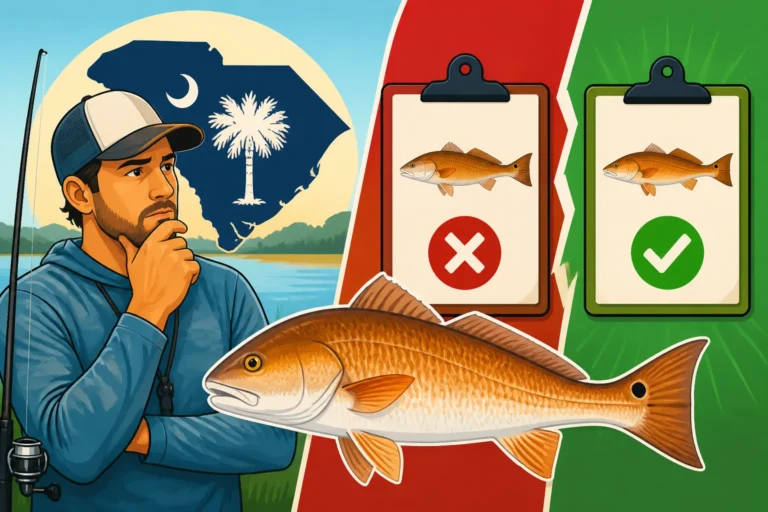
Pay close attention to bag limits (how many fish of a certain species you can keep per day) and slot limits (the minimum and maximum size a fish must be to be legally harvested). For example, redfish currently have an 18-inch minimum and 27-inch maximum slot limit, with a daily bag limit of two per person. Spotted seatrout have a 14-inch minimum and a daily bag limit of 10. These limits can and do change, so always check the most current SCDNR regulations before each trip. This information is readily available on the SCDNR website or in their annual fishing guide. Practicing catch and release for oversized or undersized fish, handling fish gently, and using appropriate gear all contribute to sustainable fishing. It's a shared responsibility to protect these incredible resources, ensuring that your future trips to South Carolina are just as rewarding.
Disclaimer
Please be aware that fishing regulations, license costs, and availability can change. While every effort has been made to provide accurate and up-to-date information in this guide, it is always your responsibility to verify the latest regulations and pricing directly with the South Carolina Department of Natural Resources (SCDNR) before engaging in any fishing activities.