Sheepshead Fishing Spots for Beginners
If you've ever stood on a South Carolina dock, watching experienced anglers pull in those notoriously clever, striped "convict fish," you know the feeling. Sheepshead are legendary for being tricky, masters of bait theft, and it can be incredibly frustrating for beginners just trying to get a bite. But don't you worry, because this guide is all about demystifying sheepshead fishing for newcomers, showing you exactly where to find them in South Carolina, and giving you the best shot at finally reeling in your first one!
Understanding the "Convict Fish" and Their Habitat
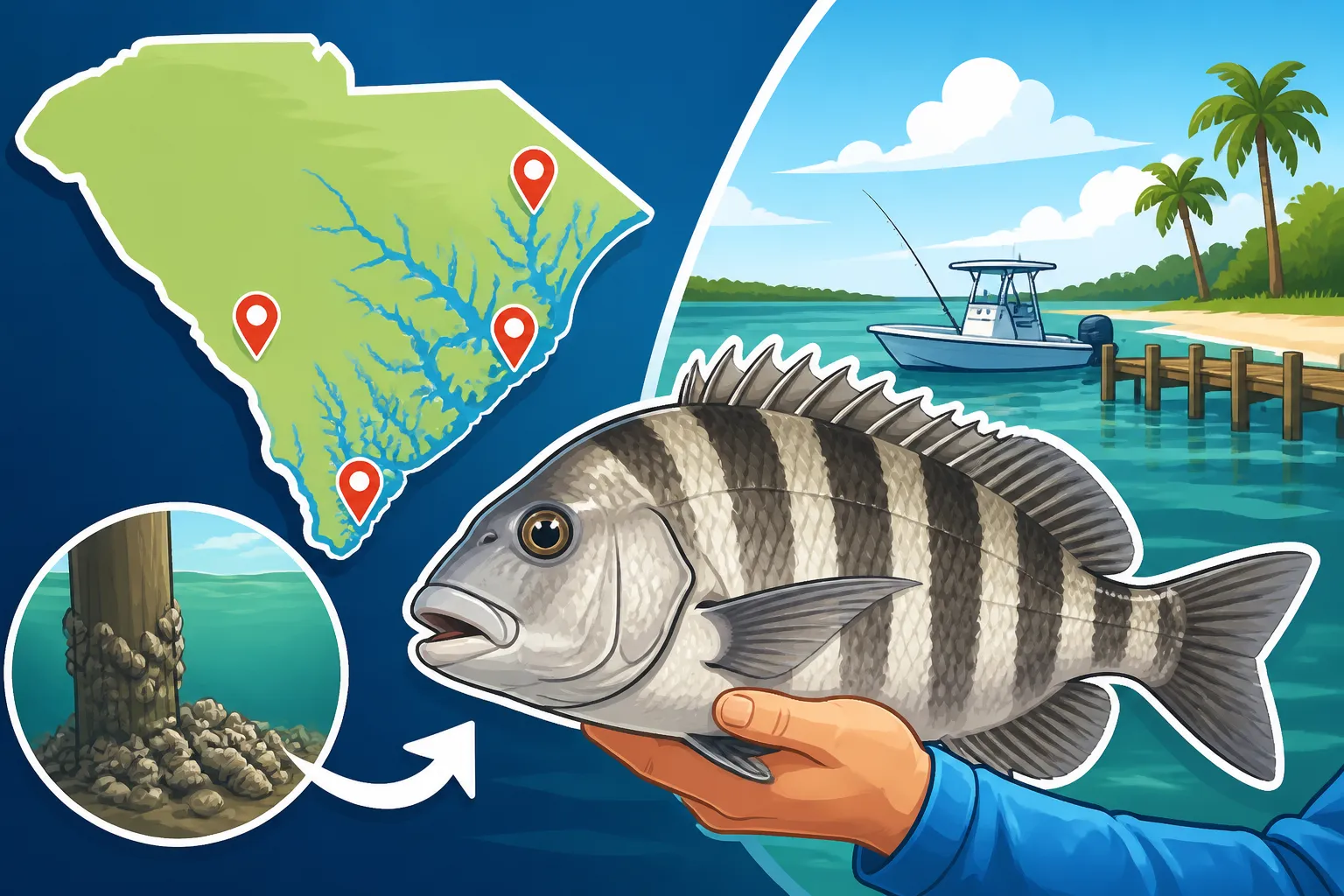
Before we dive into specific locations, let's get a handle on what makes sheepshead tick. These fish are absolute marvels of adaptation, and understanding their biology is key to figuring out where they hide and how to catch them. They're called "convict fish" for their distinctive black and white stripes, almost like a prison uniform, and believe me, they can make you feel like you're trying to bust a seasoned criminal out of jail with how hard they are to hook!
Why Sheepshead are Such a Unique Challenge
Sheepshead (Archosargus probatocephalus) are primarily bottom feeders, and their diet consists almost entirely of crustaceans and mollusks. Think fiddler crabs, barnacles, mussels, and oysters. This isn't just a fun fact; it dictates everything about how you fish for them. Unlike a bass that might aggressively strike a lure, a sheepshead gently nibbles at its food, using those human-like teeth to scrape or crush shells. They are incredibly subtle eaters, which is why so many beginners feel like they're just feeding the fish rather than catching them. You'll hear countless stories of people feeling nothing, only to reel in an empty hook, leaving them scratching their heads. Their bite is often described as a slight "tick" or a sudden heaviness, rather than a definitive tug. It takes a certain touch and a lot of patience to distinguish their gentle pick from the natural movement of the water. This also means your bait presentation needs to be impeccable, and your focus unwavering.
Where Sheepshead Love to Hang Out: Structure is Key
When you're looking for sheepshead, you're looking for structure. These fish are not open-water cruisers. They are homebodies, preferring to cling to anything that offers shelter, food, and a place to scrape off barnacles. Their entire existence revolves around these hard surfaces. This includes everything from natural formations to man-made structures. Think about what a sheepshead eats: barnacles, small crabs, and mussels. All of these tasty treats are found clinging to hard surfaces. Therefore, the sheepshead is almost always found right up against, or very close to, these structures. It's a symbiotic relationship – the structure provides the food, and the sheepshead sticks around for an easy meal. This means if you're not fishing right on top of or directly next to some kind of structure, your chances of hooking a sheepshead plummet significantly.
Prime Beginner-Friendly Sheepshead Fishing Spots in South Carolina
South Carolina's coast is a sheepshead paradise, full of the exact kind of structure these fish adore. The good news for beginners is that many of the best spots are easily accessible without needing a fancy boat or extensive navigation skills. You just need to know what to look for! You'll often find that the most productive spots are those with a combination of plenty of structure, tidal flow, and a good food source.
Public Piers and Docks: Your Accessible Starting Line
Public piers and docks are hands down some of the best starting points for sheepshead fishing, especially for beginners. Think about it: they’re built for public access, often have restrooms, and sometimes even bait shops right there. More importantly, these structures extend out into the water, providing countless pilings, crossbeams, and underwater supports that are absolutely covered in barnacles and other crustacean delights. Sheepshead will congregate around these pilings, sometimes in schools, just waiting for an easy meal. How to Catch Sheepshead Around South Carolina's Piers and Jetties is a great resource if you're planning a trip to one of these spots.
When fishing a pier or dock, try to target the pilings, especially those with visible barnacle growth. Drop your bait right down alongside the piling. The current can be your friend here, as it washes food particles (and your bait) past the sheepshead. Spots like the Charleston City Marina, various fishing piers around Myrtle Beach, or the public docks in places like Murrells Inlet offer fantastic opportunities. Best Fishing Piers Near Myrtle Beach can give you some specific ideas. Just remember, these spots can get crowded, so be courteous to other anglers. Don't cast over their lines, and always keep an eye out for boat traffic if you're on a dock that serves as a launch point.
Bridges and Causeways: A Sheepshead Smorgasbord
South Carolina's coastal landscape is crisscrossed with numerous bridges and causeways, and for sheepshead anglers, these are veritable goldmines. Each bridge piling represents an apartment building for sheepshead, teeming with food and shelter. The continuous tidal flow beneath these structures also brings a constant supply of nutrients, making them incredibly attractive feeding grounds.
Fishing bridges and causeways from the bank or a kayak can be highly productive. You'll want to focus on the pilings themselves, especially those on the deeper side of the current or those that create eddies where food might collect. However, safety is paramount when fishing near bridges. Be incredibly mindful of vehicle traffic if you're on a causeway and always watch out for boat traffic if you're in a kayak or small boat. Strong currents can also be an issue, so ensure you have proper anchoring if you're on the water. Areas around the Cooper River bridges near Charleston or the Highway 17 bridge over the Intracoastal Waterway are prime examples of productive bridge fishing spots. These areas often have robust populations of Sheepshead Fishing Tips for South Carolina's Brackish Waters, making them excellent targets.
Rocky Jetties and Oyster Reefs: Natural Sheepshead Havens
For those looking for a slightly more natural environment, rocky jetties and oyster reefs are phenomenal sheepshead grounds. Jetties, like those found at the mouth of Charleston Harbor or Murrells Inlet, are essentially long, man-made rock walls designed to protect navigation channels. These rocks become encrusted with barnacles, mussels, and crabs, creating a perfect sheepshead habitat. Oyster reefs, whether natural or cultivated, are another prime location. Sheepshead are notorious for crunching down on oysters.
Fishing these spots requires a bit more care. Jetties can be slippery and have uneven footing, so wear appropriate footwear. Oyster reefs, while productive, are sharp and can easily cut lines and hands, so handle your catch with care. Targeting the edges of these structures, where the current washes over them, can be very effective. Try casting your bait right against the rocks or dropping it into the cuts and crevices within the reef. Remember that South Carolina Fishing Bag Limits Explained and size restrictions apply to sheepshead, so always be sure to check the current regulations before you head out. These natural structures are not just great for sheepshead, but often hold other species too, offering a diverse fishing experience.
Essential Gear and Bait for Your First Sheepshead Trip
You don't need to break the bank to start sheepshead fishing, but having the right gear can certainly make a huge difference in your success and reduce frustration. Sheepshead fishing is a game of finesse and stealth, so your equipment should reflect that.
Rod, Reel, and Line for Sheepshead
When it comes to sheepshead, a sensitive setup is your best friend. You're not looking for brute strength as much as you are for the ability to feel those incredibly subtle bites. A medium-light to medium action spinning rod, typically 6 to 7 feet long, with a fast tip, is ideal. The fast tip allows you to detect those faint taps, while the medium action gives you enough backbone to fight a decent-sized sheepshead once it's hooked. Pair this with a 2500-3000 series spinning reel spooled with 10-15 lb braided line. Braid is crucial because it has almost no stretch, transmitting those tiny bites directly to your hands.
To complete your setup, you'll want to tie on a fluorocarbon leader, typically 15-20 lb test. Fluorocarbon is nearly invisible underwater, which can be an advantage with wary sheepshead, and it's also more abrasion-resistant than mono, protecting your main line from sharp oyster shells and barnacles. You can find some excellent beginner-friendly combos on Amazon that will get you started without a huge investment. Just search for "medium light spinning combo" and read reviews to find something sensitive but durable.
The Best Baits to Fool a Sheepshead
This is where the sheepshead's diet really comes into play. Forget your typical worms or artificial lures (mostly). Sheepshead are crustacean connoisseurs, and live bait is almost always the most effective.
- Fiddler Crabs: These are the undisputed king of sheepshead baits. Their small size and natural presence in sheepshead habitat make them irresistible. Hook them gently through the bottom shell, careful not to damage their vital organs. You can often buy these at local bait shops or sometimes even catch them yourself in marshy areas.
- Barnacles: If you're fishing directly off a piling, jetty, or dock that has barnacles, you've got free bait! Carefully scrape a cluster of barnacles off the structure and crack them open slightly. Hook the meat inside. This is incredibly natural and effective.
- Shrimp: Live shrimp are a versatile bait that many fish love, including sheepshead. They can be a bit softer and easier for sheepshead to steal, but if that's all you can find, they'll work. Use smaller pieces if the sheepshead are being particularly finicky.
- Oysters: Similar to barnacles, fresh oyster meat can be very effective. Shuck a fresh oyster and cut the meat into small, hook-sized pieces. Just be aware that oysters are a valuable commodity, so only use what you need or what's readily available.
For beginners, starting with fiddler crabs is often the best bet. If you can't find them locally, sometimes bait and tackle shops might carry them, or you can check online marketplaces like Amazon for certain types of bait or bait-collecting tools. Best Bait for Sheepshead in Brackish Water has even more detail on this topic.
Terminal Tackle That Makes a Difference
Your terminal tackle needs to be precise and discreet. Sheepshead have small mouths and excellent vision.
- Hooks: Small, sharp hooks are absolutely essential. #1 or 1/0 J-hooks are common, or small circle hooks in sizes #1 to 2/0. Many experienced anglers prefer J-hooks because they allow for a more immediate hook-set when you feel that subtle bite. However, circle hooks are fantastic for beginners because they often set themselves in the corner of the fish's mouth once tension is applied, reducing gut hooks. Look for strong, black or dark-colored hooks, as shiny hooks can spook wary sheepshead. Brands like Owner or Gamakatsu are popular and can be found on Amazon.
- Weights: You'll need just enough weight to get your bait down to the structure and hold it there against the current. Egg sinkers or small split shot weights are perfect. Start with a 1/4 to 1/2 ounce egg sinker above a small swivel, then a short fluorocarbon leader (6-12 inches) to your hook. This allows the bait to move somewhat naturally near the bottom. The key is to use the lightest weight possible that still allows you to maintain contact with the bottom and feel those light bites. Too heavy, and you'll miss the subtle taps; too light, and your bait will just drift away.
Beginner-Friendly Techniques to Hook a Sheepshead
Now that you have your gear and bait, let's talk about the actual fishing. This is where patience, concentration, and a light touch truly come into their own when targeting sheepshead.
The Art of the Light Touch: Detecting That Subtle Bite
This is arguably the hardest part of sheepshead fishing for beginners. A sheepshead bite is rarely aggressive. It's often described as a faint "tick," a sudden "heaviness," or just a slight wiggle of your rod tip. Sometimes, it feels like your line just went slack for a split second before suddenly feeling heavy. You need to be incredibly focused, watching your line where it enters the water and feeling for anything out of the ordinary.
Hold your rod with a light but firm grip, resting your index finger on the rod blank to maximize sensitivity. Keep your rod tip slightly elevated and your line taut but not overly tight. Any little tap, bump, or change in pressure should be met with an immediate, quick, and firm (but not violent) hook-set if you're using a J-hook. If you're using a circle hook, just slowly reel down until you feel pressure and then sweep the rod gently to the side as you continue reeling. The fish will usually hook itself. This takes practice, so don't get discouraged if you miss a lot of bites at first; it's part of the learning curve! Year-Round Fishing Techniques in South Carolina often highlight this kind of finesse.
Presenting Your Bait Naturally: Finesse Over Force
Sheepshead are particular. They won't chase a wildly flailing bait. Your goal is to make your bait look as natural and easy to eat as possible. This means vertical drops and minimal movement once your bait is on the bottom.
When you cast, aim to drop your bait directly alongside the piling, jetty rock, or oyster bed you're targeting. Let your weight carry the bait straight down. Once it hits the bottom, reel in any slack line until you feel your weight, and then hold it steady. Don't constantly lift and drop or jig your bait aggressively. Sheepshead are accustomed to scraping food off surfaces, not chasing it down. They'll mouth the bait, test it, and then often take it quickly. If you feel that subtle tap, don't move the bait; let them take it. It's a waiting game, and a steady hand often leads to success.
Setting the Hook (or Letting the Circle Hook Do the Work)
The hook-set is the moment of truth. If you're using a traditional J-hook, as soon as you feel that suspicious "tick" or slight weight, give a quick, sharp wrist flick upward and to the side. This is not a massive, sweeping motion; it's a short, precise pop of the rod. Many beginners tend to wait too long, giving the sheepshead ample time to clean the bait off the hook without ever getting caught. It's better to set the hook on a suspicious bump than to wait for a definite pull that might never come.
If you've opted for circle hooks, your approach is different. When you feel a bite, resist the urge to jerk the rod. Instead, simply start reeling steadily. As the fish moves away with the bait, the circle hook is designed to slide to the corner of its mouth and turn, setting itself. This greatly reduces the chances of gut-hooking the fish, which is great for the fish's survival if you plan on releasing it. For beginners, circle hooks can often lead to a higher hook-up ratio because they minimize the need for perfect timing on the hook-set. Whichever hook type you choose, understanding South Carolina's Freshwater Fishing Regulations and Saltwater Fishing Rules in South Carolina is always a good idea, as regulations can sometimes influence gear choices.
Here’s a quick overview of some popular Sheepshead baits for beginners:
| Bait Type | Pros | Cons | Beginner-Friendly Tip |
|---|---|---|---|
| Fiddler Crabs | Sheepshead favorite, readily available, tough skin stays on hook | Can be hard to find in some bait shops, smaller size might be hard to handle | Hook through the bottom shell, careful not to hit the internal organs. |
| Barnacles | Free and natural, highly effective, often found at fishing spots | Difficult to collect, meat is small and soft, might require specific tools | Scrape off structures, crack gently, hook small piece of meat. Great for fishing the structure they came from. |
| Live Shrimp | Easy to find, attracts other species too, good movement | Softer texture means sheepshead can steal it easily, can be expensive | Use smaller shrimp or cut larger ones into pieces. Hook through the tail for better presentation. |
| Oyster Meat | Natural food source, good scent trail | Messy to prepare, can be expensive if not collecting yourself | Use small, firm pieces of shucked oyster. Secure well on the hook. |
Fishing for sheepshead can be a truly rewarding experience once you start to crack their code. With the right spots, proper gear, and a bit of patience, you'll be well on your way to catching these clever striped fish in the beautiful waters of South Carolina. Remember, every angler starts as a beginner, so don't be afraid to try, learn, and enjoy the process!
Disclaimer
This article is for general informational purposes only and does not constitute professional advice. Laws, prices and regulations vary by location and change over time. Consult a qualified professional for guidance on your specific situation.