Native Brook Trout Streams in South Carolina’s Blue Ridge Mountains
There's nothing quite like the thrill of chasing native brook trout in South Carolina's pristine Blue Ridge Mountains. Many anglers spend years trying to find these elusive, beautiful fish, often frustrated by streams that are either heavily stocked or simply don't hold the wild, indigenous populations they seek. This guide is here to help you cut through the noise, understand where these incredible fish thrive, and give you the confidence to explore the remote corners of our state to experience a truly unique fishing adventure.
The Unique Allure of South Carolina's Native Brook Trout
For many, the mention of trout fishing in South Carolina immediately brings to mind the regularly stocked streams and rivers that flow through the Upstate. While those certainly offer fantastic opportunities, there's a distinct, almost spiritual connection to be made when pursuing the native brook trout. These aren't your typical hatchery-raised fish; these are the original inhabitants of our mountain waters, survivors that have adapted to and thrived in the unique conditions of our Blue Ridge ecosystem for millennia.
Why Native Brook Trout Are So Special
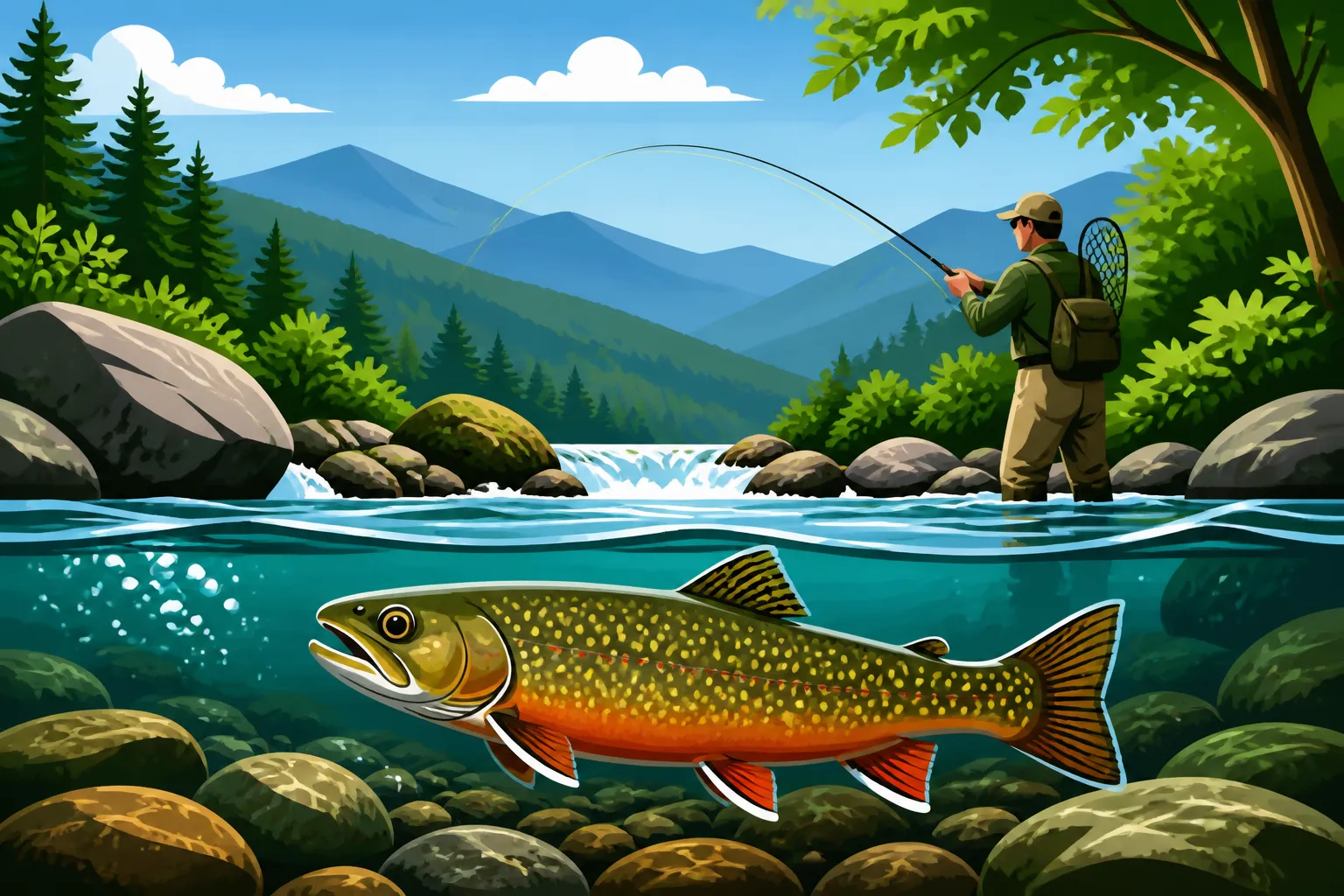
Native brook trout, or "specks" as many old-timers affectionately call them, are a testament to the wildness that still exists in South Carolina. They are typically smaller than their rainbow or brown trout cousins, rarely exceeding 10-12 inches, but what they lack in size, they more than make up for in vibrant coloration and spirited fight. Their backs are a mosaic of olive green and black vermiculations, their sides shimmer with red and yellow spots, often ringed with blue halos, and their lower fins boast striking white leading edges. Catching one feels like holding a jewel, a living piece of the mountain itself. The challenge of finding them, the pristine environments they demand, and their wild beauty make them a highly prized catch for conservation-minded anglers. You'll find a deeper dive into their unique place in our state in South Carolina's Native Brook Trout: A Blue Ridge Mountain Original.
The Untouched Habitat They Call Home
These remarkable fish are incredibly sensitive to environmental changes, which is precisely why they're found in the most untouched corners of our mountains. Their preferred habitat is characterized by incredibly cold, clear, highly oxygenated water – conditions typically found in the headwater streams and tributaries at higher elevations. Imagine small, cascading streams flowing over rocky bottoms, shaded by a dense canopy of rhododendron, mountain laurel, and old-growth hardwoods. This thick vegetation is crucial, keeping water temperatures consistently low, even during the summer months. The undisturbed banks provide vital cover, keeping predators at bay and offering a steady supply of terrestrial insects. Any significant human impact, pollution, or rise in water temperature can quickly make a stream uninhabitable for these delicate fish, underscoring the importance of protecting these special places.
Pinpointing Prime Native Brook Trout Streams in the Blue Ridge
Finding native brook trout streams isn't as simple as driving to a popular access point. These fish demand solitude and specific environmental factors, meaning you'll often need to venture off the beaten path. This quest is part of the adventure, guiding you to some of the most beautiful and secluded areas South Carolina has to offer.
Characteristics of a Promising Stream
When you're looking for potential native brook trout waters, keep an eye out for several key characteristics. First and foremost, elevation is critical. Look for streams that originate high in the Blue Ridge Mountains, often above 2,000 feet, sometimes even higher. These headwater streams are naturally colder and less prone to temperature fluctuations. Secondly, water clarity is paramount; native brook trout thrive in crystal-clear water where they can easily spot prey and feel secure. Any signs of siltation or murkiness are red flags. Thirdly, the surrounding forest cover should be dense and mature, offering ample shade to keep water temperatures down. Lastly, consider the size of the stream. While larger rivers may have some brook trout, the purest native populations are often found in smaller, sometimes barely-there rivulets and feeder creeks that flow into larger systems. These smaller waters typically have less fishing pressure and maintain more stable conditions.
| Characteristic | Native Brook Trout Streams | Stocked Trout Streams |
|---|---|---|
| Location | High elevation headwaters, remote | Lower elevation, accessible, popular rivers |
| Water Temp | Very cold, stable year-round | Colder, but more prone to summer warming |
| Water Clarity | Crystal clear, pristine | Clear to slightly turbid |
| Stream Size | Small, narrow, cascading creeks | Medium to large rivers and streams |
| Tree Canopy | Dense, mature forest, heavy shade | Varied, sometimes open |
| Fish Size | Smaller (typically <10 inches) | Larger, more uniform (stocking size) |
| Fishing Pressure | Low, challenging access | High, easy access |
| Catch Potential | Fewer but highly prized native fish | More frequent, varied catch |
Top Regions and Specific Stream Types to Explore
In South Carolina, your best bet for finding native brook trout streams lies predominantly in the extreme northwestern corner of the state, within the Sumter National Forest's Mountain Bridge Wilderness Area and surrounding drainages. Areas near Walhalla, Mountain Rest, and Long Creek are good starting points for your research. Look for topo maps that show high-gradient streams winding down steep slopes. The upper reaches of many drainages that feed into rivers like the Chattooga, Chauga, and Horsepasture are prime candidates. These are often named streams, but their native brook trout populations are generally found in their highest, most inaccessible sections. Remember, these are not well-marked, easy-access locations. You'll be doing some serious hiking and bushwhacking to reach these hidden gems. For more detailed information on specific locations and conditions, be sure to check out Best Streams for Brook Trout in the Blue Ridge Mountains. It's crucial to consult with the local South Carolina Department of Natural Resources (SCDNR) resources and regulations, as some areas may have specific rules or closures to protect these fragile populations.
Essential Techniques and Gear for Catching Native Brook Trout
Successfully catching native brook trout requires a delicate touch and an understanding of their wary nature. Forget your heavy bass gear; this is a game of finesse and stealth.
Approaching These Wary Fish with Stealth
Native brook trout are exceptionally skittish. Unlike their stocked cousins, they haven't learned to associate humans with an easy meal. Your approach is often more important than your cast. Move slowly and deliberately, staying low and using streamside vegetation as cover. Avoid casting a shadow over the water, and try to make your first cast count, as repeated splashing or movement will likely send them darting for cover. Often, you'll find yourself making short, precise casts into small pools, under undercut banks, or around fallen logs. Many anglers find the "bow and arrow" cast or roll cast invaluable in these tight, overgrown environments. Think like a hunter, not just an angler; observe the water, anticipate where a fish might be holding, and present your offering gently. This careful approach is key to success, and you'll find it incredibly rewarding when it pays off.
Recommended Gear and Bait/Lures
When targeting native brook trout, ultralight is the name of the game. A 6-foot ultralight spinning rod paired with a small spinning reel spooled with 2-4 pound monofilament line is perfect. For fly anglers, a 2 or 3-weight fly rod, 6 to 7.5 feet long, with a delicate leader and tippet is ideal.
For bait, a tiny piece of natural bait like a red wiggler worm or a small insect can be effective, but many purists prefer artificial lures or flies to minimize impact. Small inline spinners (like a size 0 or 1 Panther Martin or Mepps), tiny spoons, or micro-jigs can work wonders. Fly anglers will have success with small dry flies (such as a Parachute Adams, Elk Hair Caddis, or Royal Wulff in sizes 14-18) or tiny nymphs (like a Pheasant Tail or Hare's Ear in sizes 16-20). Often, presentation is more important than the exact pattern. You can easily find a great selection of these specialized small lures and flies on Amazon, ensuring you have the right tools for these diminutive fish. Remember, these fish have small mouths, so tiny hooks are a must.
Conservation and Responsible Angling Practices
Catching native brook trout comes with a profound responsibility: conservation. These populations are fragile, and their survival depends on careful management and angler ethics. Many native brook trout streams are designated as catch-and-release only, and for good reason. Even where harvest is permitted, consider releasing your catch to help sustain these populations. Always use barbless hooks to minimize harm, and handle fish as little as possible. If you must handle a fish, do so with wet hands and keep it in the water if you can. Minimize the time it's out of the water, and release it gently, allowing it to swim away on its own power. Education is also key; learn how to correctly identify a native brook trout so you don't accidentally keep a protected species. For information on specific regulations concerning catch and release, check out Which South Carolina Streams Are Catch-and-Release Only for Trout?.
Navigating Regulations and Access for Native Trout Fishing
Fishing for native brook trout isn't just about the right gear and technique; it's also about understanding and respecting the rules that protect these precious resources and knowing how to safely access their remote homes.
Understanding South Carolina's Trout Regulations
Before you even tie on a fly, it is absolutely essential to familiarize yourself with South Carolina's specific fishing regulations, especially those pertaining to trout. While a general South Carolina Fishing License Guide is your starting point, trout fishing in the Blue Ridge often has its own set of rules, which can vary significantly from stream to stream or even section to section of the same stream. Some waters may be managed as "catch-and-release only," others may have specific tackle restrictions (e.g., artificial lures only), and bag limits for trout can differ from the statewide default. It's not uncommon for native brook trout streams to have stricter regulations than stocked waters, all designed to protect these vulnerable populations. Always check the latest SCDNR regulations booklet or website before heading out. Ignorance of the law is never an excuse, and penalties for violations can be significant, as detailed in South Carolina's Freshwater Fishing Regulations.
Gaining Access to Remote Mountain Streams
One of the biggest hurdles and, for many, part of the appeal, of fishing for native brook trout is gaining access to their remote habitats. Most of these streams are nestled deep within public lands, primarily the Sumter National Forest. This means you'll likely be hiking, often off-trail, through rugged terrain. Planning is critical:
- Maps and Navigation: Invest in detailed topographic maps (USGS quad maps are excellent) or reliable GPS apps. Many of these areas have limited cell service, so don't rely solely on your phone. You can find excellent waterproof maps and robust GPS devices on Amazon to help you navigate challenging terrain.
- Physical Preparation: Be prepared for strenuous hikes, steep inclines, and potentially slippery stream banks. Good hiking boots are a must.
- Safety Gear: Always let someone know where you're going and when you expect to return. Carry a first-aid kit, plenty of water, snacks, a headlamp, and emergency supplies. The solitude is part of the experience, but it also means help can be a long way off if something goes wrong.
- Respect Private Land: Always be aware of property boundaries. While much of the prime brook trout habitat is on public land, private parcels can be intermingled. Trespassing is illegal and can damage angler-landowner relationships.
Exploring Remote and Uncrowded Fishing Spots in South Carolina can provide more general guidance on finding hidden gems, but for native brook trout, your research and preparation need to be even more meticulous. The effort you put into finding and accessing these streams is often directly proportional to the reward of catching these incredible, indigenous fish.
Disclaimer
This article is for general informational purposes only and does not constitute professional advice. Laws, prices and regulations vary by location and change over time. Consult a qualified professional for guidance on your specific situation.