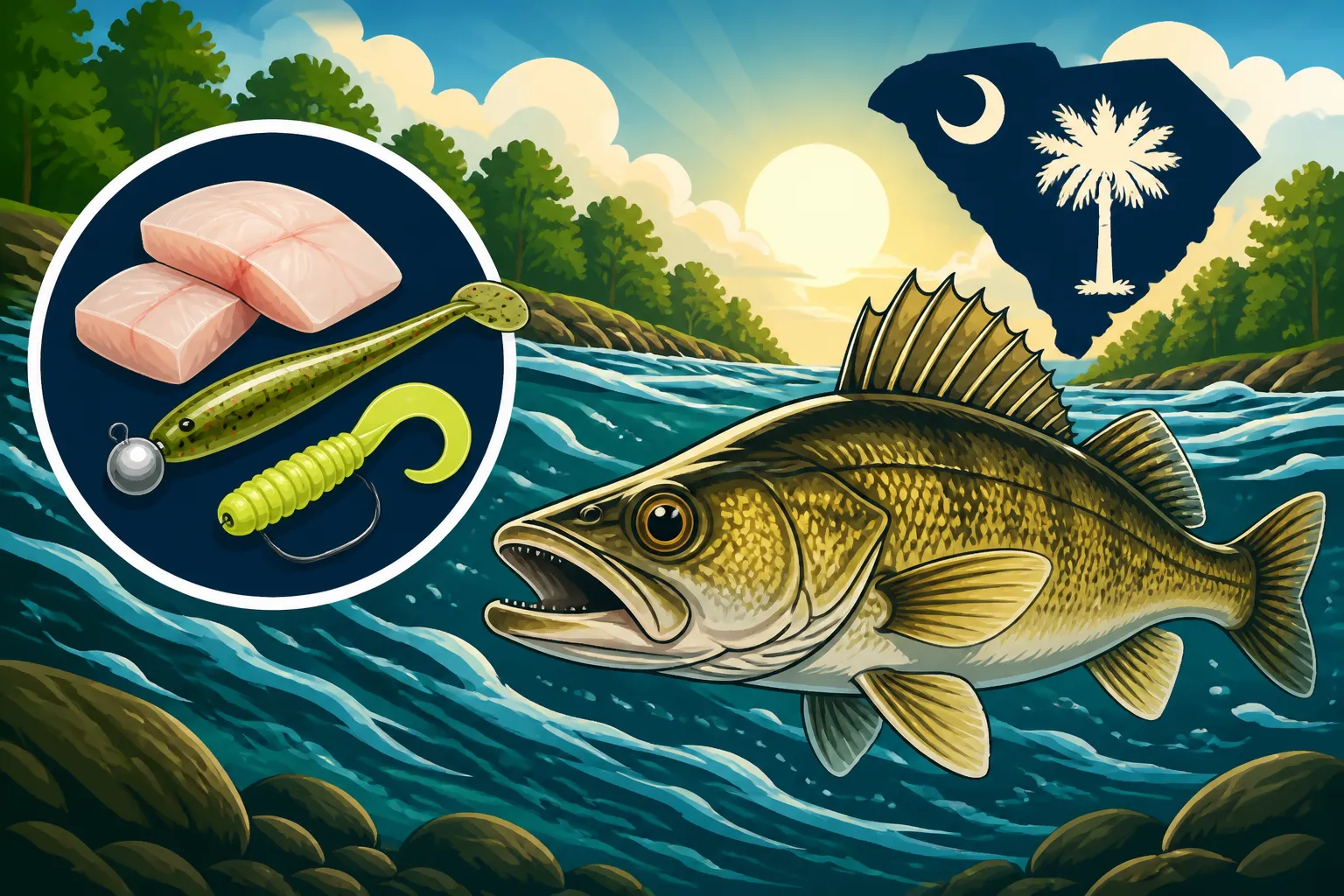
Best Bait for Sauger in River Currents
There's nothing quite like the tug of a sauger on the line, especially when you're battling the current in one of South Carolina's beautiful rivers. Many anglers struggle to find the sweet spot, wondering what bait truly cuts through the flow and tempts these finicky fish. This guide is dedicated to helping you master the art of selecting and presenting the best bait for sauger, ensuring your next river excursion is productive and rewarding.
Understanding Sauger Behavior in River Currents
Sauger are fascinating fish, closely related to walleye, but with a distinct preference for moving water and a knack for using current to their advantage. To catch them consistently, you first need to think like a sauger.
Why Sauger Prefer Current and Structure
Sauger are ambush predators by nature. They aren't generally chasing baitfish through open water; instead, they prefer to lie in wait, letting the current do the heavy lifting for them. Imagine a sauger nestled behind a submerged rock, a logjam, or even a bridge piling. The current sweeps food past these structures, and the sauger can dart out, grab a meal, and quickly retreat to its hiding spot without expending too much energy. This is also where they find higher concentrations of oxygen, which is crucial in warmer months. They'll hug the bottom, often in seams where fast current meets slower water, or at the edges of deep holes and drop-offs. Understanding this means you're not just casting blindly; you're looking for their grocery store and their easy chair all in one.
Reading the River: Identifying Productive Sauger Spots
Finding sauger is all about interpreting the river's flow and features. Look for anything that breaks the main current. Eddies, those swirling pockets of calmer water behind an obstruction, are prime real estate. Drop-offs where the riverbed suddenly plunges deeper provide both cover and a conveyor belt of food. Bridge pilings create excellent current breaks and scour holes that sauger love. Submerged timber, rock piles, and even sharp bends in the river that create deeper outside turns are all potential sauger hotspots. Sometimes, you can even spot subtle changes in the water's surface that indicate underwater structure. A slight ripple where the rest of the water is smooth could be a submerged rock, while a slower swirl might indicate a hidden eddy. A good fish finder can be invaluable here, helping you map out those crucial depth changes and unseen underwater structures. Even without one, dropping a heavy jig and feeling the bottom can tell you a lot about the contours and potential snag points. For more insight into these river fish, check out Sauger Fishing in South Carolina: What Anglers Should Know.
Top Baits for Sauger in South Carolina River Currents
Now that we know where they like to hang out, let's talk about what makes them bite. Sauger are opportunistic feeders, and a variety of baits can be effective, depending on the conditions and the specific river.
Live Baits: The Irresistible Choice
When it comes to tempting sauger, live bait often reigns supreme. Its natural movement and scent are incredibly hard for a sauger to resist, especially when it's drifting helplessly with the current.
Minnows: The Classic Sauger Meal
Minnows are, without a doubt, the king of sauger baits. Shiners, fatheads, or even small creek chubs are perfect choices. Their natural darting and struggling action mimics injured baitfish, which is a sauger's preferred meal. The key is to present them naturally, allowing the current to do most of the work.
- Rigging: A simple rig involves a three-way swivel with a bell or walking sinker on a short dropper line (6-12 inches) and your minnow hooked through the lip or just behind the dorsal fin on a longer leader (18-36 inches). This allows the minnow to swim somewhat freely above the bottom, right in the sauger's strike zone. Another effective method is a slip-sinker rig, which lets the sauger take the bait without feeling the weight immediately.
- Keeping Them Lively: Healthy, active minnows are crucial. Keep them in a well-aerated bait bucket with cool water. If they're sluggish, they won't be nearly as effective. You can often find aerators and bait buckets on platforms like Amazon, making it easier to transport and maintain your live bait.
Nightcrawlers/Worms: Simplicity and Scent
While not as lively as minnows, nightcrawlers and other worms offer a powerful scent trail that sauger can't ignore, especially in stained or muddy water. Their wiggling action, even when hooked, is still enticing.
- Rigging: Worms can be threaded onto a jig head or fished on a standard hook with a slip sinker. For river currents, a snell rig with two hooks can help present the worm stretched out, increasing the chances of a solid hook-up. The key is to keep it near the bottom where sauger are lurking. The scent from a struggling worm can be a game-changer when sauger are less active or visibility is low.
Artificial Lures: Mimicking Natural Prey
When sauger are more aggressive or you want to cover a lot of water quickly, artificial lures can be incredibly effective. Modern lure technology allows for fantastic imitations of baitfish, often with added flash and vibration that can trigger strikes.
Jigs: Versatility and Effectiveness
Jigs are a sauger angler's best friend. They are incredibly versatile and can be fished in many ways to mimic injured baitfish or crawfish.
- Types: Lead head jigs with soft plastic grub bodies (like curly tail grubs or paddle tails) are very popular. Hair jigs and bucktail jigs also have a timeless appeal.
- Colors: Chartreuse, white, orange, and black/blue are all common sauger colors. In clear water, more natural baitfish patterns like pearl or smoke can work. In stained water, brighter colors provide better visibility.
- Weight: Choosing the right jig weight is critical for river currents. You need enough weight to get to the bottom and stay there, but not so much that it just drags. Experiment until you can feel your jig periodically tapping the bottom without getting swept away too quickly. You can find a huge variety of jig heads and soft plastics on Amazon to build your perfect sauger arsenal.
- Presentation: Vertical jigging directly over structure or slowly dragging the jig along the bottom are prime techniques. Let the current give the jig some natural movement, and use subtle lifts and drops of your rod tip.
Blade Baits: Vibration and Flash
Blade baits are a fantastic choice for sauger, especially when they're hugging the bottom in deeper, colder water. Their intense vibration and flash are irresistible.
- How to Fish Them: Cast them upcurrent and let them sink, then retrieve with short, sharp lifts and drops, allowing them to flutter on the fall. This vertical jigging motion is key. They're also excellent for vertical jigging directly under the boat. The key is to impart action that makes the bait 'swim' and 'vibrate' without just pulling it steadily.
Crankbaits: Covering Water and Reaching Depth
Crankbaits are excellent for covering larger areas of river and for reaching deeper channels, especially when trolling from a boat or casting along current breaks.
- Types: Deep-diving crankbaits that can get down to the 15-25 foot range are ideal for sauger. Look for models with a tight wobble rather than a wide, erratic one, as sauger often prefer a more subtle action.
- Colors: Natural baitfish colors (silver, shad, perch patterns) are good for clear water. Bright colors like firetiger or chartreuse can be great for stained or muddy conditions.
- Presentation: When casting, aim upcurrent and retrieve just fast enough to get the bait diving and wobbling, letting the current help impart action. When trolling, match your speed to the current to keep the bait running at its optimal depth.
Cut Bait and Scented Baits: When All Else Fails
Sometimes, sauger are finicky, or the water conditions are challenging. That's when you turn to baits that capitalize on their incredible sense of smell.
Cut Bait: The Scent Trail Powerhouse
Strips of baitfish, like shad or herring, can be incredibly effective. The scent bleeds into the water, creating an irresistible trail that sauger can follow, even in low visibility.
- Presentation: Fish cut bait on a bottom rig, allowing it to drift naturally with the current. Use a sharp, small hook that allows the bait to flutter.
Scented Soft Plastics: An Extra Edge
Many soft plastic lures come pre-scented, or you can add your own scent sprays and dips. This can significantly increase your strike rate, especially on days when fish aren't actively feeding by sight. You can find a vast array of these scent additives and pre-scented lures on Amazon. Remember, sauger are largely sight feeders, but scent plays a huge role in enticing them to hold onto the bait longer, giving you time to set the hook.
Here's a quick comparison of some popular sauger baits:
| Bait Type | Best Conditions | Advantages | Disadvantages |
|---|---|---|---|
| Live Minnows | All conditions, especially clear water | Most natural presentation, strong scent/action | Requires aeration, can be fragile |
| Nightcrawlers | Stained water, colder temperatures | Excellent scent, readily available, simple to use | Less natural action than live minnows |
| Soft Plastic Jigs | All conditions, especially varied depth | Versatile, mimics baitfish, various colors/shapes | Requires active presentation, can snag |
| Blade Baits | Deep, cold water; vertical jigging | Strong vibration/flash, triggers reaction strikes | Can be tricky to fish effectively, prone to snagging |
| Deep-Diving Cranks | Covering large areas, trolling | Reaches deep, covers water, good for active fish | Can snag easily in rocky rivers, expensive |
| Cut Bait | Stained/muddy water, slow bite | Strong scent trail, good for inactive fish | Less action, can attract nuisance fish |
Techniques for Presenting Bait in River Currents
Knowing the best bait is only half the battle; presenting it effectively in a river current is an art form. Sauger are typically bottom-oriented, so your presentation needs to get down to them and stay there.
Drift Fishing and Bottom Bouncing
These techniques are paramount for sauger, allowing your bait to tumble and roll naturally along the riverbed, mimicking food dislodged by the current.
- Drift Fishing: This involves allowing your boat (or even your bait from shore) to drift with the current, while maintaining contact with the bottom. Use just enough weight to feel your sinker occasionally ticking the bottom, but not dragging heavily. A "walking" sinker or a barrel sinker with a swivel above it works well. The goal is a controlled drift that puts your bait right in front of sauger holding in current breaks or deeper holes. Too much weight means snagging; too little means your bait floats over their heads.
- Bottom Bouncing: Similar to drift fishing but often used with a specialized bottom bouncer rig, particularly when covering ground from a boat. The bottom bouncer acts as a "feeler," maintaining contact with the bottom while your bait or lure trails behind, preventing snags and keeping your offering in the strike zone. This is especially effective when sauger are scattered across a flat bottom or along gradual ledges. For related techniques, consider reading Catfish Bottom Fishing Basics, as some principles of bottom fishing apply.
Vertical Jigging and Casting Upcurrent
These are active techniques that can be incredibly effective when you've located a concentration of sauger or are targeting specific structures.
- Vertical Jigging: From a boat, position yourself directly over known sauger holding spots like deep holes, submerged timber, or bridge pilings. Drop your jig or blade bait straight down, letting it hit the bottom. Then, use subtle lifts and drops of your rod tip to make the lure dance. The goal is to keep the bait in the strike zone for as long as possible. Sometimes, a very subtle quiver is all it takes to trigger a bite.
- Casting Upcurrent: Cast your jig, crankbait, or blade bait directly upstream or at an angle upcurrent. Allow it to sink and then retrieve it slowly, letting the current carry it downstream as you reel in the slack. This creates a natural, wounded baitfish presentation. The key is to keep enough tension on your line to feel bites and maintain control, but not so much that you're pulling the lure against the current unnaturally fast.
Gear Considerations for River Fishing
The right gear makes a huge difference in effectively presenting your bait and feeling those subtle sauger bites.
- Rods and Reels: A medium-light to medium power spinning rod, 6'6" to 7' long, with a fast action tip is ideal. The fast action provides the sensitivity needed to feel light bites and bottom contact, while the medium power offers enough backbone to fight sauger in current. Pair it with a reliable spinning reel in the 2500-3000 size range.
- Line: Many seasoned sauger anglers prefer braided line for its incredible sensitivity and lack of stretch. A 10-15 lb test braid is usually sufficient. To maintain stealth, especially in clear water, tie on a 6-10 lb fluorocarbon leader using a double uni knot or an FG knot. Fluorocarbon is nearly invisible underwater and offers excellent abrasion resistance against rocks and logs. You can find quality braided line and fluorocarbon leaders on Amazon from various brands.
- Terminal Tackle: Have a good selection of swivels (barrel and three-way), snap swivels, and sinkers. Round, bell, and pyramid sinkers in various weights (1/4 oz to 1 oz, depending on current) are essential. Don't forget sharp jig hooks and octopus-style hooks for live bait. Having a well-stocked tackle box is key, and Amazon offers plenty of options for organizing your river essentials.
Seasonal Considerations for Sauger Fishing
Sauger behavior, and thus the best baits and techniques, can change significantly with the seasons. Adapting to these shifts is crucial for consistent success.
Winter and Early Spring: Prime Time for Sauger
This is often considered prime time for sauger fishing in South Carolina. As water temperatures drop, sauger tend to congregate in deeper holes, channels, and slow-moving current breaks in rivers. They become less active, making slow, deliberate presentations essential.
- Bait Preference: Live minnows, fished slowly on a three-way rig or slip-sinker, are incredibly effective. Small, dark-colored jigs (black, blue, brown) tipped with a minnow or scented plastic also shine. The goal is to put the bait right on their nose and keep it there.
- Techniques: Vertical jigging over deep structure from a boat is a killer technique. If fishing from shore, casting jigs or slowly drifting live bait into deep pockets will produce. Remember, sauger will be conserving energy, so a slow, subtle presentation is usually best. Don't be afraid to leave your bait in the strike zone for longer periods. For more on how to adjust your approach, consider Bait Choices for Cold Weather Fishing.
Summer and Fall: Adjusting to Warmer Water
As river temperatures rise in summer, sauger may spread out more, seeking cooler, more oxygenated water. They might move to the deepest parts of the river, around springs, or find shade under overhanging banks and deep logjams. In the fall, as water cools, they'll become more active again, often feeding heavily in preparation for winter.
- Bait Preference: While live minnows are always good, faster-moving artificials like blade baits and crankbaits can become more effective in fall as sauger become more aggressive. During summer, stick to deep-diving baits or fish during dawn, dusk, or even at night when temperatures are cooler.
- Techniques: Trolling deep-diving crankbaits can be very productive in summer and fall, allowing you to cover vast stretches of river and find scattered fish. Look for sauger in areas with stronger current, as these spots tend to hold more oxygen. Early morning and late evening bites can be crucial in warmer months. If you're into night fishing, even for sauger, you might find some useful tips in Night Fishing Techniques for Catfish.
Sauger fishing in South Carolina's river currents offers a unique and rewarding challenge. By understanding their behavior, selecting the right baits, and mastering presentation techniques, you'll be well on your way to a successful day on the water. Don't be afraid to experiment, and always pay attention to what the fish are telling you!
Disclaimer
This article is for general informational purposes only and does not constitute professional advice. Laws, prices and regulations vary by location and change over time. Consult a qualified professional for guidance on your specific situation.