Where Are Spotted Bass Found in South Carolina?
It's a common story, isn't it? You're out on a South Carolina lake, casting your heart out, and you pull in a bass. You think, "Great, another largemouth!" But sometimes, there's a subtle difference, something about its shape or markings that makes you pause. You might have just caught a spotted bass, a truly fantastic fighting fish that often gets overlooked or misidentified in the Palmetto State. This guide is here to unravel the mystery of the spotted bass, diving deep into where these feisty fish call home in South Carolina, how to tell them apart, and what makes them such a unique target for anglers.
Understanding South Carolina's Spotted Bass Landscape
Many anglers in South Carolina are laser-focused on largemouth bass – and for good reason, they're everywhere and grow to impressive sizes! But beneath the surface, especially in certain regions, another equally exciting bass species thrives: the spotted bass. These aren't just smaller largemouths; they have distinct characteristics and preferences that make finding them a bit of a treasure hunt.
The Elusive Nature of Spotted Bass in the Palmetto State
Spotted bass, or "spots" as they're often affectionately called, haven't traditionally garnered the same widespread attention as their largemouth cousins in South Carolina. For years, many anglers probably caught them without realizing they weren't largemouths, simply classifying them as "small bass." This misidentification, coupled with their somewhat more confined range compared to the ubiquitous largemouth, has given them an almost elusive quality. They're not necessarily rare, but you won't find them in every pond and slow-moving river bend like you might a largemouth. They prefer specific conditions, and knowing those conditions is the key to unlocking their whereabouts.
It's also worth noting that in some waters, especially those where largemouth and spotted bass coexist, they can even hybridize, making identification even trickier! This genetic blending adds another layer of complexity for anglers trying to pinpoint pure spotted bass. However, generally speaking, if you're fishing the right types of water, you'll start to notice more of the classic spotted bass traits, signaling you're in their preferred domain. Understanding these subtle differences and being able to identify them is a rewarding part of expanding your angling knowledge.
Key Environmental Preferences of Spotted Bass
Unlike largemouths that thrive in a wide range of habitats, from murky ponds with abundant vegetation to vast open reservoirs, spotted bass are a bit pickier. They generally prefer clearer, cooler, and rockier waters. Think of them as the bass that enjoys an underwater landscape with more structure, less mud, and a consistent flow or current. This preference for specific environments is the biggest clue as to where you'll find them in South Carolina.
You'll often find spotted bass congregating around rocky points, bluff walls, rip-rap, and submerged timber, particularly in areas with good current or deeper access. They aren't as keen on thick, shallow hydrilla beds or lily pads, preferring instead the hard bottom features that offer ambush points and cooler water temperatures. Their diet also reflects this, as they're often feeding on crayfish, shad, and other baitfish that inhabit these rockier, open-water environments. If you're fishing water that looks more like a smallmouth bass habitat up North, you might just be in spotted bass country in South Carolina.
Prime Spotted Bass Waters in South Carolina
When it comes to pinpointing the best places to catch spotted bass in South Carolina, the search narrows significantly compared to largemouths. The Upstate region, with its mountainous terrain, clearer waters, and deep reservoirs, is where these fish truly shine. If you're looking to target spotted bass specifically, this is where you should focus your efforts.
Upstate Reservoirs: Where They Truly Thrive
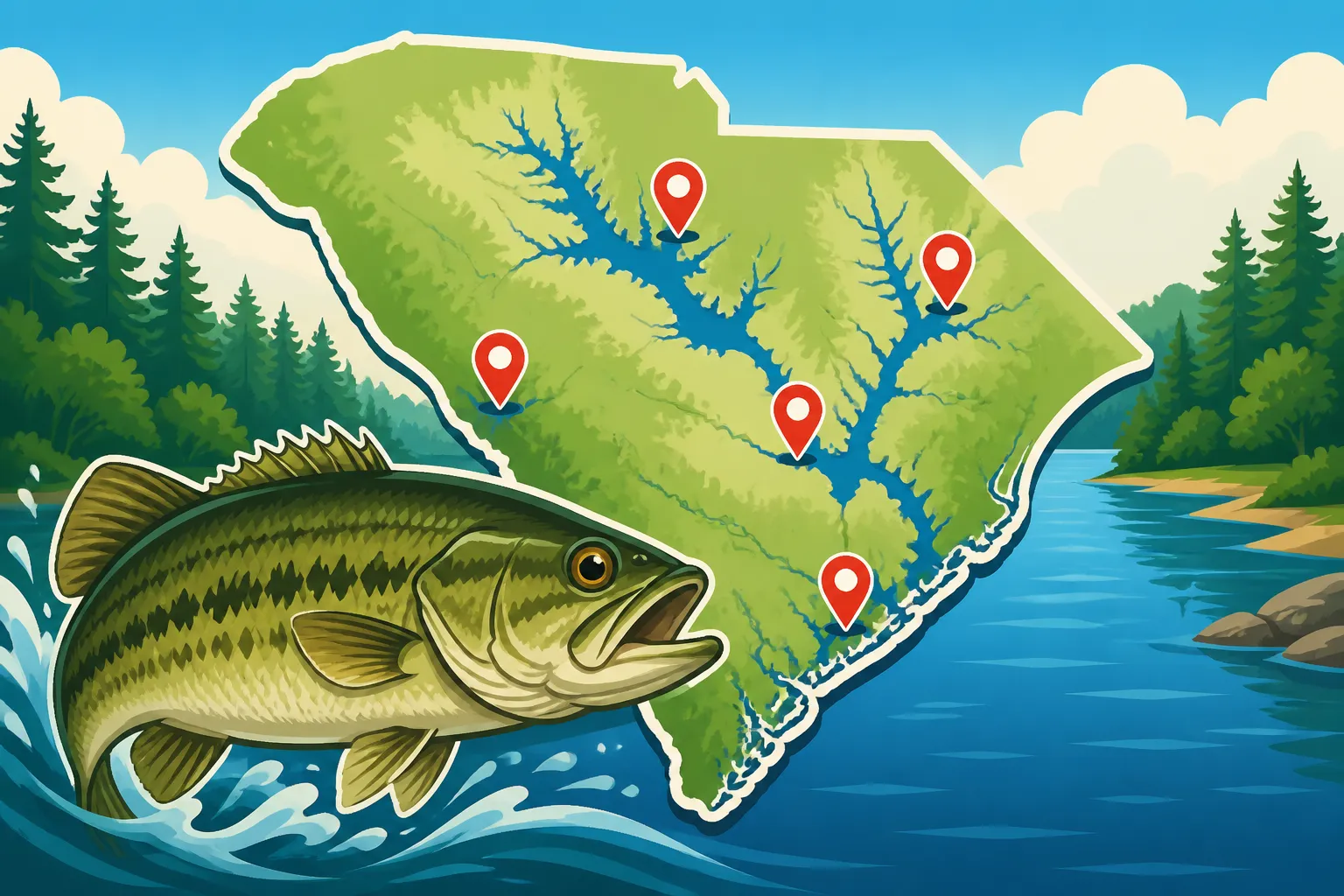
Without a doubt, the premier waters for spotted bass in South Carolina are found in the Upstate. Lakes like Lake Keowee and Lake Hartwell are legendary for their populations of these hard-fighting fish. These reservoirs offer the perfect cocktail of conditions that spotted bass adore: deep, clear, oxygen-rich water, abundant rocky structure, and a good forage base. Anglers often report catching impressive numbers of spotted bass in these lakes, with some fish reaching respectable sizes.
On Lake Keowee, for example, the sheer clarity of the water and the abundance of rocky points, humps, and deep ledges make it a paradise for spotted bass. You'll find them schooling around these structures, often deeper than you might expect largemouths to be, especially during the warmer months. Similarly, Lake Hartwell, which straddles the South Carolina-Georgia border, offers vast stretches of spotted bass habitat. The Tugaloo River arm of Lake Hartwell, in particular, is known for its strong spotted bass fishery, where they actively chase baitfish in open water and around submerged timber and rocky outcroppings. For more on these areas, check out Lake Hartwell Fishing Spots on the South Carolina-Georgia Border and Best Bass Spots on Lake Keowee.
Lesser-Known Spotted Bass Hotspots
While the Upstate reservoirs are the undisputed champions for spotted bass fishing, there are other areas where they might pop up, often as a pleasant surprise. Smaller, clear-water reservoirs or certain sections of larger river systems that mimic their preferred rocky, current-heavy environments can occasionally hold populations. For instance, some of the upper reaches of river systems feeding into major reservoirs, where the water is less turbid and the bottom is harder, could offer opportunities.
Anglers exploring the Savannah River system, particularly the sections above major impoundments, might encounter spotted bass, though perhaps not in the same densities as the primary Upstate lakes. These fish tend to be more prevalent where there's less competition from largemouths that dominate the slower, weedier sections. It often takes a bit more exploration and local knowledge to find these secondary spots, but the reward of finding an unpressured group of spotted bass can be immense. Always remember to check local fishing reports and talk to bait shop owners in the area you plan to visit, as they often have the most up-to-date information on where these elusive fish are biting.
Identifying and Differentiating Spotted Bass
One of the biggest challenges for anglers when it comes to spotted bass in South Carolina is telling them apart from largemouths, and occasionally even smallmouths. They share enough similarities that casual observation can be misleading, but there are distinct features that, once you know them, make identification much easier.
Visual Cues: How to Tell a Spotted Bass Apart from Its Cousins
The most definitive way to identify a spotted bass is to look inside its mouth. Unlike a largemouth, a spotted bass will typically have a small, rough patch of teeth on its tongue. This is a tell-tale sign that instantly differentiates it. Beyond that, there are other visual cues you can use:
- Jaw Line: A largemouth's jaw extends well beyond the back of its eye when its mouth is closed. A spotted bass's jaw, by contrast, usually ends directly under or only slightly beyond the back of its eye.
- Lateral Line: Spotted bass often have a very distinct lateral line pattern. Below this line, scales usually feature dark spots, arranged in rows, which contribute to their "spotted" name. While largemouths have a lateral line, the spotting below it is generally less pronounced or absent.
- Dorsal Fin: Count the rays on the soft dorsal fin. Spotted bass typically have 12-13 rays, while largemouths usually have 11-12. This can be harder to do accurately in the field, but it's another technical differentiator.
- Body Shape: Spotted bass tend to have a more slender, torpedo-like body compared to the bulkier, deeper-bodied largemouth. They often look more streamlined, which contributes to their reputation as powerful fighters.
Here's a quick comparison table to help you out:
| Feature | Spotted Bass | Largemouth Bass | Smallmouth Bass |
|---|---|---|---|
| Tongue Patch | Present (rough patch of teeth) | Absent (smooth) | Absent (smooth) |
| Jaw Extension | Ends at or slightly behind the eye | Extends well behind the eye | Ends at or before the eye |
| Lateral Line | Distinct, with rows of dark spots below it | Less distinct, often broken, usually no spots below | Vertical bars/blotches, no distinct lateral line spots |
| Body Shape | More slender, torpedo-like | Deeper body, chunkier build | Bronze-colored, stout, powerful |
| Habitat | Clear, rocky, deeper water with current | Varied: weeds, wood, open water, shallower | Clear, cool, rocky rivers/lakes, strong current |
For more detailed information on identification, you might find Spotted Bass vs Largemouth Bass: How to Tell Them Apart a useful resource.
Gear and Techniques for Targeting Spotted Bass
Since spotted bass often inhabit clearer, deeper, and rockier environments, your approach to catching them might need a slight tweak from your typical largemouth strategies. Light line, finesse presentations, and baits that imitate crayfish or small baitfish are often highly effective. Dropshot rigs, shaky head jigs, small crankbaits, and swimbaits are excellent choices for targeting these fish. Using fluorocarbon line, which is less visible underwater, can give you an edge in the clear waters they prefer. You can find a fantastic selection of these specialized lures and finesse fishing gear, including lighter spinning rods and reels, on online retailers like Amazon.
When it comes to techniques, covering water efficiently is key. Cast to rocky points, bluff walls, submerged humps, and brush piles. Pay attention to your electronics to locate schools of baitfish, as spotted bass won't be far behind. Sometimes, a faster retrieve can trigger a reaction strike, especially if they are actively chasing shad. Other times, a slow, methodical presentation of a jig or plastic worm along the bottom will tempt them. Experimentation is always your best friend on the water. Many anglers have great success using finesse jigs or even small spoons when these fish are holding deep, easily found at a trusted tackle retailer or even on Amazon for convenient delivery.
Conservation and Best Practices for Spotted Bass Anglers
As anglers, we have a responsibility to protect the resources we enjoy. While spotted bass populations in South Carolina's key reservoirs are generally healthy, understanding and practicing conservation ensures that future generations can enjoy the same fantastic fishing.
Promoting Sustainable Spotted Bass Fishing
Sustainable fishing for spotted bass often means practicing catch-and-release, especially for the larger, older fish that contribute significantly to the gene pool. While spotted bass are typically aggressive feeders and can be great fun to catch, taking care to minimize stress on them when releasing them is paramount. Use appropriate tackle to avoid over-fighting fish, handle them gently with wet hands, and release them quickly. South Carolina Spotted Bass Fishing Tips for Beginners can offer more insights into responsible angling.
It's also beneficial to consider the impact of live bait. While effective, live bait can sometimes lead to deeper hooking, making release more difficult. Using artificial lures, especially those designed for finesse presentations, can often result in hookups that are easier to remove, promoting a healthier release. Investing in a good pair of pliers or de-hooking tools, readily available on Amazon or at any tackle shop, is a small but mighty step towards better fish care.
Local Regulations and Why They Matter
Always, and I mean always, check the most current regulations from the South Carolina Department of Natural Resources (SCDNR) before heading out. While spotted bass often fall under general bass regulations (which usually means a combined bag limit with largemouths), there can be specific size limits or creel limits that apply to certain lakes or river systems. These regulations are put in place for a reason – to protect fish populations and ensure healthy fisheries for everyone.
Understanding the why behind the rules is crucial. Regulations on bag limits, size restrictions, and even specific gear restrictions are designed to manage fish populations, prevent overfishing, and allow fish to reach spawning maturity. Ignoring these rules can lead to fines and, more importantly, can harm the very resource we cherish. Familiarize yourself with the statewide guidelines, but also look for any specific rules pertaining to the particular lake or river you're fishing. Being a responsible angler means being an informed angler. Don't let ignorance be an excuse for breaking the rules – a quick check of the SCDNR website is all it takes! For general rules, you can refer to resources like South Carolina's Freshwater Fishing Regulations.
Disclaimer
This article is for general informational purposes only and does not constitute professional advice. Laws, prices and regulations vary by location and change over time. Consult a qualified professional for guidance on your specific situation.