Smallmouth Bass Fishing in Upstate Lakes
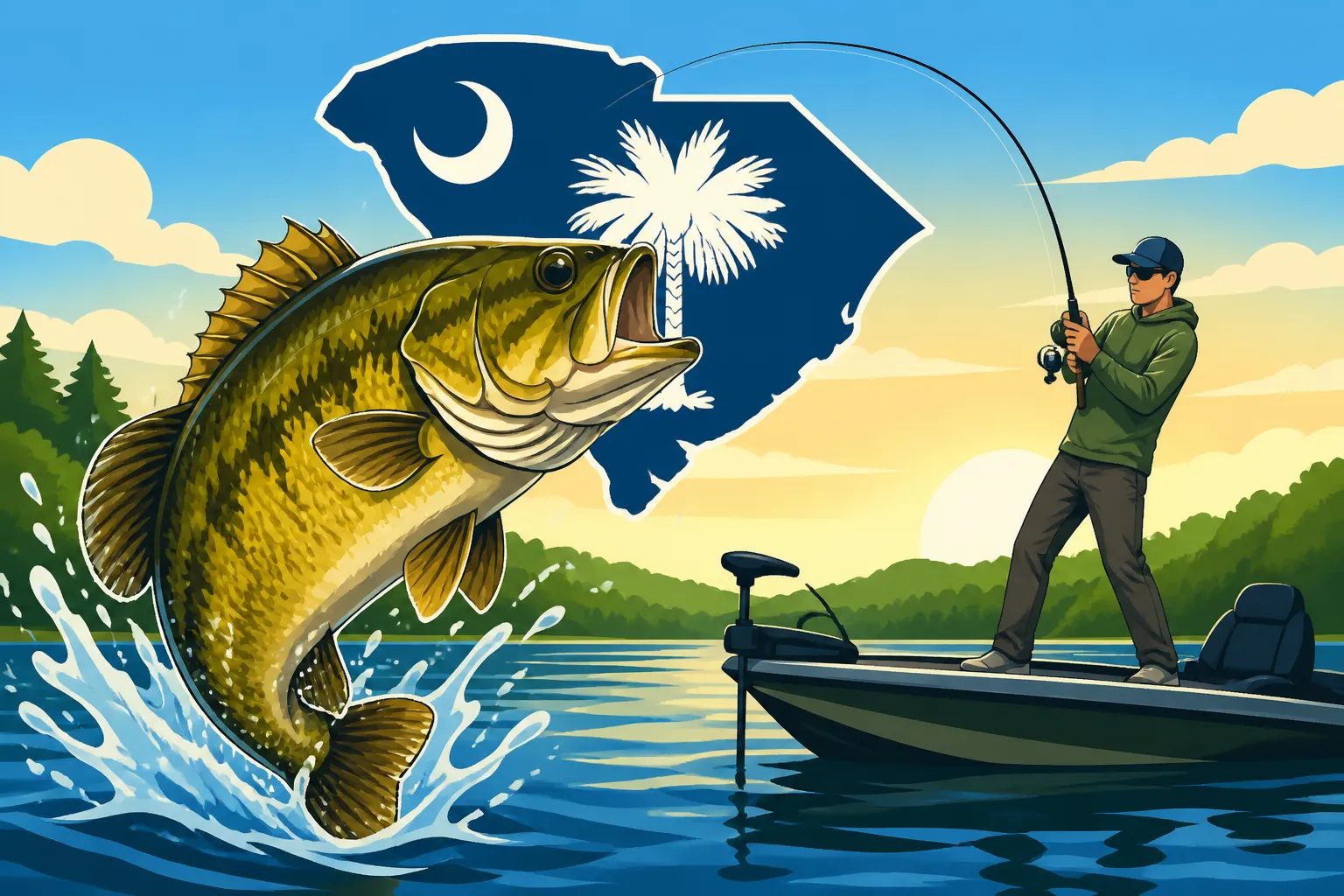
For many anglers in South Carolina, the thought of bass fishing often conjures images of thick hydrilla beds and cypress stumps, targeting those massive largemouths in our lowland reservoirs. But for those who venture into the cooler, clearer waters of the Upstate, a different, equally thrilling challenge awaits: the smallmouth bass. These bronze beauties are a hard-fighting, often elusive quarry, and understanding their unique preferences in our mountain lakes is key to a successful trip. This guide will dive deep into how and where to find smallmouth bass in South Carolina's magnificent Upstate lakes, offering practical advice to help you hook into these spirited fighters.
Understanding Smallmouth Bass in South Carolina's Upstate
Smallmouth bass, often affectionately called "bronzebacks," are a different beast entirely compared to their largemouth cousins. They prefer cooler, clearer water, typically found in rocky rivers and deep, pristine lakes. In South Carolina, this means the ideal habitat for smallmouth is predominantly limited to our Upstate lakes and the rivers that feed them, such as Lake Jocassee, parts of Lake Keowee, and the upper reaches of Lake Hartwell. Unlike largemouths that thrive in cover like weeds and submerged timber, smallmouths are structure-oriented, gravitating towards rocky points, ledges, humps, and current breaks.
The thrill of catching a smallmouth comes not just from its aggressive strike, but from its incredible fighting ability. They're known for their powerful runs, acrobatic jumps, and never-give-up attitude, even when brought boatside. This makes them a highly sought-after sportfish for many anglers who appreciate a challenging fight on light tackle. Fishing for smallmouth requires a slightly different approach and understanding of their unique habits, which we'll explore in detail.
Smallmouth vs. Largemouth: Key Differences
While both are members of the black bass family, smallmouth and largemouth bass have distinct characteristics that influence where and how you'll target them. Recognizing these differences is crucial for any angler heading to the Upstate.
| Feature | Smallmouth Bass | Largemouth Bass |
|---|---|---|
| Habitat | Cool, clear water; rocky areas, deep lakes, rivers | Warmer, often stained water; vegetation, timber |
| Appearance | Bronze to brown, vertical bars, smaller mouth | Green, horizontal dark stripe, large mouth |
| Fighting Style | Acrobatic jumps, powerful runs, relentless | Deep dives, head shakes, strong initial pull |
| Diet | Crayfish, minnows, insects, smaller fish | Larger baitfish, frogs, worms, anything that moves |
| Preferred Cover | Rocks, boulders, ledges, current breaks | Weeds, lily pads, submerged timber, docks |
Physically, the easiest way to tell them apart is by their mouth. A largemouth bass's mouth extends beyond the rear of its eye when closed, while a smallmouth's mouth typically does not. Smallmouths also tend to have more uniform vertical barring or mottling patterns on their sides, compared to the distinct horizontal stripe often seen on a largemouth. Understanding these differences helps you identify the fish you're targeting and adjust your approach accordingly. For more on identifying different bass, you might find our guide on Redeye Bass vs Largemouth Bass: How to Tell Them Apart helpful, as redeye are also found in some upstate river systems.
Prime Smallmouth Lakes in South Carolina's Upstate
When we talk about smallmouth bass fishing in South Carolina, our attention naturally turns to the pristine waters of the Upstate. These mountain-fed lakes provide the cooler temperatures, abundant rocky structure, and clear water that smallmouth bass adore. You won't find them in every pond or reservoir, but in specific, high-quality environments.
Lake Jocassee is perhaps the most renowned smallmouth fishery in South Carolina. Known for its deep, clear, and cold waters, it mirrors the ideal habitat for these bronze beauties. Anglers regularly pull healthy smallmouth from its rocky ledges and submerged peaks. Lake Keowee Fishing Spots and Boat Ramps is another excellent choice, particularly its northern reaches and tributary arms where cooler water and rocky bottoms dominate. While Lake Hartwell is primarily known for its largemouth and striped bass, certain areas, especially the Tugaloo River arm, can hold good populations of smallmouth, particularly in deeper, rockier sections. It's all about finding that clear, cold water and hard structure.
When planning your trip, remember that a South Carolina Fishing License Guide is essential. You'll need to know whether you need a freshwater or combination license, depending on where you plan to fish and what other species you might target. Check out Fishing License Requirements in South Carolina for all the details before you hit the water.
Where to Find Smallmouth Bass in Upstate Lakes
Finding smallmouth bass isn't always about casting blindly. These fish are creatures of habit and prefer specific types of structure and depth depending on the season, time of day, and even weather patterns. In the clear waters of Upstate lakes, stealth and understanding their preferred haunts are key.
Smallmouth bass typically don't hide in thick vegetation like largemouths. Instead, they relate to hard structure: rock piles, boulders, ledges, submerged humps, deep points, and bluff walls. These features provide ambush points, shade, and access to deeper, cooler water. The key is to look for transitions – where a rocky point drops off into deeper water, or where a hard bottom meets a softer one.
Seasonal Patterns and Prime Locations
Smallmouth bass behavior changes significantly with the seasons, impacting where you'll find them in Upstate lakes.
Spring (Pre-Spawn & Spawn): As water temperatures begin to rise in early spring (typically late March to May, depending on the lake and elevation), smallmouth move from their deep winter haunts into shallower rocky areas to stage for the spawn. Look for them on rocky points, gravel beds, and protected coves with hard bottoms in 5-20 feet of water. They'll often be found near the mouths of creeks and rivers that feed into the main lake. This is a fantastic time for sight fishing in clear water.
Summer: Once the spawn is over and water temperatures really climb, smallmouth retreat to deeper, cooler water. You'll find them relating to offshore structure like deep humps, ledges, submerged islands, and bluff walls, often in 20-50 feet of water or more. Early mornings and late evenings might see them push shallower to feed, but during the day, they'll hold tight to deep structure. This is when good electronics become invaluable for locating these fish.
Fall: As water temperatures cool down in autumn, smallmouth become highly active, feeding aggressively to build up fat reserves for winter. They'll often move back shallower, frequenting rocky points, secondary humps, and creek channels, usually in 10-30 feet of water. They can be found cruising flats adjacent to deep water. This is a prime time for power fishing techniques.
Winter: In the coldest months, smallmouth will suspend in deep water, often over main lake basins or in deep creek channels, near vertical structure like bluff walls or deep humps. They become less active, so slow, subtle presentations are necessary. Depths can range from 30 to 80+ feet. Finding them can be a challenge, but when you do, you can often catch several from a small school.
Using Technology to Locate Smallmouth
Modern fishing electronics are an absolute game-changer for smallmouth anglers, especially in deep, clear Upstate lakes. A quality fish finder with side-imaging and down-imaging capabilities can reveal those crucial rocky ledges, isolated boulders, and subtle humps where smallmouth often congregate.
When scouting an area, use your side-imaging to scan wide swathes of bottom, looking for irregularities in the terrain. Keep an eye out for baitfish schools and any larger arches that might be smallmouth holding tight to structure. Down-imaging helps you interpret what's directly beneath your boat with photographic clarity. Once you've marked potential targets, a good GPS unit helps you stay on top of the spot, making precise casts. Many anglers even mark individual boulders or small rock piles that hold fish, building a personal library of productive spots. Brands like Humminbird and Garmin offer excellent units, and you can often find great deals and read reviews on Amazon for the latest models.
Effective Techniques for Upstate Smallmouth
Smallmouth bass are opportunistic predators, but they often respond best to specific lure presentations that mimic their natural prey like crayfish and baitfish. Given the clear water and rocky environments of Upstate lakes, finesse techniques often outshine power fishing, though there are times for both.
One of the most effective techniques is fishing with jigs. Football head jigs in browns, greens, and black, tipped with a craw or creature bait trailer, are deadly when dragged along rocky bottoms and ledges. Smallmouth often mistake these for a crayfish. Another go-to is the drop shot rig, especially when fish are suspended or holding tight to structure. This allows you to present a small, soft plastic bait (like a minnow imitation) directly in their strike zone without lead interference, providing a very natural presentation.
For more aggressive fish, especially during the spring and fall, jerkbaits and crankbaits that dive to different depths can be incredibly effective. Color choices should generally lean towards natural patterns like chrome, chartreuse, browns, and baitfish imitations, especially in clear water. Topwater baits can also provide explosive action during low-light conditions or when smallmouth are actively feeding on the surface, particularly in early summer mornings or late evenings. For a broader look at techniques, our article on South Carolina Bass Fishing Techniques by Season provides excellent insights that can be adapted for smallmouth.
Lure Choices and Presentation Strategies
Matching your lure to the conditions and the smallmouth's mood is crucial.
- Jigs (Football Head, Ned Rig): For dragging rocky bottoms. Mimic crayfish. Sizes from 1/4 oz to 1/2 oz are common. Use a slow, deliberate drag or hop.
- Drop Shot: Ideal for deep, clear water and finicky fish. Use small soft plastics (3-4 inch minnows, worms). Keep it subtle, just barely shaking the rod tip to impart action. This rig is fantastic when you see fish on your sonar and want to keep a bait in their face.
- Jerkbaits: Excellent for suspended fish or when they're feeding on baitfish. Fish with a "twitch-twitch-pause" retrieve, letting the bait suspend in the water column. Often best in spring and fall.
- Crankbaits: Medium to deep diving crankbaits can cover water quickly and are effective when smallmouth are actively feeding. Choose colors like shad, crawfish, or bluegill patterns. Try to "crash" the bait into rocks to trigger reaction strikes.
- Tube Baits: A classic smallmouth lure. Rigged weedless, they imitate crayfish or gobies. Cast and drag slowly, letting it tumble over rocks.
- Spinners & Spoons: Underrated for smallmouth, especially blade baits and small spoons for vertical jigging on deep structure.
The retrieve is just as important as the lure. Smallmouth are often attracted to erratic movements but can be finicky in clear water. Experiment with retrieve speeds and pauses. Sometimes a long pause after a series of jerks is what triggers a strike. Remember, these fish have excellent eyesight in clear water, so a natural presentation is often more successful.
Rods, Reels, and Line for Smallmouth
Having the right gear makes a huge difference when targeting hard-fighting smallmouth, especially given their preferred habitat in rocky Upstate lakes. You need tackle that offers sensitivity, power, and durability.
For most smallmouth applications, a medium to medium-heavy spinning rod (6'6" to 7'2") paired with a 2500 or 3000 series spinning reel is a versatile choice. This setup allows for light line, long casts, and excellent sensitivity for detecting subtle bites. For power techniques like heavy jigging or throwing larger crankbaits, a medium-heavy casting rod (7' to 7'6") with a high-speed baitcasting reel can be more efficient.
When it comes to line, fluorocarbon is a favorite among smallmouth anglers. Its low visibility in clear water is a huge advantage, and its low stretch provides excellent sensitivity for feeling those light bites on deep structure. Typical line sizes range from 6-10 lb test for spinning setups, and 10-15 lb test for casting setups. Some anglers prefer braided line as a main line for its incredible sensitivity and strength, then tie on a fluorocarbon leader (6-12 feet) for stealth. Make sure your knot connecting the braid to the fluorocarbon leader is strong, as smallmouth are notorious for finding weaknesses. Many anglers find durable, high-quality fishing line options conveniently available through online retailers like Amazon, offering a wide selection to match their specific needs.
Essential Gear and Safety Considerations
Beyond rods, reels, and lures, a successful smallmouth fishing trip to South Carolina's Upstate lakes requires a few other key pieces of gear and a strong emphasis on safety. These lakes, while beautiful, can be deep, vast, and sometimes remote, so preparation is paramount.
Always bring a well-stocked tackle box with a variety of lures, extra line, hooks, and weights. A good pair of polarized sunglasses is non-negotiable for spotting fish and structure in clear water, and a wide-brimmed hat will protect you from the sun. Don't forget sunscreen, bug spray, and plenty of water to stay hydrated. A reliable landing net is also a smart investment; smallmouth can be feisty right up to the boat, and a net minimizes lost fish and potential injury to both you and the fish.
Always keep safety in mind. Wear a life jacket, especially if you're alone or in adverse weather. Inform someone of your float plan – where you're going and when you expect to return. The weather in the mountains can change rapidly, so be prepared for sudden storms or temperature drops. Remember, a South Carolina Fishing License Guide is not just about legality; it's a testament to responsible angling, ensuring funds are available for managing these precious fisheries.
Best Practices for Catch and Release
Smallmouth bass are a prized sportfish, and practicing responsible catch and release helps ensure these populations remain healthy for future generations of anglers. These fish often fight hard, which can be exhausting for them, so minimizing stress is crucial.
- Handle with care: Use wet hands when handling the fish to protect its slime coat, which is vital for disease resistance. Avoid touching its eyes or gills.
- Quick release: Get the hook out as quickly and gently as possible. Barbless hooks can make this much easier.
- Support the fish: If taking a photo, support the fish horizontally with two hands – one under the belly, one near the tail – never vertically by the jaw alone, as this can damage its internal organs.
- Revive if necessary: If a fish looks sluggish, hold it gently in the water, facing into the current (or move it back and forth to force water over its gills) until it's strong enough to swim away on its own.
By following these simple practices, you contribute to the conservation of smallmouth bass and the continued health of South Carolina's Upstate fisheries. For detailed regulations on specific species, always check resources like South Carolina Fishing Bag Limits Explained to ensure you're compliant with current rules.
Planning Your Upstate Smallmouth Adventure
Planning is key for a successful trip to South Carolina's Upstate lakes for smallmouth bass. These lakes are often remote, and resources can be sparse compared to more developed areas.
- Check weather: Always check the forecast for your specific lake, paying attention to wind, temperature changes, and potential storms. Mountain weather can be unpredictable.
- Boat ramps and access: Research public boat ramps and access points beforehand. Some Upstate lakes have limited options, and parking can be an issue on busy weekends. Our guide to Top Boat Ramps for South Carolina Lake Fishing might offer some good starting points.
- Local bait and tackle shops: While many anglers buy their gear online, supporting local bait and tackle shops can provide invaluable, up-to-date information on local conditions, hot lures, and recent fish patterns. They can tell you what's working best right now on that particular lake.
- Permits and regulations: Double-check all local and state fishing regulations. Smallmouth bass often have specific size and creel limits. You can find comprehensive information in our article South Carolina's Freshwater Fishing Regulations.
By taking the time to plan and prepare, you significantly increase your chances of a safe, enjoyable, and successful smallmouth bass fishing adventure in the beautiful Upstate lakes of South Carolina. Remember, these fisheries are a treasure, and enjoying them responsibly ensures they remain that way for years to come.
Disclaimer
This article is for general informational purposes only and does not constitute professional advice. Laws, prices and regulations vary by location and change over time. Consult a qualified professional for guidance on your specific situation.