Do You Need a License to Fish From a Private Pond?
It’s a scenario many of us have faced: you’re invited to a friend’s beautiful property with a sprawling pond, or perhaps you’ve recently moved to a rural home with its own private fishing hole. The question inevitably pops up – "Do I actually need a fishing license for this, or am I good to go?" This common confusion can lead to unnecessary worry or, worse, unintended legal issues. This guide will clarify South Carolina’s specific regulations concerning fishing in private ponds, helping you understand exactly when a license is required and when you can cast a line worry-free.
Understanding South Carolina's Fishing License Basics
Before diving into the specifics of private ponds, it's really helpful to grasp the general philosophy behind fishing licenses in South Carolina. They aren't just a way for the state to make money; they're a crucial component of wildlife and fisheries conservation, ensuring that our beautiful natural resources remain abundant for generations to come.
The General Rule for Public Waters
In South Carolina, the blanket rule is pretty straightforward: if you're 16 years old or older and plan to fish in public waters, you absolutely need a valid fishing license. This applies whether you're dangling a worm in a freshwater creek, casting a lure in a large reservoir like Lake Marion, or trying your luck for redfish in the coastal estuaries near Charleston. These licenses fund critical programs like fish stocking, habitat restoration, research, and enforcement efforts by the South Carolina Department of Natural Resources (SCDNR). Without them, our state's incredible fishing opportunities wouldn't be nearly as vibrant. To get a better grasp of all the different options available, check out our comprehensive South Carolina Fishing License Guide.
What Qualifies as "Public Water" in South Carolina?
This is where some of the confusion often begins. What exactly does "public water" mean in the eyes of the law? Generally, it refers to any body of water where the public has a legal right of access. This includes all navigable rivers, major lakes and reservoirs such as Lake Murray or the Santee Cooper lakes, coastal marsh creeks, bays, and the open ocean within state jurisdiction.
The key distinction is access. If the water is accessible to the public, regardless of whether it borders private land, it's considered public. For instance, if you're fishing from a private dock that extends into a public lake, you still need a license because you're accessing public water. This is a critical point that many anglers, especially those new to the state or vacationing here, often overlook, leading to awkward encounters with game wardens. Understanding South Carolina's Freshwater Fishing Regulations is key to staying compliant.
The Nitty-Gritty of Private Pond Exemptions
Now, let's get to the heart of the matter: those picturesque private ponds. The rules here are quite specific, designed to balance conservation with the rights of private landowners.
When a License is NOT Required for Private Ponds
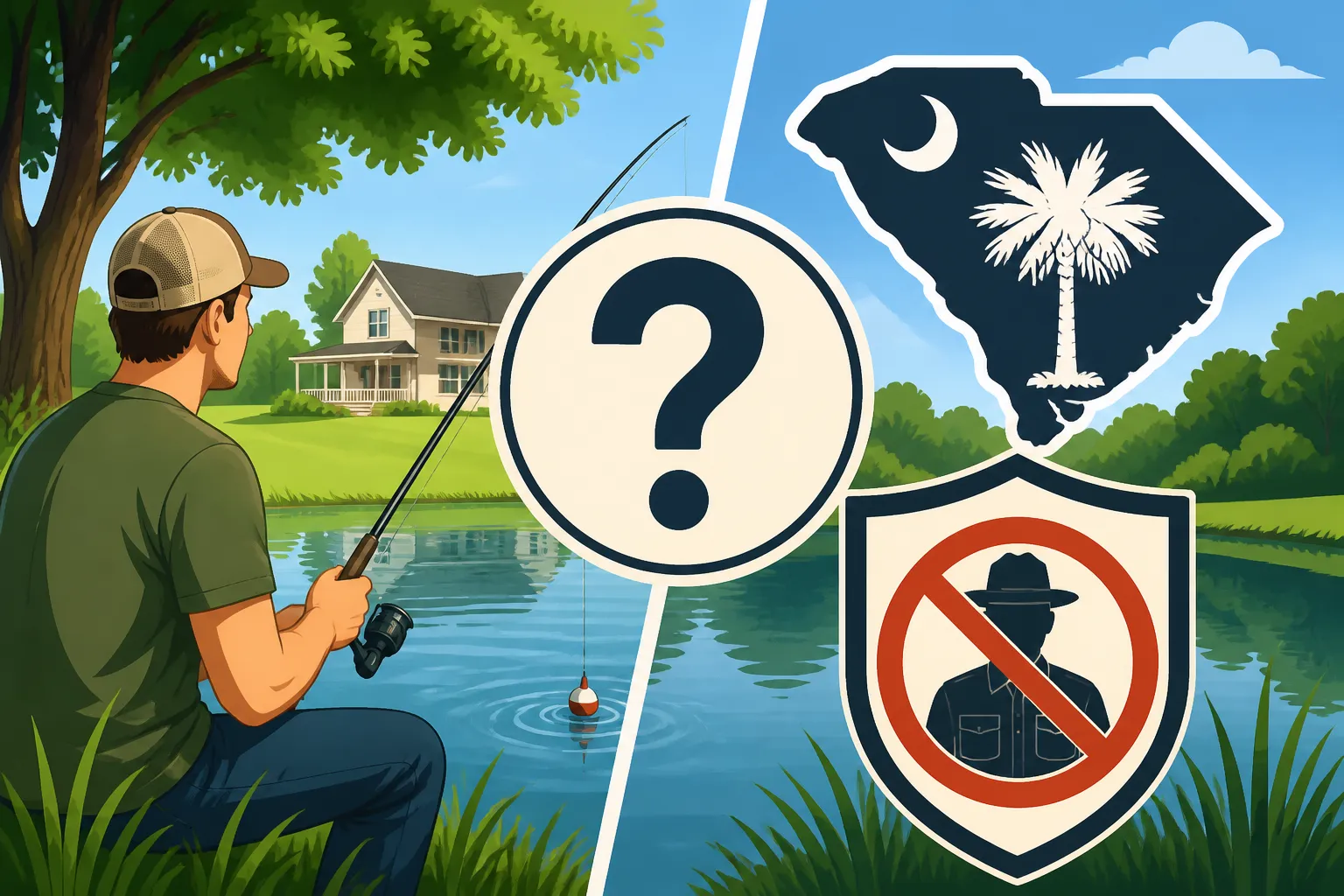
Good news for many private property owners and their guests! In South Carolina, you generally do not need a fishing license if you are fishing in a pond that is entirely located on private land and is not connected to any public waters. This means the pond must be completely self-contained within the boundaries of a single private property, with no inlet or outlet that flows into or from public streams, rivers, or lakes.
Imagine you own a sprawling farm in the upstate, and you've dug a pond solely on your property, fed by groundwater or rainwater runoff. If you're fishing in that pond, or if you've given explicit permission to a friend or family member to fish there, neither you nor your guests need a South Carolina fishing license. This exemption acknowledges that the landowner is the de facto steward of that isolated body of water, and public conservation efforts funded by licenses are less directly applicable to a contained ecosystem that doesn't interact with the broader public waterway system. It's a fantastic perk for landowners and their close circle, offering a truly relaxed fishing experience without the usual regulatory hurdles. For a comprehensive overview of when you might need a license, explore the broader Fishing License Requirements in South Carolina.
The "Private Pond" Loophole That Isn't
While the private pond exemption sounds simple, it's often misunderstood, leading people to believe they're exempt when they're not. There are several common scenarios where a fishing license would still be required, even if you think the water is private.
Firstly, if a pond has any kind of inlet or outlet that connects it to public waters, even intermittently or during heavy rains, it typically loses its "private pond" exemption status. For example, if a creek runs through your property, feeding into and out of your pond, and that creek eventually connects to a public river, your pond is likely considered part of the public waterway system. SCDNR's view is that fish can migrate, and thus conservation efforts for public waters extend to such connected systems.
Secondly, community ponds or ponds within homeowner associations (HOAs) are almost always considered public in terms of fishing license requirements. Even if access is restricted to residents, the collective ownership and the typical connection to wider drainage systems mean they don't meet the strict "entirely on private land" criterion of a single, isolated private property. These are common pitfalls, so if you're ever unsure, it's always safer to err on the side of caution and either obtain a license or contact the SCDNR for clarification.
Navigating Common Scenarios and Potential Pitfalls
The nuances of what constitutes a "private pond" versus public water can be tricky. Let's explore some scenarios that often trip people up.
Fishing on Leased Land or Community Ponds
Many anglers in South Carolina enjoy access to private land through leases, perhaps for hunting, or as part of a recreational club. If this leased land contains a pond, the license requirements depend on the pond's nature. If the pond is truly isolated and entirely within the boundaries of the leased property, and that property itself is private (not traversed by public easements or waterways), then the exemption might apply, provided you have explicit permission from the landowner. However, this often requires a detailed understanding of the property's legal descriptions and water connections.
Community ponds, like those found in suburban developments or managed by HOAs, are almost always a different story. Even though access might be restricted to residents, these ponds are rarely considered "entirely on private land" in the way the exemption intends. They usually serve as stormwater retention, are fed by or drain into public systems, and the land itself is common property, not exclusively owned by a single individual. In these cases, you should fully expect to need a South Carolina fishing license. The best course of action is to check with your HOA or local SCDNR office directly if there's any doubt about these shared water bodies. This confusion often leads to unintended violations, so being proactive is always the smartest move.
The Importance of Asking Permission
Beyond the legal requirement of a fishing license, there's a fundamental ethical and practical consideration: always ask for permission before fishing on someone else's property, whether it's a private pond or not. Even if a pond unequivocally qualifies for the license exemption, fishing without the landowner's permission is trespassing.
Trespassing can lead to serious consequences, including fines, legal action, and a permanent loss of access to what could be a fantastic fishing spot. Imagine discovering an incredible private pond and just showing up with your gear, only to be confronted by an angry landowner. It's an awkward and completely avoidable situation. A simple phone call, text, or conversation can prevent a lot of headaches and build goodwill. Most landowners are happy to share their resources, especially if you show respect for their property. Remember, even if you don't need a state license for that specific pond, permission from the property owner is paramount to a lawful and enjoyable fishing experience. This common courtesy goes a long way in ensuring positive relationships and continued access to private fishing opportunities, avoiding the kind of legal trouble detailed in Penalties for Fishing Without a License in South Carolina.
What to Carry Even When Exempt
Even when you're confident you don't need a license for that private pond, it’s a good idea to be prepared. Game wardens and local law enforcement have the right to investigate if they observe fishing activity, and being able to quickly clarify your situation can save a lot of time and potential hassle.
Proof of Ownership or Permission
If you're fishing on your own private pond, having some form of identification (like a driver's license) that links you to the property address can be helpful. For guests, a simple, dated note from the landowner explicitly stating you have permission to fish on their property (and ideally including the property address) is invaluable. A quick phone call to the landowner for verification can also resolve any questions on the spot. This isn't a legal requirement for the exemption itself, but it’s a proactive measure that demonstrates you're fishing responsibly and with legitimate access, preventing misunderstandings with authorities. Having your ducks in a row can turn a potential interrogation into a quick, friendly chat.
Gear Considerations for Private Pond Anglers
While this guide focuses on license requirements, it's worth a quick thought about gear for these private fishing havens. Private ponds in South Carolina are often teeming with largemouth bass, various panfish like bluegill and redbreast sunfish, and sometimes catfish. You don't usually need highly specialized gear. A simple spinning rod and reel combo, some basic tackle like hooks, sinkers, and bobbers, and a selection of artificial lures (like plastic worms, spinnerbaits, or small crankbaits for bass) will generally serve you well. For panfish, nothing beats a cane pole or light spinning gear with crickets, worms, or small jigs. Many anglers find great success targeting panfish, and our guide on Best Bait for Panfish in Farm Ponds offers excellent tips for beginners.
Remember to bring a cooler with ice for your catch, especially on warm South Carolina days. A pair of pliers for hook removal, a small first-aid kit, and plenty of water are also smart additions. Since you’re on private property, you might have more leeway with amenities, but it’s always best to be self-sufficient.
Here’s a handy checklist for your private pond fishing trips:
| Item | Purpose | Notes |
|---|---|---|
| Valid Photo ID | For identification purposes | Especially if you're the landowner or have permission. |
| Permission Note | Proof of landowner's consent (for guests) | Include property address and landowner's contact info. |
| Fishing Rod & Reel | Essential for casting | Appropriate for pond species (bass, panfish, catfish). |
| Tackle Box | Hooks, sinkers, bobbers, lures | A varied selection increases your chances. |
| Live Bait | Worms, crickets, minnows | Often highly effective in ponds. |
| Pliers/Hook Remover | Safety and fish care | Essential for removing hooks quickly and safely. |
| Cooler & Ice | For keeping catch fresh | Crucial in South Carolina's heat. |
| Water/Beverages | Stay hydrated | Especially important during long fishing sessions. |
| Sun Protection | Hat, sunglasses, sunscreen | Protect yourself from the strong sun. |
| Small First-Aid Kit | For minor cuts, scrapes, insect bites | Always good to have on hand. |
| Trash Bag | Pack it in, pack it out | Keep the private pond pristine. |
Other License Exemptions to Be Aware Of
While this article focuses on private ponds, it's worth noting that South Carolina does offer a few other specific exemptions to fishing license requirements that are good to know for any angler.
Age-Related Exemptions
In South Carolina, youth anglers under the age of 16 are generally exempt from needing a fishing license for both freshwater and saltwater fishing. This is a wonderful initiative to encourage young people to get into the sport. It means your kids or grandkids can fish alongside you without needing their own license, making family outings much simpler. However, once they hit their 16th birthday, the requirement kicks in. On the other end of the spectrum, certain seniors also qualify for exemptions, especially those who were born before specific dates or meet certain residency and age criteria, often through a lifetime license program. It's always best to check the current Fishing License Rules for Kids in South Carolina and our detailed guide on South Carolina's Senior Fishing License Guide to ensure you meet all the specific requirements for these age-based exemptions.
Free Fishing Days
Another fantastic exemption that benefits everyone is South Carolina's designated "Free Fishing Days." Each year, the SCDNR sets aside a couple of days where all residents and non-residents can fish in any public water without needing a fishing license. These days are usually chosen to coincide with popular holidays or key fishing seasons, providing a perfect opportunity for newcomers to try fishing without the initial investment of a license, or for experienced anglers to enjoy a day out without paperwork.
It's important to remember that while the license requirement is waived on these days, all other fishing regulations — such as bag limits, size limits, and gear restrictions — still apply. You're still expected to know and follow the rules for the species you're targeting. These days are widely publicized by the SCDNR, so keep an eye out for announcements about South Carolina Free Fishing Days in 2026 if you want to take advantage of this special opportunity. It's a great way to introduce friends and family to the joy of fishing in the Palmetto State. For those interested in year-round options, our guide on South Carolina Annual Fishing License Price Breakdown can help you plan your budget. If your license has lapsed, don't worry, South Carolina Fishing License Renewal Basics covers how to get back on track. For residents specifically, details on Resident Freshwater Fishing License Costs in South Carolina are a common query.
Disclaimer
Please remember that fishing regulations can change. While this guide provides comprehensive information, it is always your responsibility to verify the most current regulations with the South Carolina Department of Natural Resources (SCDNR) before fishing. This content is for informational purposes only and should not be considered legal advice.