Best Lures for Spotted Seatrout in Grass Flats
Spotted seatrout lures and techniques for South Carolina grass flats help anglers consistently catch speckled fish in estuaries.
Know what’s on the line.
Gamefish and panfish profiles — identification, behavior, feeding habits, and species-specific strategies for every catch.
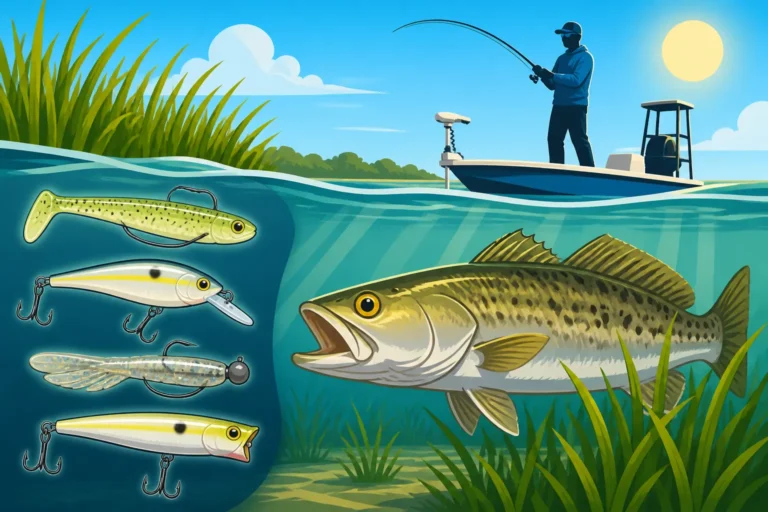
Spotted seatrout lures and techniques for South Carolina grass flats help anglers consistently catch speckled fish in estuaries.
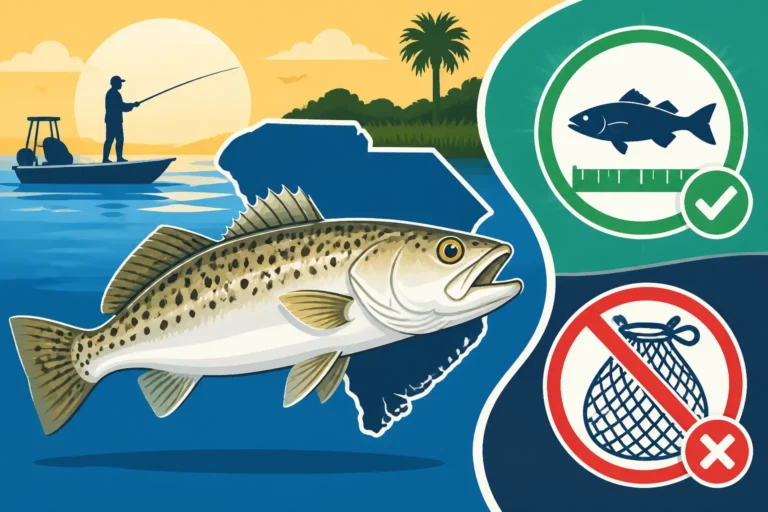
South Carolina spotted seatrout regulations detail the size limits, daily bag limits, and measurement rules for anglers.

Spotted seatrout offers a mild sweet flavor and flaky texture, making it a delicious Lowcountry meal when properly iced on ice.
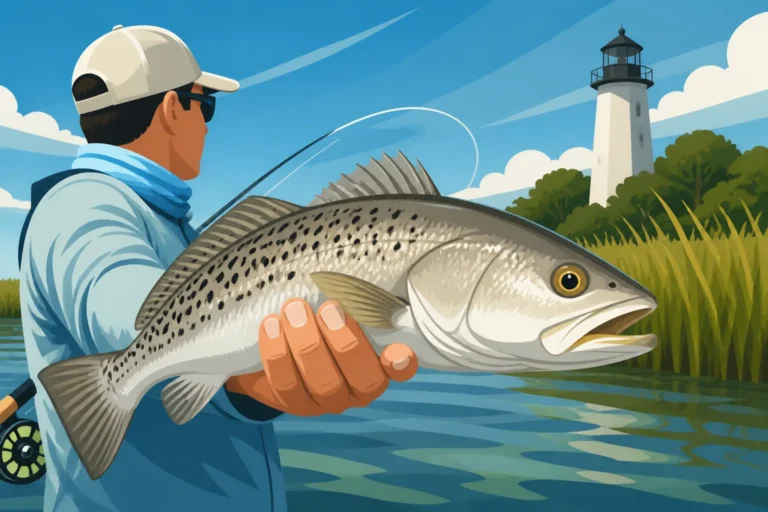
Spotted seatrout fishing near Beaufort, South Carolina explains tidal creek techniques, oyster bed habitats, and seasonal bait movements.

Spotted seatrout feeding patterns in South Carolina waters peak during dawn and dusk because low light helps ambush predators.

Spotted seatrout and weakfish identification details help anglers correctly distinguish these similar South Carolina coastal fish species.
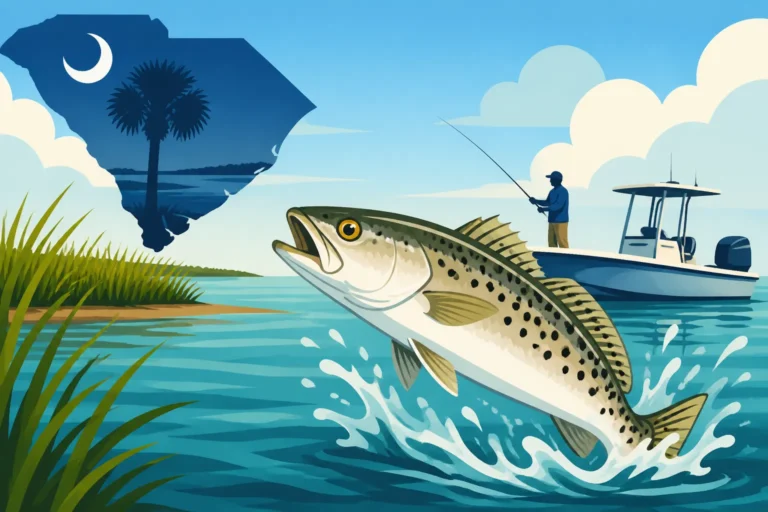
Spotted seatrout habitats in South Carolina estuaries, oyster beds, and grass flats help anglers find fish during changing tides.
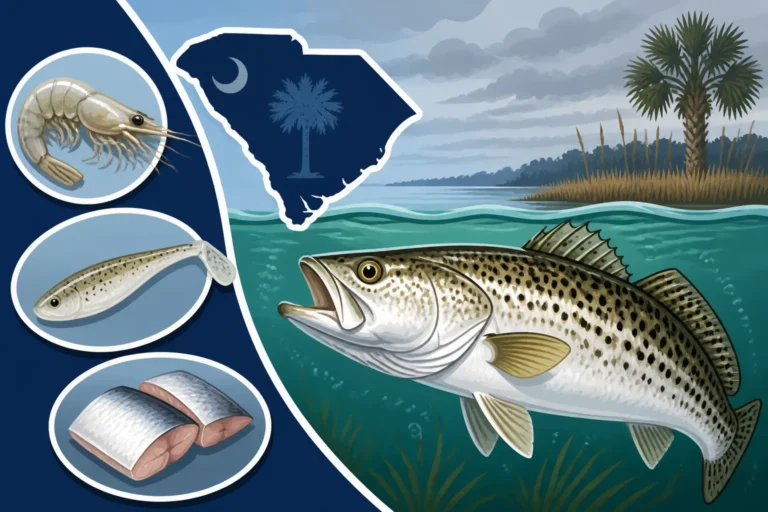
Spotted seatrout behavior in South Carolina estuaries below sixty degrees explains how to catch slow winter fish using shrimp.
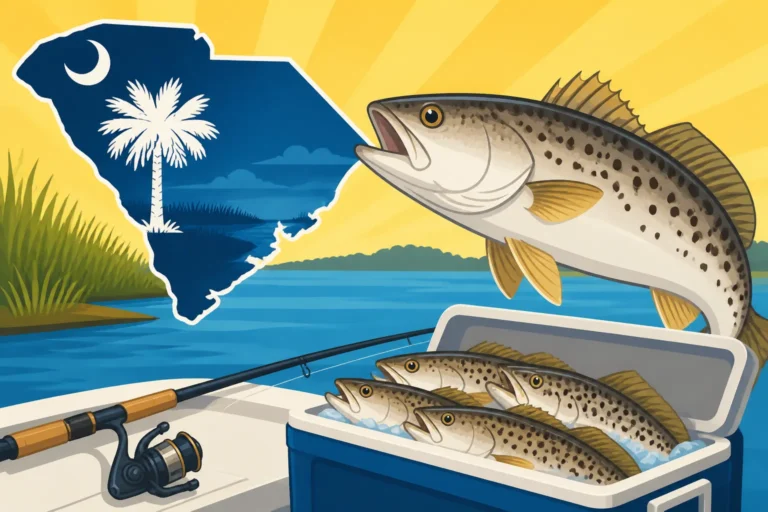
South Carolina spotted seatrout regulations set a daily bag limit of ten fish per angler and a minimum size of fourteen inches.

South Carolina spotted seatrout regulations set a ten fish daily limit per person to protect local fish populations from overfishing.