Tightlining Techniques for Crappie Explained
You know that feeling, right? You're out on the water, maybe on Lake Moultrie or the upper reaches of Lake Marion, patiently waiting for that tell-tale tap of a crappie, but all you're getting are phantom nibbles or nothing at all. It can be incredibly frustrating trying to detect those notoriously subtle bites, especially when the fish are holding tight to structure or lurking in deeper water. This comprehensive guide is going to peel back the layers on tightlining techniques for crappie, revealing how this incredibly sensitive method can transform your fishing success in South Carolina, helping you feel even the lightest strike.
Understanding the Nuance of Tightlining for Crappie
Tightlining is an art form, a dance between your rod, line, and the fish below. It’s fundamentally different from traditional bobber fishing, where you rely on visual cues, or even typical casting and retrieving where slack in the line can mask subtle takes. With tightlining, you’re creating a direct, unbroken connection to your bait, allowing you to feel everything happening at the business end of your line.
What Makes Tightlining Different and Why It Works
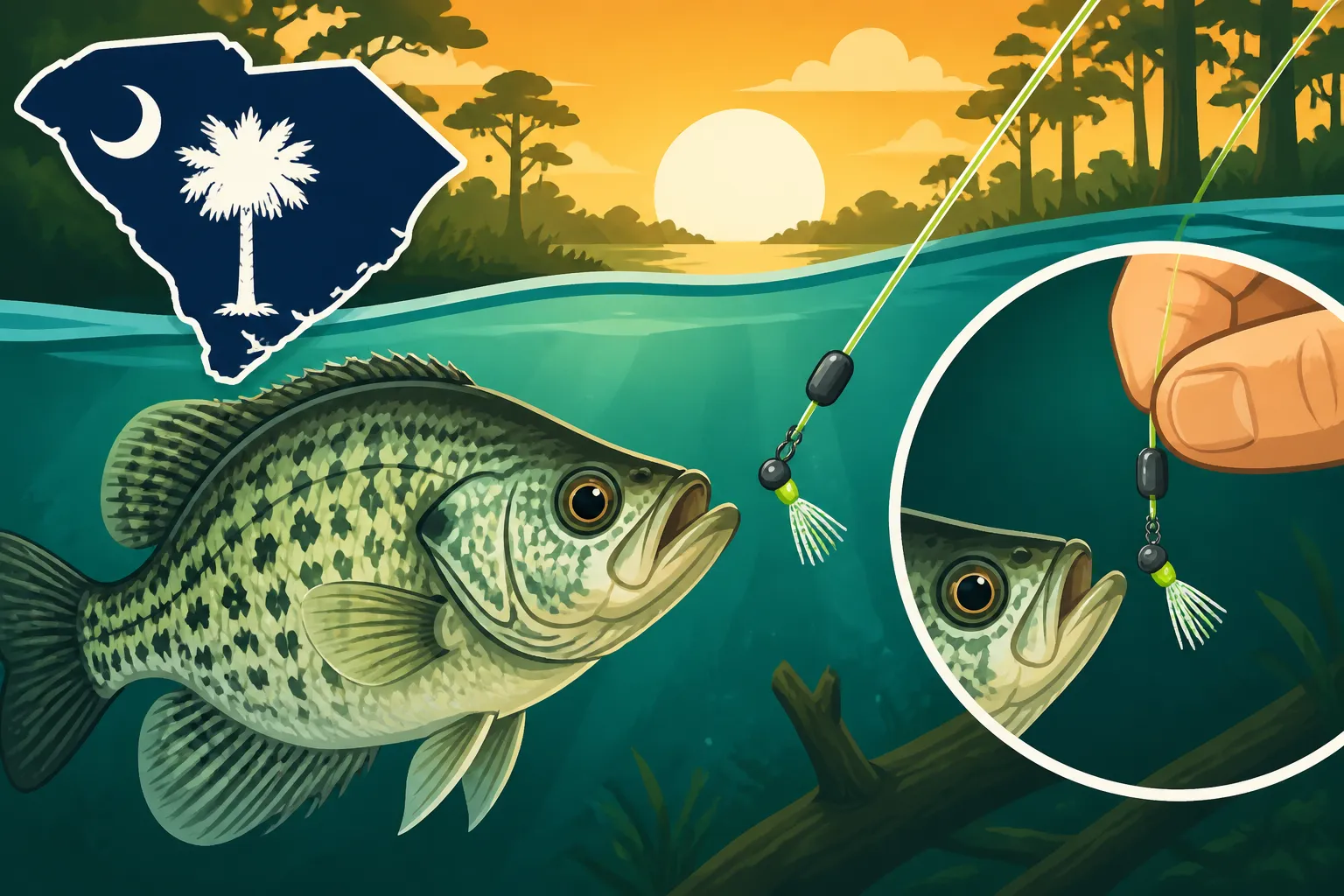
Imagine holding a string attached directly to a feather in the wind. You'd feel every little flutter, wouldn't you? That's the essence of tightlining. Instead of a bobber acting as a visual intermediary, your rod tip and your hand become the primary sensors. This method is all about keeping just enough tension on your line to maintain contact with your jig or bait, without pulling it away from a curious crappie. It's not about being "tight" in a heavy-handed way; it's about being sensitive and responsive.
This direct contact is a game-changer for crappie anglers because these fish are notoriously light biters. Sometimes, a crappie won't deliver a jarring strike like a bass might. Instead, they might just "tick" the bait, or even swim off with it, creating only a slight change in line pressure or a barely perceptible wiggle in your rod tip. If you have any slack in your line, you’ll miss these subtle indications completely. Tightlining maximizes your chances of detecting these gentle takes, often before the crappie has fully committed or spit out the bait.
When Tightlining Shines Brightest for South Carolina Crappie
While tightlining can be effective in many situations, there are specific scenarios where it truly excels and often outperforms other techniques. For instance, when crappie are schooling up in deeper water, perhaps around sunken timber or brush piles in the Santee Cooper Lakes, tightlining allows you to precisely position your jig directly into their strike zone. You can slowly drop your bait, feeling for the contact with structure, then hold it right there, subtly twitching, knowing exactly where your lure is in relation to the cover.
Another prime example is when crappie are finicky, maybe after a cold front or during the summer doldrums, and they're not actively chasing. In these conditions, they might just gently mouth the bait. Tightlining lets you detect these almost imperceptible changes in weight or pressure that signal a bite. Think about fishing a dock on Lake Murray; crappie love to hold tight to those pilings. Dropping a jig straight down and tightlining lets you work every inch of that structure without getting hung up, feeling every little tap as you slowly lift and drop your offering. It's also fantastic for working subtle ledges or drops-offs where crappie might be staging, providing a clear advantage over blind casting.
Essential Gear for Successful Crappie Tightlining
Like any specialized fishing technique, having the right tools can make all the difference when it comes to tightlining for crappie. You don't need to break the bank, but investing in a few key pieces designed for sensitivity will significantly improve your ability to feel those faint bites.
The Right Rod: Your Primary Sensor
When it comes to tightlining, your rod is your most crucial piece of equipment. You need something with extreme sensitivity in the tip, often referred to as a "fast" or "extra-fast" action. This means the rod bends mostly at the tip, transmitting even the slightest vibration or change in line pressure directly to your hand.
Many anglers opt for specialized crappie jigging rods, which typically range from 6 to 10 feet in length, though some go even longer for specific spider-rigging setups. For handheld tightlining, a 6.5 to 7.5-foot light or ultralight spinning rod is usually perfect. Look for models made of high-modulus graphite, as this material is renowned for its sensitivity. Brands like St. Croix or Fenwick offer excellent options that won't feel like you're holding a lead pipe all day. The longer rod also provides better line control and leverage when fighting a fish, especially important when fishing around structure. You can often find a great selection of sensitive crappie rods on Amazon.
Reels, Line, and Lure Choices for Maximum Feel
While the rod is paramount, your reel, line, and lure choices play equally important roles in maximizing sensitivity.
For reels, a small, lightweight spinning reel in the 1000 or 2000 series is ideal. You want something smooth with a good drag, but more importantly, it needs to balance well with your sensitive rod. Brands like Shimano or Daiwa make excellent, lightweight spinning reels that are perfect for the job.
Your fishing line is the direct conduit to the fish. Many tightliners prefer a low-stretch line to maximize feel. Braided line, with its near-zero stretch, is a top choice. A 6 to 10-pound test braided line, like PowerPro or Seaguar TactX, offers incredible sensitivity and strength, allowing you to feel every bump and tick. However, braid can be visible in clear water, so many anglers will tie on a short, 2 to 4-foot leader of fluorocarbon line (4-6 lb test) using a small swivel or a double uni knot. Fluorocarbon is nearly invisible underwater and has a moderate amount of stretch, which can act as a shock absorber. Monofilament (4-6 lb test) can also work, especially if you prefer a little more stretch to prevent hooks pulling out of soft crappie mouths, but it won't offer the same level of direct feedback as braid or fluorocarbon.
When it comes to lures, small jigs are the bread and butter of tightlining for crappie. Think 1/32 to 1/16 ounce jig heads, sometimes even lighter, depending on depth and current. Paired with soft plastic bodies like tube jigs, minnow profiles, or small grub tails (1.5 to 2.5 inches), these light presentations are key. Classic hair jigs or even a small beetle spin can also be deadly. The choice of jig color can be critical; sometimes bright colors like chartreuse or pink work best, while other times a natural shad or white pattern is preferred. If you’re not sure, try a few different colors you can easily find on Amazon. Live bait, like a small minnow hooked through the lip, can also be tightlined with just a tiny split shot a few inches above the hook.
Here’s a quick comparison of line types:
| Line Type | Pros | Cons | Best Use |
|---|---|---|---|
| Braided | Zero stretch, maximum sensitivity, very strong | Visible in clear water, can be harder to knot, cuts easy | Primary line for maximum feel, especially with a fluoro leader |
| Fluorocarbon | Nearly invisible, good sensitivity, abrasion resistant | More expensive, less knot strength than mono, sinks fast | Leaders for braid, main line in very clear water |
| Monofilament | Affordable, good knot strength, some stretch, floats | Less sensitive than braid/fluoro, memory issues, UV degradation | Beginner-friendly, good shock absorber, main line in stained water |
Step-by-Step Tightlining Techniques for South Carolina Waters
Now that you've got your gear sorted, let's dive into the actual techniques. Tightlining isn't just one method; it's a versatile approach that adapts to different scenarios and fish behaviors. The core principle, however, always remains the same: maintaining constant contact with your lure.
Vertical Tightlining Over Structure
This is perhaps the most precise and common form of tightlining, often used when crappie are holding tightly to specific cover like brush piles, submerged timber, or bridge pilings. You'll often find these hotspots in places like the deep channels of Lake Greenwood or the numerous fish attractors in Lake Hartwell.
First, position your boat directly over the structure you want to fish. Many anglers use their electronics, like a good fish finder, to pinpoint these spots and even mark individual fish. Drop your jig straight down, allowing it to freefall on a semi-tight line. As it descends, watch your line and feel for any pauses or subtle bumps – these can indicate a crappie grabbing it on the fall.
Once your jig reaches the desired depth, or touches the top of the structure, keep a slight bend in your rod tip. This is where the "feel" comes in. Slowly lift your rod tip a few inches, then gently let it fall back, allowing the jig to flutter naturally. Think of it as a subtle jigging motion, barely moving the bait. Pause for a few seconds between lifts. A bite might feel like a gentle "tick," a sudden heaviness, or sometimes, your line will just go slack for a moment as a crappie swims upwards with the bait. The moment you feel anything out of the ordinary, set the hook with a swift, upward sweep of your rod. You'll be amazed at how many fish you catch that you wouldn't have even known were there with other methods. This technique is particularly effective for those deeper crappie, especially in colder months, as detailed in many guides on Crappie Fishing Techniques for Fall.
Casting and Retrieving with a Tight Line
Tightlining isn't exclusively a vertical affair. You can also cast your jig and retrieve it with a tight line, which is excellent for covering more water or fishing shallower flats and edges. This technique is particularly useful in areas like the shallower coves of Lake Wateree or along the vegetated banks of the Edisto River.
Cast your small jig to your target area. As soon as the lure hits the water, close your bail and begin a very slow retrieve, keeping just enough tension on the line so you can feel the jig working. You're not trying to burn the bait back; instead, you want it to swim or glide along naturally. You can incorporate subtle twitches or pauses with your rod tip, letting the jig fall slightly, then picking up the retrieve again.
The key here is constant contact. If you feel your line go slack for a split second, it's often because a crappie has picked up the jig and is swimming towards you, or simply stopped its forward momentum. This is your cue to set the hook. This technique is fantastic for exploring areas like submerged grass lines or creek channels that might hold roaming schools of crappie. Learning how to find crappie in spring often involves casting to these kinds of areas as the fish move shallow for the spawn.
Reading Your Rod Tip and Feeling the Bite
This is arguably the most challenging, yet most rewarding, aspect of tightlining. It takes practice, but once you get it, your crappie catch rates will soar. You need to develop a hyper-awareness of what your rod tip and the line running through your fingers are telling you.
A crappie bite can manifest in several ways:
- The "Tick": A sharp, almost electrical impulse felt through the rod. This is a classic crappie bite.
- Added Weight: The jig suddenly feels heavier than it should, as if you picked up a leaf. It’s often a crappie swimming away with the bait.
- Slack Line: Your line, which was taut, suddenly goes slack or forms a slight bow. This happens when a crappie swims towards you after taking the bait.
- Rod Tip Dip/Wiggle: A very subtle, almost imperceptible dip or quiver of your rod tip that isn't caused by your own motion or current.
The trick is to react immediately but smoothly. Don't yank the rod; a gentle, firm sweep upwards is usually all it takes to embed the small hook. Remember, crappie have relatively soft mouths, so a powerful hook set can tear the hook free. By mastering this nuanced detection, you'll be catching more crappie, especially those that are just "mouthing" the bait without a strong pull. This skill is critical for methods like How to Jig for Crappie in Deep Water where visual cues are non-existent.
Optimizing Your Tightlining Success: Tips and Tricks
Beyond the basic techniques, there are several ways to fine-tune your tightlining approach and consistently put more crappie in your livewell, whether you're fishing the legendary Santee Cooper system or a smaller farm pond.
Seasonal Adjustments and Water Conditions
Crappie behavior changes significantly with the seasons, and so too should your tightlining strategy.
- Spring: As water temperatures rise, crappie move into shallower areas to spawn. This is when they're often found around brush, docks, and lily pads in 2-10 feet of water. Target these areas with shallow vertical tightlining or by casting and slowly retrieving. Look for guides on Best Crappie Spots on the Santee Cooper Lakes for prime spring locations.
- Summer: Crappie retreat to deeper, cooler waters, often suspending over ledges, in creek channels, or near thermoclines. This is prime time for vertical tightlining over brush piles and submerged timber in 15-30 feet of water. Night fishing can also be incredibly effective for summer crappie, as they move up to feed.
- Fall: As waters cool, crappie become more active, often schooling up again and feeding heavily to prepare for winter. They can be found in a variety of depths, often transitioning from deeper summer haunts to shallower feeding areas, sometimes as shallow as 10-15 feet, especially on sunny days. Focus on creek channels, main lake points, and brush piles.
- Winter: Crappie are usually in their deepest patterns during winter, suspending in large schools in very deep water or hugging the bottom in creek channels. This is when patience and precise vertical tightlining are crucial. Winter Fishing Techniques in South Carolina Lakes often call for minimal jig movement and super slow retrieves.
Water clarity and temperature also dictate your approach. In clear water, opt for natural jig colors and thinner fluorocarbon leaders. In stained or muddy water, brighter colors like chartreuse or orange can be more visible, and you might get away with slightly heavier line. Remember to always consult the South Carolina Freshwater Fishing Calendar to align your techniques with seasonal changes.
Using Electronics to Maximize Precision
Modern fishing electronics are an invaluable tool for tightlining, especially when targeting crappie that are suspended or hidden in complex structures. A good fish finder or side imaging unit can help you:
- Locate Structure: Pinpoint brush piles, sunken trees, or artificial fish attractors with incredible accuracy. This is crucial for knowing exactly where to drop your jig.
- Identify Fish: See individual fish or schools of crappie holding near or within the structure. This confirms you're in the right spot and allows you to drop your lure directly to them.
- Monitor Depth: Know the exact depth your lure is at in relation to the fish you're seeing on your screen. This allows for precise depth adjustments, which can be the difference between catching fish and going home empty-handed.
Using a trolling motor with a spot-lock feature (like those offered by Minn Kota or Garmin) allows you to hold your boat precisely over a productive spot, even in wind or current, freeing up your hands for uninterrupted tightlining. You can rig your boat with multiple rods in holders and run several tightlined jigs at different depths, a technique often called "spider rigging," particularly effective on large bodies of water like Lake Marion.
The Power of Experimentation and Subtle Adjustments
Crappie can be fickle, and what worked yesterday might not work today. Don't be afraid to experiment and make subtle adjustments until you crack the code.
- Jig Weight: If there's current or you're fishing very deep, you might need to go up to a 1/8 ounce jig to maintain contact, but always use the lightest jig possible for maximum sensitivity.
- Jig Color: If you're not getting bites, switch colors. Carry a variety of options. Sometimes the Best Jig Colors for Crappie Fishing can change hour by hour.
- Retrieval Speed/Jigging Motion: Try faster twitches, slower lifts, or even dead-sticking (holding the bait perfectly still) for several seconds. Often, the slightest movement is all it takes.
- Depth: If you see fish on your electronics but aren't getting bites, adjust your depth up or down a foot or two. Sometimes crappie are very specific about the depth at which they'll strike.
Remember, tightlining is about paying attention to details and responding to what the fish are telling you through your rod tip. The more you practice, the more intuitive it becomes, turning those subtle bumps and wiggles into memorable catches on the beautiful waters of South Carolina.
Disclaimer
Fishing regulations, including license requirements, bag limits, and size restrictions, can change. Always consult the latest rules and regulations published by the South Carolina Department of Natural Resources (SCDNR) before heading out on the water. This guide is for informational purposes only and does not constitute legal advice.