South Carolina Stocked Trout Season Fishing Techniques
There's nothing quite like the thrill of chasing trout in South Carolina's cooler waters, but sometimes it feels like these stocked fish have a Ph.D. in avoiding your bait. If you've ever felt frustrated by finicky trout or unsure which technique will finally entice a bite, you're in the right place. This comprehensive guide will walk you through the most effective fishing techniques tailored specifically for South Carolina's stocked trout season, helping you turn those "almost" moments into memorable catches.
Understanding South Carolina's Stocked Trout Program
South Carolina might be known for its warm climate, but tucked away in the Upstate are beautiful, cold-water streams and lakes where trout thrive. Since many of these waters can't support a robust, year-round wild trout population due to temperature fluctuations or other environmental factors, the South Carolina Department of Natural Resources (SCDNR) steps in with an active stocking program. This initiative ensures that anglers, from seasoned veterans to families just starting out, have ample opportunities to experience the joy of trout fishing.
The Role of SCDNR in Stocking
The SCDNR plays a crucial role in maintaining these fisheries. Their dedicated teams raise thousands of trout in hatcheries, primarily in the Walhalla State Fish Hatchery, before carefully releasing them into designated public waters. This isn't just a random dump of fish; it's a strategic effort to provide consistent fishing opportunities, especially in streams that might otherwise go unfished for trout. They analyze water quality, temperature, and access points to determine the best locations and times for stocking, usually targeting cooler months from fall through spring when water temperatures are most hospitable for trout. You can often find details about these efforts and the waters involved by looking up the latest updates on the SCDNR website, which is invaluable for planning your trip.
Common Stocked Trout Species
While South Carolina has a small, precious population of native brook trout in its highest mountain elevations, the vast majority of stocked trout you'll encounter are rainbow trout. These vibrant, hard-fighting fish are popular with anglers due to their willingness to strike a variety of baits and lures, as well as their generally good eating quality. Occasionally, you might also find brown trout stocked, known for their elusive nature and larger size potential. These species are selected for their adaptability to hatchery environments and their ability to survive and provide sport in the stocked waters for a reasonable period. Knowing which species you're likely to encounter can sometimes influence your choice of presentation, though most general trout techniques will work for both rainbow and brown trout.
Essential Gear for Stocked Trout Fishing
You don't need a boatload of specialized equipment to enjoy stocked trout fishing, but having the right basic setup can make a world of difference. Think light and sensitive. Trout often have a subtle bite, and an overly heavy setup can mask those gentle tugs, leading to missed opportunities. Plus, these fish are often found in smaller streams and creeks, where delicate presentations are key.
Rod and Reel Setup for Trout
For most stocked trout scenarios, a light to ultralight spinning rod is your best friend. A rod between 5 to 6.5 feet in length with a fast or moderate-fast action will give you the sensitivity to feel soft bites and the backbone to handle a feisty trout. Pairing this with a small spinning reel, something in the 1000 to 2000 size range, creates a balanced and comfortable setup. This combination allows for precise casting of lighter baits and lures, which is often necessary when fishing smaller streams or when trout are being particularly picky. For those serious about their tackle, reputable brands like Shimano and Daiwa offer excellent options that strike a balance between performance and durability, and you can often find great deals on these through retailers like Amazon.
Line and Leader Selection
When it comes to line, lighter is almost always better for trout. Four to six-pound test monofilament or fluorocarbon line is usually ideal as your main line. Monofilament offers good knot strength and some stretch, which can be forgiving with a hard-fighting fish. Fluorocarbon, on the other hand, is nearly invisible underwater and has less stretch, providing more sensitivity. However, where you really gain an edge is with a fluorocarbon leader. Tying a 2-4 pound test fluorocarbon leader, about 18-24 inches long, to your main line using a small swivel or a uni-to-uni knot can make a huge difference. The invisibility of the leader in clear trout water can reduce spooking significantly, especially in streams that see a lot of fishing pressure.
Terminal Tackle Essentials
Your terminal tackle selection for stocked trout is surprisingly simple, focusing on small and subtle components. Keep a variety of small hooks on hand, ranging from size 10 to 16, with some being bait holder styles and others more of an Aberdeen or nymph hook shape. Split shot weights, in various small sizes (BB, 3/0, 2/0, 1/0), are essential for getting your bait down to the fish without being overly intrusive. A few small bobbers or strike indicators, particularly pencil-thin or unweighted foam models, can be helpful for detecting light bites when drifting bait. Don't forget a pair of needle-nose pliers or hemostats for hook removal, as well as a small pair of line clippers. Having a well-organized tackle box or small fishing vest to carry these essentials will make your time on the water much more efficient.
Effective Baits and Lures for Stocked Trout
Stocked trout, especially those recently introduced, often have a more aggressive feeding response than their wild counterparts. However, as they acclimate and receive more fishing pressure, they can become quite wary. Therefore, having a diverse arsenal of baits and lures is key to consistent success.
Natural Baits That Get Bites
For many anglers, especially those just starting out or fishing with kids, natural baits are the go-to for stocked trout. PowerBait, in its various forms (dough, nuggets, or eggs), is a consistent producer. Trout are often raised on pellet feed, and PowerBait's scent and texture are designed to mimic that, making it incredibly effective. Popular colors include chartreuse, rainbow, and white. Another classic is corn, either plain canned sweet corn or scented versions, which trout seem to find irresistible, perhaps due to its size and bright color.
Beyond these manufactured options, live baits are often deadly. Small red worms or mealworms fished on a tiny hook are hard for a hungry trout to pass up. You can also try small crickets or even salmon eggs, which are a natural food source for trout in some regions and hold a strong appeal. When fishing live bait, remember that presentation is everything. You want your bait to drift naturally with the current, appearing as easy prey. For more specific advice on this approach, check out our guide on how to fish bait for stocked trout.
Artificial Lures That Work Wonders
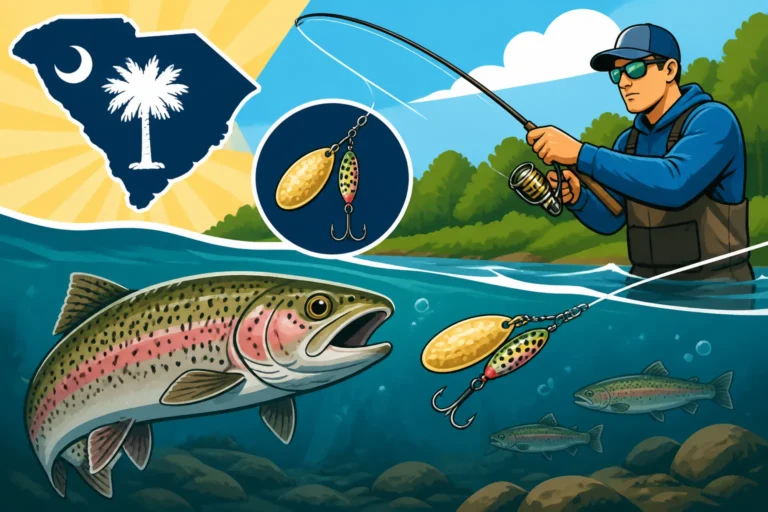
If you prefer the active style of lure fishing, stocked trout respond well to a variety of artificial presentations. Small inline spinners, such as those from Mepps or Panther Martin, are absolute classics. Their flashing blades and vibrating action mimic small baitfish or aquatic insects, triggering aggressive strikes. Sizes from 0 to 2 are usually best. Spoon lures, like the classic Thomas Buoyant or Kastmaster, also work well, especially in larger pools or wider sections of streams. Their wobbling action is excellent for attracting attention.
For a more subtle approach, small jerkbaits or crankbaits, particularly those designed for ultralight fishing (think Rapala Countdown or similar brands), can be incredibly effective when trout are holding deeper or are less aggressive. Soft plastics, especially small trout worms, tubes, or grubs, fished on a tiny jig head, can also be deadly. These offer a lifelike presentation with minimal effort and can be fished effectively by bouncing them along the bottom or slowly retrieving them. You can find a huge selection of these types of lures to fill your tackle box on Amazon. If you want to dive deeper into this specific approach, consider reading our guide on Spin Fishing Techniques for Stocked Trout Streams.
Fishing Techniques for Stocked Trout Success
Knowing what gear and bait to use is only half the battle; knowing how to present them effectively is where true success lies. Stocked trout can be found in a variety of water types, from slow, deep pools to swift, rocky runs, and each demands a slightly different approach.
Drifting Baits in Currents
Drifting bait is arguably one of the most effective ways to catch stocked trout, especially in moving water. The key is to make your bait look as natural and unattached as possible. Start by placing a small split shot or two a foot or so above your hook, just enough weight to get your bait down but not so much that it causes an unnatural drag. Cast upstream and allow your bait to drift downstream with the current, keeping a slight bow in your line to maintain contact and detect bites.
Watch your line or bobber carefully for any hesitation or sudden movement – sometimes a bite is nothing more than a slight twitch or pause in the drift. If you're using a bobber or strike indicator, make sure it's appropriately sized for the current; too large, and it'll spook fish; too small, and you won't see it in the chop. Experiment with how much weight you use and how far from the hook you place it to get the most natural drift possible. This technique is particularly effective in runs and riffles where trout typically hold, waiting for food to be swept to them.
Casting and Retrieving Lures
When using artificial lures, your casting and retrieve techniques will dictate your success. For inline spinners and small spoons, a simple cast-and-retrieve method is often all you need. Cast across or slightly upstream, and reel in just fast enough to get the blade spinning or the spoon wobbling. Vary your retrieve speed and occasionally pause or twitch the lure to imitate an injured baitfish, often triggering a strike. In deeper pools or lakes, let your lure sink for a few seconds before starting your retrieve to target different depths.
For soft plastics on jig heads, a slow, jigging retrieve is often best. Cast out and let the jig sink to the bottom. Then, with small lifts of your rod tip, hop or drag the jig along the bottom, mimicking a bottom-dwelling insect or crayfish. This can be deadly when trout are lethargic or holding close to the streambed. Remember to always be prepared for a strike on the fall as well as on the retrieve. Having a selection of lure colors and sizes on hand, which you can easily swap out, is critical for adapting to what the trout are keying in on that day.
Mastering the Art of Fly Fishing for Stocked Trout
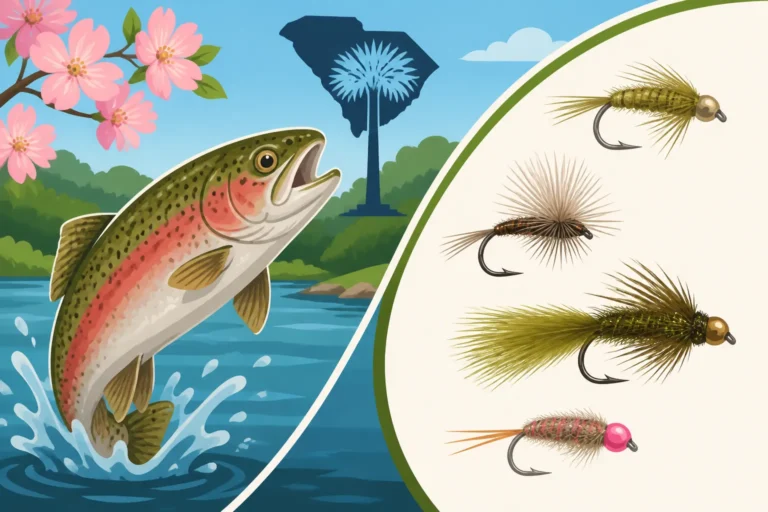
Fly fishing for stocked trout, while sometimes perceived as advanced, is incredibly rewarding. A 3- to 5-weight fly rod is perfect for most South Carolina trout streams. For recently stocked fish, attractor patterns like Woolly Buggers (black, olive, or brown) in sizes 8-12, or brightly colored nymphs like a San Juan Worm or Squirmy Wormy, can be highly effective. These patterns often mimic the hatchery pellets or other readily available food sources.
As trout become more acclimated, they might start feeding on natural insects. Having a selection of basic dry flies (e.g., Adams, Elk Hair Caddis) and nymph patterns (e.g., Pheasant Tail, Hare's Ear) in sizes 12-18 will serve you well. The key technique in fly fishing is often the "dead drift," allowing your fly to float naturally with the current, without drag. For an even deeper dive into this, check out our guide on Fly Fishing Basics for Stocked Trout. Observing the water for rising fish (indicating they're feeding on the surface) or subsurface hatches will help you select the most appropriate fly and technique. Good quality fly boxes and tippet can be found on sites like Amazon, ensuring you're ready for any situation.
Finding the Best Stocked Trout Waters
South Carolina's trout fisheries are primarily concentrated in the Upstate region, where the mountainous terrain provides the necessary cold-water habitat. While the SCDNR does an excellent job of stocking, knowing where and when to go significantly boosts your chances of success.
Key Rivers and Streams for Stocked Trout
Many of South Carolina's prime stocked trout waters are nestled within the Blue Ridge Mountains and their foothills. Popular spots include the Chattooga River, a designated National Wild and Scenic River that offers both wild and stocked sections, and its tributaries. The East Fork of the Chattooga, though smaller, is also a great spot. Other notable rivers include the Chauga River, the Middle Saluda River, and various sections of the Whitewater River system.
Lakes like Lake Jocassee, particularly its deeper, cooler waters, also host stocked trout. Some smaller, easily accessible streams and ponds within state parks might also receive periodic stockings, offering family-friendly opportunities. It's always a good idea to research the specific access points and regulations for each body of water before you head out, as some areas may be catch-and-release only or have specific tackle restrictions. For those seeking information on specific locations and their unique characteristics, our guide to the Best Streams for Brook Trout in the Blue Ridge Mountains might offer some crossover insights, even if you're targeting stocked fish.
Utilizing SCDNR Stocking Schedules
The single most valuable resource for locating stocked trout is the SCDNR's official stocking schedule. This information, typically updated regularly during the stocking season (usually fall through spring), details which rivers, streams, and lakes have recently received fish. You can usually find this information directly on the SCDNR website. Checking this schedule before your trip can literally put you where the fish are.
Beyond just the schedule, pay attention to any special regulations associated with specific stocked waters. For example, some streams might have a South Carolina Stocked Trout Daily Limit of 5 fish, while others, particularly those managed for special regulations or catch-and-release, could be different. Always verify the current rules for the specific section of water you plan to fish to ensure compliance. You can learn more by checking a stream's trout limit before you fish it, which is crucial for a legal and responsible outing.
Ethical Angling and Regulations for Stocked Trout
As responsible anglers, it's our duty to understand and adhere to the regulations designed to protect these fisheries and ensure sustainable recreation for everyone. Not only does this keep you out of trouble, but it helps preserve the resource for future generations of anglers.
Understanding Daily Bag and Size Limits
South Carolina has specific regulations regarding trout, including daily bag limits and sometimes size limits. For stocked trout, the general statewide daily creel limit is usually 10 trout per person, with no minimum size limit, but these rules can and do vary significantly depending on the specific body of water. For instance, some designated trout streams might have a reduced limit, like a South Carolina Streams With a 7-Fish Trout Limit, or even stricter controls to protect wild populations or enhance the fishing experience.
It is absolutely imperative to consult the current South Carolina's Freshwater Fishing Regulations booklet or the SCDNR website before each trip. Fishing without being aware of these rules can lead to fines and penalties. This is especially true for special regulation waters, such as those that are Catch-and-Release Only for Trout. Knowing the rules ahead of time means you can confidently enjoy your day on the water without worry.
Responsible Catch and Release Practices
While many stocked trout are harvested, practicing responsible catch and release, especially for larger fish or if you've already met your daily limit, helps spread the joy of fishing to more people. If you plan to release fish, handle them with extreme care. Wet your hands before touching the fish to protect its slime coat, which is crucial for disease resistance. Use a pair of pliers or hemostats to quickly remove the hook. If the fish is deeply hooked, it may be better to cut the line as close to the hook as possible rather than risk further injury trying to extract it.
Minimize the time the fish is out of water. If taking a photo, do it quickly and hold the fish horizontally, supporting its belly. When releasing, gently hold the fish in the water, facing upstream, until it swims away on its own. Don't simply toss it back. These practices not only increase the survival rate of released fish but also contribute to a healthier fishery overall, making for better fishing experiences for everyone involved. For a broader understanding of fishing throughout the year, our South Carolina Fishing Seasons Guide offers valuable context.
| Bait Type | Best For (Trout Behavior) | Pros | Cons | Tips |
|---|---|---|---|---|
| PowerBait | Recently stocked, hatchery-fed | Strong scent, floats, easy to use | Can be messy, less natural appearance | Mold small ball, use light leader, let it drift. |
| Worms | Active feeders, all conditions | Natural, widely available | Can be torn off easily, requires careful rigging | Hook lightly through head for natural wiggle. |
| Corn | Recently stocked, curious | Bright, easy to obtain, inexpensive | Less durable, specific appeal | Use a few kernels on a small hook, try scented variations. |
| Inline Spinners | Aggressive, chasing behavior | Visually appealing, covers water | Can twist line, not for very shallow water | Vary retrieve speed, cast to eddies and current seams. |
| Small Spoons | Deeper pools, predatory instincts | Good flash, casts far | Can get snagged on bottom | Let it sink, jig or retrieve with erratic motion. |
| Soft Plastics | Fussy feeders, subtle presentation | Lifelike, versatile | Can be delicate, specific jigging needed | Bounce along bottom, use lightest jig head possible. |
| Flies (Nymphs) | Subsurface feeding, natural drift | Highly effective, matches insects | Requires fly rod/reel, specialized technique | Dead drift under indicator, target seams. |
| Flies (Dry) | Surface feeding, insect hatches | Exciting visual strikes | Specific to surface activity, delicate presentation | Match hatch, proper presentation without drag is key. |
Trout fishing in South Carolina is a truly special experience, offering a different kind of angling challenge compared to the state's more prevalent warm-water fisheries. By understanding the SCDNR's stocking efforts, arming yourself with the right gear, mastering effective techniques, and always respecting the regulations, you'll be well on your way to consistent success. So grab your rod, hit the Upstate streams, and get ready to enjoy the thrill of a bending rod and a beautiful trout.
Disclaimer
The information provided in this guide is for general informational purposes only and is not intended as legal advice or a substitute for official regulations. Fishing rules and regulations in South Carolina can change frequently. Always consult the latest South Carolina Department of Natural Resources (SCDNR) official publications and local signage before engaging in any fishing activity. Adherence to all local, state, and federal laws is the responsibility of the angler.