How Far Offshore Do South Carolina Charters Go for Tuna?
Ah, the thrill of offshore fishing in South Carolina! There's nothing quite like the open ocean, the salty air, and the anticipation of a drag-screaming run. But if you're dreaming of landing a majestic tuna, you're likely wondering just how far out into that vast blue expanse you'll need to venture. It's a question many anglers ponder, especially when planning a trip from the coast, because the distance directly impacts the type of adventure you're in for. This guide will take a deep dive into the typical ranges South Carolina charters travel to pursue tuna, what factors influence those distances, and what you can expect on such an epic journey.
The Quest for Tuna: Understanding Offshore Distances in South Carolina
When it comes to offshore fishing for species like tuna off the South Carolina coast, you're not just heading out a few miles from the nearest inlet. These powerful pelagic fish are often found much further out, where the ocean's depths and currents create the ideal hunting grounds. It's a significant commitment of time and fuel, and it shapes the entire charter experience.
The Variable Nature of Tuna Habitats
Tuna, being highly migratory and fast-swimming predators, follow baitfish and specific water conditions. This means their presence isn't static; it shifts with seasons, water temperature, and available food sources. For anglers in South Carolina, this usually means pushing beyond the nearshore reefs and wrecks, past the initial offshore ledges, and into truly deep water.
For species like Blackfin Tuna, which are often the most accessible tuna species off South Carolina, you might find them anywhere from 30 to 60 miles offshore. These fish can sometimes be found closer, especially around significant underwater structures or temperature breaks, but generally, a good run is required. Yellowfin Tuna, the prized catch for many offshore anglers, typically require an even longer journey. These magnificent fish are often found much further out, truly in the realm of the deep blue.
The All-Important Gulf Stream
The primary reason South Carolina offshore charters travel so far for tuna is the influence of the Gulf Stream. This powerful, warm ocean current acts like a superhighway for pelagic life. It brings warmer water, baitfish, and a whole host of apex predators, including various tuna species, closer to the continental shelf. The edge of the Gulf Stream, where the warmer, blue water meets the cooler, greener shelf water, is a convergence zone that concentrates marine life and is an absolute magnet for tuna.
Depending on where you depart from along the South Carolina coast – be it Charleston, Hilton Head, or Myrtle Beach – the distance to the productive waters of the Gulf Stream can vary. From some points, it can be 60 miles, while from others, it might be 80 miles or even more. The charter captain's knowledge of where the Gulf Stream is pushing and where the temperature breaks and eddies are forming is absolutely paramount to finding these fish. It's not just about reaching the Gulf Stream, but about knowing where in the Gulf Stream to target. You can learn more about these trips by reading Tuna and Wahoo Charters off the South Carolina Coast.
Types of South Carolina Tuna Charters and Their Reach
Not all offshore charters are created equal, and the distance a boat will travel for tuna largely depends on the specific trip package you book. Captains offer a range of options designed to target different species and accommodate various budgets and timeframes.
Standard Offshore Charters and Blackfin Tuna
Many "standard" full-day offshore charters from South Carolina ports like Charleston or Murrells Inlet will venture anywhere from 40 to 70 miles offshore. On these trips, while the primary targets might be Mahi-Mahi, Wahoo, or Billfish, Blackfin Tuna are often a welcome bonus catch. These smaller but feisty tuna species often hang around the same depths and structures as other pelagics, especially around the ledges and deeper wrecks before the true Gulf Stream waters.
A typical full-day trip usually involves a few hours of travel time out to the fishing grounds, several hours of actual fishing, and then the return journey. For an angler eager to experience offshore fishing and potentially land their first tuna without committing to an extreme expedition, these trips are a fantastic option. They offer a taste of deep-sea adventure and a shot at a diverse range of species. It's worth discussing with your captain if Blackfin tuna are typically encountered on their standard offshore runs. If you're wondering about other species, check out South Carolina Saltwater Fish Species Worth Targeting.
Dedicated Gulf Stream Tuna Trips
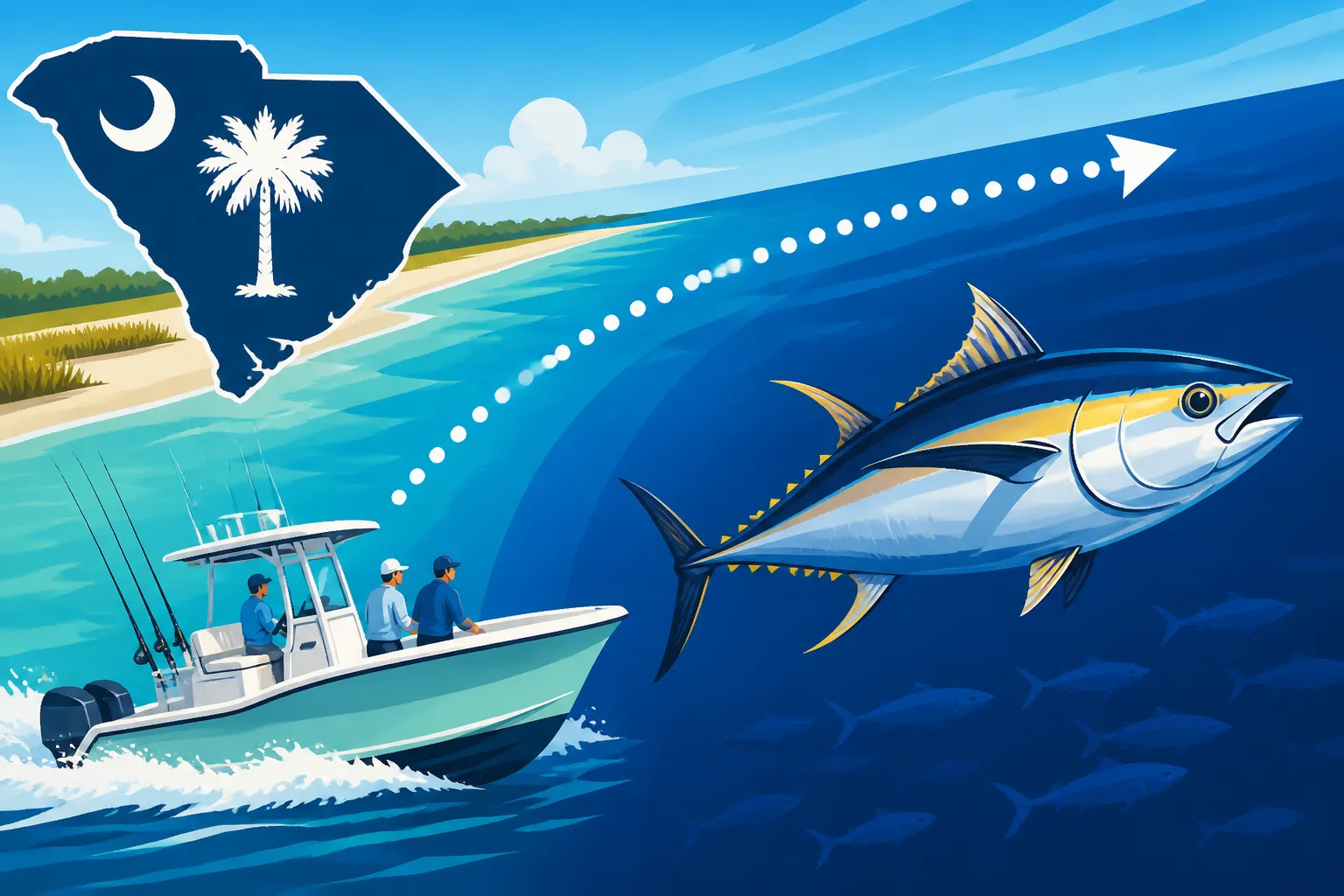
If your heart is set specifically on Yellowfin Tuna, or a greater chance at larger Blackfin, you'll likely need to book a dedicated Gulf Stream trip. These charters are designed to go the distance, often pushing 60 to 100 miles offshore, or sometimes even further, to find the core of the Gulf Stream and its rich fishing grounds. The travel time alone can be several hours each way, meaning these are almost always full-day or extended-day excursions.
Captains on these trips are highly skilled at reading sea surface temperature charts, current maps, and chlorophyll data to pinpoint the most productive areas. They know that to find those schools of Yellowfin, you need to be where the water is truly blue and the conditions are just right. These trips are typically longer in duration and thus carry a higher cost, reflecting the increased fuel burn and time commitment from the crew. It's truly an investment in a bucket-list fishing experience. For more on trip lengths, consider South Carolina Charter Fishing Trip Lengths Compared.
Extended and Overnight Tuna Expeditions
For the ultimate tuna pursuit, some South Carolina charters offer extended or even overnight trips. These multi-day excursions allow captains to travel even further, sometimes well over 100 miles, to explore remote offshore banks, seamounts, and persistent eddies within the Gulf Stream that rarely see fishing pressure. On these longer trips, the focus is almost exclusively on target species like Yellowfin Tuna, and occasionally larger Bluefin (seasonally and with very strict regulations).
Overnight trips are a completely different animal. They allow for fishing during prime low-light hours when tuna often feed aggressively, and they maximize fishing time on the most productive grounds by eliminating daily travel back to port. These are serious undertakings, requiring specialized boats, experienced crews, and a prepared group of anglers. They are also the most expensive option, but they offer the best chance at multiple large tuna catches and an unforgettable deep-sea adventure. South Carolina Offshore Fishing Charters Explained can give you a broader overview of these kinds of trips.
Factors Influencing How Far Charters Go
The exact distance a South Carolina charter travels for tuna is rarely a fixed number. Instead, it's a dynamic calculation based on a multitude of factors, each playing a critical role in the captain's decision-making process.
Targeting Specific Tuna Species
As mentioned, the species of tuna you're hoping to catch is a huge determinant of distance.
- Blackfin Tuna: These can often be found in the 30-70 mile range, sometimes closer, sometimes further, depending on bait and water conditions. They are a common bycatch on general offshore trips targeting other pelagics like Wahoo and Mahi.
- Yellowfin Tuna: The most sought-after tuna in South Carolina, these generally require a committed run to the Gulf Stream, often 60-100+ miles offshore. They prefer the deeper, bluer, warmer waters found in and around the Gulf Stream eddies and filaments.
- Bluefin Tuna: While not a primary target for most South Carolina recreational charters due to their highly protected status and stringent regulations, juvenile Bluefin can sometimes be encountered in similar offshore zones as Yellowfin, particularly during cooler months. Catching a keeper Bluefin requires specific permits and is incredibly rare for a recreational angler.
Captains will plan their trips based on the species most likely to be encountered in the fishing grounds accessible within the chosen trip duration.
Boat Capabilities and Safety
The type and size of the charter boat directly impact how far and how comfortably it can travel offshore. Larger, faster sportfishing yachts with greater fuel capacity can make the long run to the Gulf Stream more efficiently and safely than smaller, slower vessels. A boat designed for serious offshore work will have the range, electronics, and safety equipment necessary for extended trips far from shore.
Charter captains prioritize safety above all else. They know their vessel's limits and will not push it beyond what is safe and prudent given the conditions. This means if you're on a smaller boat, the captain might opt for closer fishing grounds even if the Gulf Stream is calling.
The Impact of Weather and Sea Conditions
Weather is perhaps the single biggest wildcard in offshore fishing. Even if the fish are biting 80 miles out, a captain will not venture there if sea conditions are forecasted to be rough or unsafe. A smooth ride out can quickly turn into a bumpy, even dangerous, return if the weather shifts. Wind speed and direction, swell height, and the presence of thunderstorms all factor into the decision of how far a boat can safely and comfortably travel.
A seasoned captain constantly monitors marine forecasts and will make the call to adjust plans or even reschedule if conditions aren't favorable. It’s always best to trust their judgment; they want a successful and safe trip just as much as you do. South Carolina Charter Fishing Cancellation and Weather Policy might be helpful to review when booking.
Trip Duration and Fuel Considerations
The length of your booked charter trip directly dictates the maximum distance a boat can travel. A half-day trip might only allow for nearshore fishing, while a full-day or extended trip is necessary to reach the offshore tuna grounds. The more time you have, the more travel time is permissible.
Fuel costs are also a massive factor. Offshore boats, especially larger ones running at cruising speed for hours, burn a significant amount of fuel. The further you go, the more fuel is consumed, which naturally contributes to the overall cost of the charter. Captains factor this into their pricing and trip planning. For information on costs, see South Carolina Charter Fishing Costs and Trip Types.
Booking Your South Carolina Tuna Charter Adventure
So, you're ready to chase some tuna off the South Carolina coast? Fantastic! Booking the right charter is key to ensuring you have a productive and enjoyable experience.
Finding the Right Captain and Boat
This is where your research really pays off. Look for captains who specialize in offshore pelagic fishing and have a proven track record for targeting tuna. Don't be shy about asking questions:
- What species of tuna do you primarily target?
- What is the typical range for your tuna trips?
- What is the average duration of a dedicated tuna trip?
- What fishing techniques do you employ for tuna?
Many excellent captains advertise their specialties and boast about their offshore capabilities. Websites like FishingBooker can be an invaluable resource, allowing you to filter by location, trip type, and even target species. You can read reviews, compare boats, and get a good sense of what each charter offers before committing. When using platforms like FishingBooker, you often get a clear picture of the boat's size and equipment, which is crucial for those long runs offshore. Make sure to check out Choosing the Right South Carolina Fishing Guide for more tips.
What to Expect on Your Tuna Trip
When you book an offshore tuna charter, especially one heading to the Gulf Stream, prepare for a long day.
- Travel Time: Expect anywhere from 2-4 hours (or more!) of travel each way. This is part of the adventure, but it's important to set expectations. Use this time to relax, prepare your gear, and enjoy the sunrise or sunset over the open ocean.
- Fishing Techniques: Trolling is a primary method for tuna, especially at the Gulf Stream edge. This involves dragging multiple lines with artificial lures or rigged natural baits at specific speeds to cover vast areas. Chunking (cutting up baitfish and throwing it overboard to create a chum slick and draw fish closer) can also be effective once a school is located.
- Gear: Charter boats are fully equipped with heavy-duty rods, reels, and tackle designed to handle powerful tuna. You won't need to bring your own, but it's always a good idea to confirm what's included.
- Comfort: The ride can be bumpy. Be prepared for motion, and if you're prone to seasickness, take preventative measures. Many charters provide comfortable seating and cabins, but you'll spend a lot of time on deck.
| Trip Type | Typical Distance Offshore | Primary Tuna Species Target | Trip Duration | Key Considerations |
|---|---|---|---|---|
| Standard Full-Day | 40-70 miles | Blackfin Tuna (opportunistic) | 8-10 hours | Diverse species, good for general offshore fun |
| Dedicated Gulf Stream | 60-100+ miles | Yellowfin, Blackfin Tuna | 10-14 hours (or longer) | Focus on tuna, long travel, higher cost |
| Extended/Overnight | 100+ miles | Yellowfin, potentially Bluefin | 24+ hours | Maximize fishing time, highest cost, serious trip |
Planning for Success and Safety
A successful tuna trip starts long before you leave the dock.
- Communicate with your Captain: Have an open dialogue about your expectations and what the captain realistically thinks is possible given the conditions and the bite.
- Pack Smart: Bring appropriate clothing for varying weather, sun protection (hat, sunglasses, high SPF sunscreen), plenty of water and snacks, and any personal medications. Layers are your friend. A good resource for this is What to Bring on a South Carolina Fishing Charter.
- Listen to the Crew: The captain and mate are experts; they'll guide you on proper fishing techniques, safety protocols, and how to handle big fish. Their instructions are vital for a smooth and safe trip.
- Be Patient: Tuna fishing requires patience. There can be long periods between bites, but the reward of a screaming reel and a powerful fish on the line is absolutely worth the wait.
South Carolina offers some incredible opportunities for tuna fishing, but it's an adventure that demands respect for the ocean and a commitment to venturing far from shore. With the right preparation and the guidance of an experienced captain, your quest for tuna can become a thrilling reality.
Disclaimer
This article is for general informational purposes only and does not constitute professional advice. Laws, prices and regulations vary by location and change over time. Consult a qualified professional for guidance on your specific situation.