Stocked Trout Limits in South Carolina
It's incredibly frustrating, isn't it? You've got your gear ready, you've scouted a promising trout stream in South Carolina's beautiful Upstate, but then the nagging question hits: "How many can I actually keep?" The rules for trout can feel like a labyrinth, especially when you factor in the difference between native and stocked fish, and how limits seem to change from one bend in the river to the next. This guide aims to clear up that confusion, diving deep into the specific stocked trout limits in South Carolina so you can hit the water with confidence, knowing exactly what's allowed.
The Tale of Two Trouts: Native Versus Stocked
Before we get into the nitty-gritty of daily limits and size restrictions, it's vital to understand a fundamental distinction that shapes South Carolina's trout regulations: the difference between native and stocked trout. Ignoring this can quickly lead to misunderstandings or, worse, unintended violations.
Why the Distinction Matters for Anglers
It's easy to assume "a trout is a trout," but South Carolina's regulations are carefully crafted around these differences for good reason. Native Brook Trout, for example, are a precious resource. These beautiful, smaller fish are genetically unique to our region and are found primarily in the cold, pristine headwater streams of the Blue Ridge Mountains within South Carolina. They represent a delicate ecosystem, and conservation efforts are paramount to their survival. Anglers looking to learn more about these special fish should read our guide on South Carolina's Native Brook Trout: A Blue Ridge Mountain Original.
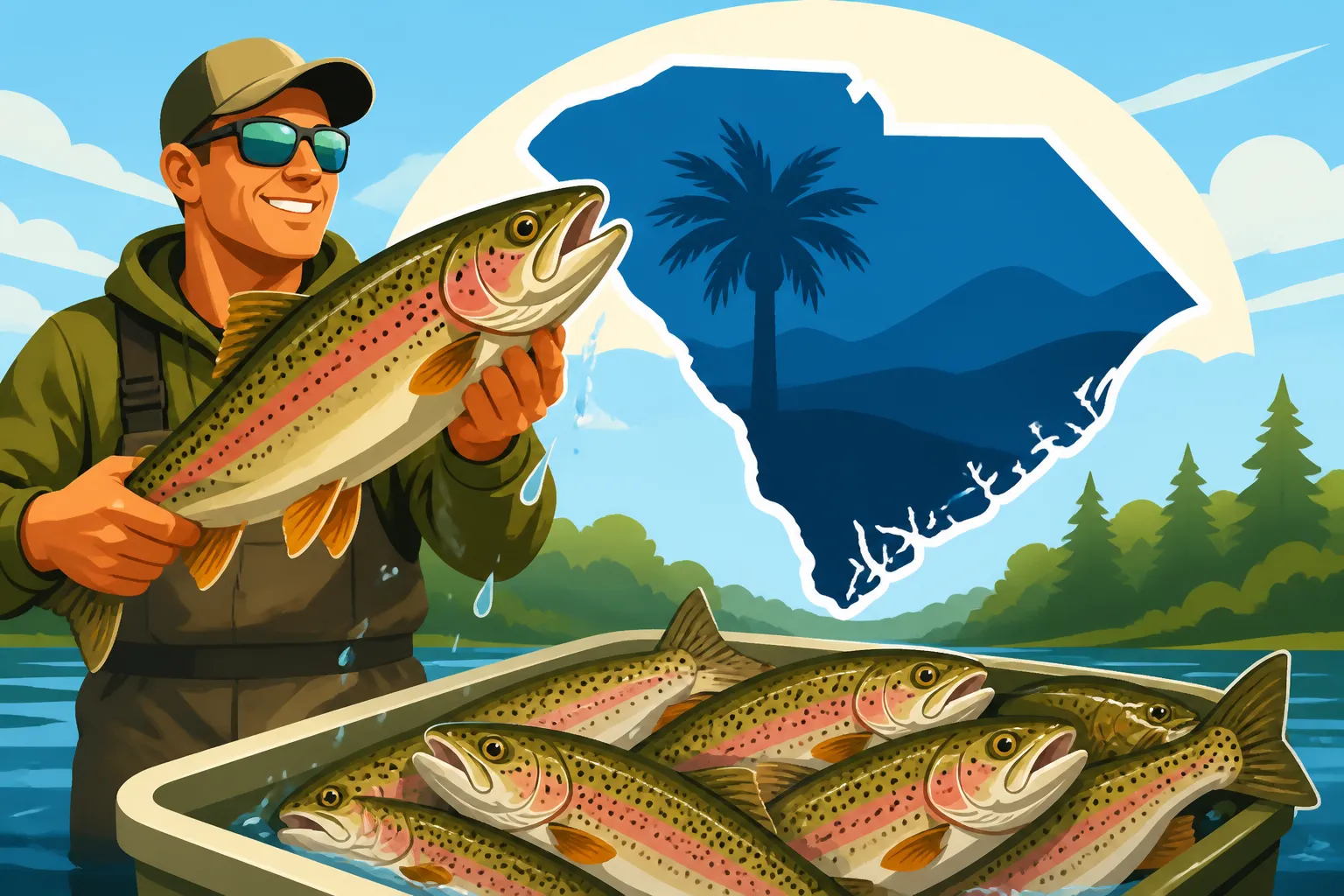
On the other hand, stocked trout – predominantly Rainbow Trout and Brown Trout – are raised in state hatcheries and regularly released into various lakes and streams across the state. These stocking programs are designed to enhance recreational fishing opportunities, providing a more reliable and often higher-volume catch for anglers. Because these fish are part of a managed "put-and-take" system, the regulations often lean towards allowing for a reasonable harvest. This dual approach means that the rules you follow depend heavily on which type of trout you're targeting and where you're fishing.
General Baseline for Trout in South Carolina
When it comes to the broader trout fishery in South Carolina, there’s a general baseline to start from. Many of the state’s more accessible waters, particularly those that receive regular stockings from the South Carolina Department of Natural Resources (SCDNR), operate under a standard 5-fish daily creel limit for trout. This is often the rule for readily available, stocked waters where the goal is to provide consistent angling success and allow for a sustainable harvest.
However, and this is where it gets tricky, this 5-fish limit is merely a starting point. It's the default in many areas but is frequently superseded by special regulations designed for particular streams, lakes, or even sections of a single river. These special rules are put in place for various reasons, from protecting specific fish populations to enhancing a trophy fishery, or simply managing fishing pressure in popular spots. Understanding this baseline is crucial, but always remember that context is king, and you must dig deeper into the specific location you plan to fish. You can find more specific details in our article on South Carolina Stocked Trout Daily Limit.
Decoding the Standard Stocked Trout Regulations
While many waters have special rules, there are still plenty of fantastic opportunities to enjoy South Carolina's stocked trout under more generalized regulations. Knowing these standard rules is the first step to a successful and compliant fishing trip.
The Common 5-Trout Daily Limit
The most widespread regulation you'll encounter for stocked trout in South Carolina is a daily creel limit of five fish. This rule applies to numerous streams and lakes that are routinely stocked by the SCDNR, creating what are often referred to as "put-and-take" fisheries. These areas are incredibly popular because they offer a good chance of catching fish, making them ideal for beginners, families, and those just looking for a relaxing day on the water.
In these waters, the 5-trout daily limit typically comes without a minimum size restriction. This means that once you've caught a trout, as long as it's of legal size (not excessively small, though official minimums are rare in these areas), it counts towards your limit. Some popular examples where you might find this regulation include certain sections of the Chattooga River downstream from Burrells Ford, the lower stretches of the Chauga River, and accessible parts of the Eastatoe River. These areas are often well-maintained and provide relatively easy access for anglers. The goal here is to allow for a reasonable harvest from a replenished population, ensuring that there are always new fish for anglers to pursue. Our guide on South Carolina Streams With a 5-Fish Trout Limit offers more specific locations.
When Size Limits Come Into Play: Lake Jocassee as a Prime Example
Just when you think you've got the 5-trout limit figured out, a unique and exciting fishery like Lake Jocassee comes into the picture, demonstrating how regulations can become more nuanced to achieve specific management goals. Lake Jocassee, nestled in the mountains of Oconee County, is a deep, cold, clear reservoir managed by the SCDNR as a premier trophy trout fishery. It's stocked primarily with Rainbow and Brown Trout, and the regulations here are designed to protect and grow those fish to impressive sizes.
For Lake Jocassee, while the overall daily creel limit for trout is still five fish, there are distinct size restrictions that apply to certain species within that limit. For Brown Trout, for example, anglers must adhere to a 15-inch minimum size, but also a 20-inch maximum size. This means you can only keep Brown Trout that fall within that 15-20 inch "slot." Furthermore, you're usually limited to keeping only two Brown Trout per day that fall within this slot, as part of your overall 5-fish limit. Rainbow Trout on Lake Jocassee also have a specific minimum size, typically 13 inches, with the standard 5-fish daily creel. These strict rules are in place to allow younger fish to mature and to ensure that larger, trophy-sized trout have a chance to reproduce and contribute to the fishery's reputation. It takes careful planning and attention to detail to ensure you're compliant when fishing these waters, but the reward of a truly massive trout makes it worthwhile for many anglers.
Navigating Special Management and Catch-and-Release Areas
While the 5-trout limit covers many stocked areas, South Carolina also boasts numerous streams with more restrictive regulations. These rules are put in place to protect fragile ecosystems, enhance the quality of the fishing experience, or to sustain wilder populations of trout.
Streams with Reduced Harvest: The 2-Trout Limit
Beyond the general 5-trout limit, some specific streams or sections of rivers are managed with a more conservative daily creel limit, often set at two trout per day. These areas are typically characterized by a combination of factors: they might have some natural trout reproduction, or they are managed to offer a higher quality angling experience with less harvest pressure. The goal here is often to allow for a limited take while still promoting the growth of larger, healthier fish populations.
You'll find these 2-trout limits in select parts of the state's mountain streams. For example, certain sections of the Middle Saluda River or specific stretches of the Chattooga River might fall under these stricter guidelines. These areas often come with additional stipulations, such as "artificial lures only" and "single barbless hook" requirements. These gear restrictions are not just about tradition; they are crucial for minimizing harm to any fish that are caught and then released, increasing their chances of survival. It's a system designed for the discerning angler who values the challenge and the health of the fishery over a large cooler full of fish. For a deeper understanding of how these limits are determined, check out How Trout Limits Vary by Stream in South Carolina.
Embracing Catch-and-Release Only Trout Waters
For many dedicated trout anglers, the ultimate experience lies in waters designated as "catch-and-release" (C&R) only, where the daily creel limit is a firm zero. These streams are sanctuaries for trout, often representing the most pristine headwater environments or areas where native Brook Trout populations are being actively protected and restored. The ethic here is simple: fish for sport, appreciate the beauty of the fish and its habitat, and return every trout unharmed to the water.
These C&R zones are typically found in the rugged, remote reaches of South Carolina’s Blue Ridge Mountains. They often feature crystal-clear water, dense forest canopies, and a sense of wild solitude. To ensure the highest survival rates for released fish, these areas almost universally mandate the use of artificial lures only and single barbless hooks. The barbless hook minimizes tissue damage and allows for quick, clean releases, while artificial lures prevent the accidental ingestion of bait, which can be fatal. If you're heading to a C&R stream, make sure you have a good supply of single barbless hooks or a tool to crimp barbs on your regular hooks – you can often find great options for these on Amazon. The reward in these waters isn't a meal, but the satisfaction of a challenging fight and the knowledge that you're contributing to the preservation of a precious natural resource. To identify these special areas, refer to our comprehensive guide on Which South Carolina Streams Are Catch-and-Release Only for Trout?.
Where to Find the Rules and Gear Up
Navigating South Carolina's trout regulations might seem like a maze, but there are clear paths to follow to ensure you're always informed and properly equipped for your trip.
Your Go-To Resources for Up-to-Date Information
Let's be real: trying to remember every single regulation for every stream you might want to fish is a recipe for a headache. That's why your absolute best friend when planning a trout fishing trip in South Carolina is the official South Carolina Department of Natural Resources (SCDNR) website. This is not just a suggestion; it's a necessity. The SCDNR is the authoritative source for all fishing regulations in the state.
Beyond the website, make sure to either download or pick up a hard copy of the annual South Carolina Comprehensive Fishing Regulations guide. This booklet is a treasure trove of information, detailing all statewide rules, as well as specific exceptions for individual lakes, rivers, and even specific sections of those waterways. These guides are usually available wherever fishing licenses are sold, or you can find a printable version online. Additionally, the "Go Outdoors South Carolina" app or online portal, which you'll use to purchase your South Carolina Fishing License Guide or learn How to Buy a Fishing License on Go Outdoors South Carolina, also often provides direct links to the most current regulations.
It's crucial to understand that regulations can and do change. What was legal last year might not be this year, or a new restriction might be put in place mid-season to protect a vulnerable population. Therefore, always make it a habit to check the most current regulations before every single trip. This small step can save you a lot of hassle and potential fines.
Essential Gear for Responsible Trout Angling
Once you've got your head wrapped around the rules, it's time to think about the gear. Proper equipment not only enhances your chances of success but also ensures you're practicing ethical and responsible angling, especially in sensitive trout habitats.
For trout, generally, you'll want a lighter action rod and reel setup. A light spinning rod (5'6" to 6'6") paired with a small spinning reel spooled with 4-6 lb test line is typically perfect for stream fishing. For lures, a variety of small inline spinners (like Panther Martins or Mepps), tiny crankbaits, or soft plastics can be effective. If you're into fly fishing, a 3 to 5-weight fly rod is usually ideal, with an assortment of dry flies, nymphs, and streamers. For more specific lure choices, consult our articles on Fly Fishing Techniques for Stocked Trout and Spin Fishing Techniques for Stocked Trout.
Beyond your rod and reel, a few key accessories are non-negotiable, especially if you plan on practicing catch-and-release or want to responsibly harvest your catch. A small, soft rubberized net is crucial for safe handling, as it protects the fish's delicate slime coat and fins. A sturdy pair of forceps or needle-nose pliers are invaluable for quick and efficient hook removal, minimizing stress on the fish. Both of these items are widely available on Amazon, and a good set will last you for years. Don't forget proper footwear, like wading boots or old sneakers, if you plan to wade in streams. Nothing ruins a fishing trip faster than wet, cold feet!
Planning Your South Carolina Trout Adventure
With a solid grasp of the regulations and the right gear in hand, you're almost ready to embark on your South Carolina trout adventure. A little pre-trip planning can make all the difference between a frustrating outing and a memorable one.
Considerations Before You Go
First and foremost, never forget the cardinal rule of fishing in South Carolina: you must possess a valid Fishing License Requirements in South Carolina. There are no exceptions for residents or non-residents over the age of 16 (or specific ages for youth, which you should confirm). Game wardens actively patrol trout streams, and not having a license is a surefire way to ruin your day and incur a hefty fine.
Beyond your license, always check the weather conditions and water levels for your chosen fishing spot. Trout are highly sensitive to changes in water temperature and flow. Heavy rains can muddy streams and make them unfishable, while prolonged dry spells can lead to dangerously low water levels. Online resources often provide real-time stream gauge data, which can be invaluable. If you're heading to more remote mountain streams, be aware that cell phone service can be spotty or non-existent, so inform someone of your plans and expected return time. Finally, embrace the "leave no trace" principle. Pack out everything you pack in, and leave the natural environment as pristine as you found it.
Maximizing Your Stocked Trout Experience
South Carolina offers a diverse range of stocked trout waters, from easily accessible streams to the deeper, colder waters of Lake Jocassee. Don't be afraid to explore different locations and see what suits your angling style and goals. Some streams are stocked more frequently than others, while certain sections of rivers might offer better access or different fishing challenges. Checking a stream's stocking schedule (often available on the SCDNR website) can help you plan your trip for optimal success. You can also dive into our guide on Checking a Stream's Trout Limit Before You Fish It for more specific insights.
Experiment with different techniques and baits. What works one day might not the next, depending on weather, water conditions, and fish behavior. Having a well-stocked tackle box with a variety of small spinners, inline baits, and some powerbait or corn (where legal) can make all the difference, and it's easy to build up your collection through Amazon. Most importantly, take the time to truly enjoy the experience. The cool mountain air, the sound of rushing water, and the thrill of a bending rod are what make trout fishing in South Carolina so special, regardless of how many fish you end up keeping.
| Water Type | Daily Trout Limit | Size Limit (General) | Special Rules & Gear | Primary Species (Stocked) | Typical Location |
|---|---|---|---|---|---|
| General Stocked Waters | 5 | None (or ~7-inch min in some) | None | Rainbow, Brown | Accessible streams & rivers |
| Lake Jocassee (Trophy) | 5 | Brown: 15-20" slot (2 max); Rainbow: 13" min (5 max) | Deepwater fishing methods | Rainbow, Brown | Lake Jocassee |
| Reduced Harvest Streams | 2 | Varies by stream | Artificial lures, single hook | Rainbow, Brown (some native) | Specific mountain stream sections |
| Catch-and-Release Only Streams | 0 | N/A | Artificial lures, single barbless hook | Rainbow, Brown, Native Brook | Pristine mountain headwaters |
Disclaimer
The information provided in this guide is intended for general informational purposes only and is subject to change. While we strive to provide accurate and up-to-date information, fishing regulations are complex and can be modified by the South Carolina Department of Natural Resources (SCDNR) without prior notice. Always consult the most current official SCDNR fishing regulations guide and local signage before engaging in any fishing activity. It is the angler's responsibility to know and abide by all applicable laws and regulations.