How to Identify a Bluegill vs a Redbreast Sunfish
Oh, the humble panfish! They might not be the biggest trophies in South Carolina's waters, but they offer some of the most consistent and delightful fishing, especially for families and beginners. However, it's incredibly common for even seasoned anglers to get a little mixed up when trying to tell the difference between a bluegill and a redbreast sunfish, especially when they're both flashing in your hand. This guide is here to clear up that confusion, giving you the insider tips and visual cues you need to confidently identify these two beloved sunfish species.
The Bluegill Basics: A Closer Look at South Carolina's Panfish Favorite
Let's start with the bluegill, often considered the quintessential panfish. These little fighters are everywhere in South Carolina, from sprawling lakes to small farm ponds, and they're a blast to catch. But beyond their feisty tug on light tackle, they have some very specific characteristics that, once you know them, make them stand out.
Key Physical Characteristics of Bluegill
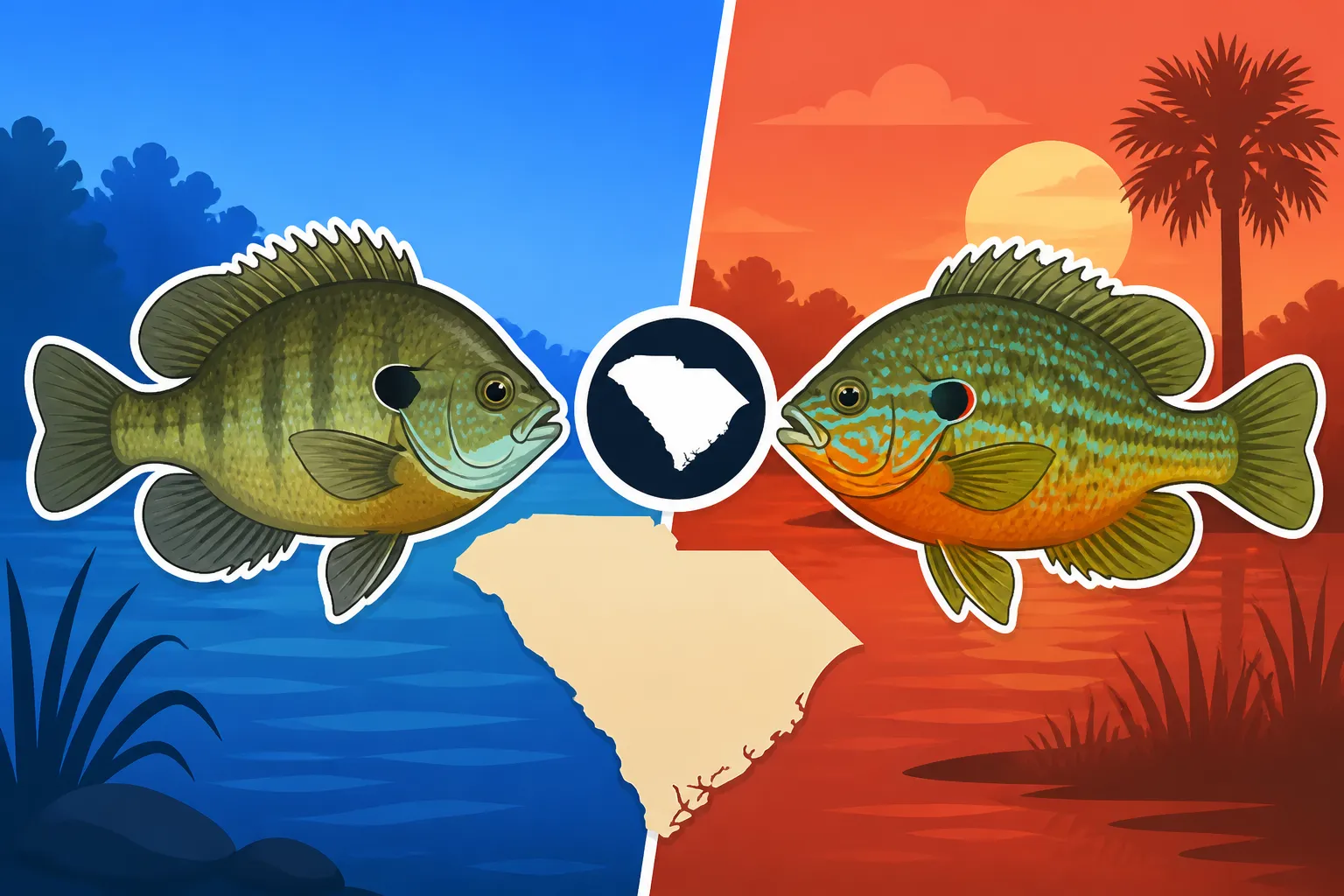
When you pull a bluegill out of the water, the first thing you'll probably notice is its distinctive "ear flap," which isn't actually an ear at all, but rather the opercular flap extending back from its gill cover. For bluegills, this flap is typically short and broad, and it will have a prominent, solid black spot on it. This solid black spot is one of the most reliable indicators you're looking at a bluegill.
Another giveaway is their body shape. Bluegills tend to have a very compressed, disc-like, or almost round body, much like a flattened plate. Their coloration can vary quite a bit depending on water clarity and diet, but they often have an olive-green back that fades into a lighter, sometimes yellowish, belly. Crucially, many bluegills, especially younger ones or those from clearer water, will display several faint, dark vertical bars along their sides. These bars can be subtle but are definitely a characteristic feature.
Then there's the mouth. Bluegills have a relatively small mouth, not extending past the front edge of their eye. They're built for nibbling on small insects, aquatic vegetation, and tiny crustaceans. Finally, take a peek at their dorsal fin – the one on their back. Many bluegills will have a distinct black blotch at the base of the soft-rayed portion of this fin, another helpful identifying mark. Learning these visual cues can truly enhance your fishing experience, as discussed in How to Identify a Bluegill vs a Redbreast Sunfish.
Typical Bluegill Habitats and Behaviors in South Carolina
Bluegills are truly adaptable little fish, making them widespread across South Carolina's freshwater systems. They absolutely thrive in calmer, warmer waters, which is why you'll find them in abundance in lakes, ponds, and slow-moving rivers. They love structure and cover, so look for them around submerged vegetation like lily pads, cattail beds, brush piles, fallen trees, and docks. These areas provide both refuge from predators and a bounty of small insects and larvae to feed on.
During the spawning season, which typically runs from late spring through summer when water temperatures are consistently warm, bluegills become incredibly easy to find. They create "beds" – circular, fanned-out depressions in shallow, sandy or gravelly bottoms. You'll often see dozens of these beds clustered together in a colony, and the males, with their often darker and more vibrant colors during this time, will aggressively guard them. Catching bluegill during this period is almost too easy, as they'll hit just about any small bait dropped near their beds. They are also known to school up, particularly when feeding, which means if you catch one, there are likely many more nearby.
Unpacking the Redbreast Sunfish: River King of the Lowcountry
Now, let's talk about the redbreast sunfish. While perhaps not as universally recognized as the bluegill, they are incredibly popular among anglers, especially those who frequent South Carolina's rivers and blackwater creeks. They offer a spirited fight and are prized for their vibrant colors and willingness to bite.
Distinctive Features That Set Redbreast Sunfish Apart
The redbreast sunfish earns its name from its strikingly bright red or orange belly, particularly in mature males. This vivid coloration is often one of the first things people notice, and it's certainly more pronounced than the more subdued yellow or pale orange you might sometimes see on a bluegill. Their back is usually a rich olive or bronze, transitioning through shades of green and gold down their sides. Unlike bluegills, mature redbreasts typically do not have those distinct vertical bars on their sides, though very young specimens might show faint ones.
The most crucial identifying feature for a redbreast sunfish is its opercular flap, or "ear flap." On a redbreast, this flap is notably long and slender, often extending much further back than a bluegill's. It's usually entirely black, or very dark, but it lacks the distinct, round black spot that a bluegill has. Instead, it's just a long, dark extension. Their body shape is also generally more elongated than a bluegill's, though still somewhat compressed. They often look a bit more "streamlined" in comparison.
When it comes to the mouth, the redbreast sunfish also has a relatively small mouth, similar to the bluegill, but it usually doesn't extend past the middle of their eye. Their diet also consists of insects, small crustaceans, and even tiny fish, but they're often more adapted to foraging in moving water.
Where to Find Redbreast Sunfish in South Carolina Waters
Redbreast sunfish are true river dwellers. While you might occasionally find them in the quiet backwaters of large reservoirs or in deep ponds that mimic riverine conditions, their preferred habitat is definitely flowing water. Think of the blackwater rivers, tannin-stained creeks, and clear, rocky streams that crisscross South Carolina, particularly in the coastal plain and midlands. They thrive in places with a moderate current, seeking shelter around submerged logs, fallen trees, rock piles, bridge pilings, and undercut banks.
These fish are often found hugging the bottom or near cover, waiting to ambush insects or small baitfish swept downstream by the current. If you're fishing a river like the Edisto, Congaree, or Santee, and you're consistently catching colorful sunfish with long, dark ear flaps, chances are you've found a honey hole for redbreasts. They are particularly active during the warmer months, often biting enthusiastically throughout the day. Understanding their preferred habitat is key to knowing Redbreast Sunfish Fishing Spots in South Carolina.
Side-by-Side Comparison: Bluegill vs. Redbreast Sunfish
Let's break down the key differences visually and by habitat. This side-by-side comparison should make identification much clearer the next time you're out on the water.
Visual Cues: Coloration, Markings, and Body Shape
When you've got a fish in hand, the most obvious indicators are visual. Here's what to zero in on:
- The "Ear Flap" (Opercular Flap): This is your number one differentiator. The bluegill's flap is short, broad, and has a distinct, solid black spot on it. The redbreast's flap is long, slender, and uniformly dark or black, without that distinct spot. It literally looks like a long, thin ear.
- Coloration of the Belly: Bluegills will usually have a yellowish to pale orange belly, sometimes even white. Redbreasts, especially mature males, will boast a much more vibrant red or orange, truly living up to their name.
- Vertical Bars/Markings on the Sides: Bluegills often display faint to distinct vertical bars on their sides, particularly when young or in clear water. Redbreasts, on the other hand, rarely have prominent vertical bars once they reach a decent size. Their sides might have iridescent flecks or lines, but not strong vertical stripes.
- Body Shape: Bluegills are typically more rounded and disc-like, very compressed side-to-side. Redbreasts tend to be a bit more elongated, giving them a slightly more torpedo-like appearance, though still quite flat.
- Dorsal Fin Spot: Remember that black blotch at the base of the bluegill's soft dorsal fin? Redbreasts usually don't have this.
To help solidify these differences, here's a quick comparison table:
| Feature | Bluegill ( Lepomis macrochirus ) | Redbreast Sunfish ( Lepomis auritus ) |
|---|---|---|
| Opercular Flap | Short, broad, with a distinct black spot | Long, slender, uniformly dark (no distinct spot) |
| Belly Color | Yellowish, pale orange, or whitish | Vibrant red or orange (especially males) |
| Side Markings | Often 5-7 faint to distinct dark vertical bars | Typically no vertical bars; sometimes iridescent lines |
| Body Shape | Very round, deep-bodied, compressed, disc-like | More elongated, slightly less deep-bodied |
| Dorsal Fin | Often has a black blotch at the soft-rayed base | Generally lacks a distinct black blotch |
| Mouth Size | Small, not extending past front of eye | Small, not usually extending past middle of eye |
You might wonder, "Does sunlight or water clarity affect their appearance?" Absolutely! A bluegill pulled from murky water might appear darker and less vibrant, making those vertical bars less obvious. Similarly, a redbreast from a very dark, tannic creek might have a deeper, almost maroon belly compared to one from a clearer stream. Always check multiple features, not just one.
Habitat and Behavior Differences to Aid Identification
Beyond the visual, understanding where you caught the fish can provide a strong clue. This is why knowing Best Time of Year to Catch Panfish can also help narrow down the possibilities.
- Location, Location, Location: If you're fishing a quiet farm pond, a large lake's vegetated cove, or a slow-moving backwater, your catch is far more likely to be a bluegill. If you're casting into a clear, flowing river, especially around rapids or log jams, you're probably pulling in redbreasts. While there's always overlap, their primary habitats are quite different.
- Structure Preference: Bluegills love dense submerged weeds, lily pads, and docks – anything that provides dense cover. Redbreasts, while they appreciate cover, prefer it in the form of fallen trees, rocky bottoms, and undercut banks in areas with current.
- Spawning Habits: Bluegills are famous for their communal bedding in shallow, calm areas. Redbreasts also build nests, but they often do so in areas with some current, sometimes individually or in smaller groups, often near the cover of a log or bank.
By combining visual identification with knowledge of the fishing environment, you'll become a true expert at telling these two wonderful South Carolina panfish apart.
Why Accurate Identification Matters for South Carolina Anglers
You might think, "They're just panfish, what's the big deal?" But knowing exactly what you've caught goes beyond bragging rights or satisfying curiosity. It actually impacts your understanding of the local ecosystem and your adherence to regulations, ensuring sustainable fishing for everyone.
Bag Limits and Regulations: Know Your Catch
While bluegill and redbreast sunfish often fall under a general "sunfish" or "panfish" category with generous daily bag limits in South Carolina, there's always the potential for specific regulations to apply to certain species in particular bodies of water. For instance, some areas might have special size or creel limits for certain sunfish if conservation efforts are focused on them. While less common for these two widespread species, it's still crucial to be able to identify your catch to ensure you're always following the rules. Ignorance of the regulations, even for panfish, can lead to Penalties for Fishing Without a License in South Carolina or for violating bag limits.
Beyond the letter of the law, ethical angling practices mean understanding the fish you're targeting. Being able to identify a fish quickly and accurately allows you to make informed decisions about catch and release. If you're targeting a specific species for dinner, knowing how to pick it out ensures you're harvesting exactly what you intended, and potentially releasing a different species that you weren't planning to keep. This respect for the resource is a hallmark of responsible fishing.
Enhancing Your Fishing Strategy and Enjoyment
Understanding the subtle differences between bluegill and redbreast sunfish can significantly improve your fishing strategy. Since they prefer different habitats and often different feeding behaviors, knowing which one you're likely to encounter can help you choose the right spot, the right bait, and even the right presentation.
For example, if you're set up on a quiet lake cove with plenty of weeds, you'll be rigged for bluegill. You might use a small bobber rig with a tiny hook and a piece of worm. If you move to a flowing river, however, and you're now targeting redbreasts, you might switch to a small spinner or even a tiny fly, casting near submerged logs and letting the current carry your offering. This nuanced approach will lead to more successful outings and, let's be honest, more fun! Knowing these species also allows you to appreciate the incredible diversity of South Carolina Freshwater Fish Species Worth Targeting and become a more knowledgeable angler overall. It turns every catch into a mini biology lesson and makes you a better steward of the environment.
Gear and Techniques for Both Species
Even though bluegill and redbreast sunfish have their distinct preferences, the good news is that they can often be caught with very similar, light tackle setups. These are perfect fish for beginners, kids, or anyone just looking for some relaxing action.
Tackle Considerations for Panfish
When it comes to tackle, the general rule for panfish is "keep it light."
- Rod and Reel: A lightweight spinning rod and reel combo, typically in the ultralight or light action category, is ideal. A 5 to 6-foot rod with a fast or moderate action will give you plenty of sensitivity to feel those light bites and enough backbone to handle a feisty sunfish. You can find excellent, affordable ultralight combos on platforms like Amazon, perfect for getting started without breaking the bank.
- Line: Opt for light monofilament line, usually 4 to 6-pound test. This lighter line allows for longer casts with small baits and lures and is less visible to these often skittish fish.
- Hooks: Small hooks are essential. Size 8, 10, or even 12 hooks are perfect for the small mouths of bluegill and redbreast. Anything larger and they'll have trouble getting it in their mouth.
- Bobbers and Weights: A small bobber (clip-on or slip bobber) is great for suspending your bait at a desired depth and for easily detecting bites. A few small split-shot weights, just enough to get your bait down, complete the classic panfish rig.
Remember, fishing for panfish isn't about brute strength; it's about finesse and sensitivity. A quality, light setup lets you truly enjoy the fight, even from a small fish. Kid-Friendly Bluegill Fishing Techniques often revolve around this simple, effective tackle.
Best Baits and Lures
Both bluegill and redbreast sunfish are opportunistic feeders, but they do have their favorites.
- Live Bait: This is almost always a winner for panfish.
- Worms: Small pieces of earthworm, red wigglers, or even mealworms are universally effective. Just hook a small piece, enough to cover the hook point, and let it do its magic.
- Crickets/Grasshoppers: These are irresistible to both species, especially redbreasts in riverine environments. Suspending a live cricket under a bobber near cover is a classic technique. You can often find these readily available through bait shops or even online from retailers like Amazon.
- Other Insects: Small grubs, wax worms, or even tiny aquatic larvae can be deadly.
- Artificial Lures:
- Small Jigs: Tiny 1/32 to 1/16 ounce jigs, often tipped with a piece of plastic grub, a small hair jig, or even a live wax worm, are incredibly effective. Chartreuse, white, and black are popular colors. Crappie Jigging Techniques for Beginners can often be applied to sunfish as well.
- Tiny Spinners: Lures like a Rooster Tail or Panther Martin in small sizes (1/32 to 1/8 ounce) are excellent, especially for redbreasts in current. The flash and vibration can trigger aggressive strikes.
- Small Flies: For the fly-fishing enthusiast, small poppers, nymphs, and wet flies can be incredibly productive for both species, offering a unique challenge and rewarding experience.
No matter your preference, having a small tackle box stocked with a variety of these baits and lures, perhaps sourced from a convenient online store, will have you ready for any panfish encounter in South Carolina's waters.
Identifying bluegill and redbreast sunfish might seem tricky at first, but with a little practice and attention to their key features – especially that distinctive "ear flap" and belly color – you'll be able to tell them apart in no time. Whether you're chasing the plate-sized bluegills in a local pond or the vibrant redbreasts in a winding river, understanding these species will deepen your appreciation for South Carolina's diverse fisheries and make every catch a more informed and enjoyable one.
Disclaimer
This article is for general informational purposes only and does not constitute professional advice. Laws, prices and regulations vary by location and change over time. Consult a qualified professional for guidance on your specific situation.