Sandbar Troughs to Target When Surf Fishing at Myrtle Beach
One of the biggest head-scratchers for any surf angler, especially when you're staring out at the vast expanse of the Atlantic off Myrtle Beach, is knowing where to cast. It’s easy to feel like you’re just throwing bait into an endless ocean, hoping for a bite. But the secret to consistent success in surf fishing often lies in understanding and targeting specific underwater features – particularly those sneaky sandbar troughs. This guide will walk you through exactly what these troughs are, how to spot them, and the best ways to fish them, turning your guesswork into genuine strategy.
Deciphering the Underwater Landscape: What Are Sandbar Troughs?
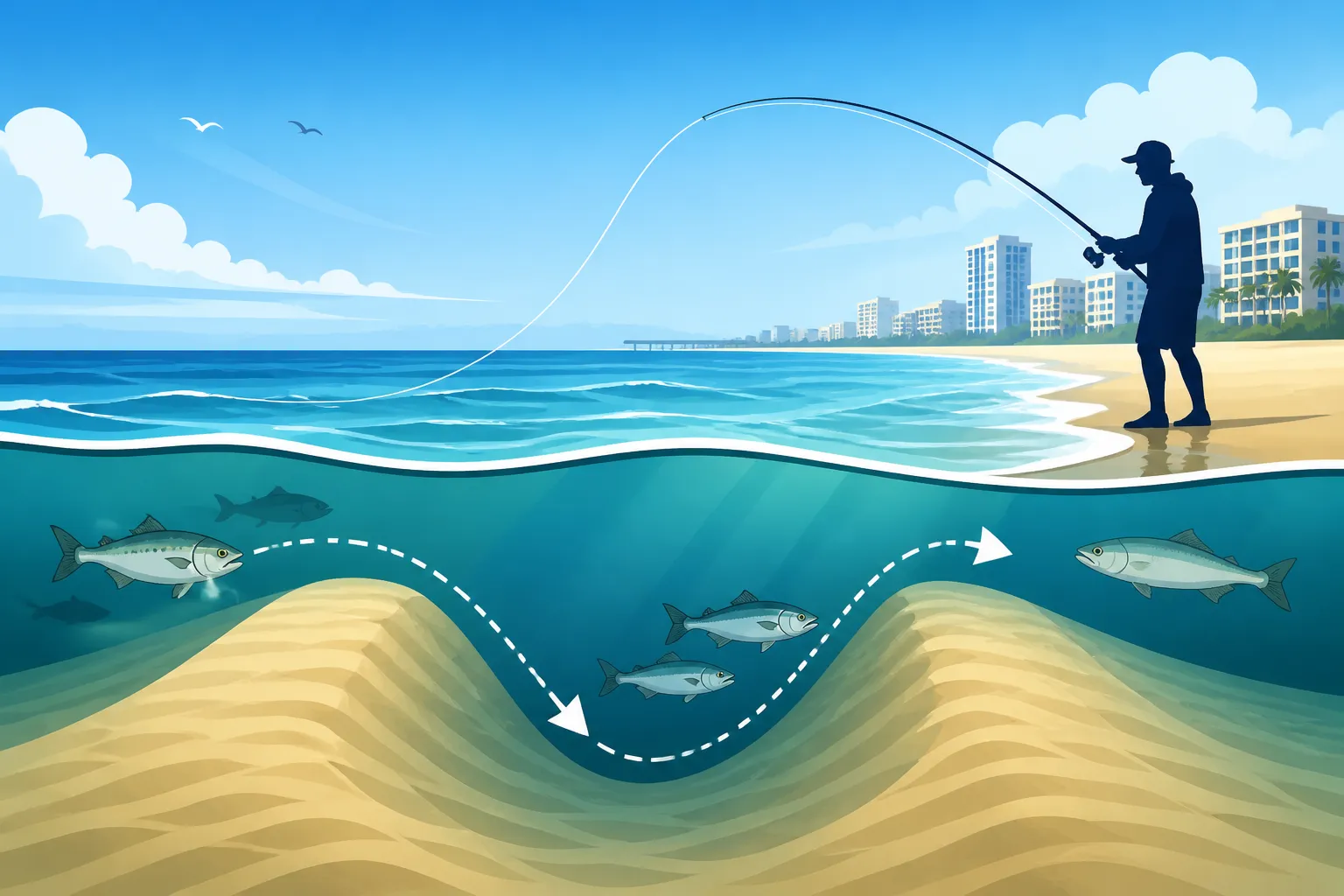
Imagine the ocean floor just beyond the breakers isn't a flat, featureless plain. Instead, it's a dynamic, ever-changing landscape of peaks and valleys, carved by the relentless push and pull of the tides and currents. These "valleys" are what we call sandbar troughs, and they are absolute goldmines for surf anglers.
The Dynamics of Sandbar Formation
Sandbars are essentially underwater dunes, built up by sand carried by waves and currents. They run roughly parallel to the shoreline, creating natural barriers. On the ocean side, the waves break over them, and as the water rushes back out, it carves out depressions – these are our troughs. They can be found in various forms: sometimes as long, deep channels running parallel to the beach, or as shorter, deeper "cuts" that run perpendicular through a sandbar, connecting the open ocean to the calmer water closer to shore.
The frustration often comes from not realizing these structures exist. Many new anglers just cast as far as they can, assuming the fish are "out there." But often, the fish are much closer, utilizing these troughs for shelter and feeding. The constant movement of sand means these features are never truly permanent, changing subtly or dramatically with every major storm or tidal cycle. This ever-shifting nature is precisely why consistently reading the beach is so important; what was a prime trough yesterday might be a shallow flat today.
Why Fish Flock to Troughs and Gutters
Fish are creatures of comfort and opportunity, just like us. Sandbar troughs offer both in abundance. First, they provide deeper water, which offers a sense of security and cooler temperatures, especially on hot South Carolina summer days. Second, the turbulent water created by waves breaking over the sandbars and washing into the troughs dislodges all sorts of tasty morsels – crabs, shrimp, baitfish, and marine worms – creating a natural buffet line.
Think of it like this: the sandbar is a conveyor belt of food, and the trough is the collection point. Predator fish, like redfish, spotted seatrout, and various species of drum, will patrol these troughs, waiting for an easy meal to be swept in. Even smaller panfish, like whiting and pompano, will stage themselves in these calmer, deeper areas to pick off food, making them prime targets. Understanding these natural instincts is key to successful surf fishing, helping you anticipate where the fish will be holding.
Identifying Productive Sandbar Troughs at Myrtle Beach
Finding these elusive troughs might seem daunting, especially with the vast stretches of beach at places like Myrtle Beach. But with a keen eye and a bit of practice, you can learn to read the water like a pro.
Visual Cues from the Beach
The easiest way to spot troughs is by looking for visual anomalies in the water. One of the most common signs is darker water. Deeper water absorbs more light, appearing darker than the shallower, wave-covered sandbars. Look for stretches of water where the waves break, then a calm, darker channel, followed by another line of breaking waves closer to shore. That calm, dark channel is your trough.
Another strong indicator is the pattern of breaking waves. If you see waves breaking consistently farther out, then a lull, and then waves breaking again closer to shore, you've likely identified a sandbar and the trough behind it. Sometimes, you'll see a distinct "cut" where waves don't break, creating a narrow, deeper path through a sandbar. These are often fish highways. Early morning or late afternoon, when the sun is lower, can make these features even more pronounced due to the angle of the light and the shadows they cast. Many anglers who frequent Myrtle Beach's surf fishing spots will tell you that a little elevation, perhaps from a dune or even a beach chair, can make spotting these subtle differences much easier.
Leveraging Tides and Conditions
Tides play a monumental role in surf fishing, especially when targeting troughs. On an incoming tide, water rushes over the outer sandbars, bringing baitfish and food into the troughs. This is often an excellent time to fish, as predators move into these feeding lanes. Conversely, on an outgoing tide, water drains out of the troughs and through cuts in the sandbars, funneling bait out to deeper water, which can also trigger a feeding frenzy. Understanding tide-based techniques for inshore fishing translates well to the surf.
Wind direction and wave height also impact how visible and fishable these troughs are. A calm day might make troughs easier to spot but less productive if there's not enough wave action to churn up food. A moderate chop can be ideal, creating that food source without making casting impossible. After a good storm, the entire beach profile can change, so always take a few minutes to re-evaluate the landscape before setting up shop. You can often find current tide charts and weather reports through local bait shops or online resources, which will significantly help in planning your trip.
Effective Fishing Techniques for Targeting Troughs
Once you've found a promising trough, it's time to adapt your fishing strategy to maximize your chances of success. It's not just about casting into the dark water; it's about presenting your bait effectively.
Bait and Lure Selection for Trough Species
The best bait for troughs depends on what you're trying to catch. For redfish and drum, fresh cut bait like mullet, spots, or bluefish is highly effective. Live or fresh dead shrimp are irresistible to spotted seatrout, whiting, and pompano. Sand fleas, found by digging at the water's edge, are absolute gold for pompano, whiting, and even smaller drum. Often, the rule is to "match the hatch" – use whatever baitfish or invertebrates are naturally present in the local ecosystem. Many experienced anglers will even combine baits, using a piece of shrimp with a small strip of Fishbites or other artificial scent to add extra appeal.
Lures can also be very effective, especially for redfish and spotted seatrout. Soft plastics on a jig head, spoon lures, and even some hard jerkbaits can imitate baitfish darting through the trough. For example, a Gulp! Shrimp or Z-Man MinnowZ on a 1/4 to 1/2 ounce jig head cast parallel to the trough and retrieved with a slow, twitching motion can be deadly for trout. It's always a good idea to have a variety of options in your tackle box, allowing you to adapt to what the fish are biting on any given day. If you're chasing Redfish hot spots along the South Carolina coastline, having both natural bait and a few go-to lures is smart.
Rigs and Casting Strategies
For static bait fishing in troughs, the tried-and-true fish finder rig is incredibly effective. It allows the fish to take the bait without feeling the resistance of the sinker, leading to more confident bites. A pyramid sinker (2-4 oz, depending on current) attached to a slide, a swivel, a leader (18-24 inches of 20-30 lb fluorocarbon), and a circle hook (1/0 to 4/0) is a classic setup. Pompano rigs, which feature two small dropper loops with floats and small hooks, are perfect for sand fleas and shrimp when targeting smaller species like whiting and pompano.
The key casting strategy is precision. Instead of casting as far as you can, aim to land your bait in the trough, often just behind the breaking waves of the outer sandbar. If you've identified a cut, casting directly into or just beyond it can be incredibly productive. For parallel troughs, casting slightly up-current and letting your bait drift naturally through the trough can entice bites. Don't be afraid to cast multiple times in slightly different spots within the trough to find where the fish are holding. This is where patience and observation pay off.
Best Times to Fish Troughs
While troughs can be productive anytime, certain windows offer a distinct advantage. The two hours on either side of high tide and low tide are often prime. During these periods, the water movement is typically strongest, stirring up food and creating those feeding opportunities. Additionally, dawn and dusk provide low-light conditions that make many predatory fish more active. The dim light offers them cover, and they're less wary of feeding in shallower areas.
Fishing after a cold front can be challenging, as fish tend to become less active. However, troughs can still hold fish seeking deeper, more stable water. Conversely, after heavy rain, the water might be stained or muddy, which can sometimes improve fishing for species like redfish and drum as they use the murky water for ambush. Always consult local fishing reports, which often provide insights into current conditions and what's biting. Many local charters listed on platforms like FishingBooker keep detailed logs of their most successful fishing windows, and reviewing these can give you a significant edge.
| Trough Type | Description | Ideal Fish Species | Common Baits/Lures |
|---|---|---|---|
| Parallel Gutter | Long, deeper channel running parallel to the beach, often between the shore and the first sandbar. | Whiting, Pompano, Small Drum, Flounder, Spotted Seatrout | Sand Fleas, Shrimp, Fishbites, Small Jigs |
| Outer Trough | Deeper water just behind the outermost sandbar, where waves first break. | Redfish, Larger Drum, Striped Bass (seasonal), Sharks (smaller) | Cut Bait, Live Finger Mullet, Large Shrimp, Spoons, Jig Heads with Soft Plastics |
| Cuts/Sloughs | Narrow, deeper channels running perpendicular through a sandbar, connecting the beach-side trough to the ocean. | Redfish, Flounder, Spotted Seatrout, Bluefish | Live Bait (mullet, shrimp), Soft Plastics, Bucktail Jigs, Spoons |
Advanced Strategies and Local Insights for Myrtle Beach
Stepping up your surf fishing game at Myrtle Beach involves more than just identifying the troughs; it's about understanding the subtle nuances of this specific fishery.
Utilizing Beach Access Points and Piers
Myrtle Beach has numerous public beach access points, many of which can lead to productive surf fishing areas. When scouting, pay attention to the areas around existing structures like jetties or fishing piers. These structures often alter currents, creating deeper holes and scour marks that function exactly like natural troughs. For instance, the piers themselves, such as Myrtle Beach State Park Pier or Second Avenue Pier, extend into the ocean and often have deeper water around their pilings where fish congregate. While you might need a pier permit to fish directly from them, the areas adjacent to the piers can be excellent for surf fishing.
If you're exploring beyond the main tourist zones, consider checking out some of the less crowded fishing spots along the South Carolina coast, particularly those south or north of the main Myrtle Beach strip. These areas might offer more pristine and untouched sandbar formations. A good strategy is to walk a stretch of beach at low tide, mentally mapping out the sandbars and troughs, then return to fish those same spots as the tide rises.
When to Consider a Local Guide
Even with all the knowledge in the world, sometimes a local expert can provide an invaluable shortcut. If you're new to the area, only have a short time to fish, or simply want to fast-track your learning, booking a local guide can be incredibly beneficial. Guides know the constantly changing local conditions, current hot spots, and specific techniques that are working right now.
Many guides in the Myrtle Beach area specialize in surf fishing or inshore fishing, and they can show you firsthand how to read the water, identify the best troughs, and rig your bait for success. Platforms like FishingBooker make it easy to find and compare experienced local captains who can take you out for a few hours. A half-day trip with a pro can teach you more than weeks of trial and error, providing insights into specific redfish slot limits and other regulations that can affect your catch.
Conservation and Responsible Angling
As you enjoy the incredible surf fishing opportunities that Myrtle Beach's troughs offer, remember the importance of responsible angling. Always be mindful of fishing regulations, including size and bag limits for species like redfish and spotted seatrout. Carry a tape measure and release any undersized or oversized fish gently.
Pack out everything you pack in, and avoid leaving trash, especially fishing line, which can be harmful to wildlife. Consider using circle hooks when bait fishing, as they are proven to reduce gut-hooking and increase the survival rate of released fish. Practicing good stewardship ensures that these productive sandbar troughs will continue to provide fantastic fishing experiences for generations to come.
Conclusion
The vastness of the ocean can make surf fishing feel like a shot in the dark, but by learning to identify and target sandbar troughs at Myrtle Beach, you gain a significant advantage. These dynamic underwater channels are where fish find food, shelter, and comfort, making them prime real estate for anglers. From recognizing the subtle visual cues in the water to adapting your bait and casting techniques for specific species, mastering trough fishing will undoubtedly elevate your surf fishing success. So next time you're on the beautiful shores of South Carolina, take a moment to read the water – those darker patches and wave breaks are whispering secrets about where the fish are hiding, just waiting for your perfectly placed cast.
Disclaimer
The information provided in this guide is for general informational purposes only. Fishing regulations, conditions, and species behavior can change frequently. Always consult the latest regulations from the South Carolina Department of Natural Resources (SCDNR) before heading out, and prioritize safety on the water.