How to Fish From the Bank for Bass
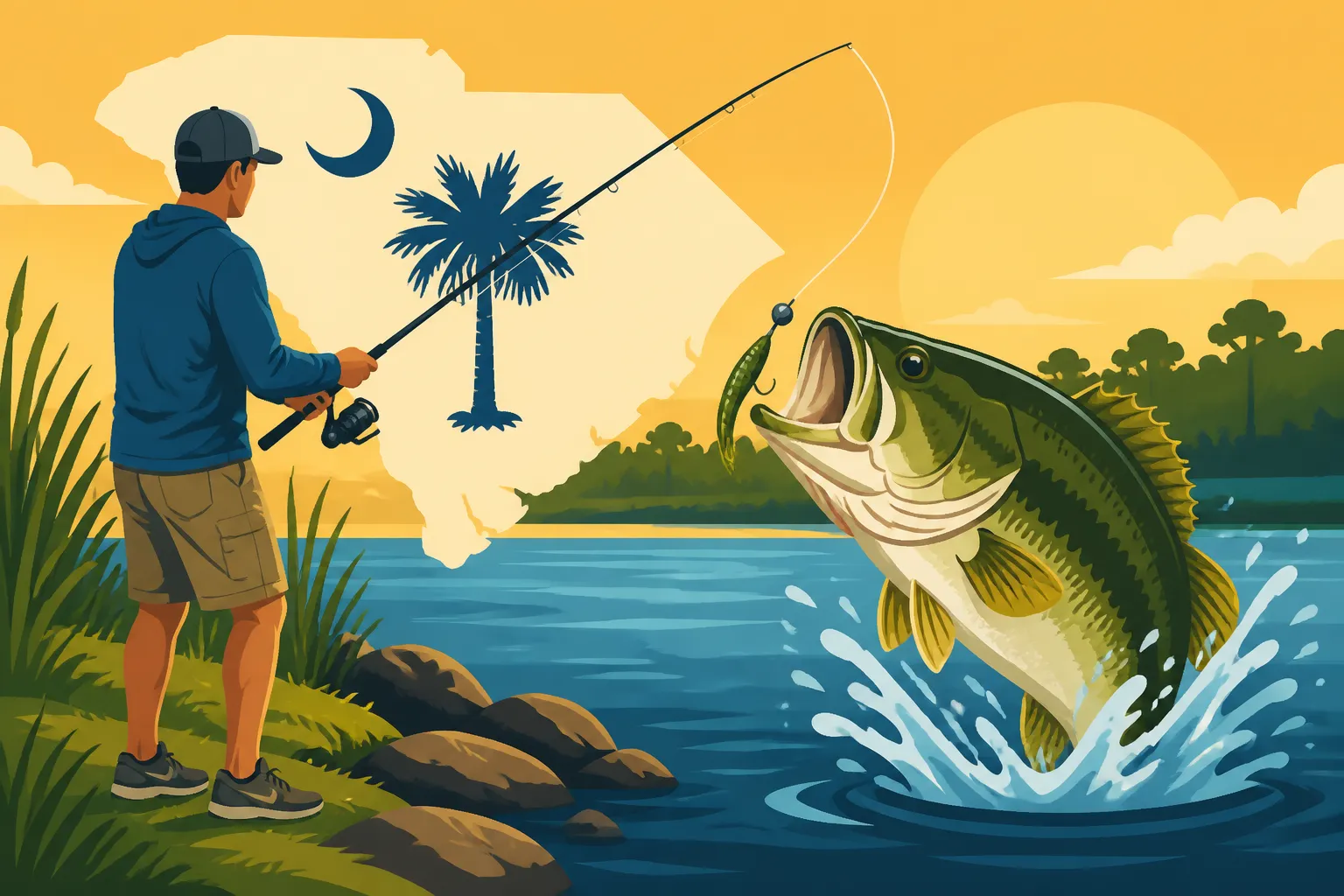
It’s a common frustration, isn't it? You love the idea of catching big bass, but you don't have a fancy boat with all the latest electronics, and it feels like everyone else does. You stare at those wide-open lakes and rivers in South Carolina, wondering how on earth you're supposed to reach the fish from the bank. Well, take a deep breath, because I'm here to tell you that you absolutely can be successful bass fishing from the bank. This guide will walk you through the strategies, gear, and mindset you need to consistently hook into some awesome largemouth bass, even when your feet are firmly on solid ground.
Understanding Bass Behavior from the Bank
When you're fishing from the bank, your perspective is different from someone in a boat, and you need to understand how bass use the shoreline to their advantage. They aren't just out in the middle of the lake; they're often right under your nose, especially in areas offering cover and ambush points.
Why Bass Hang Out Near the Bank
Bass, particularly largemouth bass, are ambush predators. This means they love structure and cover – anything they can hide behind or in, waiting for an unsuspecting baitfish or crawfish to swim by. From a bank angler's perspective, this is fantastic news because a lot of that prime structure is perfectly accessible from shore. Think about it: fallen trees, submerged brush piles, weed lines, docks, lily pads, rocky outcrops, and sudden drop-offs are all hotspots. These areas provide shade, protection from predators, and a smorgasbord of food. Often, the bank itself creates an edge, a transition zone where shallow water meets deeper water, and that's exactly where bass like to patrol. Understanding what Do Largemouth Bass Eat in South Carolina Ponds? will give you an edge in selecting your baits.
Consider a sunny afternoon on Lake Murray or Lake Hartwell. While boaters might be out chasing schooling fish in open water, the bass closer to shore will be tucked away, seeking cooler water and shade. A large dock, a thick patch of cattails, or a fallen oak tree extending into the water becomes a miniature ecosystem, and bass know it. They're conserving energy, waiting for an easy meal, and you, standing on the bank, have a direct line to their hiding spots if you know what to look for.
Reading the Shoreline for Key Structures
One of the biggest keys to success in bank fishing is learning to "read" the water and the shoreline. Don't just cast blindly. Instead, survey your immediate area and identify potential bass hideouts. Look for changes in the bank's contour: does it suddenly drop off into deeper water, or is it a long, gradual slope? Bass prefer those sudden changes. Pay close attention to any visible cover. Is there a tree that fell into the water years ago, now a submerged haven? Are there lily pads forming a dense mat? What about rocks, riprap, or even old tires and debris? These are all magnets for bass.
Imagine you're standing on the bank of the Edisto River. You might see a stretch of open bank, then suddenly, a bend in the river with a deep eddy and a logjam on the far side. That logjam is screaming "bass habitat!" The current will bring food to the bass hiding in the tangled branches, and the shaded water offers refuge. Similarly, on one of South Carolina's Best Bass Fishing Lakes, an old wooden pier that extends out could be a game-changer. The pilings themselves create vertical structure, attracting baitfish, and thus, bass. Even a subtle change in bottom composition, like where a sandy bottom meets a muddy patch or a gravel bar, can be enough to hold fish. Being observant before you even make your first cast will dramatically increase your chances.
Essential Gear for the Bank Angler
You don't need a boatload of expensive equipment to catch bass from the bank, but having the right tools makes a huge difference. The focus should be on portability, versatility, and efficiency, because you're often covering ground on foot.
The Right Rod, Reel, and Line Setup
For bank fishing, a versatile rod is your best friend. I usually recommend a medium-heavy power spinning rod, around 6'6" to 7'6" in length. This gives you enough backbone to fight a good-sized bass and enough length for decent casting distance, especially important when you can't get as close to cover as you'd like. A good quality spinning reel, sized 2500-3000, will balance well with this rod and handle a variety of lure weights. You can often find excellent combos on Amazon that offer great value and performance.
When it comes to line, braid is often my go-to for bank fishing. A 15-20 lb braided line offers incredible sensitivity, excellent casting distance, and superior strength-to-diameter ratio, meaning it's less likely to snap when you hook a bass in heavy cover. The lack of stretch in braid also helps with hook sets from a distance. I typically tie on a fluorocarbon leader (10-15 lb test) using an FG knot or a double uni knot. Fluorocarbon is nearly invisible underwater and is more abrasion-resistant, which is crucial around docks and brush. If you prefer mono, a 12-14 lb test monofilament is a solid, forgiving choice, especially if you're just starting out. Just remember to check your line frequently for nicks and abrasions, as you'll be casting into some gnarly spots.
Must-Have Tackle Box Essentials for Shore
Since you can't bring your entire garage with you, your tackle box needs to be lean and mean. Focus on lures that are versatile, cast well, and can be retrieved effectively from a fixed position. Here's a breakdown of what I always carry:
- Soft Plastics: These are bank fishing powerhouses. Think Texas-rigged worms (7-10 inches), creature baits, and senkos. They are weedless, allowing you to pitch them into heavy cover where bass live, and they mimic natural prey like crawfish or dying baitfish. You can buy a variety pack from Amazon to get started.
- Spinnerbaits and Chatterbaits: These are excellent for covering water and triggering reaction strikes. They cast well, come through cover relatively easily, and their flash and vibration are irresistible to bass. A 1/4 to 1/2 oz size is usually perfect.
- Crankbaits: A few shallow-diving and medium-diving crankbaits can be incredibly effective, especially when bass are actively feeding. Choose colors that mimic local baitfish or crawfish.
- Topwater Lures: Poppers, walking baits, and frogs are thrilling to fish, especially during early morning or late evening. There's nothing quite like a bass blowing up on a topwater lure right in front of you. Check out Topwater Bass Fishing Techniques for Early Morning for more tips.
- Jigs: Rubber-skirted jigs (1/4 to 1/2 oz) with a craw-style trailer are fantastic for mimicking crawfish. They can be pitched into tight cover or slowly dragged along the bottom. If you want to learn more, read How to Fish a Jig for Largemouth Bass.
- Terminal Tackle: Don't forget a selection of hooks (EWG and straight shank for Texas rigs), bullet weights (1/8 oz to 1/2 oz), swivels, and perhaps some small split shots for weight adjustments.
A small, organized tackle backpack or shoulder bag is far more practical than a bulky box when you're hiking along a shoreline. This allows you to carry water, snacks, and extra layers without juggling multiple items.
Strategic Lure Selection and Presentation
Fishing from the bank requires a bit more thought about lure choice and how you present it, simply because you're limited by your casting angle and distance. The goal is to maximize your time in the strike zone and entice those bass hidden along the banks.
Choosing the Right Lure for the Situation
Your lure choice should always match the conditions and the type of cover you're targeting. Here's a general guide:
- Heavy Cover (Lily Pads, Thick Weeds, Brush Piles): This is where soft plastics shine. Texas-rigged worms, creature baits, or a frog on topwater are perfect. Their weedless nature means you spend less time snagged and more time fishing. A sturdy braid ensures you can pull fish out of the nastiest stuff.
- Open Water Near Structure (Docks, Rocky Banks, Drop-offs): Crankbaits can be deadly here, especially those that dive just enough to tick the bottom or bump into dock pilings. Spinnerbaits and chatterbaits are also excellent for covering water quickly and drawing strikes.
- Shallow Flats and Spawning Areas (Spring): During the Largemouth Bass Spawning Season Explained, when bass are guarding beds or actively feeding in shallow water, a weightless senko is incredibly effective. Its subtle shimmy on the fall is hard for a bass to resist.
- Low Light Conditions (Dawn, Dusk, Overcast Days): Topwater lures, spinnerbaits, and darker colored jigs or worms tend to perform well when visibility is low.
Remember, bass in South Carolina waters, whether it's the Santee Cooper Lakes or a local pond, are often looking for an easy meal. If your lure looks natural and is presented enticingly, they'll hit it. For a deeper dive into seasonal preferences, check out Bass Fishing Techniques for Spring Pre-Spawn.
Mastering Bank Casting and Retrieval Techniques
Since you're stationary, covering water efficiently and presenting your lure accurately is paramount.
- Fan Casting: Instead of casting straight out every time, use a fan casting technique. Make a cast to your far left, then work your way across the water in front of you, making a cast every few feet until you reach your far right. This ensures you cover a wide area and don't miss any potential holding spots.
- Targeting Visible Cover: When you see a submerged log, a patch of weeds, or a dock piling, cast beyond it and retrieve your lure through or past the cover. Bass often position themselves on the "downstream" side of cover or facing outward, ready to ambush.
- Vary Your Retrieval: Don't just reel in at a steady pace. Experiment with different speeds, pauses, jerks, and twitches. Sometimes a slow, methodical retrieve is best, while other times a fast, erratic retrieve can trigger a reaction strike. For example, when fishing a spinnerbait, try a "stop and go" retrieve, letting it fall occasionally before speeding it up again. Read How to Fish a Spinnerbait for Bass for more details.
- The Angle Advantage: Bank fishing forces you to think about angles. If you're casting parallel to a weed line or a dock, you're keeping your lure in the strike zone for a longer period. Sometimes, moving just a few feet along the bank can open up a completely new casting angle to a piece of structure.
| Lure Type | Best for Bank Fishing? | Pros | Cons | Common Situations |
|---|---|---|---|---|
| Soft Plastics | Absolutely essential. | Highly versatile, weedless, realistic presentation, effective in heavy cover, inexpensive to stock. | Can be slow to fish, sometimes require finesse. | Heavy cover, pitching, slow retrieves, targeting specific spots. |
| Spinnerbaits | Excellent. | Cover water quickly, good in moderate cover, strong vibration/flash, trigger reaction bites. | Can get snagged in very dense cover, less realistic profile than some. | Covering flats, weed edges, around submerged timber. |
| Crankbaits | Very good, especially shallow to medium divers. | Cover water efficiently, mimic baitfish, good for reaction strikes, can bounce off structure. | Can get snagged easily in heavy cover, depth specific. | Open water, rocky banks, docks, sharp drop-offs. |
| Jigs | Crucial for targeted presentations. | Mimic crawfish, effective in thick cover, vertical presentation, good for bottom fishing. | Can be slow to fish, requires good feel for the bottom, can snag. | Dock pilings, brush piles, bottom structure, cold water. |
| Topwater Lures | Incredibly fun and effective during certain times. | Exciting strikes, good for low light, draw fish from cover. | Limited to calm conditions, specific times of day, can be ignored by inactive fish. | Early morning, late evening, overcast days, around lily pads. |
Finding the Best Bank Fishing Spots in South Carolina
Success from the bank often comes down to knowing where to fish. South Carolina offers a wealth of opportunities, from major reservoirs to small community ponds, but not all banks are created equal.
Public Access Points and Parks
One of the biggest challenges for bank anglers is simply gaining access to good water. Fortunately, South Carolina has many public access points and parks that offer fantastic bank fishing opportunities. State parks often have designated fishing piers or accessible shorelines. Many boat ramps on public lakes and rivers also provide walk-in access to adjacent banks.
Look for areas where the public boat ramp isn't the only option. Some locations, especially on larger lakes like Lake Murray, Lake Hartwell, or the Santee Cooper Lakes, have expansive public lands or causeways where you can walk for miles, casting as you go. Even smaller community ponds or city parks can hold surprisingly large bass, especially if they are regularly stocked or have good habitat. Always check local regulations for fishing within city limits or specific park rules before you go. The "Go Outdoors South Carolina" website is a great resource for identifying public access points and understanding South Carolina Fishing License Guide.
Scouting Locations for Optimal Conditions
Beyond just finding an access point, you need to scout the area for optimal conditions. This involves more than just a quick glance.
- Use Satellite Maps: Before you even leave home, use satellite imagery (like Google Maps) to identify promising stretches of shoreline. Look for points, coves, creek mouths, visible submerged structure (sometimes you can spot old roadbeds or timber lines), and abrupt changes in depth. You can often trace old creek channels or riverbeds that lead into the main lake, and these are often highway for bass.
- Observe Water Levels: Water levels can dramatically change bank fishing conditions. High water might bring bass into newly flooded cover, while low water exposes structure that might otherwise be hidden. Keep an eye on local lake reports if available.
- Walk the Bank: Once you're on site, take some time to walk the bank without even casting. Look for signs of baitfish, ripples, or even bass jumping. Pay attention to changes in bank slope, vegetation, and bottom composition. If you see a particularly promising spot, like a laydown or a brush pile, mentally mark it as a high-percentage target. Remember that even the smallest pond can hold decent bass, so don't overlook them! The Best Bank Fishing Spots in South Carolina will often be those with diverse habitat and easy access.
Dealing with Crowds and Pressure
Bank fishing can sometimes mean dealing with more people than if you were out in a boat, especially at popular public access points. This pressure can make bass warier. Here are a few tips:
- Go During Off-Peak Hours: Early mornings, late evenings, and weekdays are generally less crowded than weekend afternoons. These times also often coincide with better bass activity.
- Venture Further: If possible, walk further down the bank from the main access point. Most people won't go far, so the more remote areas often see less pressure and have more willing fish.
- Fish Smarter, Not Harder: When fish are pressured, they become wary of flashy, noisy presentations. This is when finesse tactics really shine. Downsize your lures, use lighter lines, and present your baits more subtly. A Texas-rigged worm or a shaky head jig can be incredibly effective when bass are shut down.
- Be Patient: Sometimes, you just have to wait out the crowds or the lull in activity. Bass fishing requires patience, and bank fishing is no exception. Find a good spot, work it thoroughly, and trust your instincts. Remember, the fish are there, you just have to convince them to bite!
Being a successful bank angler for bass in South Carolina is absolutely achievable. It takes observation, the right selection of portable gear (which you can easily get from Amazon or your local tackle shop), and a willingness to adapt your techniques. Embrace the challenge, learn the nuances of shoreline fishing, and you’ll be pulling in impressive bass from the bank in no time!
Disclaimer
This article is for general informational purposes only and does not constitute professional advice. Laws, prices and regulations vary by location and change over time. Consult a qualified professional for guidance on your specific situation.