Best Lures for Inshore Redfish Fishing
You've been there, right? Standing on a marsh bank in the South Carolina Lowcountry, seeing those redfish tails waving, but no matter what you throw, they just seem to ignore it. It's enough to make you pull your hair out! Choosing the right lure for inshore redfish fishing can feel like solving a complex puzzle, but it doesn't have to be. This comprehensive guide is here to demystify the world of redfish lures, helping you understand why certain baits work best, when to use them, and ultimately, how to get more of those hard-fighting reds to commit.
Understanding Redfish Behavior and Habitat for Lure Selection
Before we even talk about specific lures, we need to get into the head of a redfish. These fantastic game fish are creatures of habit, influenced heavily by their environment and what they naturally eat. Knowing their tendencies is the first step to making your lure choices feel less like guesswork and more like a strategic play.
Why Redfish Are Picky Sometimes: Forage and Environment
Redfish, also known as red drum, are opportunistic feeders, but they have distinct preferences. Their primary diet consists of crustaceans like fiddler crabs and blue crabs, and a variety of baitfish such as mullet, menhaden, and shrimp. When you're trying to fool a redfish, your best bet is often to "match the hatch," meaning you select a lure that closely mimics what they're already eating.
Think about it: if shrimp are abundant in the marsh grass, a shrimp-imitating soft plastic under a popping cork is likely to get noticed. If finger mullet are darting through the creeks, a slender twitchbait or a weedless spoon that flashes like a fleeing minnow might be the ticket. Their habitat also plays a huge role; redfish love shallow flats, oyster beds, and the intricate network of marsh creeks where they can ambush prey. The murkier the water, the more you might lean on lures with strong vibrations or prominent scents, whereas in clear water, realism and subtle action become paramount.
It's not just about what they eat, but also how they eat it. Redfish have downward-facing mouths, perfectly adapted for rooting around in the mud and grass for crabs and shrimp. This tells us that lures presented near the bottom or those that kick up a bit of silt can be incredibly effective. Consider the texture and scent too; a soft, natural-feeling lure with an added scent can often entice a wary redfish to hold on longer, giving you a better hook set.
Reading the Tides and Current: Key to Lure Presentation
The tides are everything when you're fishing for redfish in South Carolina's inshore waters. They dictate where the fish will be, how they'll be feeding, and even how quickly you need to retrieve your lure. Ignoring the tides is like trying to drive a boat with no steering wheel – you might go somewhere, but it won't be intentional!
During an incoming tide, water floods into the marsh, bringing baitfish and crustaceans with it. Redfish often push deep into the grass flats, tailing as they root for crabs, or patrol creek mouths looking for easy meals. For these scenarios, you'll want weedless lures that can navigate dense cover without snagging, or topwater baits that create a commotion over shallow grass. On the flip side, an outgoing tide pulls water, bait, and fish out of the marsh. Redfish will stage along creek edges, oyster bars, and deeper channels, waiting for their prey to be swept out. This is a prime time for using subsurface lures like jigs with soft plastics, or spoons, allowing them to drift naturally with the current or to be worked along drop-offs.
Current also directly impacts your lure presentation. A strong current means you'll need heavier jig heads or lures that can sink quickly to stay in the strike zone. You might also need to retrieve faster to keep pace with the flow and prevent your lure from looking unnatural. Conversely, in slack water or very weak currents, lighter lures and slower retrieves are often more effective, allowing the bait to suspend or flutter temptingly. Understanding how to fish an incoming tide for Redfish or knowing how to catch Redfish on a falling tide are crucial skills that directly inform your lure choices and techniques.
Topwater Lures: Explosive Strikes in the Shallows
There's nothing quite like the heart-stopping explosion of a redfish smashing a topwater lure. It's addictive! Topwater fishing isn't just a thrill; it's an incredibly effective way to target aggressive redfish, especially in specific conditions.
Popping Corks and Soft Plastics: The Classic Combo
For many inshore anglers in South Carolina, the popping cork and soft plastic combo is a tried-and-true winner. It's simple, incredibly effective, and perfect for imitating a struggling shrimp, which is prime redfish forage. The setup usually involves a floating cork that creates a "pop" or "chug" sound when retrieved, followed by a leader and a soft plastic bait, typically a shrimp or grub imitation.
The magic of the popping cork lies in its ability to mimic two things simultaneously: the sound of shrimp flicking on the surface, or the subtle commotion of a redfish feeding. The noise attracts attention, while the soft plastic dangling below provides the irresistible visual. You cast it out, let it sit for a moment, then give your rod tip a sharp twitch to make the cork pop and splash. Let it sit again, allowing the soft plastic to fall naturally, then repeat. This rhythm is key. When choosing soft plastics, those mimicking shrimp, like a Gulp! Saltwater Shrimp, are incredibly popular, often available on Amazon. You can also use small paddle tails or grub tails for a different action. This combo is particularly effective on calm mornings or when redfish are actively feeding in relatively clear, shallow water, especially around grass edges or oyster bars. For a deeper dive, check out our guide on how to fish a popping cork for Redfish.
The versatility of this setup is another huge plus. By adjusting the leader length between the cork and the lure, you can control how deep your soft plastic sits in the water column. A shorter leader for very shallow water, a longer one for slightly deeper channels. Different cork styles also exist, from traditional cup-faced poppers to chuggers that create a larger disturbance. Experiment with retrieve speeds and pauses to find what the fish prefer on any given day. Sometimes a fast, aggressive pop is what they want; other times, a subtle twitch and long pause will draw them in.
Walk-the-Dog Plugs and Chuggers: Surface Thrills
When redfish are aggressively feeding in super shallow water, especially during low light conditions like dawn and dusk, "walk-the-dog" style topwater plugs are phenomenal. These lures, like the classic Heddon Super Spook (which you can often find on Amazon), create an enticing, side-to-side gliding motion across the surface when retrieved with a specific cadence of rod twitches. This action perfectly imitates a wounded or fleeing baitfish, and aggressive redfish simply can't resist.
The key to walking the dog is practice. It takes a rhythmic wrist flick and reel retrieve to make the lure sashay back and forth. Once you get it down, it's incredibly effective, triggering explosive strikes that are visible and exhilarating. Chugger-style topwater lures, on the other hand, are designed with a concave face that "chugs" or spits water forward when retrieved. Lures like the Rebel Pop-R create a loud splash and gurgle, drawing attention from a distance. These are excellent when you need to call fish up from slightly deeper water or in choppier conditions where a subtler walk-the-dog might get lost.
For both types of topwater plugs, color selection is often straightforward. Natural baitfish patterns, chrome, or bone are great choices in clear water, while brighter colors like chartreuse or firetiger can shine in murkier conditions. The sound and action are often more important than the exact color, as the fish are reacting to the disturbance on the surface. These lures are ideal for covering large areas of shallow water quickly, searching for active fish. Just be prepared for the adrenaline rush when a redfish erupts on your lure!
Subsurface Lures: Covering the Water Column
Not all redfish are looking up. Many prefer to hug the bottom, root around in the mud, or hold in deeper pockets. That's where subsurface lures come into play, allowing you to effectively target redfish throughout the water column, even when they're not interested in looking at the surface.
Weedless Spoons: Glittering Allure in the Grass
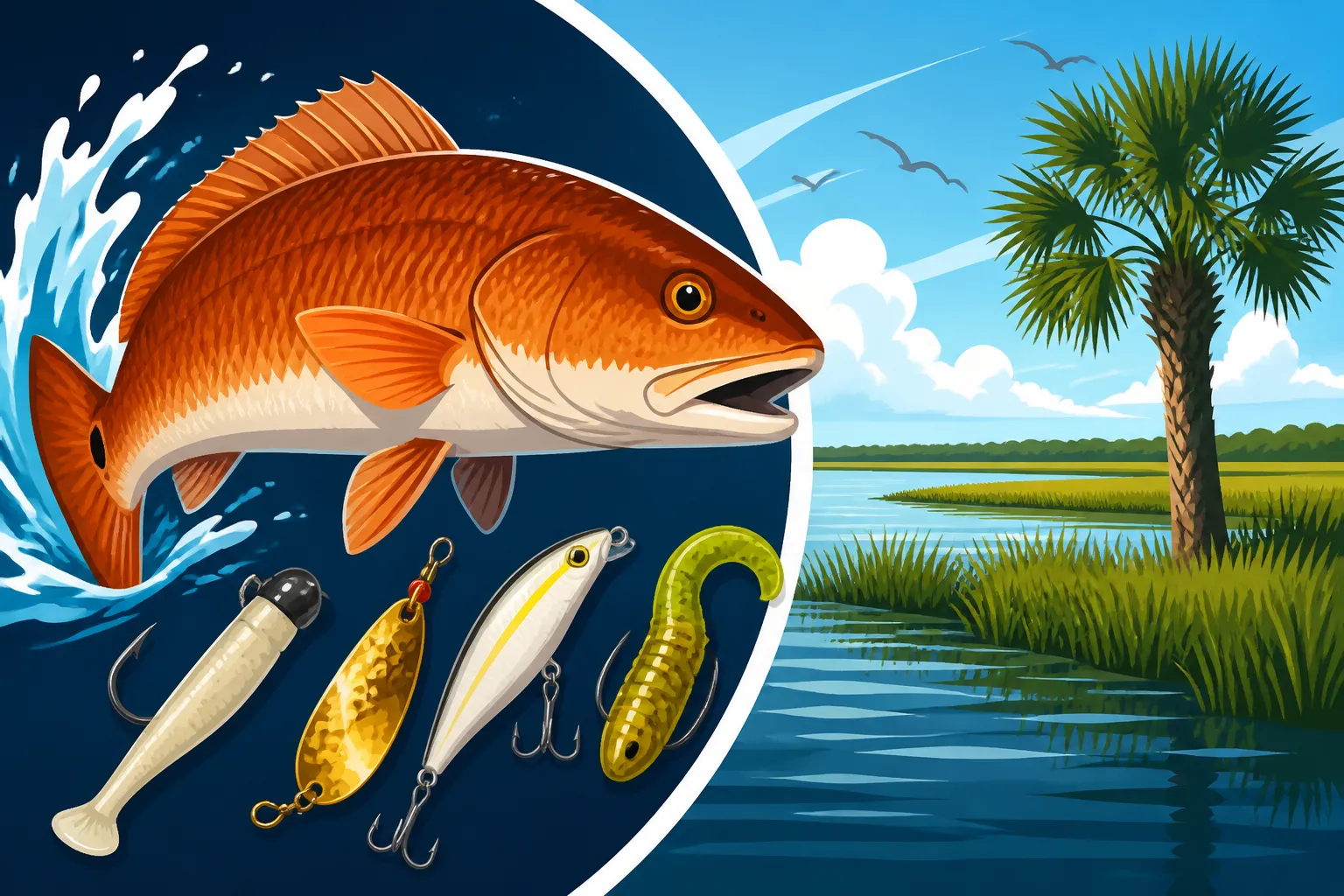
Weedless spoons are an absolute staple for inshore redfish anglers, and for good reason. Their unique design allows them to glide effortlessly over oyster shells, through grass, and across submerged structure without snagging, making them perfect for navigating the complex South Carolina inshore environment. The action of a spoon is simple yet highly effective: it wobbles and flashes like a distressed baitfish, an easy meal for a hungry red.
Colors like gold, silver, and copper are the perennial favorites, mimicking the shimmer of various baitfish species. A gold spoon, for instance, is fantastic in tannic or slightly stained water, while silver often performs well in clearer conditions. The retrieve for a spoon is usually a steady, moderate reel, allowing the spoon to wobble and reflect light. You can also incorporate a stop-and-go retrieve, letting the spoon flutter down a bit on the pause, which often triggers strikes.
Spoons are particularly deadly when redfish are holding in grass flats where other lures would quickly foul. Their weedless design means you can cast directly into the thick stuff where reds are often lurking. They also cast a mile, allowing you to cover significant water from the bank or a boat. Always check your leader and line for abrasions after fishing around oyster beds, as the shells can be surprisingly sharp and quickly compromise your tackle.
Scented Soft Plastics: Irresistible for Finicky Fish
Sometimes, redfish just need a little extra convincing, and that's where scented soft plastics become invaluable. When the bite is tough, the water is murky, or the fish are particularly finicky, adding scent can make all the difference. Redfish have an excellent sense of smell, and a good scent trail can often turn a curious sniff into a committed bite.
Many brands offer scented soft plastics, with Berkley Gulp! Saltwater Shrimp (widely available on Amazon) being a hugely popular choice among South Carolina anglers. These lures come in various shapes – shrimp, minnows, paddle tails, and even crab imitations – and are infused with powerful scents that disperse in the water. The key is to match the shape and size to the predominant forage and then let the scent do its work. Colors range from natural browns and grays to brighter chartreuse and pinks.
You can rig scented soft plastics on a variety of jig heads, from simple round heads to specialized stand-up jigs that keep the bait upright on the bottom. They also work well on weedless hooks for fishing heavy cover. The retrieve should often be slower than with traditional plastics, allowing the scent to dissipate and the fish to track it. A slow drag-and-pause, subtle twitching, or even just letting it sit on the bottom in the current can be incredibly effective. Don't be afraid to let a scented soft plastic sit in one spot for a longer period, especially if you're sight fishing or know reds are in the area but aren't actively chasing.
Hard-Bodied Twitchbaits and Crankbaits: Aggressive Presentations
When redfish are feeling aggressive or you need to cover water quickly, hard-bodied twitchbaits and crankbaits can be absolute powerhouses. These lures offer a different kind of appeal, often with internal rattles, realistic finishes, and erratic actions that mimic fleeing or disoriented baitfish.
Twitchbaits, like the MirrOlure MirrOdine, are designed to suspend or slow-sink and are worked with a series of rod twitches and pauses. This creates an irresistible darting, slashing action that can trigger reaction strikes from even wary redfish. They are excellent for probing slightly deeper channels, around dock pilings, or along oyster reefs. The pauses are crucial, as many strikes occur when the bait is suspended, seemingly vulnerable.
Crankbaits, on the other hand, are typically characterized by a diving lip that forces them to dive to a specific depth when retrieved. They often have a strong wobbling action and internal rattles that create noise and vibration, making them effective in stained water or when fish are active. While not as commonly used for redfish as soft plastics, smaller crankbaits that mimic shrimp or baitfish can be effective in deeper creeks or along riprap. For both twitchbaits and crankbaits, choose colors that imitate local baitfish, or go with flashy chrome or vibrant patterns for murky conditions. These lures are fantastic for those times when you need to search for active fish or when the reds are keyed in on a faster, more aggressive presentation.
Jig Heads and Soft Plastics: The Versatile Workhorse
If there's one combination that every inshore angler should master for redfish, it's the jig head paired with a soft plastic. This setup is arguably the most versatile and consistently productive option for targeting redfish in a myriad of situations across South Carolina's diverse inshore waters.
Choosing the Right Jig Head
The jig head is the anchor and the hook, dictating how your soft plastic lure behaves in the water. Selecting the right one is crucial for success. The weight of the jig head is paramount and depends on several factors: the depth of the water you're fishing, the strength of the current, and the size of the soft plastic you're pairing it with.
For shallow marsh flats (1-3 feet), a 1/8 ounce or 1/4 ounce jig head is often perfect, allowing for a slower, more natural fall. As you move into deeper channels (4-8 feet) or encounter stronger currents, you'll need to step up to a 3/8 ounce or even a 1/2 ounce to ensure your bait reaches the bottom and stays in the strike zone. Too light, and your lure will be swept away; too heavy, and it'll sink like a rock, looking unnatural. Hook size on the jig head should match the soft plastic. A 3/0 hook is great for smaller shrimp imitations, while a 4/0 or 5/0 might be better for larger paddle tails or baitfish profiles. Standard round jig heads are the most common, but stand-up jigs can be useful for keeping your bait off the bottom, especially when fishing over muddy areas. Some jig heads come with weed guards, which are a blessing when fishing around grass or oysters. Consider the color of the jig head too; red, chartreuse, or even black can sometimes make a difference, acting as an additional attractant or matching the overall profile of the bait.
Pairing with Soft Plastics for Maximum Effect
Once you've got your jig head, the real fun begins: pairing it with the perfect soft plastic. This is where you can truly fine-tune your presentation to match the conditions and the mood of the redfish.
Paddle tail soft plastics are incredibly popular for redfish. Their segmented tails create a strong vibration and thumping action as they move through the water, mimicking a swimming baitfish. This makes them excellent for covering water quickly, searching for active fish, and drawing attention in stained or murky conditions. Colors like chartreuse, white, natural mullet, or "rootbeer" are often fantastic choices. Shrimp imitations, as we discussed, are a redfish favorite. Rigged on a jig head, they offer a very realistic profile and a slower, more natural fall than a paddle tail, which can be irresistible to finicky reds. Grubs, with their curly tails, offer a more subtle action and are incredibly versatile, working well in a variety of retrieves from slow bottom drags to moderate swims. Finally, realistic baitfish profiles, often referred to as "flukes" or "minnow" baits, are superb for active feeders, especially when sight fishing in clear water. For example, knowing the Redfish Slot Limit Rules for South Carolina Anglers is important, as it might influence your choice of lure size if you are specifically targeting keeper-sized fish.
The key is to experiment. If the paddle tail isn't working, try a shrimp. If they're not hitting a fast retrieve, slow it down with a grub. The combination of different jig head weights and various soft plastic shapes and colors allows you to adapt to almost any inshore scenario you encounter in South Carolina. For additional context on redfish behavior and the effectiveness of different bait choices, you might find our guide on best bait for Redfish in South Carolina's marsh creeks helpful, even though it focuses on natural baits.
Here's a quick reference table to help you choose the right lure for your next South Carolina redfish adventure:
| Lure Type | Ideal Conditions | Key Features & Actions | Best for… |
|---|---|---|---|
| Popping Cork & Soft Plastic | Calm water, active fish, shallow grass | Pop, splash, struggling shrimp imitation | Sight fishing, calling fish, versatile |
| Walk-the-Dog Topwater | Low light, aggressive fish, very shallow | Side-to-side sashay, fleeing baitfish | Covering flats, triggering explosive strikes |
| Chugger Topwater | Choppy water, slightly deeper, aggressive fish | Loud chug, spitting water, wounded baitfish | Drawing attention, covering water |
| Weedless Spoons | Grassy flats, oyster beds, strong current | Wobbling, flashing, weedless design | Heavy cover, long casts, mimicking fleeing baitfish |
| Scented Soft Plastics | Finicky fish, murky water, slow bite | Natural feel, strong scent, versatile shapes | Slow retrieves, sight fishing, tough conditions |
| Twitchbaits | Deeper creeks, docks, clear water, active fish | Suspending/slow sink, erratic darting action | Reaction strikes, imitating wounded baitfish |
| Crankbaits | Deeper channels, riprap, covering water | Diving lip, wobbling, rattling (some) | Finding fish, aggressive presentations |
| Jig Head & Paddle Tail | Versatile, searching, stained water | Strong vibration, thumping, baitfish imitation | Covering water, active feeders |
| Jig Head & Shrimp Imitation | Versatile, finicky fish, natural presentation | Realistic profile, natural fall, shrimp imitation | Slow retrieves, subtle presentation |
Whether you're exploring the famed waters near Mount Pleasant Redfish Fishing Spots in South Carolina or seeking out new areas, understanding these lure choices will undoubtedly boost your success. Don't forget that how to sight fish for Redfish in shallow water is a technique that often benefits from a subtle, well-presented lure. Always keep an eye on South Carolina Redfish Slot Limit Rules, as regulations can change, and you want to be sure you're compliant.
Disclaimer
This article is for general informational purposes only and does not constitute professional advice. Laws, prices and regulations vary by location and change over time. Consult a qualified professional for guidance on your specific situation.