How to Fish an Incoming Tide for Redfish
Ah, the incoming tide for redfish in South Carolina! It's one of those times that can be both incredibly exciting and, let's be honest, a little perplexing for anglers. You know the water's rising, pushing into all those nooks and crannies, and you know the redfish are moving with it, but figuring out exactly where and how to intercept them can feel like a guessing game. This guide is all about helping you decode the incoming tide, turning those tricky conditions into some of the most productive redfish angling experiences you'll have in our beautiful Palmetto State.
Understanding the Redfish and the Tides in South Carolina
South Carolina's coast is a labyrinth of estuaries, marsh grass, oyster beds, and intricate creek systems, all profoundly influenced by the daily ebb and flow of the ocean. For redfish, often called "spot tail bass" or "red drum," these tidal movements aren't just background noise; they're the rhythm of life, dictating where and when they feed, seek shelter, and travel.
The Rhythmic Dance of South Carolina's Tides
Our tides along the South Carolina coast are semi-diurnal, meaning we generally experience two high tides and two low tides each day. The incoming tide, often called the flood tide, is when the ocean water rushes inland, filling up the creeks, marsh flats, and shallow bays. This rising water brings with it a surge of life and opportunity, but it also creates strong currents and changes in depth that can make finding and catching redfish a unique challenge. Unlike a lake, where conditions might stay relatively static, the coastal environment is constantly shifting, requiring anglers to be adaptable. Understanding these dynamics is the first step to mastering Tide-Based Techniques for Inshore Fishing.
When that water starts to flood in, especially during a strong moon tide, you'll see creeks swell, oyster beds disappear under the surface, and entire marsh flats become navigable. This can feel overwhelming, like the fish could be anywhere. But what might seem like boundless new territory for the fish is actually quite predictable once you know what they're looking for. The trick is to think like a redfish: where would you go to find an easy meal when the buffet is suddenly open?
Why Redfish Love an Incoming Tide
Redfish are opportunistic feeders, and the incoming tide is essentially their dinner bell. As the water pushes into the shallower areas, it literally flushes out baitfish, crabs, and shrimp from their hiding spots. Imagine a submerged grass flat that was dry or barely covered at low tide; now, as the water rises, fiddler crabs emerge from their holes, shrimp dart through the Spartina, and small baitfish venture into the newly flooded shallows. This is a redfish's dream scenario.
They follow the rising water, often pushing deep into the marsh or onto flooded flats, looking for these easy meals. This is when you might see those iconic "tailing" redfish, their tails breaking the surface as they root around in the mud or grass. The incoming tide also provides a sense of security for redfish, allowing them to move into areas where they might be vulnerable at lower tides. The deeper water gives them cover from aerial predators and a quicker escape route if a larger predator or, say, an angler in a boat approaches. This phenomenon makes fishing an incoming tide especially productive if you know where to look and what bait to use, as we discuss further in How to Fish an Incoming Tide for Redfish.
Reading the Water and Key Locations on an Incoming Tide
Finding redfish on an incoming tide isn't just about showing up; it's about observation and understanding their behavior patterns. The water may look vast and featureless to the untrained eye, but subtle clues abound if you know how to read them.
Identifying Prime Incoming Tide Feeding Zones
When the tide starts to flood, specific areas become redfish magnets. These are the places where bait congregates, or where the redfish can ambush their prey most effectively.
- Oyster Beds and Shell Rakes: These natural structures are always fantastic for redfish, but especially on an incoming tide. As the water rises, it covers the sharp shells, allowing redfish to cruise over them safely, picking off crabs and other invertebrates that live within the beds. The irregular surfaces also create current breaks where baitfish can hide, and redfish can wait in ambush. Look for eddies and seams where the current flows around these structures.
- Spartina Grass Flats: This is the quintessential redfish habitat in South Carolina. At dead low tide, these flats are often exposed or have very little water. But as the tide floods, the water pushes into these areas, covering the roots and stalks of the marsh grass. This is where fiddler crabs live in abundance, and shrimp seek refuge. Redfish will follow the water line, often with their backs or tails exposed (tailing), rooting through the grass for these crustaceans. These areas are particularly hot during the upper half of the incoming tide.
- Creek Mouths and Confluences: Where smaller creeks meet larger ones, or where creeks empty into larger bays, are critical choke points. As the tide floods, water and bait are funneled through these junctions. Redfish will often stage at these mouths, waiting for the current to deliver meals right to them. Look for signs of baitfish scattering or subtle swirls on the surface—these are classic indicators of feeding activity.
- Shallow Coves and Pockets: These quiet, protected areas can warm up quickly in the sun, attracting baitfish and providing a comfortable environment for redfish. As the tide rises, these coves become accessible, offering redfish a buffet away from stronger currents. They're great spots to drift into quietly or approach with a kayak.
The Importance of Current and Structure
While redfish love the new feeding grounds, they also appreciate efficiency. They don't want to fight a strong current all day if they don't have to. This is where structure and current breaks come into play.
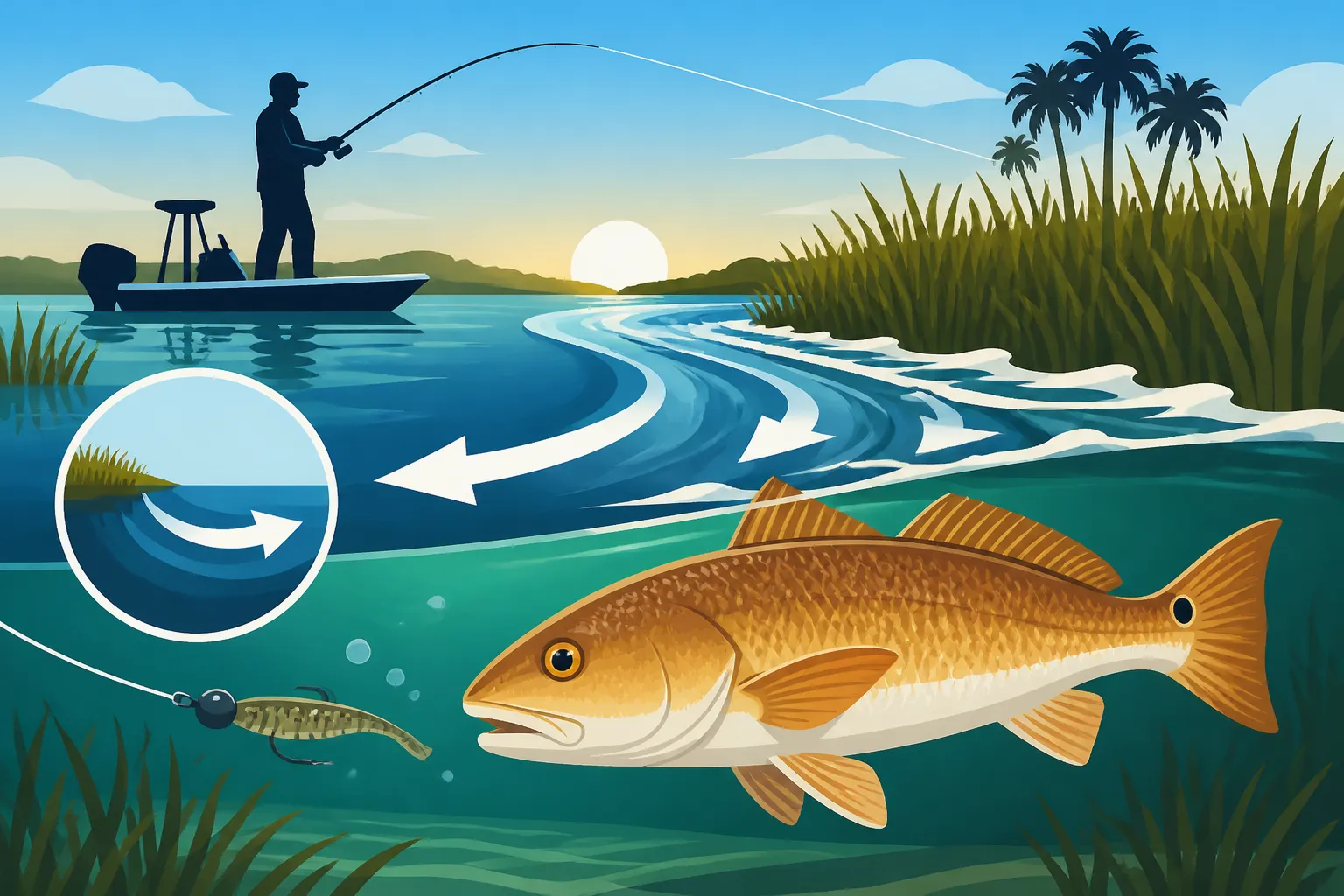
- Current Seams: These are lines in the water where faster-moving water meets slower-moving water. Baitfish often get disoriented or pushed along these seams, making them easy targets. Redfish will position themselves on the slower side of the seam, conserving energy while waiting for prey to drift by. Look for these seams around points, islands, or even subtle changes in bottom contour.
- Docks, Pilings, and Fallen Trees: Any vertical or horizontal structure in the water can create a current break. Redfish will often hang tight to these structures, using them as ambush points. On an incoming tide, these structures can offer shade, deeper water access, and a consistent food source as bait washes around them. Remember to cast as close to the structure as possible, as redfish will often hug it tightly.
- Points and Bends in Creeks: These geographical features concentrate current and bait. As the incoming tide flows around a point or through a bend, it creates eddies and swirling water. Redfish will position themselves on the "down-current" side of these features, ready to intercept anything swept past. Pay attention to how the current is moving and anticipate where the fish will be staging.
Essential Gear and Techniques for Incoming Tide Redfish
Having the right tools for the job makes all the difference, especially when you're trying to outsmart a wary redfish in their own backyard. You don't need a boatload of expensive equipment, but a few key items will significantly boost your success rate.
Rods, Reels, and Line for Inshore Action
For redfish, particularly in the shallow, often obstacle-rich environments of an incoming tide, a balanced setup is key.
- Rods: A medium-light to medium power spinning rod, typically 6'6" to 7'6" in length, is ideal. The lighter action allows for accurate casts with lighter baits, while still having enough backbone to handle a fighting redfish. If you're going after larger reds or fishing around heavier cover, a medium-heavy rod might be beneficial. Look for rods with a fast action, meaning the tip bends easily but the rest of the rod is stiff, giving you excellent sensitivity and hook-setting power.
- Reels: Pair your rod with a 2500-sized or 3000-sized spinning reel. These reels offer a good balance of line capacity, drag power, and retrieve speed for inshore redfish. Make sure your reel has a smooth, reliable drag system, as redfish are powerful fighters, especially on that first run. You can find excellent options for both rods and reels on platforms like Amazon, offering a wide range to suit any budget or preference.
- Line: Braided line is king for redfish. I'd recommend 10-20 lb test braided line. Its lack of stretch provides incredible sensitivity, allowing you to feel even the most subtle bites, and its strength-to-diameter ratio is unbeatable, meaning you can cast further and use lighter line for stealth. However, you'll want to tie on a fluorocarbon leader, typically 2-3 feet long and 20-30 lb test. Fluorocarbon is nearly invisible underwater, crucial for wary redfish, and its abrasion resistance protects your main line from oyster shells and rough structures. A good strong knot, like an FG knot or an Albright knot, is essential for connecting braid to fluorocarbon.
Top Baits and Lures to Entice Redfish
Redfish aren't picky eaters, but some offerings are more effective than others on an incoming tide. The key is to match the hatch or present something irresistible.
- Live Bait:
- Shrimp: Absolutely deadly. Live shrimp under a popping cork is a classic and highly effective setup. The popping cork draws attention, mimicking a feeding fish or shrimp, while the live shrimp below is an easy meal. This works wonders when redfish are cruising the edges of marsh grass or over oyster beds.
- Mud Minnows (Killifish): These hardy baitfish are a redfish favorite. They can be fished on a Carolina rig along the bottom near creek mouths, or even free-lined into grassier areas. They're tough and stay alive well, making them a great choice.
- Finger Mullet: Small mullet are a primary food source for redfish. They can be live-lined or fished on a Carolina rig. This is especially good for larger reds.
- Artificial Lures:
- Soft Plastics: These are incredibly versatile. Paddle tail shads, jerk shads, and Gulp! shrimp imitations rigged on a jig head (1/8 to 1/4 oz is common for shallower water) are fantastic. Colors like natural shrimp, rootbeer with gold flake, or chartreuse are often productive. Vary your retrieval: slow and steady for bottom feeders, or twitch and pause to imitate a struggling baitfish. There's a huge variety available on Amazon, so you can experiment with different sizes and colors.
- Spoons: Gold or silver weedless spoons (like the Johnson Silver Minnow) are excellent for fishing over grass flats, especially when the water is shallow and you need to avoid snagging. Their flash and wobble perfectly imitate a fleeing baitfish.
- Topwater Lures: When redfish are aggressively feeding on the surface, especially during low light conditions or when the tide is just starting to push in, topwater plugs (like MirrOlure MirrOdines or Heddon Super Spooks) can elicit explosive strikes. The "walk-the-dog" retrieve is often irresistible.
Mastering Casting and Retrieval Techniques
It's not just what you throw, but how you throw and retrieve it. Stealth and precision are paramount for incoming tide redfish.
- Accuracy is Key: When redfish are pushing into shallow areas, they're often hugging structure or cruising tight to the marsh grass. Pinpoint casts are crucial. Practice skipping lures under docks or placing your bait precisely along a grass line. Overshooting your target or splashing too loudly can spook fish in these shallow environments.
- Slow and Deliberate Retrieves: For most bottom-oriented baits and soft plastics, a slow, methodical retrieve is best. Redfish are often rooting around, and a bait that moves too fast will be overlooked. Think about a crab scuttling or a shrimp flicking – it's not a frantic escape. Many anglers utilize a "drag and pause" retrieve with soft plastics, letting the jig head settle and then subtly dragging it a foot or two before pausing again.
- Vary Your Retrieval: Don't be afraid to experiment. If a slow retrieve isn't working, try twitching your rod tip more aggressively, or speed up your retrieve slightly. Sometimes a more erratic movement triggers a reaction strike.
- Stealth Mode: Redfish in skinny water are incredibly spooky. Approach your fishing spots quietly. If in a boat, use your trolling motor sparingly and avoid slamming hatches or making loud noises. If wading or kayak fishing, move slowly and deliberately. Casting into the wind, if possible, can help your lure land softly and prevent a loud splash.
Strategies for Success: From Scouting to Hookset
Putting all the pieces together is where the magic happens. A successful incoming tide redfish trip starts long before you even launch your boat or step onto the bank.
Scouting and Timing Your Approach
Preparation is half the battle when it comes to redfish. The more you know about your chosen spot, the better your chances.
- Pre-Trip Research: Before you even leave the house, check the tide charts for your specific location. Look at aerial maps (Google Maps, Navionics) to identify creek mouths, oyster bars, and grass flats that will be flooded on the incoming tide. Pay attention to how the creeks wind and where potential current breaks might form. Understanding Does Tide Timing Matter for South Carolina Redfish? is essential.
- Observing Water Movement and Fish Activity: When you arrive, take a few minutes to just watch the water. Which way is the current flowing? Are there any visible wakes or swirls? Are birds actively feeding? What about baitfish jumping? These are all clues. Sometimes you'll even spot a redfish cruising or tailing before you make your first cast. Let the fish tell you what they're doing.
- When to Be There: The sweet spot for an incoming tide often isn't at the very beginning of the flood, nor at high tide. It's usually during the middle to upper stages of the incoming tide, as the water reaches those prime feeding grounds. For tailing redfish on grass flats, the last two hours of the incoming tide and the first hour of the outgoing can be phenomenal, as the water level is just right for them to root around. Being on location 30-60 minutes before the prime window starts gives you time to observe and position yourself correctly.
Adjusting to Changing Conditions
Fishing is rarely static, and the incoming tide brings its own set of variables. Being able to adapt is a hallmark of a successful angler.
- The Bite Slows Down: If the bite suddenly dies, don't keep doing the same thing. First, check your bait or lure – is it fouled with grass? Is the hook dull? If that's not it, try changing your retrieve speed, switching to a different color lure, or even downsizing your presentation. A subtle change can often trigger a bite.
- Water Clarity Changes: After heavy rains, the water can become stained or muddy. In these conditions, redfish rely more on scent and vibration. Consider using darker colored soft plastics (like black or junebug) or lures with rattles. Live bait also shines in stained water. Conversely, if the water is crystal clear, you'll need to be extra stealthy, use longer fluorocarbon leaders, and maybe more natural bait presentations.
- Wind and Current: A strong wind can make casting difficult and create chop on the water, obscuring signs of feeding fish. It can also speed up or slow down the natural current. Adjust your jig head weight to compensate – a heavier jig head might be needed to get down in strong current, while a lighter one will drift more naturally in lighter currents. When fighting fish in windy conditions, keep your rod tip low to reduce the wind's influence on your line. You can explore How to Catch Redfish on a Falling Tide for techniques that might be opposite to what you'd use on an incoming tide.
The Fight: Landing Your South Carolina Redfish
Once you feel that telltale tug, the real fun begins! Redfish are powerful fighters, especially in shallow water where they can really dig in.
- Setting the Hook: When you feel a strike, particularly with soft plastics or live bait, a firm, sweeping hookset is necessary. Don't yank wildly; instead, smoothly and powerfully pull the rod tip upwards or to the side. With a popping cork, often the redfish will hook itself, but a gentle reel-down and pull ensures a solid connection.
- Managing the Fight: Redfish are known for strong, drag-peeling runs, especially in the initial moments. Let your drag do its job! Don't try to muscle the fish in. Keep your rod tip up (a 45-degree angle is a good target) to absorb the shock of their runs. If you're fishing near oyster beds or docks, try to steer the fish away from these obstacles to prevent your line from getting cut. Move with the fish if you need to, especially in a boat or kayak.
- Safe Handling for Release: Many redfish are caught and released, especially those outside the legal slot limits. If you're planning to keep a fish within the South Carolina Redfish Slot Limit Rules for South Carolina Anglers, be sure to review current regulations. For released fish, minimize air exposure. Use a dehooking tool if the hook is deep. Support the fish horizontally and revive it gently in the water, letting it swim off when it's ready. A good pair of lip grippers can help handle the fish safely without touching its body.
Remember, fishing is as much an art as it is a science. Every day on the water is a learning experience. By understanding the redfish's behavior on an incoming tide, reading the subtle cues the environment provides, and employing thoughtful techniques, you'll greatly increase your chances of reeling in one of South Carolina's most iconic and exciting sportfish.
Incoming Tide Redfish Baits and Lures Comparison
| Bait/Lure Type | Description | Ideal Conditions | Pros | Cons |
|---|---|---|---|---|
| Live Shrimp | Natural bait, often fished under a popping cork or free-lined. | Edges of grass flats, creek mouths, over oyster beds; good visibility. | Extremely effective, natural scent, visual appeal. | Fragile, can be picked off by bait stealers, requires livewell. |
| Mud Minnows | Hardy baitfish, fished on a Carolina rig or free-lined. | Creek channels, deeper holes, near structure; slightly stained water. | Durable, redfish love them, can withstand more abuse. | Slower retrieve, less active presentation. |
| Soft Plastics | Imitations of shrimp, baitfish, or worms on a jig head. | Versatile for grass flats, oyster beds, structure; clear to stained water. | Highly versatile, many colors/shapes, can be fished weedless. | Requires more angler skill (retrieval), no natural scent (unless Gulp!). |
| Gold/Silver Spoons | Metal spoon with flash and wobble, often weedless. | Shallow grass flats, open water, windy conditions. | Casts far, weedless for grass, good flash for attracting fish. | Limited action range, can be less effective in deep water. |
| Topwater Plugs | Floating plugs that create a commotion on the surface. | Low light (dawn/dusk), calm water, aggressive fish, over submerged grass. | Exciting blow-ups, covers water quickly, attracts attention from afar. | Less effective in choppy water, can spook fish in very clear, shallow water. |
| Crab Imitations | Soft plastic or real crab pieces, fished on the bottom or under a cork. | Oyster beds, rocky areas, around docks where crabs are present. | Mimics a primary redfish food source, good for larger reds. | Can be slower fishing, specific to crab-rich areas. |
Disclaimer
This article is for general informational purposes only and does not constitute professional advice. Laws, prices and regulations vary by location and change over time. Consult a qualified professional for guidance on your specific situation.