Best Night Fishing Spots on South Carolina Lakes
There’s a unique magic to fishing South Carolina’s lakes after the sun dips below the horizon. If you've ever found yourself battling the scorching summer heat, dodging pleasure boats, or simply wishing for a different kind of angling challenge, night fishing is your answer. This guide will walk you through the best spots and strategies for making the most of those tranquil, star-lit hours on the water, turning common frustrations into memorable catches.
The Allure of Night Fishing on South Carolina Lakes
Let's be real, daytime fishing in South Carolina can sometimes feel like a competition, especially on those popular lakes during peak season. The heat can be brutal, the boat traffic relentless, and the fish can get mighty finicky under a blazing sun. But when twilight descends, a whole new world opens up, offering cooler temperatures, quieter waters, and a different kind of fishing experience altogether.
Escaping the Daytime Heat and Crowds
One of the biggest draws of night fishing, especially from late spring through early fall, is the welcome relief from the heat. South Carolina summers are legendary for their oppressive humidity and high temperatures, which can make a full day on the water exhausting. Nighttime brings a significant drop in temperature, making it far more comfortable to stay out longer and focus on your fishing.
Beyond the comfort, the calm is unparalleled. Imagine gliding across Lake Murray or the vast expanse of Lake Marion, the only sounds being the gentle lapping of water against your boat and the chirping of crickets. Gone are the roaring wake boats, jet skis, and crowded ramp lines. This peaceful solitude isn't just good for the soul; it’s often fantastic for the fishing. Fish, like us, can be sensitive to heavy boat traffic and noise, and the tranquil night offers them a sense of security, encouraging them to move more freely and feed more aggressively. For those seeking an escape from the hustle and bustle, exploring some of the more remote and uncrowded fishing spots in South Carolina becomes a truly serene experience after dark.
Tapping into Nocturnal Feeding Patterns
It's no secret that many species of fish become much more active once the sun goes down. The cover of darkness provides predators with an advantage, allowing them to ambush prey more effectively. For anglers, this means a prime opportunity to intercept fish that might be hunkered down and inactive during the brightest parts of the day.
Think about it: smaller baitfish might feel safer venturing into shallower waters at night, which in turn draws in larger predatory species. The reduced light intensity also makes fish less wary of your lines and presentations. This shift in behavior can lead to explosive bites and consistent action that you simply won't find during daylight hours. Understanding these nocturnal feeding patterns is key to successful night angling, turning what might be a slow day into an unforgettable night.
Prime South Carolina Lakes for After-Dark Angling
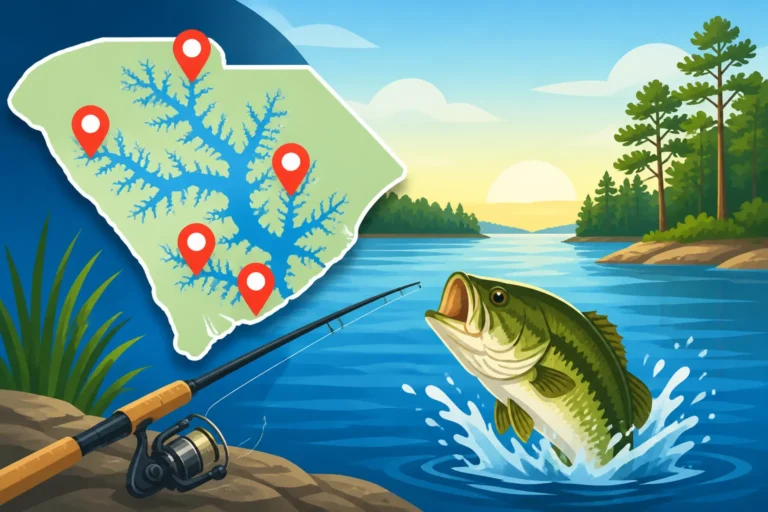
South Carolina boasts an incredible array of freshwater lakes, many of which transform into exceptional night fishing destinations. Each lake has its unique characteristics, making them suitable for targeting specific species once the lights go out. Knowing where to go and what to expect can greatly increase your chances of success.
Lake Murray: A Striper Haven Under the Stars
Lake Murray, affectionately known as the "Jewel of South Carolina," is perhaps one of the most famous lakes in the state for night fishing, especially if you're chasing striped bass. These powerful fish are incredibly active after dark, often coming up from the deeper, cooler waters to feed on baitfish closer to the surface or around prominent structures. When planning your trip, consider using platforms like FishingBooker to find guides who specialize in nocturnal striper trips on Lake Murray, as their local knowledge can be invaluable.
Many anglers target the submerged humps and ledges, particularly near areas like Dreher Island, where stripers tend to congregate. The sound of a large school of stripers blowing up on bait on the surface in the dead of night is an adrenaline rush you won't soon forget. Beyond stripers, you can also find good numbers of catfish and even some largemouth bass moving into shallower areas to hunt under the cover of darkness. For those looking for detailed insights, our guide on Night Fishing Spots on Lake Murray, South Carolina is a must-read.
Santee Cooper Lakes Marion and Moultrie: Catfish and Crappie Hotspots
The Santee Cooper Lakes, comprising Lake Marion and Lake Moultrie, are legendary for a reason. These massive bodies of water offer some of the best freshwater fishing in the Southeast, and that reputation only grows after sunset. If your goal is to land a trophy catfish or fill a cooler with crappie, the Santee Cooper system should be at the top of your list for night adventures.
Catfish—channel, blue, and flathead—are incredibly active at night in these lakes. They move out of their daytime hiding spots in deeper holes and under submerged timber, venturing into flats and shallower channels to scavenge for food. Using cut bait or stink bait on the bottom can yield fantastic results. For crappie, anglers often use submersible lights, which attract baitfish, and in turn, draw in hungry crappie. You'll find plenty of opportunities around brush piles, submerged timber, and bridge pilings. Locals often recommend checking out Lake Moultrie Catfish Fishing Spots for prime locations. The sheer size and diversity of habitat in these lakes ensure that there's always a new spot to explore once the moon is high.
Lake Hartwell: Bass and Hybrids After Sundown
Located on the border with Georgia, Lake Hartwell is another fantastic option for night fishing, particularly for largemouth bass and hybrid striped bass. While it might not have the same national recognition for night fishing as Lake Murray for stripers, its healthy populations of game fish make it a compelling destination.
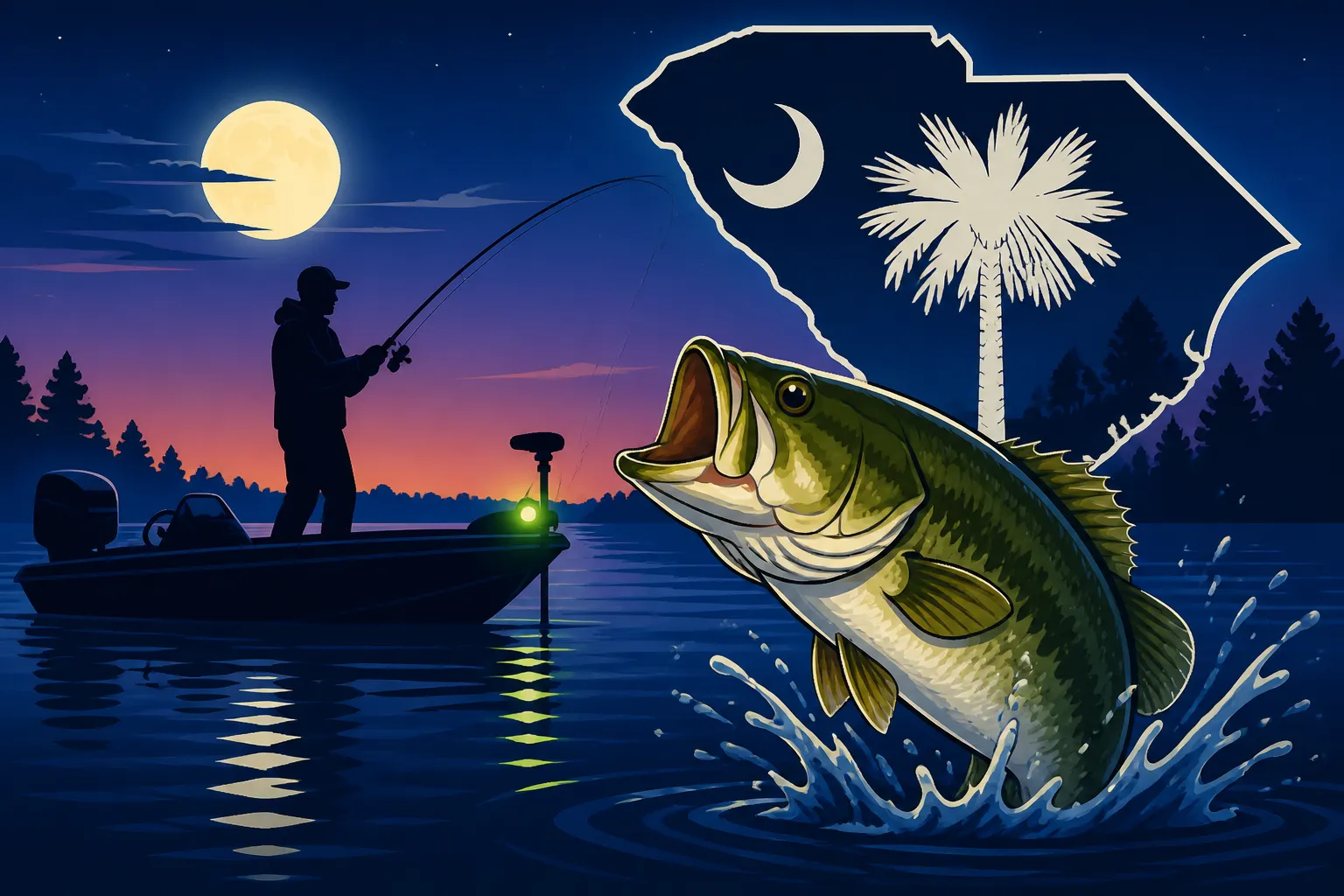
Largemouth bass, especially bigger ones, often become more aggressive nocturnal feeders. They'll move to shallow points, rocky banks, and around docks with lights, looking for an easy meal. Throwing large dark-colored spinnerbaits, Jitterbugs, or buzzbaits can provoke some thrilling topwater strikes. Hybrid stripers, a cross between striped and white bass, also feed actively at night, often schooling up and chasing baitfish near the surface. Anglers typically find success trolling with planer boards or casting artificial lures that mimic baitfish. For those interested in this productive lake, our article on Lake Hartwell Fishing Spots on the South Carolina-Georgia Border provides a great overview of the best areas to explore, both day and night.
Top Species to Pursue When the Sun Goes Down
When the sun sets, certain fish species truly come alive. Knowing which fish are more active in the darkness helps you tailor your approach, bait, and tackle for the best results.
Targeting Channel and Flathead Catfish
Catfish are arguably the kings of night fishing in South Carolina. Their keen sense of smell and barbels allow them to navigate and feed effectively in low-light conditions, making them a prime target for nocturnal anglers. Both channel and flathead catfish are abundant in many of the state's large lakes and rivers, including the Santee Cooper system, Lake Murray, and the Congaree River.
To target these whiskered warriors, heavy tackle is usually the way to go. A medium-heavy to heavy action rod paired with a robust reel spooled with 20-40 lb monofilament or braided line is a good starting point. For bait, cut bait like shad, mullet, or bream is often irresistible to flatheads, while channel catfish will devour anything from chicken livers and nightcrawlers to prepared stink baits. Setting up multiple rods with different baits at varying depths can help you dial in what the fish are biting. Many seasoned anglers will tell you that Is Night Fishing Better for Catfish? the answer is almost always a resounding yes.
Chasing Striped Bass and Hybrid Stripers
Striped bass and their hybrid cousins are powerful, hard-fighting fish that offer an exhilarating challenge under the stars. In lakes like Murray, Hartwell, and the Santee Cooper system, stripers move shallower and often feed more aggressively at night, making them a top target for many dedicated anglers.
Live bait, particularly blueback herring or gizzard shad, drifted or slow-trolled, is incredibly effective. However, artificial lures can also produce fantastic results. Large topwater plugs that create a lot of commotion, like a Zara Spook or a Whopper Plopper, are thrilling when a striper explodes on them in the dark. Subsurface lures such as bucktail jigs, swimbaits, or large crankbaits can also be productive when fish are holding a bit deeper. Using a powerful spotlight to scan the surface for schooling baitfish or actively feeding stripers can give you an edge, allowing you to quickly move to where the action is. Exploring South Carolina's Best Striped Bass Waters after dark can reveal some truly epic encounters.
Night Crappie Fishing Strategies
Crappie might be known as a springtime staple, but they can provide incredible action after dark, especially in the cooler months. Their tendency to congregate around structure and their attraction to light make them ideal for night fishing, particularly on lakes like the Santee Cooper system, Lake Wateree, and Lake Greenwood.
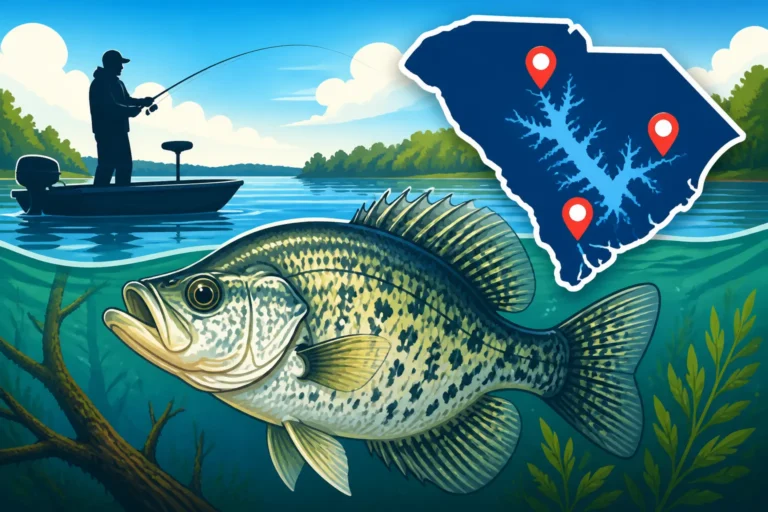
The most common and effective technique for night crappie is to use submersible green LED lights. These lights, when lowered into the water, attract plankton, which in turn draws in baitfish, creating a feeding frenzy that crappie simply can't resist. Anglers typically position their boats over brush piles, submerged timber, or bridge pilings in 10-25 feet of water. Small jigs (1/16 to 1/8 oz) tipped with a minnow or a soft plastic body are the go-to baits. Use light-action rods and sensitive lines to detect those subtle crappie bites. Keep an eye on your fish finder; once the baitfish show up, the crappie usually aren't far behind. For more general crappie advice, you might also find our guide on Crappie Fishing Techniques for Fall helpful, as some principles translate to night fishing.
Essential Preparations and Safety for Your Night Excursion
Night fishing is undeniably rewarding, but it also comes with its own set of challenges and safety considerations. The darkness reduces visibility and increases risks, making careful preparation absolutely paramount. Don't let your excitement overshadow the importance of safety!
Navigational Lights, Headlamps, and Illumination
Operating a boat at night requires strict adherence to navigation light regulations. Ensure your boat's running lights (red/green bow lights and an all-around white stern light) are fully functional and properly displayed. These aren't just for avoiding fines; they're crucial for preventing collisions with other vessels, which can be hard to spot in the dark.
Beyond boat lights, personal illumination is non-negotiable. A good quality headlamp with adjustable brightness and a red light option (to preserve night vision) is essential. Carry at least one powerful spotlight or handheld lantern as well. These are vital for tying knots, baiting hooks, navigating around the boat, and scanning the water for hazards or fishing action. Consider adding a few portable LED lights for illuminating your fishing area or tackle box, making sure not to spook fish with excessive light directed into the water. For booking a guided trip where gear is provided, remember that services found on FishingBooker often handle all these details for you.
Ensuring Personal Safety and Emergency Readiness
Safety should always be your top priority when venturing out after dark. Always let someone know your float plan – where you're going, when you expect to return, and who is with you. Cell phone service can be spotty on some South Carolina lakes, so a VHF radio is a smart backup for communication.
Wear your personal flotation device (PFD) or at least have one readily accessible for every person on board. The dark can make it disorienting if someone accidentally goes overboard. Pack a well-stocked first-aid kit, a whistle or air horn, and a fire extinguisher. Check the weather forecast meticulously before you head out, as storms can be particularly dangerous and disorienting at night. Finally, avoid alcohol and operate your boat defensively; expect other boaters to potentially make mistakes in the low light. Knowing the South Carolina Fishing License Requirements in South Carolina is also part of being prepared, as wardens can check licenses day or night.
Selecting the Right Baits and Lures for Darkness
When fishing at night, visibility is severely limited, which means fish rely more heavily on their other senses: lateral line (vibration), hearing, and smell. This should inform your choice of baits and lures.
For live bait, freshness and liveliness are key. Active baitfish or crawfish will create vibrations that predatory fish can detect. Scented baits, like cut bait, shrimp, or commercially prepared catfish baits, become even more effective after dark. For artificial lures, focus on options that create significant vibration, noise, or have a distinct silhouette. Buzzbaits, chatterbaits, and spinnerbaits with large thumping blades are excellent choices for bass and stripers. Large, dark-colored swimbaits or jigs can also present a strong silhouette against the dim sky or artificial light, making them easier for fish to ambush. Lures with rattles or internal beads can add an auditory element that helps fish home in. Don't be afraid to experiment with glow-in-the-dark lures or those with reflective properties that catch any available moonlight or artificial light. Many experienced guides on platforms like FishingBooker will have specialized tackle for night expeditions.
| Species Targeted | Best Night Bait/Lure Types | Common Night Fishing Locations |
|---|---|---|
| Catfish | Cut bait (shad, mullet), chicken livers, stink baits, large nightcrawlers | Deep holes, channel bends, flats adjacent to deep water, submerged timber |
| Striped Bass | Live herring/shad, large topwater plugs (dark colors), bucktail jigs, swimbaits | Submerged humps, main lake points, ledges, creek mouths, schooling baitfish |
| Hybrid Stripers | Live bait, castable swimbaits, umbrella rigs, spoons | Open water where baitfish are schooling, around underwater structure |
| Crappie | Small jigs (tipped with minnows or soft plastics), minnows under a bobber | Brush piles, bridge pilings, submerged timber, areas under submersible lights |
| Largemouth Bass | Dark-colored topwater lures (buzzbaits, Jitterbugs), large spinnerbaits, jigs with bulky trailers | Shallow coves, docks with lights, rocky points, lily pad edges |
Disclaimer
Please remember that fishing regulations, including size limits, bag limits, and licensing requirements, can change. Always check the latest regulations with the South Carolina Department of Natural Resources (SCDNR) before heading out on any fishing trip. The information provided here is for general guidance and informational purposes only.