Best Redfish Spots in Charleston Harbor, South Carolina
It's incredibly frustrating, isn't it? You hear all the buzz about redfish in Charleston, see those gorgeous photos of anglers holding up their catches against a Lowcountry backdrop, and then you hit the water, scratching your head wondering where these elusive copper-colored beauties actually hide. Charleston Harbor is massive, a maze of winding creeks, expansive flats, and strong currents, and figuring out where to even begin your hunt for redfish can feel like a daunting task. This guide is here to cut through that confusion, giving you the insider scoop on the very best redfish spots right here in Charleston Harbor, South Carolina, along with the tactics you'll need to hook up with them.
Understanding Redfish Behavior in Charleston Harbor
Before we dive into the specific honey holes, it's crucial to understand the redfish themselves. These powerful, intelligent fish aren't just swimming around aimlessly; they're driven by instincts—food, safety, and reproduction. Understanding their behavior in a dynamic ecosystem like Charleston Harbor is the first step to consistently finding them.
Seasonal Movements and Feeding Habits
Redfish, also known as red drum, are quite adaptable, but their patterns in Charleston Harbor are heavily influenced by the seasons and, more specifically, water temperature. In the warmer months, from late spring through early fall, you’ll find them spread out across the shallow grass flats and marsh edges. They're actively patrolling, looking for easy meals like fiddler crabs, shrimp, and small baitfish that thrive in the warmer water. This is when sight fishing becomes a real thrill, as you can often spot their tails breaking the surface as they nose down into the mud for food.
As the water cools in late fall and winter, redfish tend to school up much tighter and move to deeper water, often congregating in larger holes, along channel edges, or around submerged structures where the water temperature is more stable. Their metabolism slows down, so while they still feed, their activity might be less aggressive. Knowing this seasonal shift is paramount. Trying to find tailing redfish on a shallow flat in January will likely lead to disappointment, just as blindly casting into a deep hole in July might miss the action happening in inches of water. It's about adjusting your approach to what the fish are doing and where they're comfortable.
Key Habitat Features for Redfish
Redfish aren't picky about all habitats, but they certainly have their preferences in Charleston Harbor. The common thread for most redfish hotspots is a combination of cover, food, and current. Oyster beds are absolute magnets for redfish. These jagged structures provide shelter for baitfish and crabs, and the oysters themselves filter the water, attracting other organisms. Redfish will cruise along these shell banks, often rubbing their bodies against them, seemingly using them as a scratching post or to dislodge prey.
Vast expanses of Spartina grass, the dominant marsh grass in the Lowcountry, also serve as prime redfish territory. The dense root systems stabilize the shoreline, providing ambush points, and the grass itself harbors countless bait species. When the tide is high, redfish will push deep into these grass lines, sometimes almost entirely submerged, searching for crabs and other morsels. Look for subtle movements in the grass or a tell-tale "push" of water that indicates a redfish is on the prowl. Beyond these natural features, any kind of man-made structure like docks, bridge pilings, or sunken debris can also hold redfish, offering both shelter and a break from strong currents.
Top Redfish Hotspots Within Charleston Harbor
Now that we understand their general behavior, let's zero in on some of the most productive redfish fishing spots within Charleston Harbor. These aren't secrets per se, but they are areas that consistently produce if you fish them correctly and at the right time.
Grassy Flats and Oyster Rakes of Shem Creek
Shem Creek in Mount Pleasant is legendary, and for good reason. While it's famous for its shrimping boats and waterside restaurants, the intricate network of tidal creeks and expansive grassy flats adjacent to the main channel are a redfish angler's paradise. The sheer abundance of oyster beds along the creek banks, combined with vast stretches of Spartina grass that flood with the incoming tide, creates an ideal environment.
Anglers often focus on the deeper bends and cuts within Shem Creek during lower tides, where redfish might stack up before pushing onto the flats. As the tide rises, follow the water onto the grass flats. This is where you might experience exhilarating sight fishing, spotting individual redfish tailing or cruising just beneath the surface. Using weedless soft plastics or spoons that can be retrieved through the grass without snagging is key here. Don't overlook the smaller, unnamed creeks branching off Shem Creek; these often hold less pressured fish, especially on a falling tide when redfish are retreating from the flooded marsh. For those new to the area, many local guides specialize in this area and can be found on platforms like FishingBooker, offering guided trips specifically targeting redfish in these productive waters.
The Intricate Creeks of Mount Pleasant and Wando River Tributaries
Beyond Shem Creek, the entire Mount Pleasant side of Charleston Harbor, particularly the tributaries feeding into the Wando and Cooper Rivers, offers an incredible array of redfish opportunities. Creeks like Hobcaw Creek, Copahee Sound, and the countless smaller nameless channels are goldmines. These areas are characterized by a mix of deep channels, sprawling mud flats, and extensive marsh grass, providing varied habitat for redfish throughout the tidal cycle.
Fishing these creeks often involves navigating tight turns and shallow water, making a shallow-draft boat or even a kayak ideal. On an incoming tide, redfish will move into the shallow pockets and edges, often cruising within mere inches of water, ambushing crabs and shrimp. As the tide falls, they'll often stage in deeper holes at creek intersections or along the main channel, making these choke points excellent ambush spots. Pay close attention to current seams and areas where smaller feeder creeks merge, as these create natural food funnels. Understanding the local tide charts, which is covered in "Tide-Based Techniques for Inshore Fishing," is absolutely critical here, as these fish move with the water.
Structure Fishing Around the Bridges and Docks
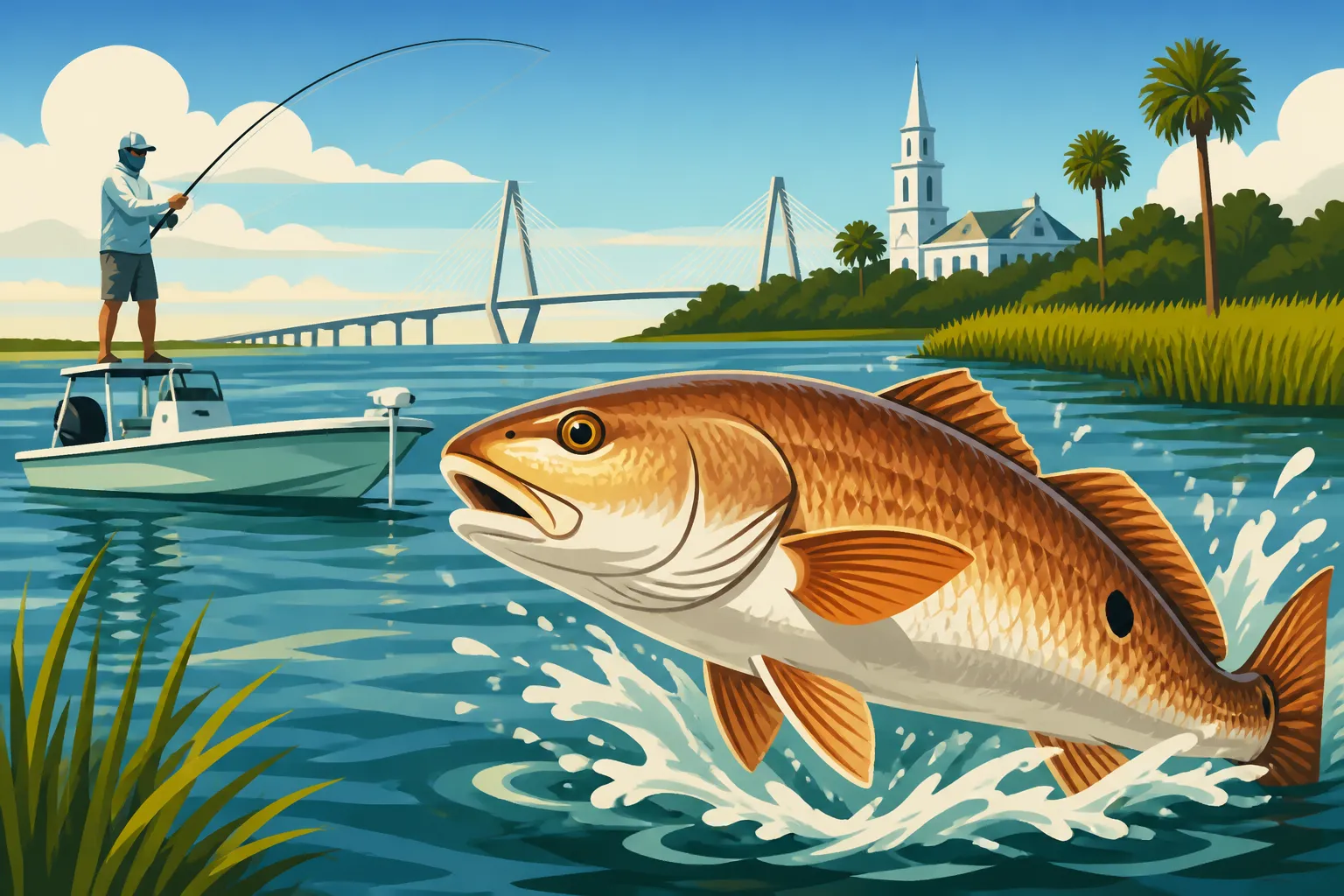
While grass flats and oyster beds are classic redfish haunts, don't discount the urban fishing opportunities around Charleston's impressive infrastructure. The pilings of the Arthur Ravenel Jr. Bridge, the numerous private docks lining the harbor, and even public piers provide excellent habitat. These structures offer shade, current breaks, and often host a variety of crustaceans and baitfish that redfish eagerly feed on.
Fishing these spots effectively requires a slightly different approach. Stronger currents are often present, so heavier jig heads or sinkers might be necessary to get your bait down. Redfish will often hug the pilings or the shaded undersides of docks. Pitching a live shrimp or a soft plastic grub tight to the structure and letting it drift with the current can be incredibly effective. Be prepared for a strong fight; redfish around structure are often larger and use the obstacles to their advantage. Remember that "South Carolina Redfish Slot Limit Rules" apply here, so make sure any fish you keep are within the legal size. Many local fishing charters also focus on these specific types of structure, and searching for "Charleston Harbor Redfish Fishing Trips" on a platform like FishingBooker can connect you with experienced captains who know these productive spots intimately.
Backcountry Estuaries Near James Island and Folly Beach
Venturing slightly south and west of the main harbor, the backcountry estuaries around James Island and stretching towards Folly Beach offer a quieter, often more pristine redfish experience. Areas like the Stono River's numerous tributaries and the creeks leading off Clark Sound are phenomenal. These locations tend to be less crowded than the bustling main harbor areas, offering a chance for a more serene fishing adventure.
These estuaries are characterized by extensive marsh systems, expansive mud flats that bake in the sun at low tide, and deep, winding channels. Sight fishing is particularly popular here on clear, calm days, as redfish are often spotted tailing in the super-shallow water or cruising the edges of the grass. The sheer amount of food—crabs, shrimp, and various small baitfish—makes these areas consistently productive. When planning a trip, consider exploring these more remote locations, especially if you're looking for a more immersive Lowcountry experience. You can even find specific "South Carolina Redfish Daily Bag Limit Per Person" information to ensure you're fishing legally while enjoying these beautiful spots.
Essential Techniques and Tackle for Charleston Harbor Redfish
Having the right spot is only half the battle; knowing how to fish it is just as important. Redfish can be caught on a variety of techniques, but some stand out as particularly effective in Charleston Harbor.
Best Baits and Lures for Success
When it comes to tempting redfish, you have a few excellent options, ranging from natural presentations to artificial lures that mimic their prey. For live bait, shrimp are king. They're a natural food source, and few redfish can resist a lively shrimp presented correctly. Mud minnows and finger mullet are also highly effective, especially for larger redfish looking for a more substantial meal. These can be fished under a popping cork or on a simple Carolina rig, depending on the depth and current.
For artificial lures, soft plastics are incredibly versatile. Paddle tail grubs, jerk shads, and Gulp! Shrimp patterns in natural colors like root beer, new penny, or chartreuse are consistent producers. These can be fished on jig heads ranging from 1/8 to 1/2 ounce, depending on current and depth. Spoons, particularly gold or silver weedless varieties like Johnson Silver Minnows, are excellent for covering water on the flats or around oyster shells. Topwater lures, used during dawn or dusk, can trigger explosive strikes from aggressive redfish. Don't forget to check out "Best Lures for Tailing Redfish in Grass Flats" for more specific recommendations that work well in these shallow-water scenarios.
Mastering the Tides and Water Clarity
Charleston Harbor is a tidally-dominated system, and the tides dictate everything for redfish. Understanding the tide cycle is not just helpful; it's absolutely crucial for consistent success. On an incoming tide, redfish will often push into the shallower grass flats and marsh creeks, making them accessible. A high, slack tide can sometimes be slow, but it's also when redfish might be deep in the grass.
The outgoing tide is when redfish often pull back out of the shallowest areas, congregating in creek mouths, along channel edges, and around oyster bars, creating excellent ambush opportunities as bait gets flushed out. Water clarity is another major factor. In general, redfish prefer cleaner water, especially for sight fishing. After heavy rains, the harbor can become muddy, pushing fish to areas with better clarity or requiring different lure choices (like noisier lures or brighter colors). Always consult a tide chart before heading out, and observe the water conditions carefully.
Gear Recommendations for Inshore Redfish
You don't need highly specialized gear to catch redfish in Charleston Harbor, but a reliable setup will certainly enhance your experience. A medium-heavy spinning rod, typically 7 to 7.5 feet in length, paired with a 3000 or 4000 series reel, is a fantastic all-around choice. This setup provides enough backbone to fight powerful redfish and enough sensitivity to feel subtle bites.
For line, 15 to 20-pound braided line is ideal. Braid offers incredible sensitivity, casting distance, and strength, and its thin diameter cuts through the water well. Always tie on a fluorocarbon leader of 20 to 30-pound test; fluorocarbon is virtually invisible underwater and provides abrasion resistance against oyster shells and rough structures. Circle hooks, in sizes appropriate for your bait (usually 1/0 to 3/0), are preferred when using live bait, as they are safer for the fish and result in more solid hooksets.
Navigating and Accessing Charleston Harbor's Redfish Grounds
Getting to these prime redfish spots often means getting on the water. Thankfully, Charleston offers numerous access points for anglers.
Boat Ramps and Public Access Points
For anglers with boats, Charleston boasts several excellent public boat ramps that provide direct access to the harbor and its tributaries. Remley's Point Boat Landing in Mount Pleasant is a popular choice, offering easy access to Shem Creek and the Wando River. Wappoo Cut Boat Landing on James Island provides access to the Stono River and the southern reaches of the harbor. Garris Landing in Awendaw, while a bit of a drive north, opens up access to the Cape Romain National Wildlife Refuge area, which has fantastic redfish grounds just outside the immediate harbor.
For those without a boat, there are still opportunities. The Mount Pleasant Pier can occasionally produce redfish, especially during the fall. Bank fishing access points are more limited, but some parks and public access areas along the tidal creeks can offer shore-based opportunities, though often requiring more walking and exploration. Kayaks and paddleboards are also excellent choices for quietly navigating the shallow creeks and flats.
Hiring a Local Guide for an Edge
If you're new to the area, short on time, or simply want to maximize your chances of success, hiring a local fishing guide is an invaluable investment. Charleston's inshore fishing guides are intimately familiar with the ever-changing tides, seasonal patterns, and specific redfish hotspots. They'll provide all the necessary gear, bait, and most importantly, their expert knowledge.
A good guide can teach you techniques, help you understand the nuances of the local ecosystem, and put you on fish when you might struggle on your own. Platforms like FishingBooker make it incredibly easy to find and book experienced "South Carolina Inshore Fishing Charters Explained" directly in the Charleston area, allowing you to filter by trip type, duration, and even specific target species like redfish. Many guides offer half-day trips which are perfect for learning the ropes and getting acquainted with the harbor's redfish population. This is often the quickest way to learn "How to Catch Redfish in South Carolina's Lowcountry" from a pro.
Charleston Harbor Redfish Hotspots and Techniques
| Hotspot Area | Primary Features | Ideal Tide & Conditions | Recommended Techniques | Key Baits/Lures |
|---|---|---|---|---|
| Shem Creek Flats & Creeks | Extensive Spartina grass, oyster beds, tidal flow | High incoming to mid-outgoing | Sight fishing, pitching to grass lines | Live shrimp, soft plastic paddletails |
| Wando River Tributaries | Winding creeks, mud flats, creek mouths | Mid-incoming to mid-outgoing | Casting creek bends, targeting current seams | Mud minnows, Gulp! shrimp, spoons |
| Ravenel Bridge & Docks | Bridge pilings, shaded dock structures, currents | All tides (stronger current bite) | Vertical jigging, pitching to structure | Live shrimp, cut mullet, heavy grubs |
| James Island Backcountry | Remote marsh, shallow flats, deep channels | High incoming (flats), outgoing (channels) | Sight fishing, wading, quiet approach | Fiddler crabs, weedless soft plastics |
Disclaimer
Please be aware that fishing regulations, including bag limits and size restrictions for redfish and other species, can change. Always consult the latest South Carolina Department of Natural Resources (SCDNR) regulations before heading out on the water. This guide is for informational purposes only and does not supersede official regulations.