Submerged Timber and Rocky Points on Hartwell’s Tugaloo Arm
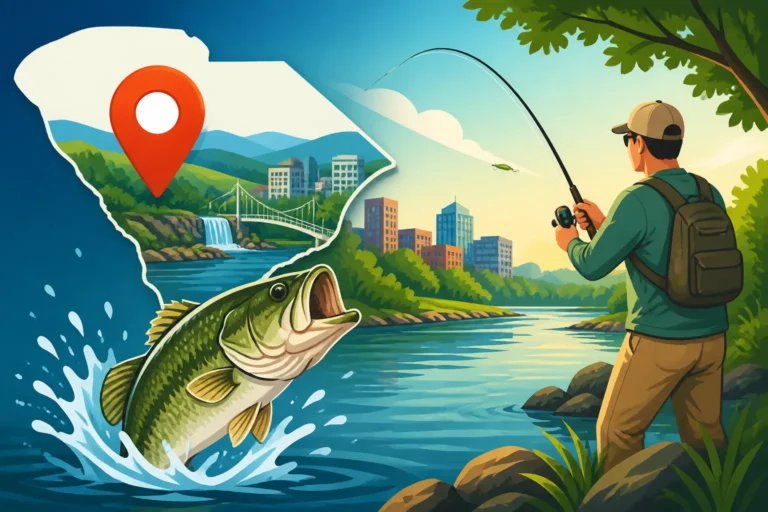
One of the biggest challenges for any angler hitting a vast body of water like Lake Hartwell is figuring out where the fish are hiding. It’s not enough to just know the lake; you really need to understand its contours, its hidden treasures, and how fish relate to specific structures. This guide is all about demystifying the Tugaloo Arm, specifically focusing on how to effectively locate and fish those often-elusive submerged timber and rocky points where the biggest bass love to lurk.
Understanding Lake Hartwell's Tugaloo Arm
Lake Hartwell, a massive reservoir straddling the border of South Carolina and Georgia, is renowned for its excellent fishing, particularly for bass. But within its sprawling network of coves, creeks, and river arms, the Tugaloo Arm stands out as a unique and highly productive area, often intimidating to those who don't know its secrets.
The Unique Topography of the Tugaloo Arm
The Tugaloo Arm of Lake Hartwell truly feels like a river within a lake. It’s characterized by deeper, often clearer waters compared to some of the other arms, with a strong river current influence that draws in baitfish and, consequently, big predatory bass. What makes it particularly special is the abundance of dramatic topographical features: steep, rocky bluff walls plunging into deep water, and expansive flats that were once old creek beds, now home to dense stands of submerged timber.
These features are absolute magnets for fish. The deep, cool waters provide refuge during hot summer months, while the timber offers crucial ambush points and protection from predators. Rocky points, on the other hand, create current breaks, hold heat, and are prime spots for crawfish and baitfish to congregate, making them irresistible to hungry bass. Anglers often find themselves staring at a sonar screen trying to decipher what lies beneath, and in the Tugaloo, that often means interpreting dense forests of old trees or jagged rock piles. To truly master this area, you'll want a good understanding of the overall Lake Hartwell Fishing Guide for South Carolina Anglers.
Key Fish Species to Target
While Lake Hartwell is home to a diverse array of fish, the Tugaloo Arm is particularly famous for its bass fishery. You're primarily looking to tangle with two main species here:
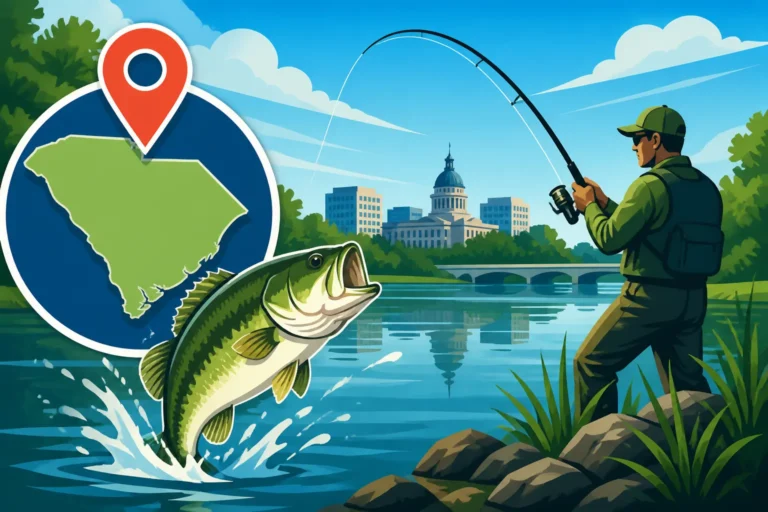
- Largemouth Bass: These iconic green fish thrive in the Tugaloo's varied cover. They’ll gravitate towards the denser submerged timber, using the cover to ambush prey like shad and sunfish. During the spawn, they’ll also seek out shallower rocky areas to build nests. Expect them to hug cover tightly, requiring precise presentations.
- Spotted Bass: The "spots" are often found deeper and in areas with more current than their largemouth cousins. They absolutely love rocky points, bluff walls, and deep-water humps, often suspended over timber or hugging the bottom in rocky crevices. They fight incredibly hard for their size and are a blast to catch on lighter tackle. Many anglers find the Best Spotted Bass Spots on Lake Hartwell, South Carolina are often concentrated in these riverine arms.
Beyond bass, you might also encounter Striped Bass or Hybrid Striped Bass, especially suspended in deeper sections of the arm, often chasing schools of baitfish. Crappie will also utilize the submerged timber, particularly during cooler months, providing another exciting target for anglers. Understanding the specific habits of these fish within the unique Tugaloo environment is key to a successful outing.
Decoding Submerged Timber on the Tugaloo Arm
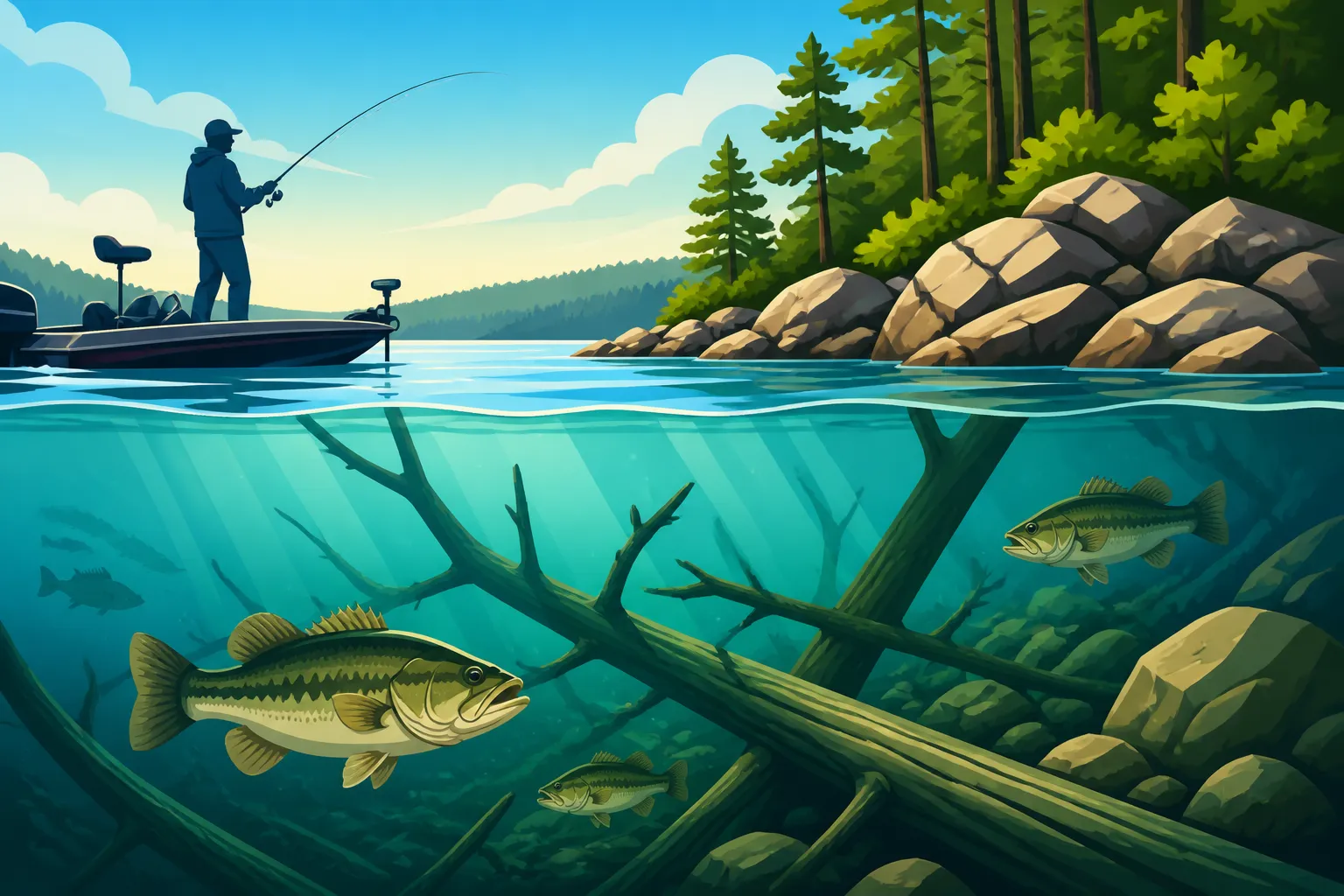
Submerged timber on Lake Hartwell's Tugaloo Arm isn't just a hazard; it's a goldmine for bass. These underwater forests, remnants of the land flooded to create the reservoir, provide essential cover, shade, and ambush points for predatory fish. Learning to identify and effectively fish them can dramatically increase your catch rates.
Locating the Best Wood Structure
Finding the productive timber isn't just about stumbling upon a tree; it's about finding the right trees in the right places. This is where modern electronics truly shine, transforming a guessing game into a strategic hunt.
First and foremost, invest time in studying your contour maps. Look for old creek channels, riverbeds, or areas where tributaries once flowed into the main Tugaloo River. These are prime locations for denser, more extensive stands of timber. When you're on the water, use your side imaging and down imaging sonar extensively. Side imaging allows you to scan wide swaths of water on either side of your boat, revealing entire fields of standing timber, fallen trees, and brush piles that might be invisible directly beneath you. Down imaging gives you a clearer, photographic-like view directly below, helping you differentiate between a solitary stump and a dense brush pile, or even suspended fish within the timber.
Once you pinpoint a promising area, look for specific characteristics. Are the trees standing upright, creating vertical cover from the bottom to the surface (or near-surface)? Are there laydowns – fallen trees that extend from the bank out into deeper water? Are there brush piles, either naturally occurring or intentionally sunk by anglers? Productive timber often sits near drop-offs, ledges, or humps, offering fish easy access to both shallow and deep water, depending on their feeding and comfort levels. Don't overlook the edges of these timber fields, as bass will often stage there, waiting for baitfish to pass. Many experienced guides, easily found on platforms like FishingBooker, make a living by knowing these subtle nuances of underwater structure, guiding you to productive spots you might otherwise miss.
Effective Techniques and Lures for Timber
Fishing submerged timber can be a tackle-eater, but it's often where the biggest bass hide. You need a combination of precise presentation and stout gear to get fish out of the thick stuff.
- Jigging and Pitching: This is often the bread and butter for timber fishing. Use a heavy jig (like a ½ oz or ¾ oz football or casting jig) with a stout weed guard and a bulky soft plastic trailer. Pitch or flip your jig directly into the densest parts of the timber. Let it fall on a semi-slack line, feeling for the "tick" of a bite as it descends. Once it hits bottom, slowly crawl it over branches and through gaps. The key is to be patient and work the jig slowly, allowing fish time to react. If you feel a bite, set the hook hard and immediately try to pull the fish out of the cover to prevent it from burying itself.
- Texas-Rigging and Carolina-Rigging: Soft plastic worms, creature baits, and crawfish imitations rigged Texas-style (with the hook point buried in the plastic) are incredibly weedless and effective for penetrating timber. Use a heavy tungsten weight (3/8 oz to ¾ oz) to get your bait down quickly. For Carolina-rigging, use a heavier sinker (1 oz+) on the main line, a swivel, and a leader (2-4 feet) to a lighter hook and soft plastic bait. This allows your bait to float enticingly above the bottom, dragging over the timber while the weight clears the path. These techniques are fantastic for probing around the bases of standing timber or working along the edges of a brush pile.
- Swimbaits and Crankbaits (Carefully!): While risky due to snags, a squarebill crankbait can be incredibly effective when retrieved along the edges of sparse timber, deflecting off branches and triggering reaction strikes. Similarly, a paddle-tail swimbait can be slow-rolled just above or through less dense timber, mimicking baitfish. Just be prepared to lose a few!
For all these techniques, heavy fluorocarbon or braided line is a must. Fluorocarbon offers excellent abrasion resistance against rough wood, while braid provides incredible strength and sensitivity, allowing you to feel every subtle bite and muscle fish out quickly. Always have extra hooks and weights on hand, because snags are an inevitable part of fishing this productive, yet challenging, cover. Remember that Fishing Submerged Timber on Lake Hartwell in South Carolina requires patience and a willingness to get snagged.
Mastering Rocky Points and Bluff Walls
Beyond the tangled depths of submerged timber, the Tugaloo Arm also boasts incredible rocky points and bluff walls that plunge into significant depths. These structures are equally critical fish attractors, offering different advantages depending on the season and the fish's mood.
Identifying Productive Rock Formations
Just like timber, not all rock is created equal. Understanding the nuances of different rock formations can help you predict where fish will be holding.
- Slope and Composition: Look for rocky points that have a varied slope – not just a sheer drop, but areas where the depth changes gradually before plummeting. These transition zones often hold the most fish. The composition of the rock also matters. Points with larger chunk rock or boulders often provide more significant crevices and hiding spots than areas with finer gravel or rip-rap. These larger rocks hold heat, attracting baitfish, and also provide ambush cover.
- Proximity to Deep Water and Channels: The best rocky points on the Tugaloo Arm are often those that extend into or are adjacent to the main river channel. This gives fish quick access to deep, stable water for refuge, while also allowing them to move up onto the point to feed. Current breaks created by these points are also crucial. As current flows past a point, it creates eddies and slack water on the downstream side, where baitfish will gather and bass will lie in wait to ambush them.
- Baitfish Presence: Always pay attention to your sonar for signs of baitfish schools. If you see clouds of baitfish suspended around a rocky point or bluff, you can bet there are predatory fish nearby. These baitfish will use the rock for cover and feeding, making them a prime target for bass. This is particularly true during the Fall Bass Fishing Around Rocky Points on South Carolina's Lake Hartwell when baitfish activity is high.
Utilize your boat's electronics to scan these rocky areas thoroughly. Side imaging can reveal hidden rock piles, individual boulders, or even submerged humps off the main point that might be holding fish. Drop a waypoint on anything that looks promising, and be prepared to fish it from multiple angles.
Lure Strategies for Rocky Structure
Fishing rocky points effectively means choosing lures that can either mimic the resident forage or elicit reaction strikes as they bounce off the unforgiving bottom.
- Crankbaits: These are arguably the most effective lures for rocky points.
- Squarebill Crankbaits: In shallower rocky areas (up to 8-10 feet), squarebills are fantastic. Their unique lip design allows them to deflect off rocks and timber without getting hung up as easily as other crankbaits. Cast them parallel to the point or directly at it, retrieving them so they "bang" off the rocks. This erratic action often triggers violent strikes.
- Deep-Diving Crankbaits: For deeper points and bluff walls, deep divers that can reach 15-25 feet are essential. Cast them out, crank them down, and let them occasionally make contact with the bottom or rock formations. The idea is to mimic a fleeing baitfish or a crawfish scurrying along the rocks. Brands like Rapala and Strike King make excellent options for this.
- Jigs and Shaky Heads: When fish are less active or holding tight to cover, jigs and shaky heads excel.
- Football Jigs: These jigs are designed to crawl over rocky bottoms without getting snagged. Pair them with a crawfish-imitating trailer and slowly drag or hop them along the bottom of rocky points. They imitate crawfish perfectly, which are a primary food source in rocky environments.
- Shaky Heads: A shaky head jig with a finesse worm or small creature bait is deadly for picking apart individual rocks or targeting fish that are tucked into crevices. Cast it out, let it sink to the bottom, and then slowly shake your rod tip to impart subtle action to the bait. This technique often works wonders when other presentations fail.
- Spinnerbaits: In stained water or during windy conditions, a spinnerbait can be a great choice. Slow-roll it along the edges of rocky points or over shallower rock piles, letting the blades flash and vibrate, attracting attention.
The retrieve speed is often crucial with rocky structure. Sometimes a fast, erratic retrieve that causes the lure to deflect off rocks is best, while other times a slow, methodical crawl is necessary to entice a less aggressive fish. Experiment until you find what the fish want on that particular day. For anglers seeking expert advice on these techniques, many guides available through FishingBooker specialize in teaching these nuanced strategies on Lake Hartwell's rocky terrain.
Seasonal Approaches and Optimal Conditions
Fishing the Tugaloo Arm's submerged timber and rocky points isn't a one-size-fits-all endeavor. The time of year, water temperature, and prevailing weather conditions all play a massive role in how fish use these structures and how you should approach them.
Spring and Fall Transition
These are often considered the "golden seasons" for bass fishing on Lake Hartwell, and the Tugaloo Arm is no exception.
- Spring (Pre-Spawn and Spawn): As water temperatures begin to rise in late winter and early spring, bass move out of their deeper winter haunts and start migrating towards shallower areas to prepare for spawning. Rocky points become incredibly important during the pre-spawn phase as staging areas. Bass will hold on these points, often moving up and down the water column as temperatures fluctuate, feeding heavily on crawfish and baitfish. This is a prime time for throwing crankbaits, jigs, and even jerkbaits around the rocks. As the spawn approaches, some bass will seek out smaller, protected rocky pockets or even shallow timbered flats to build nests. Understanding the Bass Fishing Techniques for Spring Pre-Spawn is vital here.
- Fall (Post-Summer and Turnover): Fall is another fantastic time, characterized by cooling water and often aggressive feeding. After the summer heat, bass become much more active, chasing massive schools of baitfish that are pushed into the backs of coves and creek arms. Both submerged timber and rocky points become key ambush locations. Bass will often hold on deeper points or within timber lines, darting out to strike at passing baitfish. Look for fish suspended over timber or actively chasing shad near rocky outcrops. Topwater lures, spinnerbaits, and crankbaits can be incredibly effective during the fall, especially during the morning and evening hours.
Summer and Winter Patterns
While spring and fall are peak times, you can absolutely catch fish year-round on the Tugaloo Arm if you adapt your tactics.
- Summer: The brutal summer heat forces bass deeper, and the Tugaloo Arm’s deeper sections, with their abundant submerged timber and rocky drop-offs, become critical. Bass will often suspend in or around the cooler, oxygen-rich thermocline, which might be over deep timber or along steep bluff walls. Vertical presentations like drop-shot rigs, deep-diving crankbaits, or heavy jigs become more effective. Early mornings, late evenings, and even night fishing can be highly productive, as bass move shallower to feed under the cover of darkness. Remember that South Carolina Bass Fishing Techniques by Season will differ greatly in summer.
- Winter: Winter fishing on Lake Hartwell demands a slower, more methodical approach. Bass are cold-blooded and become lethargic in colder water. They'll often school up tightly in deep submerged timber or on steep rocky ledges and humps, seeking stable temperatures. Finesse techniques like shaky heads, drop shots, and slow-rolled jigs or blade baits are your best bet. Look for subtle bites and don't be afraid to leave your lure in the strike zone for extended periods. Focus on sunny days when the water might warm up slightly, even by a degree or two, triggering a brief feeding window.
| Season | Structure Focus | Primary Lure Types | Key Techniques |
|---|---|---|---|
| Spring | Rocky Points, Shallow Timber | Crankbaits, Jigs, Jerkbaits, Spinnerbaits | Bouncing off rocks, pitching into cover, slow rolling |
| Summer | Deep Timber, Bluff Walls | Drop Shots, Deep Crankbaits, Heavy Jigs, Soft Plastics | Vertical jigging, slow retrieve, night fishing |
| Fall | Rocky Points, Timber Lines | Topwater, Spinnerbaits, Crankbaits, Jigs | Power fishing, reaction strikes, covering water |
| Winter | Deep Timber, Rocky Ledges | Shaky Heads, Drop Shots, Blade Baits, Finesse Jigs | Slow dragging, subtle shakes, vertical presentations |
Essential Gear and Electronics for Success
To truly conquer the Tugaloo Arm's submerged timber and rocky points, you need more than just a boat and a rod; you need the right tools for the job. Having the appropriate gear and knowing how to maximize your electronics will be the difference between a frustrating day and a fantastic one.
Rods, Reels, and Line Choices
Your tackle setup needs to be robust and versatile enough to handle both the brutal snags of timber and the subtle bites on rocky bottoms.
- Rods:
- For Heavy Timber: A heavy-action baitcasting rod (7' to 7'6") with a fast tip is crucial. This provides the backbone needed to muscle big bass out of dense cover and the sensitivity to feel bites in thick vegetation or wood. It's perfect for pitching jigs and Texas-rigs.
- For Rocky Points: A medium-heavy action baitcasting rod (6'6" to 7'2") with a fast or moderate-fast tip is more appropriate for crankbaits, spinnerbaits, and football jigs. The slightly softer action allows for better casting of reaction baits and helps absorb the shock when a fish strikes, preventing hooks from tearing out.
- For Finesse (Shaky Heads/Drop Shots): A medium-light to medium action spinning rod (6'8" to 7'2") with an extra-fast tip offers the sensitivity needed to detect light bites and the parabolic bend to fight fish on lighter lines.
- Reels:
- Baitcasting Reels: Opt for reels with a good gear ratio (6.1:1 to 7.5:1) for versatility. High gear ratios are great for quickly retrieving slack and getting fish out of cover, while slightly slower ratios are better for power fishing with crankbaits where you need consistent torque. Ensure they have a smooth, powerful drag system.
- Spinning Reels: A 2500-3000 series spinning reel is a good all-around choice, offering sufficient line capacity and a smooth drag for finesse applications.
- Line:
- Braided Line: This is your best friend in heavy timber. Its extreme strength, lack of stretch, and incredible abrasion resistance make it perfect for pulling fish out of cover. Use 30-65 lb test braid for pitching and flipping. You can tie a fluorocarbon leader (15-20 lb) if the water is clear and you need invisibility.
- Fluorocarbon Line: Excellent for rocky points and open water presentations. Its low stretch offers great sensitivity, and its invisibility underwater is a huge advantage in clear water. Use 10-20 lb test, depending on the lure and target species. Fluorocarbon also sinks, which can be beneficial for deep-diving crankbaits or jigs.
- Monofilament Line: While not as common for these specific applications, some anglers prefer mono for topwater lures or crankbaits due to its stretch, which can help prevent hooks from pulling out during aggressive strikes.
The Role of Modern Sonar and GPS
Modern marine electronics are no longer a luxury; they are an absolute necessity for fishing complex structures like those found on the Tugaloo Arm.
- Side Imaging and Down Imaging Sonar: These technologies are paramount for finding hidden treasures. Side imaging allows you to scan hundreds of feet to either side of your boat, revealing vast fields of submerged timber, individual brush piles, rock formations, and even schools of baitfish that you would otherwise pass right over. Down imaging provides a detailed, almost photographic view directly beneath your boat, helping you interpret exactly what kind of structure you’re seeing and whether fish are relating to it. Brands like Humminbird (with their MEGA Imaging) and Garmin (with their Panoptix LiveScope) offer cutting-edge solutions that can give you a significant advantage.
- 2D Sonar: The traditional sonar view is still incredibly useful for identifying fish arches, bait balls, and sudden depth changes directly under the boat. Learn to differentiate between a solid fish arch and merely a tree branch.
- GPS and Mapping: Your GPS is critical for marking waypoints. As soon as you find a promising stand of timber or a unique rocky outcrop on your sonar, mark it! This allows you to return to the exact spot, fish it from different angles, and create a milk run of productive locations. High-definition mapping chips (like those from Lakemaster or Navionics) for Lake Hartwell will show you detailed contours, old roadbeds, and creek channels that are now submerged, giving you a huge head start in your search. Knowing Lake Hartwell Fishing Spots and Boat Ramps beforehand can also help you plan your day.
The key is not just having the electronics, but learning how to interpret what you see. Spend time watching your screens, correlating what you see with the structure you know is there, and observing how fish react to your boat. Many professional guides, often booked through services like FishingBooker, have mastered these tools and can teach you how to get the most out of your electronics, unlocking the full potential of Lake Hartwell's Tugaloo Arm.
Safety and Conservation Practices
Fishing Lake Hartwell's Tugaloo Arm is an incredible experience, but it also comes with responsibilities. Prioritizing safety and practicing good conservation ensures that both you and the fishery remain healthy for years to come.
Navigating Lake Hartwell
Lake Hartwell is a vast and beautiful lake, but its underwater landscape can be treacherous, especially in areas like the Tugaloo Arm with its extensive submerged timber.
- Hidden Hazards: Many of the very structures that hold fish – submerged timber, rock piles, and old roadbeds – can also damage your boat's lower unit or propeller. Always use extreme caution when running in unfamiliar areas, especially outside of marked channels. If you're exploring new territory, take it slow, keep a sharp eye on your depth finder, and watch for any signs of breaking water or disturbed surface that might indicate shallow hazards.
- Buoys and Markers: Pay close attention to all navigation buoys and markers. These are there for your safety and indicate channels, hazards, and speed restrictions.
- Weather Awareness: Lake Hartwell is a large body of water, and weather can change rapidly. Keep an eye on the forecast, and if storms are predicted, consider rescheduling or staying close to safe harbors. Sudden winds can whip up dangerous waves very quickly.
- Life Jackets: Always ensure you have enough U.S. Coast Guard-approved life jackets for everyone on board, and wear them when conditions warrant or when operating your boat at high speeds.
Responsible Angling
Being a responsible angler means more than just following the rules; it means being a steward of the environment and the fishery.
- Catch and Release: While keeping some fish for the table is perfectly fine (and delicious!), consider practicing catch and release, especially for larger, older bass. These fish are valuable breeders and contribute significantly to the health of the population. If you do plan to release, handle fish gently, minimize their time out of water, and use proper dehooking tools.
- Respecting Regulations: Always be aware of and abide by all current South Carolina's Freshwater Fishing Regulations and bag limits. Regulations are in place to manage fish populations and ensure sustainable fishing for everyone. This includes having a valid South Carolina Fishing License Guide. Ignorance of the law is never an excuse for violations, and penalties can be significant.
- Leave No Trace: Pack out everything you pack in. Never leave trash, fishing line, or discarded bait on the water or shore. Fishing line, in particular, can be deadly to wildlife.
- Respect Other Anglers: Whether you're in a boat or fishing from the bank, give other anglers ample space. Avoid driving too close to areas where others are fishing, and keep noise to a minimum. We're all out there to enjoy the peace and thrill of fishing.
By being mindful of these safety and conservation practices, we can all contribute to keeping Lake Hartwell a premier fishing destination for generations to come.
Disclaimer
The information provided in this guide is for general informational purposes only and is intended to offer helpful tips and advice for fishing in South Carolina. Fishing conditions, regulations, and fish behavior can change rapidly. Always consult the official South Carolina Department of Natural Resources (SCDNR) website or publications for the most current and accurate regulations, licensing requirements, and safety guidelines before heading out on the water. Fishing inherently carries risks, and all anglers should prioritize their safety and adhere to all local, state, and federal laws.