Catfish Bottom Fishing Basics
For many anglers, the pursuit of catfish isn't just a hobby; it's a true passion, but consistently hooking these elusive bottom dwellers can feel like a mystery. You've cast your line, waited patiently, and still come up empty-handed more often than you'd like, leaving you wondering what secrets the seasoned pros know. This guide is here to demystify the art of catfish bottom fishing in South Carolina, giving you the fundamental techniques, gear insights, and local knowledge you need to turn those frustrating outings into successful, cooler-filling adventures.
Understanding Catfish Behavior and Habitat
To truly excel at bottom fishing for catfish, you first need to think like a catfish. These fascinating fish are less about flashy lures and more about scent, structure, and finding easy meals in their preferred environments. Understanding their daily routines, seasonal shifts, and favorite hideouts is the foundation of a successful trip.
Types of Catfish in South Carolina
South Carolina's waters are home to several species of catfish, each with its own characteristics and preferred haunts. Knowing which species you're targeting can greatly influence your approach. The big three you'll encounter are Blue Catfish, Channel Catfish, and Flathead Catfish.
Blue Catfish are the true giants of our waters, known for their immense size and powerful fights. You'll typically find them in the deep, open waters of large rivers and reservoirs like the Santee Cooper lakes or Lake Murray, often congregating in main channels and around significant underwater structure. They're primarily scavengers, but they're opportunistic predators too, and a big piece of cut bait is often their downfall. They can grow to incredible sizes, with some truly monstrous specimens pulled from our lakes and rivers each year, making them a prime target for trophy anglers.
Channel Catfish are perhaps the most common and widespread, found in almost every body of freshwater across the state, from small ponds to major rivers. They're recognized by their forked tails and speckled bodies, especially when young. Channels are true omnivores, feeding on everything from insects and crustaceans to small fish and decaying organic matter. They thrive in a variety of environments, from muddy bottoms to rocky crevices, and are often the first species new anglers catch, providing consistent action and delicious fillets.
Flathead Catfish, on the other hand, are ambush predators. Easily identified by their flat, wide heads and lower jaw that protrudes beyond the upper, they prefer live bait and often hide in heavy cover like logjams, brush piles, and undercut banks in rivers and large creeks. Unlike blues and channels, they rarely scavenge, preferring to actively hunt. Targeting flatheads often means getting your bait right into their lairs, which can be challenging but incredibly rewarding for those seeking a powerful, aggressive fight. Their meat is also highly prized for its firm texture and mild flavor.
Preferred Habitats and Structure
Catfish are structure-oriented fish. They love anything that provides cover, current breaks, or ambush points. Thinking about where a catfish would feel safe, find food, or rest from strong currents is key.
In rivers, you'll often find catfish congregating in deep holes, along ledges, behind wing dams, and in the slower water on the inside bends of curves. Log jams, sunken trees, and even bridge pilings create excellent current breaks where these fish can conserve energy while waiting for food to drift by. Targeting these areas with your bottom rig ensures your bait is presented exactly where the fish are holding. Remember, even in seemingly featureless stretches, subtle changes in depth or bottom composition can be a hotspot.
In lakes and reservoirs, look for channel swings, humps, points, and old creek beds. Deep pockets near shallow flats can be productive, especially during feeding periods when catfish move up to forage before retreating to deeper, cooler water. Submerged timber, rock piles, and artificial fish attractors are also prime real estate. Understanding how to use your sonar to identify these structures, or even just knowing the local topography of places like Lake Hartwell or Lake Marion, will drastically improve your success. Fish often hug the bottom, so presenting your bait directly in these areas is crucial for eliciting a strike.
Seasonal Movements and Feeding Habits
Catfish behavior changes significantly with the seasons, largely dictated by water temperature and spawning cycles. Adapting your strategy to these movements is essential for year-round success.
In spring, as water temperatures rise, catfish become more active and begin their pre-spawn feeding frenzy. They'll move into shallower waters, especially in coves and flats warmed by the sun, preparing for the upcoming spawn. This is an excellent time for consistent action, as they're actively looking for food. After the spawn, typically in late spring to early summer, they might be a bit lethargic but will soon resume aggressive feeding to recover energy. You can learn more about general seasonal patterns in our guide on South Carolina Fishing Seasons Guide.
Summer brings warm water, and catfish often retreat to deeper, cooler water during the day, becoming more active at dawn, dusk, and throughout the night. This is when fishing deep channels, river bends, and lake thermoclines becomes paramount. Night fishing can be incredibly productive for catfish in the summer, as explored in our article, Is Night Fishing Better for Catfish? In fall, as temperatures cool, catfish again become highly active, feeding heavily to build up fat reserves for winter. They might spread out a bit more, but deep holes and channels remain prime locations. Even in winter, when they become sluggish, they can still be caught by targeting the deepest parts of lakes and rivers with slow, patient presentations, often huddled in large groups.
Essential Gear for Bottom Fishing Catfish
Having the right equipment is paramount when you're targeting hard-fighting catfish. Don't underestimate the power these fish can exert, especially the larger blues and flatheads. Skimping on gear can lead to frustration and lost fish.
Rods, Reels, and Line Selection
The foundation of your catfish bottom fishing setup starts with a robust rod and reel, paired with appropriate line. You're not fly fishing for delicate trout here; you need strength and durability.
For rods, think medium-heavy to heavy power, with a moderate-fast to fast action. A rod in the 7 to 9-foot range is ideal, offering enough backbone to handle heavy weights and big fish, while still providing enough flex to cast effectively. Shorter rods can be used for bank fishing in tight quarters, but longer rods offer better casting distance and leverage when fighting a fish from a boat or bank. Fiberglass rods are often preferred by many seasoned catfishermen for their durability and forgiving action, which helps absorb the powerful surges of a big fish. Look for rods with comfortable handles, preferably cork or EVA foam, for long hours of holding and waiting. You can find a good selection of specialized catfish rods on platforms like Amazon.
Reel choice depends on your preference and the size of fish you're after. For most applications, a sturdy baitcasting reel is king, offering superior cranking power and line capacity. Look for models with a strong drag system and a good gear ratio for retrieving heavy rigs and battling powerful fish. Conventional reels, often used for heavier setups, are also excellent choices for trophy catfishing. Spinning reels can work for smaller channel cats or if you prefer their ease of use, but ensure it's a larger, heavy-duty model. Spool capacity is important; you want to be able to hold plenty of line for those long casts and runs.
When it comes to line, braided line is a popular choice for its strength, sensitivity, and small diameter. It cuts through the water well, allowing your bait to sink efficiently, and its lack of stretch transmits even the slightest nibble to your rod tip. However, it can be less abrasion-resistant than monofilament in certain conditions. Monofilament, particularly in heavier tests (20-40 lb), is a classic for its stretch, which acts as a shock absorber, and its better abrasion resistance around rocks and logs. Many anglers opt for a braid main line with a monofilament or fluorocarbon leader to get the best of both worlds. The specific pound test will depend on the size of catfish you expect to encounter, but generally, don't go too light; catfish are not line-shy.
Terminal Tackle: Hooks, Weights, and Swivels
The business end of your rig is where it all comes together. Getting your terminal tackle right is crucial for proper bait presentation and secure hook-ups.
Hooks are perhaps the most critical component. Circle hooks are overwhelmingly preferred by modern catfish anglers. Their design means the fish typically hooks itself in the corner of the mouth as it tries to swim away, leading to fewer gut-hooked fish (which is great for conservation if you plan to release) and more secure catches. Sizes vary widely depending on your bait and target species, but common sizes range from 5/0 to 10/0 for blues and flatheads, and 2/0 to 5/0 for channels. Offset shank hooks and J-hooks are still used by some, but circle hooks are generally more effective and fish-friendly. Ensure your hooks are sharp and strong enough to withstand powerful jaws.
Weights are essential for getting your bait down to the bottom and holding it there against current. Pyramid sinkers are excellent for sandy or muddy bottoms in current, as their shape helps them dig in. Egg sinkers or flat sinkers are better for calmer waters or when fishing over rocky bottoms where pyramid sinkers might snag. The weight size will depend on the current and depth, but carry an assortment from 1 ounce to 6 ounces or even more for heavy current. Using a weight that allows your bait to hold bottom without rolling is key.
Swivels, particularly strong barrel or crane swivels, are used to connect your main line to your leader, preventing line twist and protecting your knots. A good quality snap swivel can also be useful for quickly changing out rigs or weights. Always use swivels rated for a higher breaking strength than your main line to avoid weak points in your setup. Beads are often used between the weight and the swivel on Carolina rigs to protect the knot from the sliding weight.
Choosing the Right Bait
Catfish are primarily olfactory feeders, meaning they rely heavily on their sense of smell to locate food. This makes bait choice paramount, and there's a wide world of options depending on your target. For a deeper dive into seasonal bait options, check out our guide on Best Bait for Summer Catfish Fishing.
For Blue Catfish and Channel Catfish, fresh cut bait is king. Shad, herring, skipjack, mullet, and even potent oily fish like mackerel or sardine are excellent choices. Freshness is key; a recently caught piece of cut bait will outperform bait that's been frozen for months. Cut it into chunks or strips, ensuring each piece has some skin for scent and durability. You can also buy prepared "stink baits" or punch baits from brands like Team Catfish or Catfish Pro, which are designed to emit powerful attractants into the water. These are particularly effective for channel catfish. Other popular baits include chicken liver, shrimp, and hot dogs, all of which emit a strong scent.
Flathead Catfish, as mentioned earlier, are predators and strongly prefer live bait. Live bream (like bluegill or redbreast sunfish), small carp, shad, or even smaller bullheads are fantastic choices. The bait should be lively and appropriately sized – generally 4-8 inches long. Rigging live bait effectively, often through the back or lips, allows it to swim naturally and attract the attention of a lurking flathead. Ensuring your live bait is healthy and active is crucial for enticing these selective eaters. Always check local regulations regarding the use of live bait, as some areas have restrictions on certain species or their capture methods. For tips on how to properly rig cut bait, you can refer to How to Rig Cut Bait for Catfish. You can often find many of these bait components, like bait hooks, weights, and even pre-made stink baits, conveniently on Amazon.
Mastering Bottom Fishing Techniques
Simply dropping a bait to the bottom isn't enough; mastering bottom fishing involves understanding your rigs, casting effectively, and knowing how to read those subtle catfish bites. Precision and patience are your best friends here.
Setting Up Your Rig: Carolina and Santee Rigs
Two rigs dominate the world of catfish bottom fishing due to their effectiveness and ease of use: the Carolina Rig and the Santee Cooper Rig. Each has its strengths, depending on the conditions you're facing.
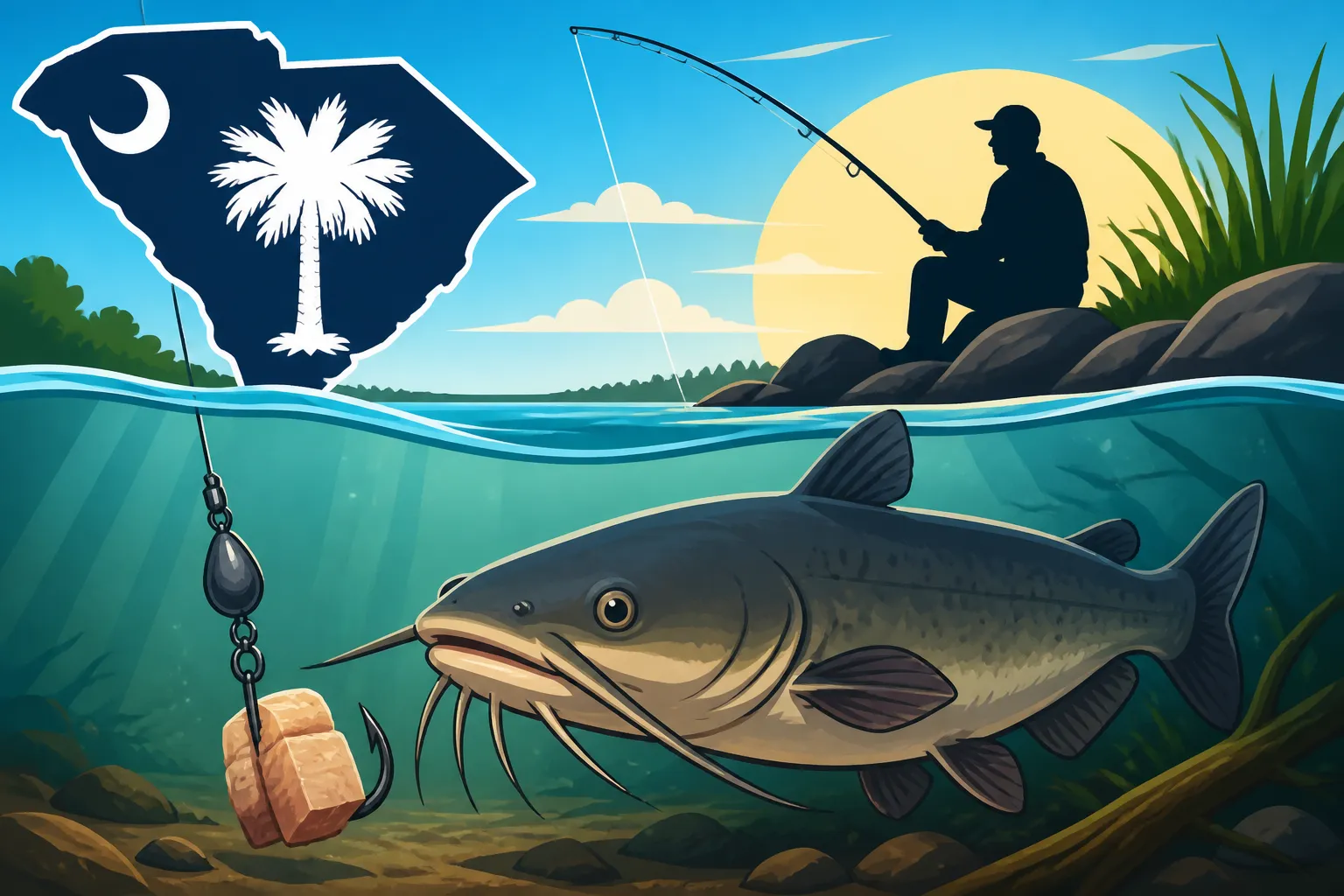
The Carolina Rig is a classic for a reason. It consists of a sliding sinker (like an egg sinker or a flat sinker) on your main line, followed by a bead (to protect the knot), and then a swivel. To the other end of the swivel, you attach a monofilament or fluorocarbon leader (typically 12-36 inches long), and finally, your hook. The beauty of this rig is that the weight slides freely on the main line, allowing a biting fish to pick up the bait and move off without immediately feeling the resistance of the sinker. This often results in a more confident take and better hook-ups. It's incredibly versatile and works well in most conditions, from still lakes to moderate river currents.
The Santee Cooper Rig, named after the legendary South Carolina lakes, is a modification of the Carolina Rig designed specifically for current. It uses the same components: sliding sinker, bead, swivel, and leader. However, instead of a standard leader, it incorporates a small, cigar-shaped float or a piece of cork on the leader, positioned just above the hook. This float lifts your bait slightly off the bottom, making it more visible to fish and preventing it from getting buried in silt or snagged in minor debris. It also allows the current to impart a subtle, natural movement to your bait, making it more enticing. This rig is exceptionally effective in rivers or lakes with significant current, such as the Santee River Fishing Spots for Catfish or the Congaree River Catfish Fishing Spots Near Columbia. The table below offers a quick comparison of these two effective rigs.
| Rig Type | Key Features | Best Use Cases | Advantages | Disadvantages |
|---|---|---|---|---|
| Carolina Rig | Sliding sinker, bead, swivel, leader, hook. | Still water, light to moderate current, varied bottoms. | Allows fish to take bait without feeling weight; simple setup; versatile. | Bait can get buried in soft mud/silt; less visible off bottom in current. |
| Santee Cooper Rig | Sliding sinker, bead, swivel, float on leader, hook. | Moderate to heavy current, soft/muddy bottoms, snaggy areas. | Lifts bait off bottom for visibility and natural movement; reduces snags in mud. | More components; can be less sensitive in very calm water if float is too large. |
Casting and Presentation Strategies
Once your rig is tied, proper casting and presentation ensure your bait reaches the strike zone effectively and stays there. It's not just about distance; it's about accuracy and stealth.
For most bottom fishing, a good, controlled cast is better than a wild heave. Aim for areas where you suspect catfish are holding, such as deep holes, channel edges, or around submerged structure. If fishing from a boat, positioning your boat strategically upstream or upwind and allowing your bait to drift naturally into a suspected hotspot can be very effective, especially when using a Carolina Rig. When anchoring, try to fan-cast several rigs around your boat to cover different depths and sections of the bottom, increasing your chances of finding an active fish. For tips on How to Anchor for Catfish in Current, check out our dedicated article.
Once your bait hits the water, let it sink naturally to the bottom. Avoid reeling in slack too quickly, as this can make your bait tumble unnaturally. After it settles, slowly reel in any slack until you feel the weight, then back off slightly to create a subtle bow in your line. This allows the current to work its magic on your bait and provides a little give when a fish first mouths it. If fishing a Santee Cooper Rig in current, the float will keep your bait suspended just above the bottom, ensuring it's presented clearly. Periodically, especially in current, lift your rod tip a few feet and let your bait drift a short distance before settling again; this can cover more water and attract attention.
Detecting Bites and Setting the Hook
Catfish bites can range from incredibly subtle to violently aggressive, and learning to differentiate between a fish and a snag is an acquired skill. Patience is a virtue, but knowing when to act is key.
Often, a catfish bite starts with a series of gentle taps or a slight twitch of the rod tip. This might be the fish mouthing the bait, trying to get it into position. Resist the urge to set the hook immediately. Give the fish a few seconds to fully commit and begin to move off with the bait. With a Carolina Rig, you'll often see the rod tip slowly bend as the line slides through the weight, or your line will simply start steadily pulling off your reel. With a Santee Cooper Rig, the float might dip or disappear, followed by movement on your rod tip.
When the fish finally takes the bait and begins to pull steadily, or your rod tip makes a decisive bend and stays there, that's your cue. For circle hooks, avoid a hard, sweeping hookset. Instead, simply reel down until your line is taut and then lift the rod firmly and steadily. The circle hook is designed to turn and catch in the corner of the fish's mouth as pressure is applied. A hard snap of the wrist often pulls the hook out of the fish's mouth before it has a chance to set. If you're using J-hooks, a more traditional, firm sweep of the rod is usually required. Once hooked, keep steady pressure on the fish, letting your rod and reel's drag do the work, and enjoy the fight!
Prime Locations and Timing for Catfish
South Carolina offers an abundance of fantastic catfish opportunities, from sprawling reservoirs to winding blackwater rivers. Knowing where to go and when to cast your line can make all the difference. For a broader overview of places to target, check out our guide on the Best Catfish Fishing Spots in South Carolina.
Best Freshwater Lakes and Rivers
Our state boasts some truly world-class catfishing destinations, renowned for both numbers and trophy-sized fish. These locations are celebrated by local anglers and visitors alike.
The Santee Cooper Lakes—Lake Marion and Lake Moultrie—are arguably the epicenter of South Carolina catfishing. These interconnected lakes are legendary for their monstrous Blue Catfish and abundant Channel Catfish. With vast expanses of open water, deep channels, submerged timber, and extensive creek systems, they offer diverse habitats that support a thriving catfish population. Many anglers specifically target these lakes for their chance at a state-record blue cat. Our guide on Santee Cooper Lakes: South Carolina's Legendary Bass Fishery also highlights their incredible catfish potential.
Lake Murray is another powerhouse, especially for Striped Bass, but it also holds an excellent population of Channel and Blue Catfish. The Saluda River arm of Lake Murray is particularly productive, with deep channels and fertile waters providing ideal catfish habitat. Fishing ledges, humps, and the main river channel can yield impressive catches. You can find more detailed information on fishing this lake in our Lake Murray Fishing Guide for South Carolina Anglers. Other notable lakes include Lake Hartwell, which has a growing reputation for big blues, and Lake Wateree, known for its consistent channel cat action.
Beyond the lakes, South Carolina's rivers offer incredible catfishing. The Congaree River, particularly the stretches near Columbia, is a prime spot for robust Channel and Blue Catfish, as detailed in Congaree River Catfish Fishing Spots Near Columbia. The Santee River is another legendary fishery, especially for massive Blue Catfish. Its strong currents and deep holes require heavy tackle but can produce unforgettable catches. Don't overlook the Edisto River, a beautiful blackwater river, which offers fantastic fishing for Channel Cats and smaller Flatheads in its countless bends and logjams.
Ideal Times of Day and Year
Catfish, like most fish, have peak feeding periods that coincide with environmental factors. Timing your trips to these windows will significantly boost your success rates.
During the warmer months of late spring, summer, and early fall, dawn and dusk are prime times for catfish action. As the sun rises or sets, light levels decrease, making catfish more confident to move into shallower feeding areas. Throughout the summer, many experienced anglers switch to night fishing entirely, as catfish are highly active under the cover of darkness. The cooler water temperatures and reduced boat traffic make for a serene and productive experience. Our article on Catfish Fishing Techniques for South Carolina Lakes in Summer dives deeper into this.
Seasonally, spring and fall offer some of the most consistent catfishing. In spring, the fish are coming out of their winter sluggishness and actively feeding to prepare for the spawn, often moving into shallower, warmer waters. In fall, they're aggressively bulking up for winter. While summer can be excellent, it often requires targeting deeper waters during the day or fishing at night. Even winter can be productive if you know how to find their deep-water haunts and fish slowly. Always keep an eye on weather patterns; pre-frontal conditions or stable periods after a cold front can often trigger strong bites.
Reading the Water for Catfish Hotspots
Becoming a successful catfisherman isn't just about dropping bait; it's about learning to "read" the water and identify potential holding areas. This skill comes with practice but is essential for consistently finding fish.
Look for areas with significant changes in depth or current. In rivers, this might be the mouth of a tributary where cooler, oxygenated water enters, creating a current break and washing in food. Deep bends where the current has carved out holes are classic catfish haunts. Submerged cover like fallen trees or brush piles are natural magnets, offering both protection and ambush points. If you see areas with swirling eddies or seams where fast and slow water meet, these are prime feeding lanes.
In lakes, pay attention to contour lines on your map or sonar. Look for sharp drops, humps that rise off the bottom, or points that extend into deeper water. Old creek channels, often identifiable on modern electronics, are highways for catfish. Even subtle changes in bottom composition, from soft mud to firmer sand or rock, can indicate where catfish are holding. Pay attention to bird activity, especially gulls or cormorants, which can sometimes indicate baitfish schools, and where there are baitfish, there are often predatory fish like catfish. A little time spent exploring with your electronics before you drop a line can save hours of fruitless fishing.
Common Challenges and Troubleshooting
Even with the best gear and knowledge, fishing presents challenges. Catfishing is no exception. Knowing how to adapt to unexpected situations and troubleshoot common problems will save you frustration and improve your catch rate.
Dealing with Snags and Lost Gear
Snags are an inevitable part of bottom fishing, especially when targeting catfish in their preferred snaggy habitats like logjams and rocky bottoms. Losing tackle can be incredibly frustrating and expensive.
The best defense against snags is often prevention. When fishing in particularly snaggy areas, consider using lighter leader material than your main line. This way, if you do get snagged, only the leader and hook might break off, preserving your main line and sliding sinker. Using a Santee Cooper Rig with a float can also help by keeping your bait suspended just above the bottom debris. Some anglers also use "breakaway" weights, designed to detach if heavily snagged, saving the rest of your rig.
When you do get snagged, resist the urge to yank hard immediately. First, try giving your line a little slack, then slowly pull from a different angle. Sometimes, the current or a slight shift in your boat's position can free the snag. If that doesn't work, point your rod directly at the snag, grab your line (carefully, with a towel or glove), and pull steadily until something breaks. While losing tackle is a bummer, it's part of the game. Always carry extra hooks, weights, and leader material so you can quickly re-tie and get back to fishing. Keeping a tackle box well-stocked with these essentials, easily replenished from places like Amazon, is a smart move.
Adjusting to Changing Conditions
Fishing conditions are rarely constant. Current, depth, weather patterns, and water clarity can all change throughout the day, requiring you to adapt your approach. Being flexible is a hallmark of a successful angler.
Current is one of the biggest factors in river catfishing. If the current picks up, you might need to increase your weight size to hold bottom. Conversely, if it slows down, you might be able to use lighter weights. Similarly, if the water becomes murky after a rain, catfish often rely more heavily on scent, making strong-smelling baits even more effective. If the water clears, they might become a bit warier, and a more natural presentation might be needed. Our guide on South Carolina Freshwater Fishing Regulations reminds us of how diverse our waters are and how local conditions can vary wildly.
Depth is another critical factor. Catfish may move deeper or shallower depending on water temperature, sunlight, and time of day. If you're not getting bites at one depth, don't be afraid to try different areas, shallower or deeper, to find where the fish are holding. Using multiple rods set at different depths can help you pinpoint the strike zone faster. Weather fronts can also shut down a bite. After a cold front, catfish often become less active. This is when patience, slower presentations, and smaller bait pieces might entice a bite. Don't be afraid to experiment; sometimes a minor adjustment makes all the difference.
When the Bites Stop: What to Do
There's nothing more frustrating than a fishing trip where the bites just mysteriously stop. It happens to everyone, but knowing how to react can turn a slow day into a productive one.
First, consider if the fish have moved. Catfish are not static; they follow food, current, and comfortable temperatures. If the bite dies, consider moving your boat or casting to entirely new areas. Sometimes, a move of just 50 yards can put you back on active fish. Re-evaluate your location: Has the current changed? Is the sun now directly overhead? Are other anglers catching fish elsewhere?
Next, reassess your bait and presentation. Is your bait still fresh and emitting plenty of scent? If using cut bait, it loses potency over time. Re-bait with a fresh piece. Are you sure your bait is on the bottom and not snagged? Pull your line in and check. Try changing up your bait type; if stink bait isn't working, try cut bait, or vice-versa. Sometimes, a change in leader length can also make a difference. If you're fishing in a high-pressure area, perhaps scaling down your hook size or using a more subtle bait presentation might be necessary. Even changing the color of any beads on your rig, though often overlooked, can sometimes be a psychological factor for finicky fish.
Cleaning and Preparing Your Catch
After a successful day of bottom fishing, the fun isn't over yet! Part of the reward is bringing home your catch and preparing it for the table. Proper cleaning and preparation ensure the best flavor and quality.
Field Dressing and Storage
Once you've landed your catfish and decided to keep it, proper field dressing and storage are crucial to maintain freshness and quality. This process begins right after the catch.
As soon as possible after catching, dispatch the fish humanely. Many anglers will bleed their catfish immediately by cutting a gill arch. This helps improve the flavor of the meat by removing blood from the system. If you're keeping multiple fish, a large cooler filled with ice is indispensable. Don't just toss them in; layer the fish with plenty of ice, ensuring they are chilled thoroughly and quickly. This rapid cooling process stops bacterial growth and preserves the firm texture and mild flavor of the meat. A quality cooler, often found at great prices on Amazon, is an investment that pays off in fresher fish.
Avoid letting fish sit in warm water or on a stringer for extended periods, especially in hot weather. This can stress the fish, leading to a poorer quality fillet and a "muddy" taste. If using a stringer, try to keep the fish in shaded, flowing water, but for optimal freshness, an ice-filled cooler is always the best option. Remember to check South Carolina Fishing Bag Limits Explained before you head out, so you know exactly how many fish you can legally keep.
Filleting Techniques
Filleting a catfish might seem intimidating at first, especially with their tough skin and sharp spines, but with a sharp knife and a little practice, it's quite manageable.
Start by laying the fish on a clean, stable surface. A good fillet knife (with a flexible, sharp blade) is essential. The first cut is usually made behind the pectoral fin, cutting down to the backbone. Then, turn the blade and run it along the backbone towards the tail, keeping the knife as close to the bones as possible to maximize your yield. Some prefer to skin the fish first, especially larger ones, before removing the fillets, while others fillet and then skin. For smaller channel cats, you can often "skin" them with pliers by making a circular cut around the head and peeling the skin off like a glove.
After removing the fillet, you'll need to remove the skin. Lay the fillet skin-side down, make a small cut at the tail end through the meat to the skin, and then, holding the skin firmly with one hand, slide your knife between the skin and the meat, working the blade slowly and steadily towards the head. Any remaining dark meat or fat pockets, particularly along the lateral line, can be trimmed away to further enhance the flavor. These areas often hold more of the "gamey" taste, and removing them leaves you with clean, white, delicious meat.
Popular Cooking Methods
Catfish is incredibly versatile and delicious, taking well to a variety of cooking methods. Once you have those fresh fillets, the culinary possibilities are endless!
One of the most popular ways to prepare catfish is by frying. A classic cornmeal breading, seasoned with salt, pepper, and your favorite spices, creates a crispy, golden crust that pairs perfectly with the tender, flaky white meat. Simply dredge your fillets in egg wash or buttermilk, then coat generously in your seasoned cornmeal mixture, and fry in hot oil until golden brown. This is a staple at fish camps and family gatherings across the South.
Beyond frying, catfish is excellent grilled, baked, or blackened. For grilling, marinate the fillets in a zesty citrus and herb mixture, then grill over medium-high heat until cooked through and slightly charred. Baking offers a lighter alternative; simply season your fillets with butter, lemon, and herbs, and bake until flaky. Blackening involves coating the fillet in a special blend of spices (often Cajun-inspired) and searing it in a screaming hot, cast-iron skillet until a dark, flavorful crust forms. No matter your preference, fresh South Carolina catfish makes for a fantastic meal, a truly rewarding end to a great day on the water.
Disclaimer
Please be aware that fishing regulations in South Carolina can change. Always consult the latest South Carolina Department of Natural Resources (SCDNR) regulations before heading out on your fishing trip to ensure compliance with current laws regarding licenses, bag limits, and specific species rules.